dailynewsnblog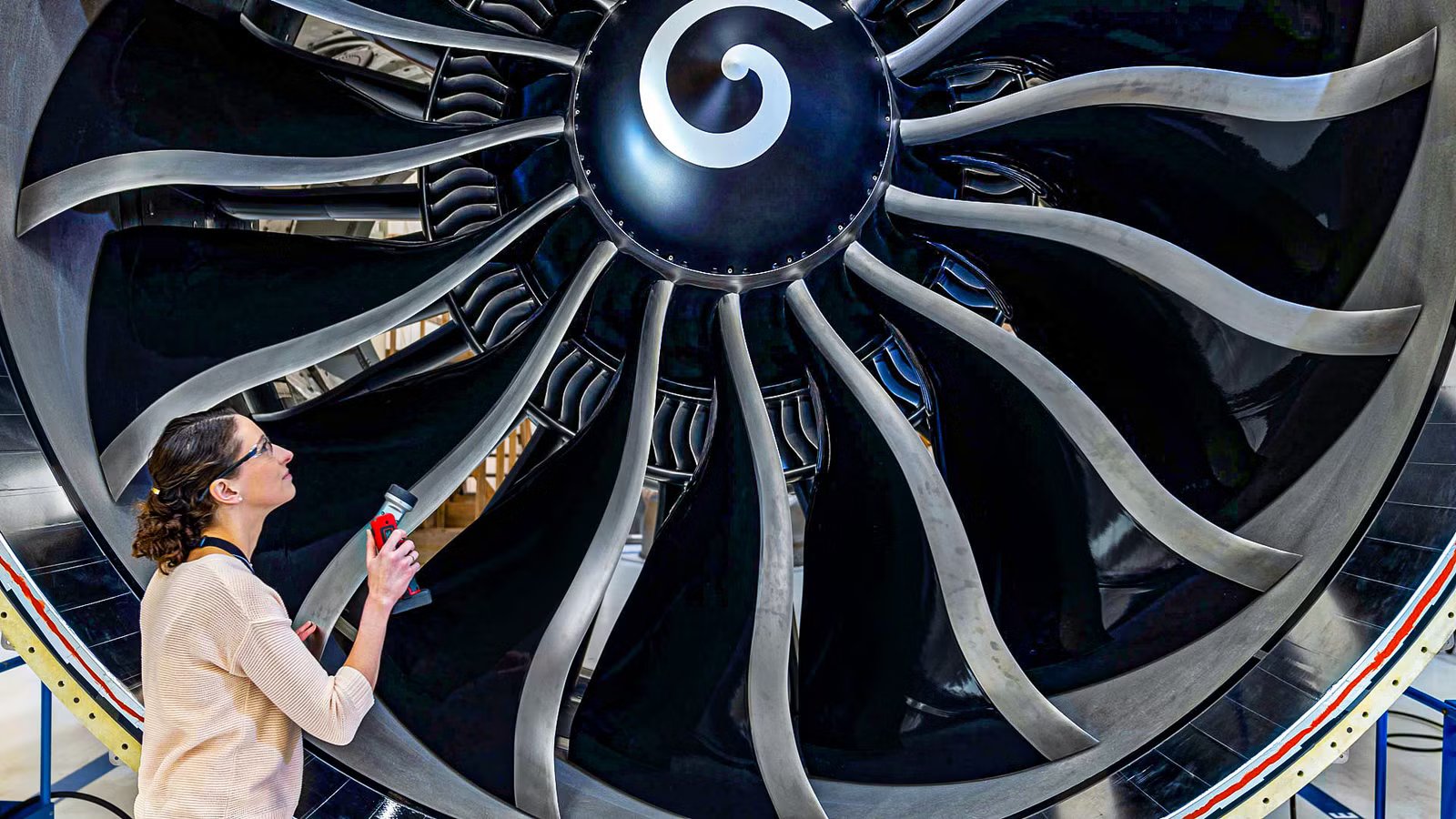
The discovery of a crack in the General Electric GE9X’s mid seal during a January 2026 inspection could easily be framed as just another technical hurdle in the long development story of the Boeing 777X. Instead, it reveals something far more interesting about modern aircraft engine design, particularly when engineers attempt to scale performance to unprecedented levels. The GE9X is not just an incremental improvement over its predecessors, but a machine that pushes the physical limits of size, airflow, pressure, and temperature in ways no commercial aircraft engine has before.
At the center of that challenge is the engine’s 134-inch (3.4 meters) fan, the largest ever fitted to a commercial aircraft. While this massive diameter brings significant efficiency gains, it also creates cascading engineering consequences throughout the entire engine. The mid-seal issue highlights how even internal components deep within the engine core are affected by decisions made by the engine manufacturer, General Electric.
The Unprecedented Scale Of The GE9X Fan

One of the defining features of the General Electric GE9X is its 134-inch fan, a dimension that would have seemed impractical only a generation ago. This fan allows the engine to move an enormous volume of air, dramatically increasing the bypass ratio and improving fuel efficiency by around 10% compared to its predecessor, the GE90. However, scaling a fan to this size is not as simple as enlarging an existing design, as the aerodynamic, structural, and mechanical implications grow significantly with increased diameter.
A larger fan means more air mass flow, which in turn requires a more powerful core to drive it. That core must operate at higher pressures and temperatures to extract sufficient energy, pushing materials and tolerances to extremes. The fan also introduces higher rotational inertia, meaning that acceleration, deceleration, and load transitions place greater stress on shafts, bearings, and downstream components.
This is why the General Electric GE9X operates in a way that few other engines do; while its rated thrust is 110,000 lbs (49,895 kg), it has demonstrated up to 134,300 lbs (60,917 kg) during testing, highlighting the immense forces involved. These forces do not remain isolated to the fan section but ripple through the entire engine, influencing how components behave under real-world conditions, especially during critical phases such as take-off and throttle changes, where loads fluctuate rapidly.
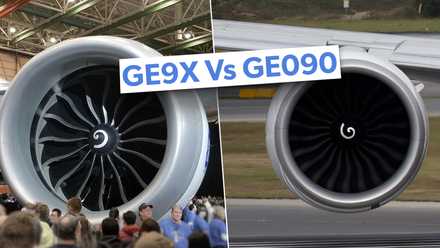
How Much Larger & More Powerful Is The 777X’s GE9X Engine Than The 777’s GE90?
The GE9X may be the largest turbofan ever built, but by just how much does it surpass its mighty predecessor, the GE90?
How Fan Size Reshapes The Engine Core

The relationship between the fan and the core is central to understanding the mid-seal issue. A larger fan demands a higher overall pressure ratio in the core, which means that air must be compressed more aggressively before combustion. This leads to hotter, denser, and more energetic flow entering the turbine stages, increasing the thermal and mechanical loads on internal components.
Inside the engine’s core, turbine stages extract energy to drive the fan, and between these stages are seals that manage pressure differentials and thermal gradients. The mid seal, in particular, plays a critical role in maintaining stability between these stages, ensuring that airflow behaves as intended and that temperature differences do not lead to inefficiencies or structural problems.
With the General Electric GE9X, the conditions around this mid seal are more extreme than in previous engines. The higher pressure ratios and elevated temperatures create an environment where even small design imperfections or material limitations can lead to durability concerns. The crack discovered in January 2026 illustrates how sensitive these components are when operating at the edge of current engineering capabilities, where margins are carefully optimized rather than generously overbuilt.
The Mid Seal As A Stress Indicator

Shutterstock | Simple Flying
Rather than being an isolated failure, the mid-seal crack can be interpreted as an indicator of the broader stresses within the engine. This component exists in a region where pressure and temperature must be carefully balanced, acting as a boundary between different turbine stages. Any imbalance or unexpected fluctuation can translate into localized stress concentrations.
General Electric confirmed that the root cause of the issue has been identified and that a redesigned part is being introduced into production. The fact that the solution involves a redesign rather than a simple repair suggests that the original configuration encountered conditions that exceeded initial expectations. This is not unusual in cutting-edge engine technology, where real-world testing often reveals issues that simulations cannot fully capture. This redesigned part should help to ensure that the first variant of the Boeing 777X family, the Boeing 777-9, is delivered in 2027 to the aircraft’s launch customer,  Lufthansa.
The need for potential retrofits during maintenance overhauls further highlights the dynamic nature of such designs. Unlike older engines, where components operated with wider margins, the General Electric GE9X operates closer to the limits of material performance. This makes it more sensitive to small deviations, requiring ongoing refinement even after certification, as operational data continues to inform engineering updates.
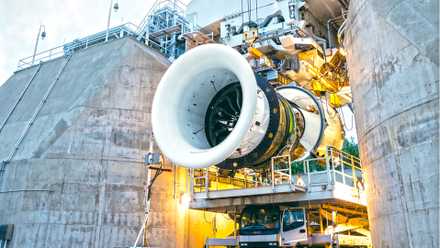
What Makes GE9X The World’s Monster Jet Engine?
Unravel the secrets of the massive GE9X, a jet engine that redefines scale and efficiency in the skies.
A History Of Pushing Limits & Encountering Hurdles

Shutterstock | Simple Flying
The mid-seal issue is not the first challenge faced by the General Electric GE9X engine program. Earlier in its development, the engine experienced high-pressure compressor stator vane durability issues in 2019, a temperature alert that temporarily suspended flight testing in 2022, and a grounding in 2024 related to titanium thrust link failures. Each of these events reflects the same underlying theme – the difficulty of engineering reliability at unprecedented performance levels.
Despite these hurdles, the engine has undergone extensive testing, including more than 30,000 cycles and over 1,600 dust ingestion tests designed to simulate harsh operating environments. These tests are intended to expose weaknesses before the engine enters service, allowing engineers to refine designs and improve durability.
The use of advanced materials such as ceramic matrix composites and additive-manufactured metal components is also part of this effort. These materials can withstand higher temperatures and stresses than traditional alloys, but they introduce new variables in terms of manufacturing consistency and long-term behavior. As a result, each innovation brings both benefits and new challenges, particularly when scaled across an engine of this size.
Why No Other Engine Faces The Same Problems

While other modern engines also pursue high efficiency, the General Electric GE9X stands apart due to the sheer scale of its fan and the resulting demands on the core. Engines with smaller fans do not require the same level of pressure ratio or thermal intensity, allowing them to operate with comparatively lower stresses on internal components.
This difference is crucial because it means that certain issues, like the mid seal crack, are not easily transferable from one engine program to another. The General Electric GE9X exists in a unique design space where traditional engineering assumptions must be revisited, as components that have performed reliably in other engines may behave differently when subjected to the conditions created by such a large fan.
In essence, the General Electric GE9X is exploring a new corner of the performance envelope. This makes it more susceptible to unforeseen interactions between components, as the combined effects of size, pressure, and temperature create scenarios that have limited historical precedent. The mid seal is just one example of how these interactions can manifest, especially when compounded over thousands of operating cycles.
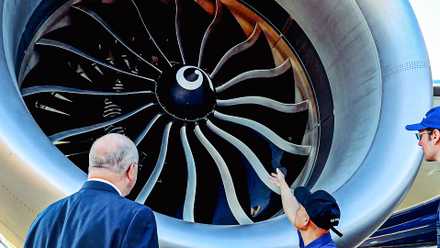
How Much Does A Boeing 777X Engine Cost?
The largest and most powerful commercial engine ever built, the GE9X is by no means cheap
Balancing Efficiency, Durability, & Certification Timelines

Despite the technical challenges, both  Boeing and General Electric maintain that the mid-seal issue will not delay the planned 2027 entry into service for the 777-9. Certification flight testing is continuing, and the redesigned component is being integrated into the production pipeline. This reflects a broader industry approach in which incremental improvements are made alongside ongoing testing rather than halting progress entirely. The latest data from ch-aviation shows that
  Emirates is set to become by far the largest operator of the passenger 777X, with a staggering 270 on order, followed by
  Qatar Airways. The largest orders are outlined in the table below:
Ranking | Airline | Boeing 777-8 | Boeing 777-9 | Total |
|---|---|---|---|---|
1 | Emirates | 35 | 235 | 70 |
2 | Qatar Airways | – | 90 | 90 |
3 | Cathay Pacific | – | 35 | 35 |
4 | Singapore Airlines | – | 31 | 31 |
5 | British Airways | – | 24 | 24 |
6 | All Nippon Airways | – | 20 | 20 |
7 | Lufthansa | – | 20 | 20 |
8 | Korean Air | – | 20 | 20 |
9 | China Airlines | – | 19 | 19 |
10 | Etihad Airways | – | 10 | 10 |
The balance between efficiency and durability is at the heart of this process, as airlines demand lower fuel consumption and reduced emissions, which drive the push for larger fans and higher performance cores. At the same time, engines must meet stringent reliability standards, requiring extensive validation and, occasionally, redesigns.
The General Electric GE9X embodies this tension more than most engines. Its 134-inch fan delivers clear efficiency benefits, but it also amplifies every challenge associated with high-performance engine design. As a result, issues like the mid-seal crack are not just setbacks but valuable insights into how such extreme machines behave in practice.
In this context, the ongoing refinements to the General Electric GE9X can be seen as part of a broader learning process. Each identified issue contributes to a deeper understanding of how to design, test, and maintain engines operating at the limits of current technology. The mid seal, while a small component in physical terms, plays a significant role in illustrating just how complex and interconnected these systems have become, particularly as the industry continues to push toward even greater efficiency gains in future aircraft and engine development programs.