dailynewsnblog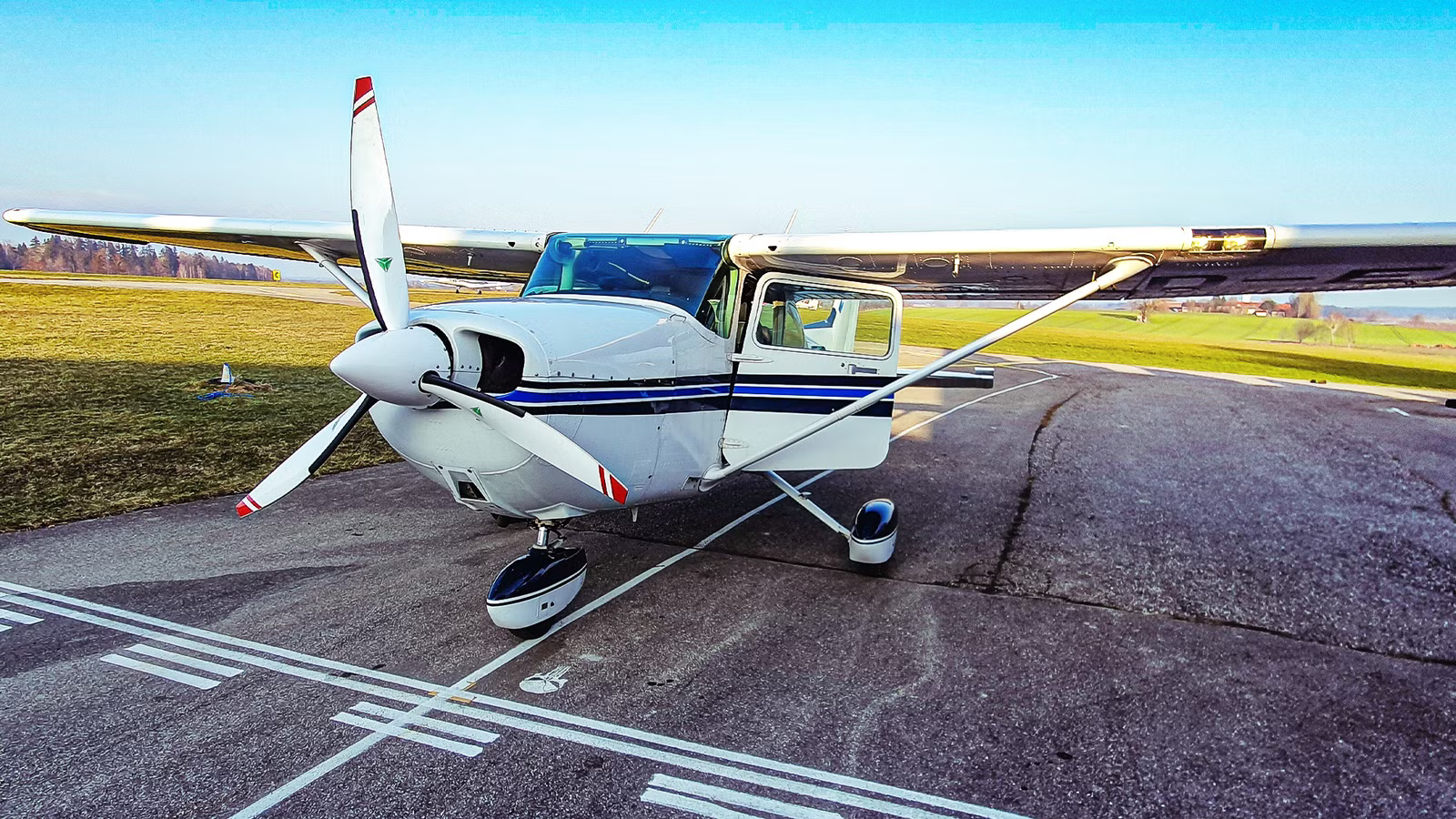
The Cessna 172 is an iconic aircraft that represents 20th-century recreational and light commercial aviation, as well as flight training. Since taking to the skies in the mid-1950s, the aircraft has transcended generations of aviation enthusiasts and student pilots with around 20 different models, remaining a favorite throughout its history. Its longevity comes from its adaptability, ease of operation, reliability, and steady upgrades over the decades.
This year, the aviation world celebrates 70 years of the iconic Cessna 172. With widespread parts availability, popularity, and an extensive role in private aviation, the aircraft is expected to remain one of the world’s most beloved light aircraft. With an established global support network and a proven design, the Skyhawk is well positioned to remain a familiar sight in the skies for years to come.
Cessna’s Early History

Cessna Aircraft traces its roots to its founding on September 7, 1927. At that point, Clyde Cessna partnered with aviation entrepreneur Victor Roos to form the Cessna-Roos Aircraft Company. The partnership was short-lived, and the company was renamed Cessna Aircraft Corporation. In the decades that followed, ownership changed hands several times, with General Dynamics purchasing the company in 1985 and Textron Aviation Inc. acquiring it in 1992.
The Cessna Corporation first introduced the Model 172 in 1955, and by 1956, the company had begun production of what would become the most-produced aircraft in history. The aircraft was based on an earlier design called the 170, which emerged during the light aircraft boom following World War II. Harry Clements, a Cessna aeronautical engineer involved in the development of the 170, recalled that as “. . . sales of the 170B begin to slip. Quickly, and secretly, work on a tri-gear version began, using the 170C as a foundation . . . the next thing I knew was that the tri-gear version of the 170 was introduced, and was called the 172. And its sales were so good that the 170 line was essentially discontinued . . .”
The Cessna 172’s development coincided with a broader postwar interest in recreational flying and personal aviation, as Americans increasingly sought new forms of leisure and mobility. As noted above, the aircraft’s early sales success helped secure its place in Cessna’s lineup, with demand driven in part by its practical design, ease of operation, and high-wing configuration, which offers excellent visibility. These qualities helped establish the Skyhawk as a mainstay of general aviation and flight training. For recreational pilots and tourists alike, the aircraft also offers passengers an unobstructed view of the landscape below.
The Cessna 172’s Longevity Is Driven By Its Adaptability And Decades Of Evolution

Perhaps the greatest reason the Cessna 172 has maintained its place in private aviation is that the company has never allowed the aircraft to fade with each passing generation. Rather, the Skyhawk has evolved over the decades. Throughout the 1960s, Cessna introduced refinements that improved performance. During that decade, the 172A through 172I models saw improvements such as a swept-back tail, a streamlined cowling, an autopilot, electric flaps, and the Lycoming O-320 engine, which became the standard for future Skyhawks.
The 1970s focused on structural improvements in the 172L through 172N models, including the addition of a tubular landing gear strut and the Lycoming O-320-H2AD engine. During the 1980s, Cessna installed the Lycoming O-320-D2J engine on its 172P models, producing 160 horsepower. From the 1990s through the early 21st century, the 172R through 172S NAV III models saw further engine and avionics upgrades, including the introduction of the Garmin G1000 glass cockpit, GPS, and advanced autopilot systems.
Incredibly, over the seven decades that the Cessna 172 has been in production, Textron, the owner of Cessna, states that “. . . 45,000 Skyhawks have been delivered to customers around the world — more than any other aircraft in the industry.” The closest competitor in terms of total airframes produced is the Soviet Ilyushin Il-2 Sturmovik, with 36,183 built during World War II. Third place goes to the Messerschmitt Bf 109, with 34,852 manufactured for Germany during the war.
Commercial Aviation, Pilot Training, And The Cessna 172: Where It All Comes Together

The airlines industry requires a vast pool of qualified and experienced aviators to safely and reliably transport passengers from point A to point B. Demand for efficient, comfortable air travel will continue to rise, as noted in a report published by Airports Council International. The report states that an incredible 9.8 billion passengers traveled the globe in 2025, a rise of 3.7% over 2024 and 6.5% over 2019 levels. The data came from 2,817 airports across more than 180 countries and territories.
This growth in air travel is expected to continue for at least the next 15 years, as Airbus predicts that passenger traffic will grow by an average rate of 3.6% per year through 2044. Further, Boeing forecasts that, over the 20 years to 2044, the industry will require 660,000 new pilots.
While the airline industry wishes it were so, pilots do not grow on trees nor do they sprout from the ground. Rather, to enter the airline pilot ranks in the United States, aspiring operators must first obtain an Airline Transport Pilot (ATP) certificate, which generally requires 1,500 hours of flight experience, according to the Government Accountability Office. Fortunately, interest in flying in the US has increased, according to the Federal Aviation Administration’s Aerospace Forecast 2026–2046: “. . . the number of student pilots surged from 128,501 in 2016 to 370,286 by the end of 2025.”
It is highly likely that many of those nearly 400,000 student pilots in the US have sat at the controls of a Cessna 172 Skyhawk. For training, the 172’s design and flight characteristics provide an ideal environment for student pilots to learn and master the fundamental skills of introductory flight. The aircraft’s high-wing configuration, stable slow-flight performance, and responsive handling provide excellent visibility, while its predictable landing characteristics and fixed tricycle landing gear make ground handling less complicated for student pilots. These features can reduce stress for student pilots, helping them build confidence and develop their skills. These time-tested characteristics have made the Skyhawk a cornerstone of flight training around the world.
What The Skyhawk Looks Like At 70

Over more than 70 years, the Cessna 172 has continued to evolve with the times, with each iteration building on the successes of previous models. Currently, the latest production model is the 172S. According to Jettly, the “. . . 172S remains one of the most common aircraft seen at flight schools, universities, and flying clubs worldwide in 2026.”
The aircraft’s cockpit is centered on the Garmin G1000 or G1000 NXi integrated glass avionics suite. This configuration helps make the 172S an “ultimate classroom” for pilots transitioning to glass-cockpit flying, introducing them to avionics systems and operating concepts they may encounter in more advanced aircraft, including turboprops and business jets.
Cessna 172S Skyhawk: General Characteristics | Related Data |
|---|---|
Length | 27 feet, 2 inches (8.3 meters) |
Height | 8 feet, 11 inches (2.7 meters) |
Wingspan | 36 feet, 1 inch (11.00 meters) |
Wing Area | 174 square feet (16.17 square meters) |
Maximum Occupants | 4 |
Baggage Weight | 120 pounds (54 kg) |
Maximum Takeoff Weight | 2,550 pounds (1,157 kg) |
Usable Fuel Weight | 318 pounds (144 kg) |
Maximum Payload | 870 pounds (395 kg) |
Maximum Cruise Speed | 124 ktas (230 km/h) |
Maximum Range | 640 nm (1,185 km) |
Service Ceiling | 14,000 feet (4,267 meters) |
Maximum Climb Rate | 730 f/pm (223 m/min) |
Maximum Limit Speed (Maximum permitted operating speed) | 163 kias (302 km/h) |
Lycoming | Lycoming IO-360-L2A – 180 hp (134 kW) |
The cabin features four seats for the instructor, student, and passengers. The seats are made from durable Luxor 2-type seating materials designed to withstand the demands of flight training. The aircraft also features large wraparound windows that enhance situational awareness, in addition to power headset jacks and USB outlets for charging electronic flight bags (EFBs).
Obtaining a Private Pilot Certificate generally requires 50 to 70 flight hours, and this can take anywhere from three to 12 months, depending on the training schedule and weather conditions. Fortunately, the consistent and forgiving nature of the 172s helps students develop their flying skills as they progress through their lessons.
In terms of ownership, a new 172 will generally cost between $450,000 and $550,000 (£337,000–£412,000), while older models can range from $300,000 to $400,000 (£225,000–£300,000), depending on condition and equipment. Whether for a private owner, commercial operator, or flight school, Cessna’s decades of industry experience have helped it develop an extensive support and logistics network. For maintenance and parts replacement, Cessna maintains an inventory of 140,000 parts, offers a 12-month warranty, and reports a 99% same-day shipping rate for in-stock parts.
The Cessna 172’s Enduring Legacy And Continued Market Relevance

Following its first flight in 1955, the Cessna 172 became a staple of the private flying world and continues to be so today. With the substantial increase in student pilot certificates between 2016 and 2025, the aircraft is well positioned to remain a popular training platform for aspiring commercial pilots. Supporting the aircraft, Textron operates a 500,000-square foot (46,452 square meters) production facility in Independence, Kansas, where nearly 500 full-time Cessna employees were reported in 2013. The facility produces well-known aircraft such as the 172 Skyhawk, the 182 Skylane, and the 206 Stationair.
Cessna’s continued relevance is reflected in the financial performance of its parent company’s aviation division. In the first half of 2026, Textron Aviation reported $3.03 billion in revenue, up 11% from the same period in 2025, while segment profit rose 9% to $319 million. These results demonstrate the continued commercial strength of the broader business behind Cessna and its aircraft. With its established market presence, manufacturing expertise, and diverse range of models, Cessna is well positioned to remain a major player in general aviation and a key contributor to the pilot-training pipeline that supports the airline industry.