dailynewsnblog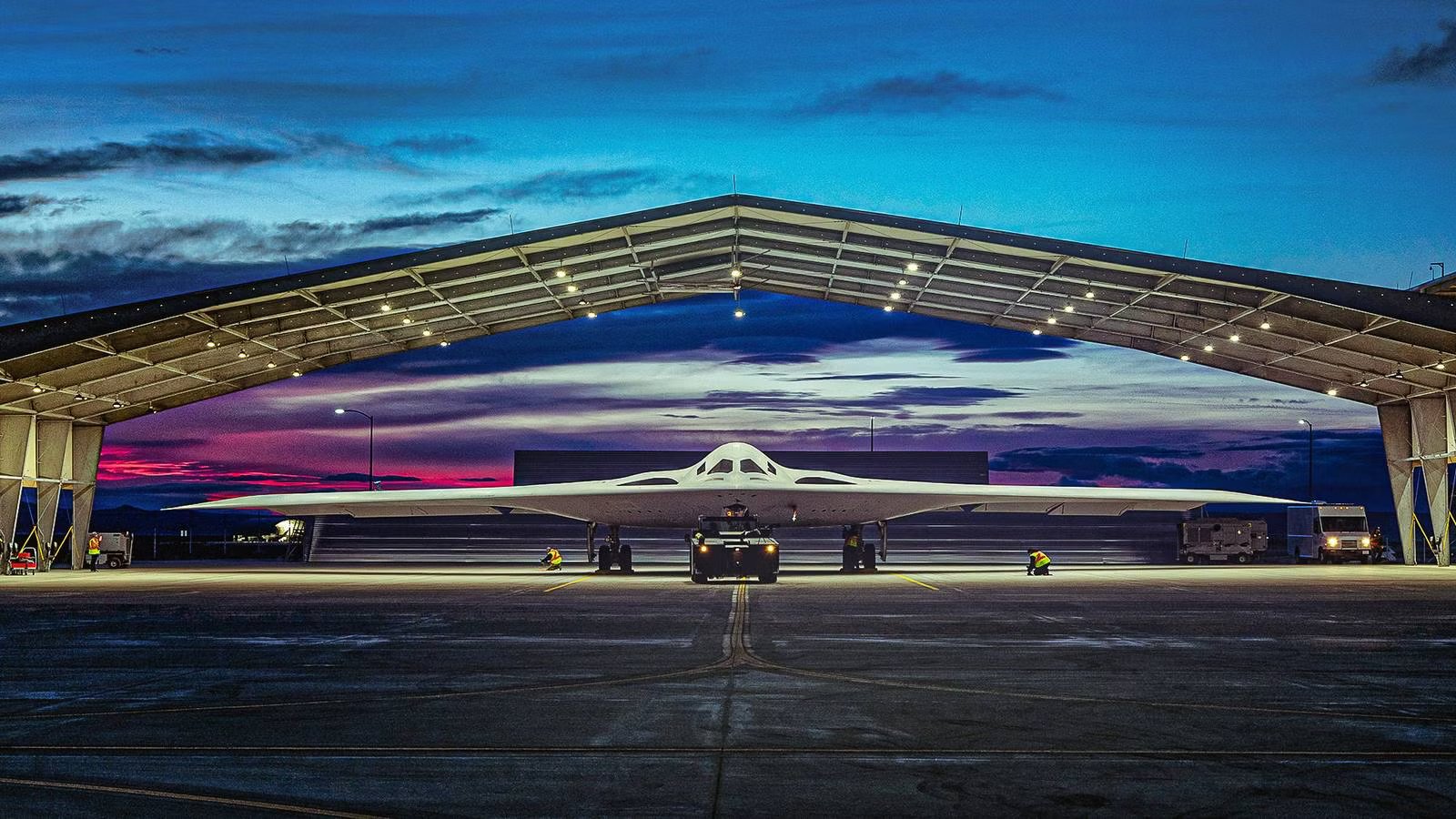
The Northrop Grumman B-21 Raider strategic stealth bomber is the next-generation replacement for the older Northrop B-2 Spirit. One of the major updates is that it is designed from the ground up for a higher operational tempo and to be comparatively affordable. As discussed below, ‘comparatively affordable’ is relative, and the aircraft will still be too expensive for all but the most well-funded air forces to feasibly operate.
Compared with other programs, it is difficult to talk about the specifics of B-21 Raider costs as the aircraft is heavily classified and only some information has been released. Sometimes this information is now years old. At the same time, as the aircraft has not yet entered service, there are no actual costs per flight hour yet, even if the Air Force were willing to disclose them. Let’s examine how the Air Force has designed the Raider to be more affordable than the B-2 Spirit.
Mature Flying Wing & RAM Technologies

The B-2 Spirit was a novel aircraft and the first operational bomber to use the flying wing design. In the 1980s, when it was being developed, this was a next-generation design and came with the issues associated with an all-new complex concept. Now the flying wing design is a mature technology.
Not only does Northrop Grumman have the experience of building the B-21, but it also has experience building various stealthy flying wing reconnaissance drones. Another major development is the maturation of stealth coatings or radar-absorbent material (RAM). The B-2 Spirit uses highly sensitive and essentially first-generation RAM.
It requires special climate-controlled hangars to prevent it from degrading. The Air Force even has portable climate-controlled hangars for when it is deployed forward. The Lockheed Martin F-22 Raptor followed around ten years later and was able to build on the technology of the B-2.
While its RAM is still sensitive and expensive to maintain, it is much more robust and doesn’t require climate-controlled hangars. The F-35 came around a decade later, and its RAM is advanced enough to withstand the punishing salty air of carrier-based operations. The B-21 has the advantage of yet another decade of development and will be an improvement over the F-35 and a massive leap over the B-2’s RAM.
Correcting Economies Of Scale

While many of the Northrop B-2 Spirit’s high expenses are due to its cutting-edge and novel technologies for the late 1980s, Congress is also somewhat to blame. As with other programs, it had a massive fixed research and development cost with huge costs in setting up specialized tooling and a supply chain. These were largely fixed costs that didn’t vary a large amount with the quantity purchased.
The Air Force had initially planned to purchase 132 B-2s, and this would have spread these costs out. Instead, it eventually purchased just 21 operational examples, denying the program any semblance of economies of scale. This produced a massive per-unit fixed cost with very high per-unit R&D costs and very low production runs for highly specialized components.
With the B-21 Raider now in low-rate production, the Air Force has committed to purchase at least 100 examples, with the target rising to 145. There have been some suggestions that the Air Force may go beyond that and eventually purchase around 200. This would give the B-21 a much lower per-unit cost and the ability to have larger production runs of needed components and keep those supply chains alive for longer.
Designed To Reduce Expenses & Maintain High Tempo

The Air Force has also repeatedly said it was looking for an evolutionary, not revolutionary, upgrade over the B-2. It wanted the B-21 to be a safe program that relied as much as possible on mature and proven technologies in order to keep the program on schedule and keep its costs lower.
The B-21 is not a revolutionary new type of aircraft: instead, it is the next-generation maturation of an existing aircraft type. The B-2 Spirit was also designed with a heavy emphasis on its intercontinental nuclear strike mission. For those missions, it did not need to be able to sustain a high tempo of sortie generation, and its cost per flight hour was less important.
Its conventional strike missions were designed around being a high-impact first-day effector targeting time-sensitive, high-value targets. It wasn’t so much intended to sustain day-after-day sorties of conventional strikes. Its intended mission was to help ‘kick in the door’ to allow other bombers (such as the B-1 and B-52) to exploit and carry a high tempo of strikes.
This was seen in 2026’s Operation Epic Fury. However, the B-21’s conventional missions are designed on the understanding that the threat environment may be too dangerous for non-stealthy bombers. It is designed to be able to sustain a much higher tempo of sorties from operations. So, instead of being a first-day wonder, it is to be the future backbone of bomber operations.
The B-21’s Huge Fiscal 2026 & 2027 Budgets

In Fiscal 2026, the B-21 program received a $4.5 billion boost in supplementary funding to ramp up production, bringing its total funding for that year to over $6 billion. The supplementary funding is boosting production capacity by 25%. The funding also highlights the very different geopolitical context that the two stealth bombers found themselves in as they neared operational service.
By the time the Northrop B-2 was nearing service in the 1990s, the principal adversary it had been designed for, the Soviet Union, was gone. This was a period of the ‘Peace Dividend,’ and military budgets across the West were being slashed, programs were being cut, and the United States defense aerospace sector was being consolidated. This was when Northrop and Grumman became Northrop Grumman.
Today, the B-21 Raider is entering at a time of Great Power Competition. While Russia may not be the threat it once was, China is rapidly unveiling more high-end aircraft and missiles. It is known to be developing an advanced stealth bomber of its own called the Xi’an H-20 bomber.
In the Air Force’s Fiscal 2027 budget and the Department of War Budget Overview Book, the Air Force is requesting another $6.1 billion in funding, of which $2–3+ billion is for advanced procurement, including long-lead items. This puts its Fiscal 2027 Air Force funding at close to the F-35A’s $2.4 billion funding request (includes 24 new aircraft).
More Affordable, But Still Expensive

Typically, Government Accountability Office reports are useful in gauging the costs of various programs. However, public reports specifically dedicated to a full audit of the B-21 remain limited on account of the secrecy of the bomber. This is a Special Access Program, and its details, costs, schedules, and performance data are often classified or provided in a restricted capacity.
The US Air Force has previously said the official per-unit cost target for the B-21 is $550 million in base-year 2010 dollars based on a buy of at least 100 aircraft. Industry reporting in 2026 generally put the inflation-adjusted cost at around $700 million per copy. If that is accurate, it would both be one of the most expensive aircraft in USAF inventory and be largely on budget.
US Air Force strategic bomber fleet | Quantity (per US Air Force) | Note |
|---|---|---|
B-52H Stratofortress | 76 (minus one crashed) | To be upgraded to B-52J |
B-1 Lancer | 45 (mandated, approx. 44 actual) | To be retired from 2037 |
B-2 Spirit | 19 | Undergoing mid-life upgrades |
B-21 Raider | 2+ | In testing, to enter service in 2027 |
Of course, costing less to purchase and operate than the B-2 Spirit does not mean it is cheap. It is not, and there is no realistic way to make a high-end strategic stealth bomber cheaply. This is partly why only the United States and China have solid plans to develop and operate them. Russia has its Tupolev PAK DA program to produce a strategic stealth bomber. However, it is unclear if the program is funded, and the fact that Russia is putting its old conventional Tu-160 into production casts further doubt.
Costs Per Flight Hour For USAF Bombers

In its 2022 report, the GAO reported that each individual Rockwell B-1 Lancer bomber cost $19.02 million in total costs for the year in Fiscal 2020 dollars. This included $173,014 per flight hour. Since then, the Air Force has reduced its B-1 inventory from 62 to 45. The B-52 Stratofortress fleet consisted of 76 aircraft (one crashed in 2026).
Each B-52 costs $16.62 million in 2020 dollars and costs $88,354 per flight hour. The B-2 Spirit fleet consisted of 20 aircraft (one has since been written off) and cost $41.01 million per aircraft and $150,741 per flight hour. It doesn’t appear that the GAO has published an update on these numbers since then, making them somewhat old.
The costs will likely be higher now on account of inflation and increased wear and tear on these same airframes, now more than half a decade older. This article will not guesstimate the flight-hour cost of the B-21 Raider, as that would be merely speculation.
As the type remains in its testing stage and is not yet mature, even the Air Force likely doesn’t know what the stable cost per flight hour will be after it matures and teething issues are worked out. With that being said, at least after the first few years, the Air Force is likely aiming for a lower cost per flight hour for the B-21 than the inflation-adjusted B-2 figure and lower than whatever the B-2’s flight-hour costs are in the early 2030s.