dailynewsnblog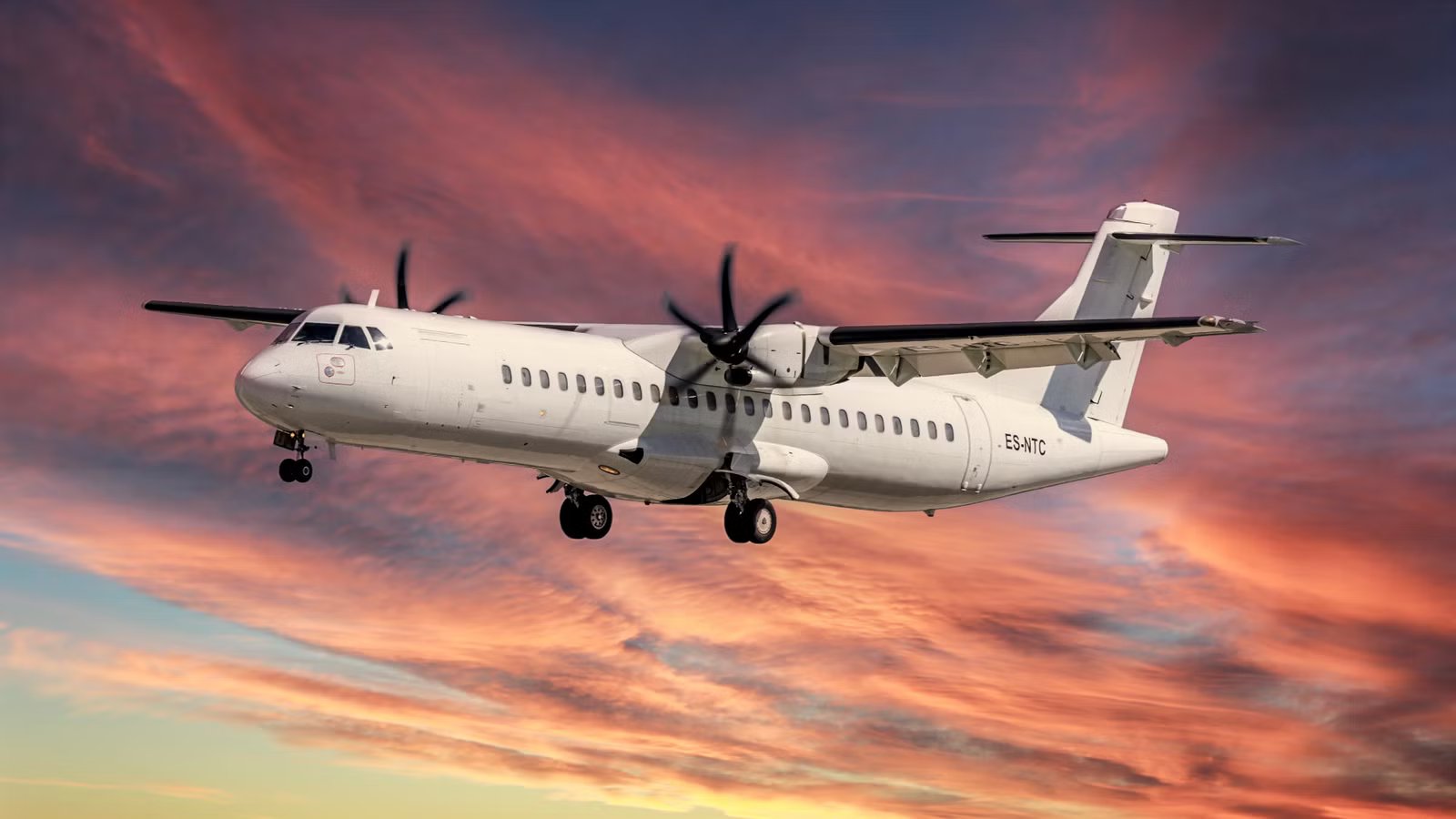
The two large propellers on the ATR 72 are among its most recognizable features, but they also create a different engineering problem when the aircraft encounters a bird. A turboprop does not avoid a bird strike simply because its propellers are positioned ahead of the engine. The blades themselves are exposed to impacts, while the nacelle, spinner, windshield, wings, and other forward-facing structures remain vulnerable. What makes the aircraft safe is not immunity to birds, but a certification framework designed to prevent a defined impact from becoming a catastrophic event. The ATR 72 is covered by EASA’s CS-25 certification framework, and EASA’s type certificate identifies the family as a CS-25 aircraft.
The engineering challenge becomes clearer when the ATR 72 is compared with a modern turbofan. Turbine engines have dedicated bird-ingestion requirements that test what happens when birds enter the engine’s inlet and strike rotating machinery. Propellers are assessed under separate certification rules that focus on blade loads, the spinner, retention hardware, and the possibility of a major or hazardous propeller effect. The ATR therefore relies on several layers of protection rather than one feature that supposedly stops birds from reaching its engines.
ATR 72 Faces The Same Basic Airframe Threat

Because the ATR 72 is certified under CS-25, its design has to address bird strikes as an aircraft-level hazard. EASA’s CS 25.631 requires an aeroplane to be designed for continued safe flight and landing following impact with a defined bird at specified speeds and altitudes. The rule does not mean every component must remain undamaged. Instead, certification establishes a defined impact condition and asks whether the resulting aircraft can still complete the flight safely.
The requirement extends beyond the obvious point of impact. EASA’s certification guidance identifies the potential effects of bird strikes on structural components, control systems, essential equipment, and other systems whose failure could compromise safe flight. The agency treats bird impact as a particular risk that must be considered within the broader aircraft safety assessment. The cockpit windshield is subject to a particularly direct requirement. CS 25.775 specifies that windshield panes immediately in front of pilots must withstand the bird-impact conditions established under CS 25.631 without penetration. The regulation also addresses the possibility of windshield fragmentation and requires measures to minimize hazards to the crew.
This matters on a turboprop because the propellers are not the only forward-facing components that can encounter wildlife. An aircraft approaching an airport can encounter birds at relatively low altitude, when both the aircraft structure and propulsion system are exposed to the hazard. Certification therefore treats the airplane as an integrated system rather than assuming the propellers will absorb every encounter. For the ATR 72, continued airworthiness adds another layer. EASA’s type-specific safety publications include continuing airworthiness requirements covering ATR 72 variants, illustrating that certification does not end when an aircraft receives its type certificate. Operators must continue maintaining the aircraft and responding to identified technical risks throughout its service life.
Propellers Are Designed For Impact Loads

The ATR 72’s propellers create the most distinctive difference from a conventional jet. Instead of directing incoming air through a large fan before reaching the engine core, the propeller converts engine power into thrust through rotating blades located directly in the airflow. A bird can therefore strike a blade before it ever reaches the engine’s inlet. That positioning changes the sequence of a potential encounter, but it does not make the propulsion system a shield. A bird can damage a blade, spinner, hub, or associated hardware, and the resulting imbalance can impose substantial loads on the propeller and its mounting structure. Certification consequently evaluates the propeller itself as a safety-critical component.
EASA’s CS-P 360 specifically addresses bird impact. It requires a propeller to demonstrate, through testing or analysis based on testing and comparable experience, that it can withstand the specified bird impact conditions for its intended aircraft installation without producing a major or hazardous propeller effect. The rule limits the bird mass used for this propeller-specific requirement to 4 lb (1.8 kg). The accompanying guidance is more revealing about how engineers approach the problem. Testing can involve static or rotating propellers, while the selected impact location should produce the maximum blade loads. The spinner is also considered, and testing can incorporate components such as the blade hub, retention system, and pitch-change hardware when their response to the strike needs to be assessed.
The objective is not to demonstrate that the blade will emerge without a mark. Engineers are interested in whether the resulting damage and loads remain within an acceptable safety envelope. Composite blades, for example, can require inspections for delamination after impact, while the broader assembly must remain capable of avoiding a hazardous propeller effect. This approach explains why the ATR’s propellers should not be described as bird-proof. Their certification is based on defined conditions, engineering margins, and controlled consequences. An encounter outside those conditions can still cause serious damage, just as it can on other aircraft.
Turboprops And Turbofans Face Different Tests

The largest technical difference appears when propeller certification is compared with turbine-engine ingestion testing. For a turbofan, the question is what happens after a bird enters the engine inlet. The FAA’s Part 33 requirements address bird ingestion directly, and its current AC 33.76-1B provides acceptable methods for demonstrating compliance. Modern turbofan testing can involve large single birds as well as smaller flocking birds, depending on engine size and the applicable requirement. The FAA’s guidance considers bird mass, impact velocity, target location, rotor speed, and blade geometry when determining the critical impact parameters. Testing can then examine blade damage, engine structure, rotor imbalance, and other consequences of ingestion.
The design concern is particularly acute because a turbofan’s fan sits at the front of a high-speed rotating machine that feeds air toward the compressor and engine core. Damage to the fan or downstream components can create severe vibration, thrust loss, or internal failures. Certification therefore evaluates both the immediate impact and the engine’s ability to remain structurally contained. The FAA’s investigation of US Airways Flight 1549 illustrates why these requirements evolved. The Airbus A320’s CFM56 engines were certified under applicable bird-ingestion standards, yet the accident involved substantially larger geese that entered the engine cores and caused extensive internal damage. The FAA subsequently strengthened medium flocking-bird requirements for turbine engines.
A turboprop presents a different sequence. Its propeller is a separately-certified component, and the engine itself is not subjected to precisely the same fan-ingestion scenario as a large turbofan. EASA’s propeller rules therefore concentrate on blade and propeller-system response, while the aircraft-level CS-25 requirements continue to address the wider consequences of a strike. The comparison demonstrates why it is misleading to ask whether an ATR 72 is more resistant to birds than a jet. The two propulsion systems are engineered around different hazards, geometries, and certification tests.
Propeller Placement Changes The Hazard

The ATR 72’s propellers are mounted ahead of the engine nacelles, which means a bird approaching from the front can encounter rotating blades before reaching the engine. That arrangement can alter how impact energy is distributed, but it does not guarantee that the bird will be stopped or that the engine will remain unaffected. A blade can absorb a direct strike and suffer damage without causing a hazardous propeller effect. In another encounter, the impact could damage several blades or create an imbalance that requires the crew to shut down the affected engine. The certification objective is to ensure that the aircraft can manage the defined consequences, not to eliminate every possibility of propulsion damage.
The distinction also matters because the propeller and engine perform different functions within the propulsion system. The propeller converts shaft power into thrust, while the turbine engine produces the mechanical power that drives it. A bird strike against the propeller therefore begins as an external rotating-component event rather than the inlet-ingestion event associated with a turbofan. That does not eliminate secondary damage. A damaged spinner, blade, or hub can transmit loads through the propeller assembly and engine mounting structure. Engineers must account for those loads when establishing the installation’s behavior under impact conditions. EASA’s propeller guidance specifically calls attention to the hub, retention, and pitch-change hardware where appropriate.
The location of the propellers can also influence the types of evidence available after an encounter. Unlike an enclosed turbofan fan, the ATR’s propeller blades are externally visible and accessible for inspection. Operators can examine blades and associated components for visible damage, while maintenance procedures determine whether an aircraft can return to service. The aircraft’s safety does not depend on avoiding every strike. It depends on ensuring that the propulsion installation, airframe, flight controls, and crew procedures collectively prevent a localized event from escalating into an uncontrollable aircraft condition.
Bird-Strike Safety Depends On More Than Certification

Certification establishes the baseline, but operators still have to manage where and when bird encounters are most likely. EASA’s guidance for propeller certification notes that critical bird-impact conditions typically occur during takeoff and landing, when aircraft operate closer to bird populations and the propeller geometry can produce critical loads. That operating environment is particularly relevant to regional turboprops. The ATR 72 is designed for shorter routes and frequent airport operations, so its flight profile naturally includes repeated departures and arrivals. Those phases occur at lower altitudes, where birds are more likely to be present than during cruise.
Airports therefore remain a major part of bird-strike risk management. Wildlife-control programs, habitat management, bird detection, dispersal techniques, and pilot reporting all contribute to reducing the probability of an encounter. Aircraft design can limit the consequences, but it cannot control the wildlife environment around a runway. Maintenance then becomes the final link. A bird strike that appears minor from the cockpit can leave damage requiring inspection. Propeller blades, spinners, engine installations, windshields, and other affected structures may require detailed examination before the aircraft returns to normal service.
The ATR 72’s continuing airworthiness framework demonstrates why these inspections matter beyond individual incidents. EASA maintains type-specific airworthiness directives and technical requirements for the ATR 72 family, allowing emerging safety issues to be addressed after aircraft have entered service. This combination of design certification, airport wildlife management, crew response, inspection, and continuing airworthiness oversight creates a broader defense system. No single layer is expected to absorb every consequence of an unusually severe encounter.
The ATR 72’s Real Defense Is Layered

The ATR 72 does not handle bird strikes through a special ability to deflect birds away from its engines. Its safety comes from a more conventional and more robust principle: different parts of the aircraft are certified against defined hazards, while the propulsion system is evaluated according to the way its components actually interact with an impact. The propellers receive their own bird-impact assessment because their blades, spinner, hub, and pitch-change mechanisms face loads that are fundamentally different from those experienced by a turbofan fan. The aircraft itself must also satisfy structural and windshield requirements, while turbine-engine certification uses dedicated ingestion tests for propulsion systems that ingest birds through an inlet.
Future turboprop designs will likely build on the same layered philosophy as materials, sensors, and maintenance analytics improve. Composite propeller structures can be inspected more precisely, aircraft systems can provide better indications of abnormal vibration, and airport wildlife-management technology can reduce exposure before an encounter occurs.
The ATR 72’s enduring lesson is therefore less about making an aircraft impervious to birds and more about controlling the consequences when prevention fails. Bird strikes remain an unavoidable aviation hazard, but certification, propulsion design, structural protection, operational procedures, and continuing oversight can work together to keep a localized impact from becoming a loss-of-aircraft event.