dailynewsnblog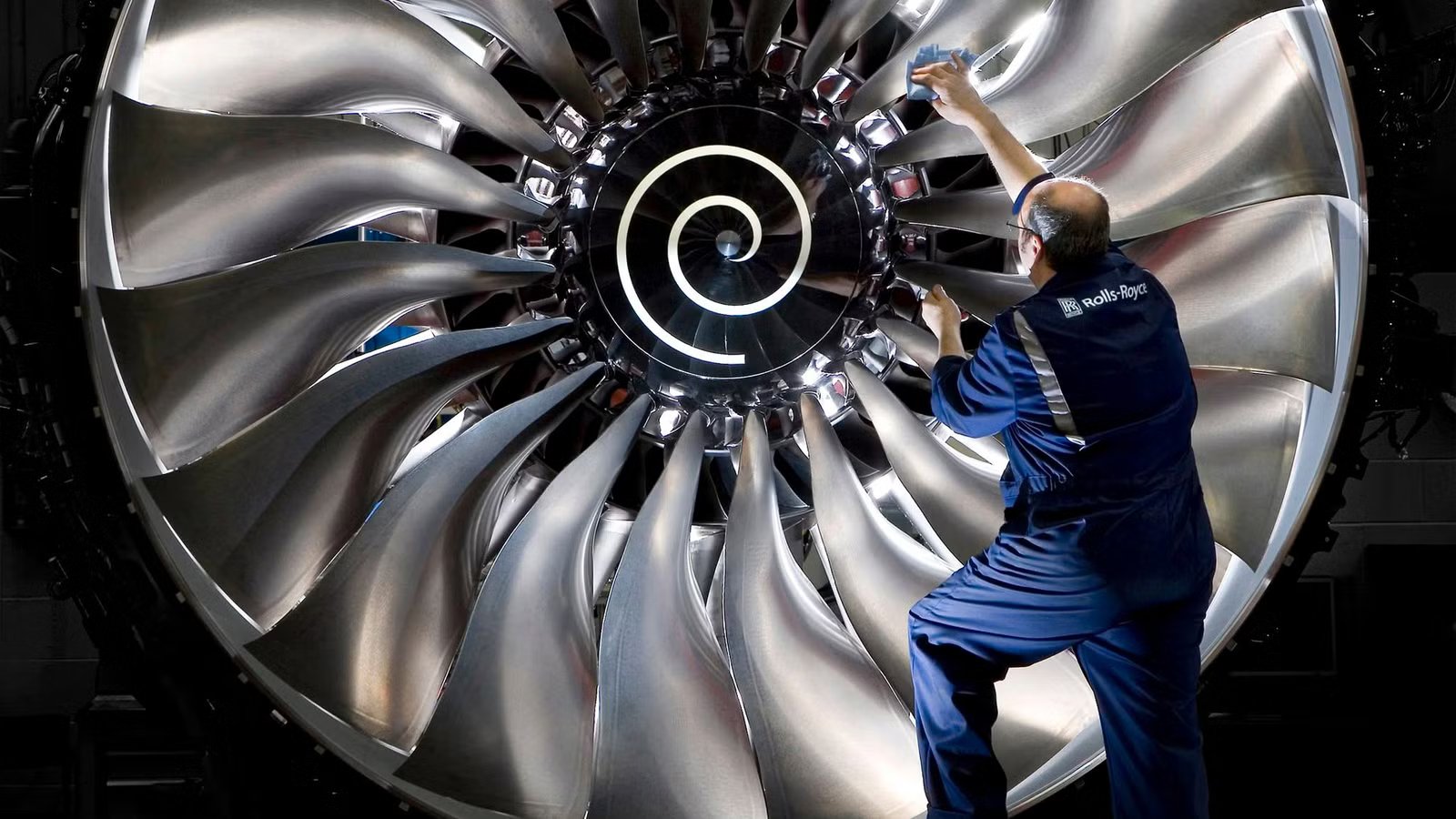
In the late 2010s, the name Rolls-Royce was most closely associated with durability issues related to the Trent 1000 engines on the Boeing 787. These motors faced premature wear, leading to Trent 1000-equipped Dreamliners getting their ETOPS ratings downgraded while planes were grounded worldwide, and the Trent 1000 lost significant market share to the competing General Electric GEnx-1B.
However, at the same time, Rolls-Royce was also rolling out the Trent XWB, the sole powerplant option for the Airbus A350 XWB. Unlike the Trent 1000, the XWB has been a remarkable success story, as these engines have proven reliable, durable, and fuel-efficient.
Rolls-Royce has continued to invest in the Trent XWB, and as the A350 itself gains popularity, the Trent XWB has become Rolls-Royce’s most important product in its commercial lineup, which currently consists of the 1000, the XWB, and the Trent 7000 (Rolls-Royce also produces engines for military and private aircraft).
What The Trent XWB Brings To The Table

The Trent XWB is the sixth engine in the Rolls-Royce Trent family. A clean-sheet design, the XWB is the largest and most powerful Rolls-Royce engine ever produced, and it entered service in 2015 on the Airbus A350. It was specifically designed for the A350 and is the only engine option for this aircraft, with Rolls-Royce holding exclusive rights to power the A350.
There are two main variants of the XWB, with the XWB-84 powering the A350-900 while the XWB-97 powers the A350-1000 and the A350F. The Trent XWB retains the coaxial triple-spool architecture featured on all Rolls-Royce Trent models, but it also features an eight-stage intermediate-pressure compressor powered by a two-stage turbine.
Prior Trent models had a single-stage IP turbine. The XWB also has a six-stage high-pressure compressor powered by a single-stage turbine and features a 118-inch (300-centimeter) fan. This engine has a bypass ratio of 9.6:1 and an overall pressure ratio of 50:1. The XWB-84 can be rated for up to 84,000 lbs of thrust, while the XWB-97 has a maximum rating of 97,000 lbs of thrust.
The two engines are largely identical, but the XWB-97 has a slightly larger core. It runs about 6% faster, requiring thicker titanium fan blades and a stronger fan casing. In addition, the engine runs hotter than the XWB-84. As a whole, however, the two engines are very similar, and this level of commonality is a major benefit for airlines operating both A350 variants, as it lowers maintenance costs.
Catch what other flight trackers miss
Emergency squawks, holds, NOTAMs — live signals, no signup.
Open tracker
Catch what other flight trackers miss
Emergency squawks, holds, NOTAMs — live signals, no signup.
Open tracker
The Trent XWB’s Smooth Introduction

Every new engine model experiences teething issues upon introduction, but the Trent XWB’s entry into service was surprisingly trouble-free. According to Rolls-Royce, it was the smoothest entry into service of any widebody engine that the manufacturer had ever developed. In 2020, premature cracking was discovered in the IPC blades of early Trent XWB-84s during overhauls, but this was discovered during planned maintenance visits, and it only affected a small number of engines.
Inspections were required, but planes weren’t grounded. In 2024, a Trent XWB-97 on a Cathay Pacific A350-1000 caught fire after a fuel nozzle component failed, and Cathay Pacific subsequently grounded its A350 fleet for inspections. However, the fire was later attributed to a maintenance cleaning procedure, and not the engine’s design.
Cathay Pacific soon returned its A350s to service, and the Trent XWB has not experienced any serious in-service issues since then. The only other problem with the engine is that the Trent XWB-97 variant has reportedly been experiencing degraded durability in harsh climates.
The reduced on-wing time has reportedly led Emirates to hold off on ordering the A350-1000, in large part because it frequently uses its widebodies on regional flights in addition to long-haul services. However, the impact on the overall in-service fleet has been small, and Rolls-Royce is working on upgrades to the XWB-97 to boost on-wing time. Meanwhile, the XWB-84 has not experienced the same durability challenges.
The Importance Of The Trent XWB To Rolls-Royce

The Trent 1000 was meant to be a high-volume product for Rolls-Royce, but the engine’s issues were hugely expensive for the manufacturer, and the company has lost market share to General Electric on the 787. Rolls-Royce also sells the Trent 7000, essentially a bleed-air version of the Trent 1000 equipped on the Airbus A330neo, but the A330neo has been a slow seller.
As such, the Trent XWB has become Rolls-Royce’s most important commercial engine and its most profitable. The XWB’s reliability, durability, and low fuel burn have restored confidence in Rolls-Royce, while the engine also generates substantial revenue through aftermarket services.
What’s more, because the Trent XWB is the exclusive engine on the A350, demand for the plane increases Rolls-Royce’s profits, and the A350 has been a smash hit in recent years. It received 281 net orders in 2023, 138 in 2024, and 185 in 2025. The plane is as popular as ever, while airlines repeatedly praise the Trent XWB.
Since taking charge of the company in 2023, current Rolls-Royce CEO Tufan Erginbilgic has placed a strong emphasis on ensuring that each sale is profitable for the company. Some airlines have criticized the manufacturer for high pricing on the Trent XWB, but Rolls-Royce and Airbus already have a strong backlog that will take years to clear.
Neither party is interested in chasing market share over profits. As such, under Erginbilgic’s leadership, stock prices are the highest that they’ve been in three decades while the company is posting record profits.
Further Improvements To The Trent XWB

Rolls-Royce is currently working on upgrades to boost the Trent XWB-97’s durability and double its on-wing time in hot and sandy climates. The temperature margin will be boosted, while the turbine case cooling will be improved. A new calcium-magnesium-alumino-silicate-resistant coating has been developed.
The impact of the coating has been tested on hot materials of up to 1,400 degrees Celsius (2,552 degrees Fahrenheit), while Rolls-Royce has also blasted dense amounts of sand into an active engine. However, arguably the more impactful project is the new Trent XWB-84 Enhanced Performance, which entered service in 2024.
It features improvements to the fan blades, compressor, turbine aerodynamics, and turbine blade cooling, all of which were supposed to give the engine a 1% reduction in Specific Fuel Consumption while also being two decibels quieter. However, in-service data shows that the Trent XWB-84 EP has actually delivered a 1.8% reduction in Specific Fuel Consumption.
The improvements to the XWB-97 will make the A350-1000 more competitive with the Boeing 777-9, especially for customers operating in harsh climates like the Middle East. Meanwhile, the A350-900 already burns only slightly more fuel than the Boeing 787 while being far more capable, and the XWB-84 EP will help bridge the gap considerably. Neither Rolls-Royce nor Airbus is prioritizing market share, but the A350-900 should become even more popular than it already is.
What’s Next For Rolls-Royce?

The Trent XWB isn’t just boosting Rolls-Royce’s profits, but it’s also funding R&D for the UltraFan. The UltraFan is an in-development next-generation engine that will feature a 15:1 bypass ratio as well as a gearbox, a lean-burn combustion system, and lightweight carbon-titanium fan blades. It will be capable of operating on 100% SAF and should deliver a 10% reduction in fuel burn compared to the Trent XWB.
Although it is still just a technology demonstrator, Rolls-Royce intends to develop the UltraFan into a production-ready engine for entry into service in the 2030s. Rolls-Royce has already successfully run the UltraFan 80 demonstrator, which produced 85,000 lbs of thrust and has a fan diameter of 140 inches (355.6 centimeters), larger than any other turbofan engine in history.
Current Generation Engines | Applications |
|---|---|
CFM LEAP | Airbus A320neo (LEAP-1A) Boeing 737 MAX (LEAP-1B) Comac C919 (LEAP-1C) |
General Electric GEnx | Boeing 787 (GEnx-1B) Boeing 747-8 (GEnx-2B) |
General Electric GE9X | Boeing 777X |
Rolls-Royce Trent 1000/7000 | Airbus A330neo (Trent 7000) Boeing 787 (Trent 1000) |
Rolls-Royce Trent XWB | Airbus A350 |
Pratt & Whitney PW1000G | Airbus A320neo (PW1100G) Airbus A220 (PW1500G) Embraer E2 (PW1900G) |
Next up will be the UltraFan 30 demonstrator, which will run in 2028 and will have a fan diameter of 90 inches (228.6 centimeters). It’s aimed specifically at the narrowbody market, while the UltraFan 80 is designed for widebodies. The UltraFan is intended to be scalable, capable of producing anywhere from 25,000 to 110,000 lbs of thrust. The UltraFan is generally considered the frontrunner for a potential re-engined Airbus A350neo, which would enter service in the 2030s.
However, the UltraFan 30 demonstrator is arguably more important for Rolls-Royce, as the company exited the narrowbody market in 2012 when it sold its stake in IAE to Pratt & Whitney. Airbus and Boeing are both developing new narrowbodies to enter service in the 2030s, and Rolls-Royce will certainly work hard to ensure the UltraFan ends up on one of them, given the high volumes associated with narrowbody projects.