dailynewsnblog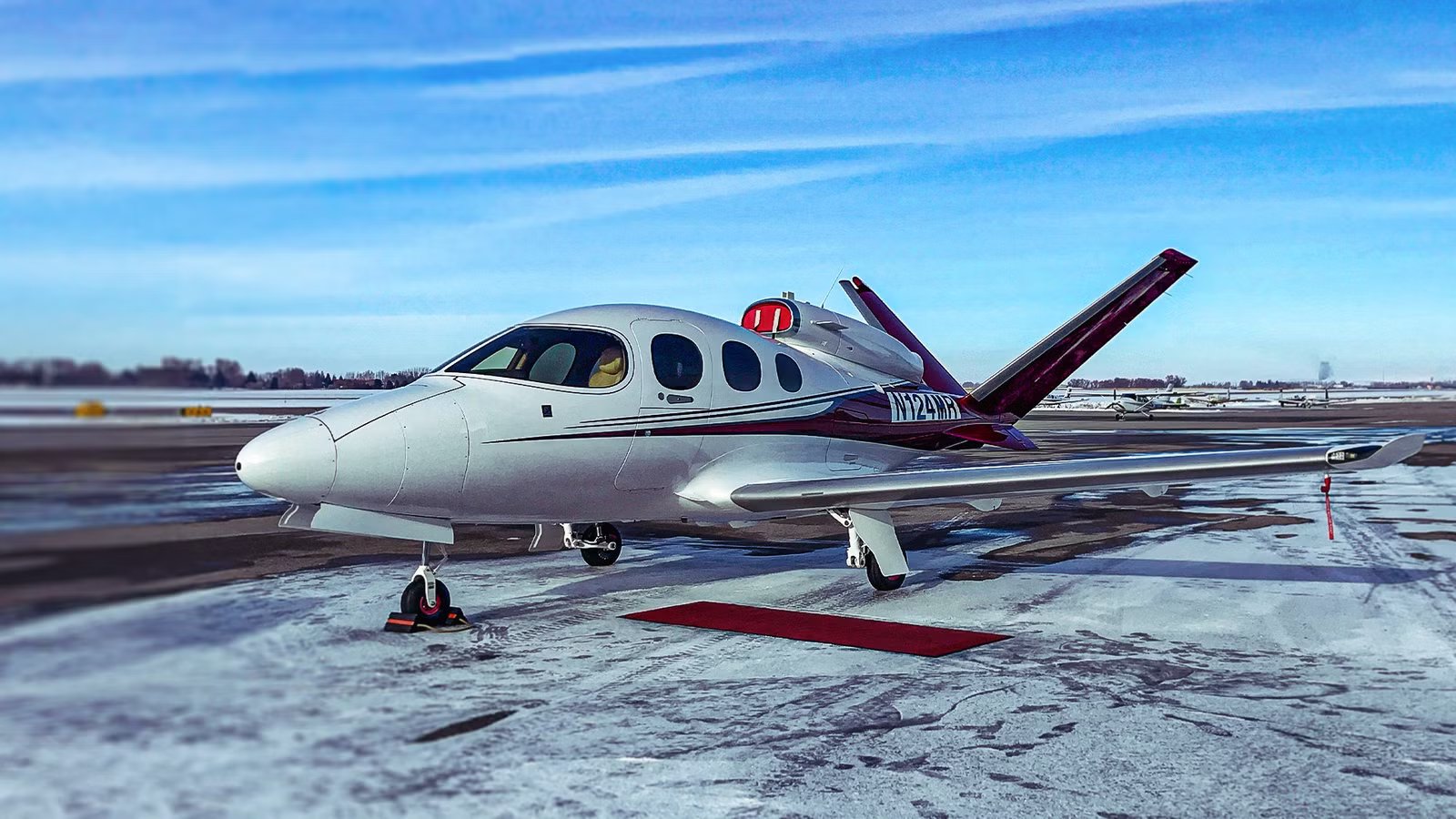
Most people associate the term ‘ private jet‘ with the largest, most expensive long-range jets produced by Gulfstream and Bombardier, but most business jets are significantly smaller with less range. These planes are less usable and may appear to provide fewer benefits, but they’re also much cheaper to purchase. Meanwhile, at the bottom of the market lies the tiny Cirrus SF50 Vision Jet, a single-engine, single-pilot very-light-jet that’s more similar in design and capabilities to turboprops than other VLJs.
One of the challenges associated with buying a private jet is that they’re very expensive to maintain and own, making the total cost of ownership much higher than the initial purchase price, especially when factoring in depreciation. While there’s undeniable novelty and prestige in owning a plane, the total cost of ownership makes it a tough pill to swallow, especially compared to chartering one. However, the Cirrus SF50 Vision Jet is positioned specifically as an aircraft that’s meant to be owned rather than chartered.
The Actual Cost To Buy A Vision Jet

The Cirrus SF50 is the cheapest turbofan-driven business jet that can be bought new, with prices starting at roughly $3 million before options. In the VLJ segment, it competes against the HondaJet, which starts at over $5 million, as well as the $4.5 million+ Embraer Phenom 100, while the Cessna Citation M2 starts at roughly $5.85 million. The SF50 Vision Jet is therefore notably cheaper than its competitors, and it’s also much cheaper to operate than the competition.
One defining characteristic of the VLJ segment is single-pilot certification, and so all VLJs on sale today can be flown by the owner. This is not unique to the SF50. However, the Vision Jet also has just one Williams FJ33 turbofan, whereas every other turbofan-powered business jet has two engines, and this significantly cuts down on operating costs (through dramatically lower fuel burn) as well as on maintenance costs, given how expensive turbofans are to maintain and replace.
The SF50 is the least capable, lowest-flying, and slowest turbofan-powered business jet on the market, but it’s also reportedly very engaging to fly at low speeds and altitudes while being much less cost-intensive than even other VLJs. It mainly appeals to customers upgrading out of SR22Ts who desire more of what that aircraft offers, and essentially straddles the line between larger VLJs and turboprops. It is the best-selling business jet currently in production and is frequently recommended as a top choice for first-time buyers who fly their own plane.
The Benefits Of Chartering A Jet

A new VLJ costs millions, while a used example will still cost at least $2 million for most models. This is an enormous amount of money to put up front or finance an aircraft, while depreciation costs can also be massive. In addition, owning an aircraft means that you are liable for its storage, insurance, and maintenance, both of which are financially draining, especially for a jet. Chartering means you’re only liable for the aircraft’s costs when you’re using it, rather than paying for the plane whether it’s flying or sitting idle.
Charter rates for a VLJ typically range between $1,700 and $3,000 per hour, depending on the aircraft model and the booking platform. Additional fees are usually included, such as taxes and possible positioning costs if the aircraft isn’t at the origin airport. Many charter providers also have a minimum hour charge, even if the flight may be shorter than what the booker requires. As such, a typical short-haul flight in the US will usually cost between $5,000 and $10,000 on a small business jet.
Regularly chartering jets can cost hundreds of thousands per year, but this is still usually cheaper than owning and maintaining your own plane. This also allows for more flexibility, as most smaller business jets are range-limited, whereas you could charter a long-range jet or fly commercial on occasion without paying for your own jet. What’s more, relying on aircraft charters is generally less stressful, since aircraft ownership means that you’re responsible for the condition of the plane, costs, storage, and insurance.
The Cost Of Running A Cirrus Vision Jet

Where the Cirrus Vision Jet differentiates itself from other private jets is its costs. The aircraft itself is cheaper to purchase, with used examples sometimes dropping below $2 million, but it’s also relatively affordable to run. Taking into account factors like fuel burn, annual insurance costs, depreciation, and financing, an SF50 will usually cost between $1,000 and $2,000 per hour to operate, which is much lower than charter prices when taking into account additional fees. In some cases, the SF50 may cost over $1,000 per hour less to operate than chartering.
Some VLJs also come with competitive hourly costs, but the SF50 has uniquely low operating costs in large part because it’s a single-engine aircraft. Turbofan engines are notoriously complicated to work on, which increases maintenance costs, and they also burn significantly more fuel than a turboprop or piston-powered aircraft. This is usually fine because turbofan-powered planes cruise higher and faster, but this still makes them expensive to operate. But by only flying with one engine, the SF50’s running costs are more competitive against turboprops.
The SF50 was specifically designed to be familiar to existing Cirrus owners, which means that pilots who own an SR20 or SR22 may benefit from lower insurance costs. At the same time, the SF50 has worse performance than top-end turboprop models and consumes more fuel. This may seem odd, but it makes more sense when you consider that the SF50, despite technically being a private jet, isn’t designed to serve the same role as a traditional business jet.
The Use Case For The SF50 Vision Jet

A traditional business jet, whether it’s a Gulfstream G650ER or a HondaJet, is primarily intended to serve as convenient, prestigious transportation. VLJs and some light jets are certified for single-pilot operations, but for the most part, they’re designed for the owner to sit in the back and be transported from Point A to Point B. Planes like the Cessna 182 or Cirrus SR22, however, are used in one of two ways: either as weekend toys, or for the owner to fly it on routes that are too long for driving to be comfortable but short enough that flying commercial is awkward.
The Cirrus SF50, despite being a business jet, is more similar to the second category of planes. It’s the smallest private jet on sale, and it can fit into a standard T-hangar, but it lacks the speed and range of even top-model turboprops, let alone other business jets. Because it’s a jet, it’s more expensive to buy and maintain than a piston-powered single-engine plane, but its costs are lower than other jets. It’s also cheaper to acquire than some turboprops, which gives it appeal despite its performance disadvantages.
Specification | Cirrus SF50 G3 | Embraer Phenom 100EX | HondaJet Elite II |
|---|---|---|---|
Starting price | $3.68 million | $4.995 million | $6.95 million |
Max. capacity | Six passengers | Seven passengers | Seven passengers |
Range | 1,200 NM (2,222 km) | 1,178 NM (2,182 km) | 1,547 NM (2,865 km) |
Top speed | 311 knots | 406 knots | 422 knots |
Service ceiling | 31,000 feet | 41,000 feet | 43,000 feet |
Takeoff distance | 3,192 feet (973 meters) | 3,190 feet (972 meters) | 3,699 feet (1,128 meters) |
As a whole, the SF50 can be thought of less as a traditional business jet and more as an upgraded personal aircraft, similar to a Cirrus SR22T but faster, with a more comfortable pressurized cabin and similar range. It’s the next level for existing Cirrus owners, proven by the easy transition between the two. With this in mind, the SF50 also doesn’t compete with any other VLJs, but more closely with turboprops. However, even in this space, Cirrus has been able to carve out its own niche.
The Competition For The SF50

In terms of price and performance, the SF50 Vision Jet is closer to the top-end turboprop models than other VLJs. The TBM960 is the latest version of the TMB line of high-performance turboprops, offering more range than the Vision Jet, a faster cruising speed, the same cruising altitude, a pressurized cabin, and superior performance. In addition, it consumes less fuel, making it cheaper to operate than the Vision Jet, but it starts at over $5 million. The Pilatus PC-12 also exists in this space, but it’s a much larger, more expensive plane that’s primarily bought by commercial operators.
Both the Vision Jet and the TBM are mainly bought by wealthy individuals looking to fly the aircraft themselves, but the TBM is better suited for those needing to operate longer missions with more payload. The Vision Jet is better suited for SR22T owners looking to upgrade their ride while operating largely the same mission, and it also benefits from commonality with the piston-powered Cirrus models along with the Cirrus brand name. It lacks the performance of the TBM, but it’s much cheaper to buy, giving it a unique market position that’s proven quite lucrative.
Specification | Cirrus SR22T G7+ | Cirrus SF50 G3 | Daher TBM 960 |
|---|---|---|---|
Starting price | $1.15 million | $3.68 million | $4.6 million |
Max. capacity | Four passengers | Six passengers | Six passengers |
Range | 1,046 NM (1,937 km) | 1,200 NM (2,222 km) | 1,730 NM (3,204 km) |
Top speed | 213 knots | 311 knots | 330 knots |
Service ceiling | 25,000 feet (not pressurized | 31,000 feet | 31,000 feet |
Takeoff distance (over 50-ft obstacle) | 2,080 feet (634 meters) | 3,192 feet (973 meters) | 2,535 feet (773 meters) |
The Cirrus Vision Jet sits in this area where it’s difficult to argue that its modest performance (for a jet) is a drawback because of where it’s priced. At the same time, it offers enough of a performance, size, and speed advantage over piston-powered planes that the price premium is worth it. In addition, the Cirrus brand name is as strong as ever, and the company has been the best-selling GA name for over 20 years. Regardless of how it compares against turboprops, the Vision Jet will sell because it’s the only choice for existing Cirrus owners looking to upgrade.