dailynewsnblog
Although pilots in both the US Air Force and Navy receive annual salaries and aviation incentive pay on the same scale, USAF pilots tend to have higher overall compensation because retention bonuses are typically greater. This difference, of up to $10,000 per year, is the largest distinguishing factor between pilots of any kind, regardless of platform or specialties, of the two services.
To put it all on the table, pilots in both the USAF and USN receive base salary, housing allowance, flight pay, and any other duty-related incentives on the same schedule. The retention bonus difference comes from the fact that the Navy offers $40,000 over a period of 3 years, for a maximum of $120,000 to retain pilots. The Air Force, on the other hand, offers $50,000 per year and a maximum total of $600,000 over the full period of retention incentive pay.
Naval Aviators: Sea Pay And Aviation Bonuses

Navy pilots assigned to shipboard commands or deploying on aircraft carriers receive monthly tax-free Sea Pay, which scales up based on rank and cumulative time spent at sea. For mid-career officers taking on commanding roles, the Navy offers a $10,000 per year Sea Duty Incentive on top of their command bonuses if they are billeted to an operational Carrier Strike Group, aircraft carrier, or Amphibious Assault Ship.
On top of the maximum $1,000 monthly flight pay, these roles qualify you for Career Sea Pay. That can be up to $750 per month, depending on rank and sea time, while Sea Pay Premium is $350 per month for consecutive sea duty. Staying in the cockpit within high-readiness, carrier-capable communities guarantees the most stable path to maximum retention bonuses. The Navy’s Aviation Bonus program heavily favors tactical jet communities. Getting selected for operational squadron command unlocks the Aviation Command Retention Bonus, compounded by $12,000 annual flight pay.
For mid-to-late career officers, transitioning from regular Active Component to the Training and Administration of the Reserve offers an identical active-duty pay scale as well as retention options. The Navy actively works to keep its TAR pilot ranks staffed, and they qualify for the same retention bonuses as active duty pilots. Some of the most in-demand billets include Fleet Logistics Support Squadron Command or Training Squadron Command as a TAR officer.
How The USAF’s Fighter And Bomber Mafia Rake In The Top Pay

Staying in the cockpit with high-demand tactical communities, like the fighter and bomber squadrons, guarantees access to the absolute highest tier of the Air Force Aviation Bonus. This is because USAF structures retention bonuses by tier based on critical staffing shortages. Fighter and bomber pilots qualify for the maximum retention bonus. Signing a long-term, 12-year contract secures the $600,000 total payout ceiling.
In addition to this incentive, taking continuous operational command or staff deployments to active combat zones or high-tension regions stacks multiple tax-free operational allowances. While deployed to designated combat zones, Air Force pilots qualify for the Combat Zone Tax Exclusion, making their entire base pay and bonuses tax-free up to the maximum legal limit. Additionally, these assignments trigger Imminent Danger Pay, Hostile Fire Pay, and Hardship Duty Pay.
The target billets for top tactical aviation pay are Commanding Officer or Director of Operations of a squadron of flight jets like the F-22 Raptor, F-35A Lightning II, F-15E Strike Eagle, or bombers such as B-2 Spirit or B-52 Stratofortress squadrons. The career positions that receive the most hazard incentives include Expeditionary Fighter Squadron Commander, Air Expeditionary Wing Operations Officer, or Al Udeid Air Base Combined Air Operations Center Liaison.
Here’s Why Landing An F-35 On An Aircraft Carrier Is So Difficult
What it takes to be in the tailhook club.
The Zoomies And Squids Go Head-To-Head

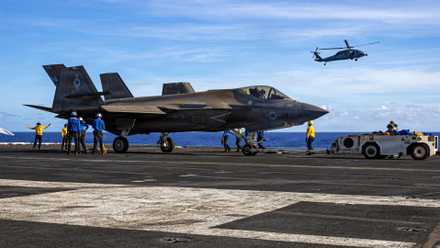
The daily reality of being a US Navy pilot versus an Air Force pilot represents one of the sharpest cultural and operational divides in the entire military. The environments they operate in, the risks they take, and the organizational mindsets they absorb are completely distinct. This is especially true for the pilots of the ‘tailhook’ community in the USN, the aviators qualified to land on an aircraft carrier. Putting a multi-million-dollar aircraft down on a pitching 1,000-foot (305 meters) piece of steel in the middle of the sea is an intense, adrenaline-fueled, and physically violent experience.
Navy pilots are trained to adapt rapidly to chaotic, fluid environments. Flying over the open ocean means zero ground references, unpredictable maritime weather, and no alternate emergency airfields. If your aircraft has a catastrophic failure, your only options are a pitching deck or an ejection seat into cold water. If you drop into the land-based maritime patrol community, you trade the carrier deck for 10-hour grinds at 300 feet over the open ocean, staring at screens to hunt foreign submarines.
Air Force flying emphasizes aerodynamic efficiency, ultra-precise planning, and maximum performance execution. If you fly fighters, the world is a hyper-sterile, highly scripted race for air dominance, taking off and landing on immaculate, two-mile-long (3.2 km) concrete runways. In the Bomber community, your reality shifts to grueling, ultra-long-endurance 20-hour strategic marathons, deeply shackled to rigid nuclear safety protocols.
In the USAF’s air mobility, you live the ‘strategic nomad’ lifestyle. You might start your week taking off from a pristine, multi-mile runway in Europe, fly a low-level tactical route at 300 feet (91 meters) to drop paratroopers into a rugged valley, and slam a hundred-ton airframe onto a short dirt strip in Africa.
Catch what other flight trackers miss
Emergency squawks, holds, NOTAMs — live signals, no signup.
Open tracker
Catch what other flight trackers miss
Emergency squawks, holds, NOTAMs — live signals, no signup.
Open tracker
By The Numbers: Breaking Down The Pay Scale

In the military, ranks, schedules, and pay follow a rigid, predictable timeline known as promotion zones and longevity steps. Military officers, including pilots, are promoted on a nearly identical schedule for the first several years. The first promotion in the USAF comes after 24 months of service from 2nd Lieutenant to 1st Lieutenant. The pay grades use a designator O-1 for 2nd lieutenant and O-2 for 1st lieutenant, and so on.
Promotion to Captain (O-3) comes after 24 months from 2nd Lieutenant, which is a total of four years from the commissioning date, or day one of a military officer’s official career. Until Major (O-4), all promotions are automatic; this is the first competitive rank selection. It usually takes between nine and eleven years to be chosen for promotion to Major.
Below are estimated monthly base pay ranges for typical ranks that will be assigned to active flying duties in the USAF or USN:
Pay Grade | US Marine Corps | US Navy | US Air Force | Average Annual Base Pay |
|---|---|---|---|---|
O-1 | Second Lieutenant | Ensign | Second Lieutenant | $56,220 |
O-2 | First Lieutenant | Lieutenant Junior Grade | First Lieutenant | $68,400 |
O-3 | Captain | Lieutenant | Captain | $87,000 |
O-4 | Major | Lieutenant Commander | Major | $101,400 |
O-5 | Lieutenant Colonel | Commander | Lieutenant Colonel | $121,200 |
O-6 | Colonel | Captain | Colonel | $144,600 |
Each rank promotion comes with an increase in base pay as well as a proportional boost in incentive and special pay, as well as other benefits. Even if a pilot stays at the same rank, they get a raise every 2 years of total service. The supplemental income for housing, groceries, and even child care is all proportionally paid by rank and location as well. Another major incentive is the free educational benefits. Unlike civilian flight schools, where you pay to learn, the military pays its pilots while they train.
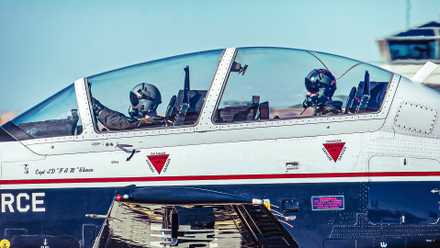
How Military Pilot Salaries Compare Across The US, UK, Japan & China In 2026
How the pay checks stack up in the world’s top air forces.
Catch 22: Uncle Sam’s Bill For Flight Training

Most services now require a 10-year commitment that only starts after you finish flight school. Since flight school can take 18 to 24 months, you are essentially locked in for 12 years. Military promotions also come with an increase in leadership administrative roles, which means less time flying. By the 10 to 12-year mark, pilots may spend more time at a desk or in meetings than in a cockpit.
While military flight training is world-class and free, the career path involves a rigid ‘Up or Out’ structure and significant lifestyle sacrifices that differ sharply from the civilian airline model. A pilot must be promoted to the next competitive rank, beginning with Major, within a specific window. If they are ‘passed over’ for promotion twice, pilots are typically required to separate from active duty.
At an airline, there is no ‘out.’ You can stay a first officer for your entire career if you choose. Promotion to Captain is based purely on your seniority number and your desire to upgrade, not on a competitive board. Unlike a civilian job, you cannot quit or switch employers if you are unhappy with your location or mission. The service owns your time until the Active Duty Service Obligation expires.
When an airline pilot lands the plane and puts on the parking brake, their job is done. There is no paperwork, no extra office duties, and no mandatory volunteer work. Military pilots must relocate every two to four years and face six to twelve-month deployments away from family. Military pilots are also officers first, pilots second, and assigned collateral duties like managing the squadron’s schedules, safety programs, or even the snack bar.
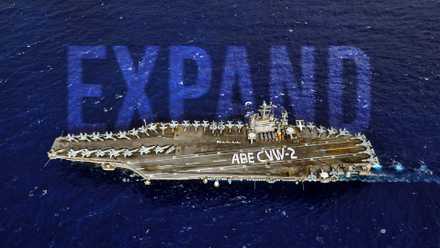
Why The US Navy Is Quietly Expanding Its Aircraft Carrier Fleet
America is getting more of the mighty flat tops.
Make A Wishlist: The Needs Of The Navy (Or Air Force)

In the military, another major factor in career satisfaction is the fact that the actual work that you do is sometimes decided by bureaucracy. For every graduating class of student pilots, the Air Force Personnel Center sends a ‘drop list’ of available airframes, or quotas, to the training base. This list is unpredictable. One class might have several jet slots, while the next has none. The top student usually gets their choice, but not always.
Many will say that the armed forces aviation pipeline lacks career agency at the outset, forcing pilots into rigid 10-to-12-year service commitments for aircraft or jobs they did not choose. Even when an individual demonstrates the merit of receiving the role that they have been working towards, assignments can be seemingly random. High-performing graduates are sometimes assigned to remain at the training base as First Assignment Instructor Pilots. This delays their entry into operational combat units, which some view as a death sentence for their career.
Many pilots join for the passion of flying. Being forced into a non-flying or ‘office-heavy’ track early on reinforces the perception that the military prioritizes bureaucracy over aviation. Recent policy changes have also allowed the Air Force to place graduates into non-standard jobs outside of their chosen fighter or bomber units to fill immediate gaps, which some fear may further degrade morale among new aviators.