dailynewsnblog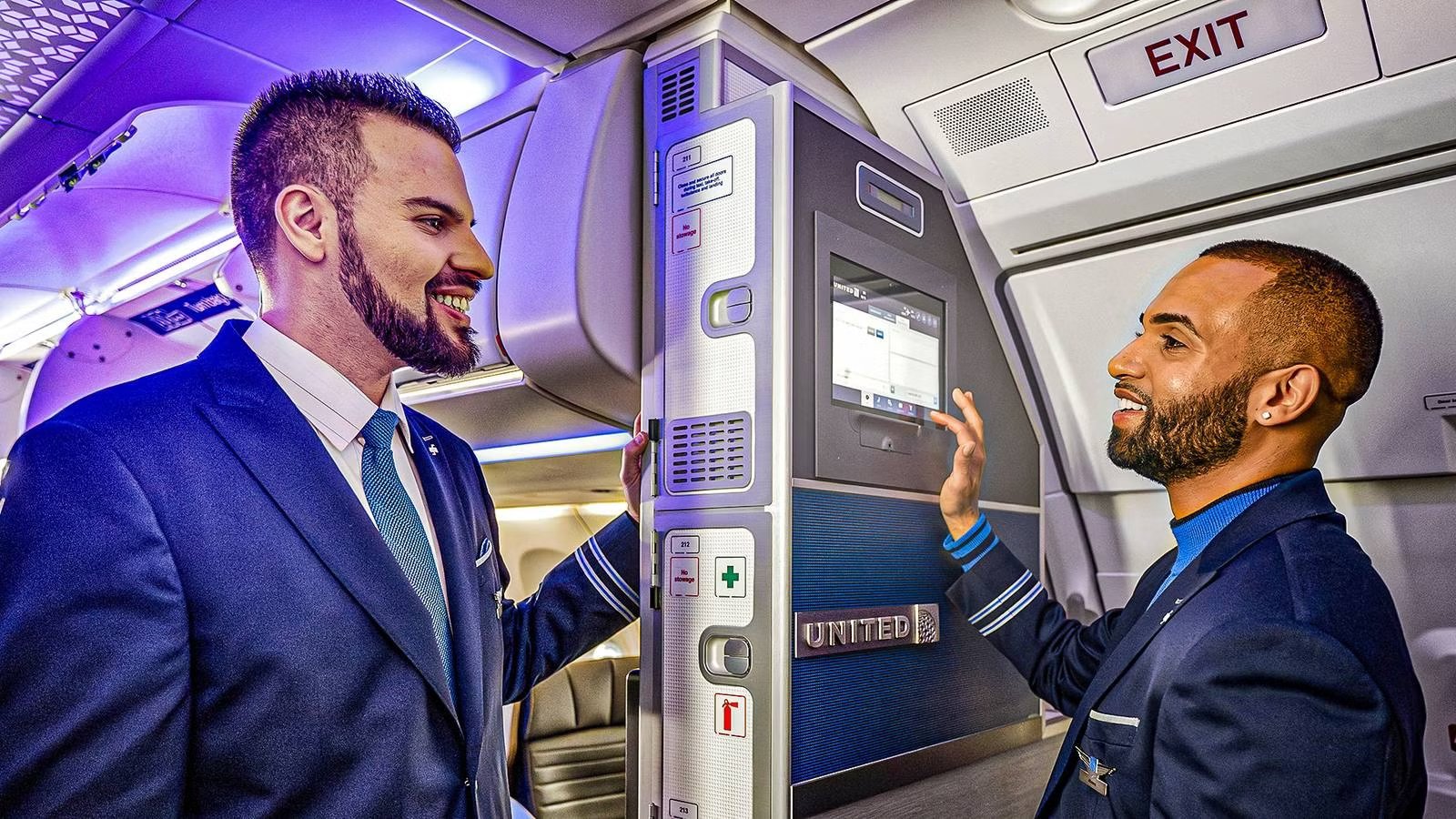
Standing in the aisle while two hundred passengers wrestle overstuffed roller bags into overhead bins used to be completely unpaid labor for cabin crew. That dynamic changed in May 2026 when  United Airlines flight attendants ratified a landmark agreement with the Association of Flight Attendants-CWA (AFA-CWA), securing $741 million in retroactive compensation, an average 31% base wage increase, and dedicated ground pay that finally compensates cabin crew for time spent at the gate.
Under the August 2026 pay scale, base hourly rates start at $38.21 for first-year crew and climb to $87.47 for attendants with 13 or more years of service. Calculating real-world annual income, however, is much less simple, taking into account credited flight hours, scheduled boarding windows, per diem allowances, and specialty flight premiums. Altogether, these factors make working as a flight attendant with United a unique earning opportunity.
A Much-Needed Victory For Crew

What made the May 2026 agreement so monumental was not just the size of the financial package, but the resolution of an exhausting multi-year stalemate between United management and union negotiators. Working under expired terms while living costs soared had pushed cabin crew to the brink, leaving union leadership with a firm mandate to deliver structural change rather than cosmetic upgrades.
The contract delivered an immediate $741 million retroactive compensation pool, distributing lump-sum payouts to attendants based on hours logged during the long negotiation gap. For senior crew members who maintained heavy flight schedules during those years, the checks provided a substantial financial cushion.
Equally important was the 31% average jump in base wages applied right out of the gate. Rather than trickling out incremental raises over a long timeline, United injected immediate capital into every tier of the pay matrix, instantly resetting benchmark compensation across the legacy airline sector.
Year-On-Year Wage Increases

Flight attendant compensation at United operates on a strict step-rate scale, where completed years of service determine the baseline hourly rate. Under the updated August 2026 pay system, new hires start at $38.21 per hour, while senior crew members with 13 or more years on the line reach the top tier of $87.47 per hour. The baseline rate applies only to credited flight hours, not total time on duty, so monthly flight volume determines an attendant’s core income.
Line holders generally build schedules between 70 and 85 flight hours per month, while reserve attendants receive a mandatory monthly guarantee of 78 flight hours. For a first-year attendant working reserve, that 78-hour floor guarantees $2,980 in base monthly earnings prior to adding ground pay or per diem. Pay increases take effect on annual service anniversaries, with the sharpest acceleration occurring between years four and seven, when hourly rates jump by over $17 across a three-year span.
Reaching that top step of $87.47 per hour comes after 12 completed years on the job, though annual contract adjustments will continue boosting these rates every summer through 2030. Base hourly rates provide a predictable financial foundation, but total earnings go far beyond the hourly rate. Adding dedicated boarding pay and operational premiums significantly changes how those base figures translate into a final paycheck.
Understanding The New Boarding Pay Structure

Flight attendants were only compensated from block-to-block before the changes occurred, starting when the aircraft doors closed and ending when they opened at the destination gate. Under the contract ratified in 2026, United flight attendants receive boarding pay calculated at 50% of their base hourly rate multiplied by the scheduled boarding duration for the operating aircraft type. This single adjustment increases average annual earnings by roughly 7.4% across the workforce while ensuring crew members are compensated for one of the most demanding phases of their duty day.
The payment amount per flight sector depends on the standard customer boarding time assigned to each fleet type. Standard narrowbody jets like the Airbus A319 and Boeing 737-700 carry a 35-minute scheduled window, equating to 29.2% of the hourly base rate. Larger single-aisle aircraft such as the Boeing 737 MAX 9 receive a 40-minute allotment, or 33.3% of the hourly pay. Widebody aircraft and long-range single-aisle jets, including the Boeing 777, have a 50-minute scheduled boarding window, providing 41.7% of the hourly rate per segment. Payments are fixed to the published schedule rather than actual gate time, so crew members receive the full flat rate even if boarding finishes early, while re-boarding after deplaning or flights that board, but ultimately cancel are fully protected.
Boarding pay scales with base hourly wage, meaning senior flight attendants on widebody international routes earn the highest total per sector. A first-year flight attendant at Step 1 earns $12.74 on a mid-sized narrowbody sector and $15.93 on a widebody flight. By contrast, a senior flight attendant at Step 13 earns $29.16 for a mid-sized narrowbody boarding and $36.48 for a widebody boarding. Furthermore, boarding pay earnings count directly toward the 480-hour annual paid activity threshold required to maintain company-subsidized medical and dental coverage, providing both financial and benefit security.
Overrides And Per Diem

Base hourly rates and boarding pay form the foundation of a United flight attendant’s paycheck, but operational overrides and allowances quietly drive up gross earnings. Taking on specific responsibilities during a trip adds hourly stackable premiums. A flight attendant working as the Purser, or the lead crew member responsible for cabin management and flight deck coordination, earns an additional override ranging from $3.00 to $7.50 per hour depending on the aircraft type and route. Other position-specific premiums include Galley pay for attendants managing food and beverage service setups, as well as Language Qualified (LOD) pay for multilingual crew members working international routes.
As well as flight position overrides, time spent away from an attendant’s home base accrues hourly per diem. Calculated continuously from initial check-in until final debrief back at home base, per diem reimburses meals and incidental expenses. Under the 2026 contract rates, domestic per diem is $2.97 per hour, while international per diem is $3.54 per hour. On a typical three-day international trip logging 72 total hours away from base, per diem alone adds nearly $250 in tax-free income directly to the trip’s payout.
Stacking these operational incentives across a month makes a standard flight schedule a significantly higher gross payout. An attendant flying 80 block hours might easily log over 200 hours of per diem alongside several purser or international segment overrides. These variable additions explain why two attendants at the exact same seniority step can see vastly different numbers on their monthly pay stubs.
The Annual Total Salaries

Translating hourly rates into an annual salary means evaluating credited hours rather than a standard 2,000-hour office work year. Flight attendants accrue flight credit exclusively while airborne or holding reserve guarantees, so a full-time schedule typically averages 75 to 88 credited hours per month. Factoring in dedicated boarding pay, tax-free per diem, and routine operational premiums elevates actual gross compensation well beyond baseline flight pay.
A first-year attendant working reserve with a 78-hour monthly guarantee earns $35,764 in base flight pay alone. Adding ground boarding pay and per diem pushes realistic Year 1 gross income to between $42,000 and $50,000. By Year 5, when base pay reaches $50.56 per hour, attendants earn between $58,000 and $72,000 annually. Senior crew at Year 10 regularly cross into the $82,000 to $100,000 range, while top-of-scale attendants at 13 or more years build schedules that comfortably reach six figures.
Reaching the upper limits of the pay scale comes down to optimizing schedules and choosing routes. Top-earning attendants earn extra income by picking up open trips on days off, bidding for long-haul international widebody pairings, or holding purser overrides on high-yield sectors. Of course, adding these extra hours means more time away from home, but the 2026 contract enhancements ensure that even moderate monthly schedules deliver a reliable, livable baseline across every stage of a flight attendant’s career.
Getting The Pay They Deserve

With this contract in place, United Airlines moves back into direct parity with, and in several key areas ahead of, its major legacy competitors.  Delta Air Lines broke long-standing industry precedent in 2022 by becoming the first major US carrier to offer boarding pay, and
  American Airlines confirmed its own substantial wage increases in 2024. United’s 2026 agreement bridges that gap by combining competitive base hourly rates with formal ground pay across every fleet type, which means the rest of the industry now has to treat uncompensated boarding time as an obsolete relic of the past.
Converting those top-tier rates into actual wealth does mean facing some harsh operational realities. High starting hourly wages do not eliminate the grinding uncertainty of reserve duty, where junior attendants spend their first few years on call with minimal schedule control. Station assignments on expensive crew bases like San Francisco, Newark, and Chicago quickly eat into entry-level earnings, and logging enough credited hours to touch six figures demands significant time away from family, crossing time zones, and managing sleep disruption.
Ultimately, the May 2026 contract completely redefines the economic baseline for commercial cabin crew. Now providing $741 million in back pay, raising base wages by an average of 31%, and ensuring every minute spent standing in the aisle during boarding carries a guaranteed paycheck, United flight attendants finally have a compensation model that reflects the full reality of their workday. The job is still physically taxing and logistically demanding, but the financial returns now match the effort required to keep the airline moving.