dailynewsnblog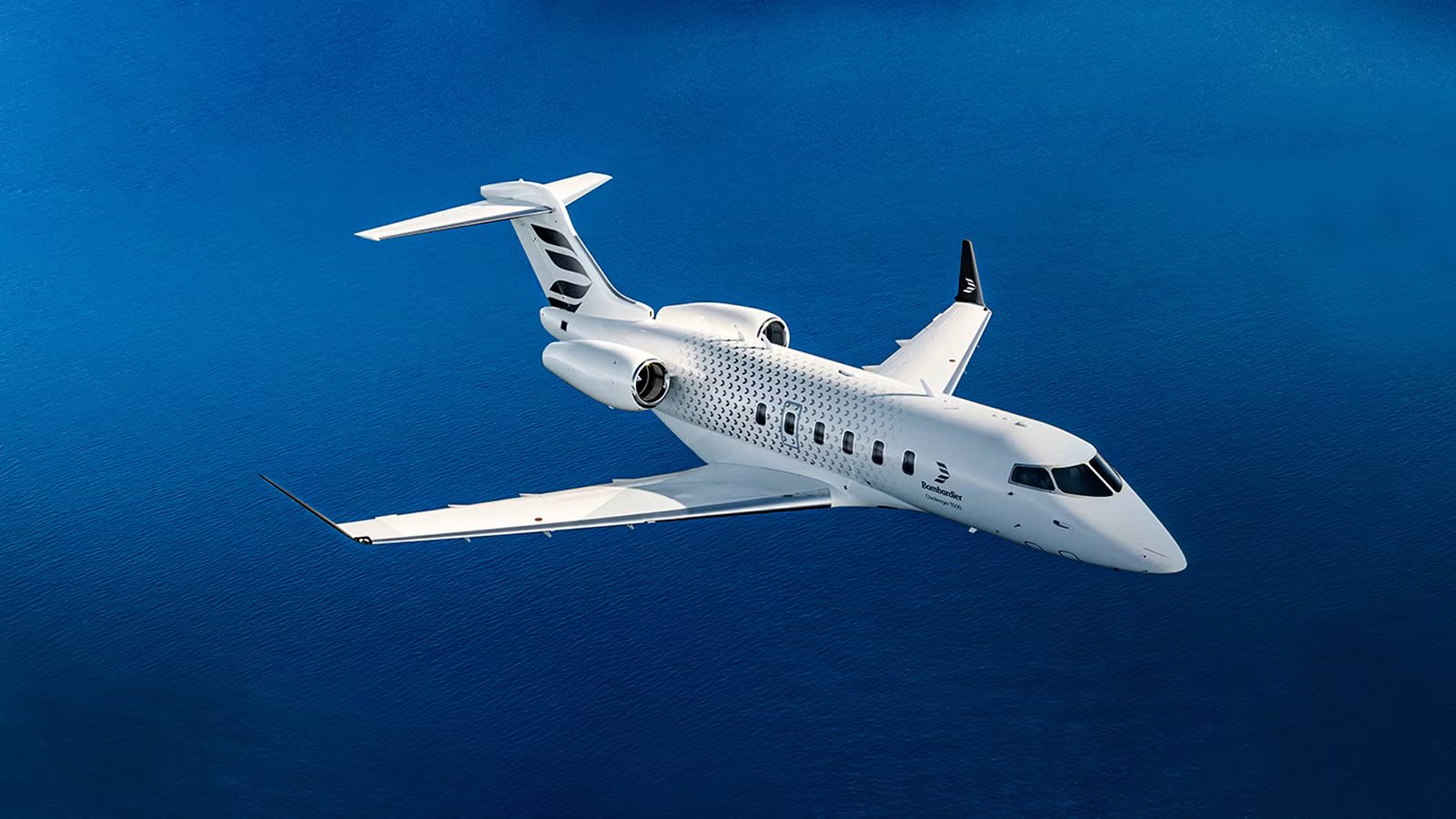
For most travelers, private aviation remains one of the biggest mysteries in air travel. Most airline passengers can easily compare economy, business, and first-class fares online, but private jet charter pricing often appears far less transparent. Ask ten people how much it costs to charter a private jet, and you’ll likely receive ten wildly different answers, ranging from a few thousand dollars to six figures for a single flight.
The truth is that both answers can be correct. In 2026, hourly charter rates span a remarkable range, with smaller turboprops available for roughly $2,000 per hour while the largest ultra-long-range business jets can exceed $20,000 per hour. However, the advertised hourly rate is only one part of the equation. Taxes, fuel surcharges, positioning costs, airport fees, and seasonal demand can all dramatically alter the final invoice. Understanding these variables is essential for determining when private aviation is simply a luxury purchase and when it can actually make financial sense compared with commercial premium cabins.
Private Jet Charter Rates Vary Enormously By Aircraft Type

The biggest factor influencing charter costs is the aircraft itself. Just as airline tickets vary significantly between a regional turboprop and an international first-class suite, private aviation pricing changes dramatically depending on aircraft size, range, speed, and passenger capacity.
At the entry level, turboprops remain the most affordable way to access private aviation. Aircraft such as the Beechcraft King Air 350 are particularly popular for short regional routes, offering space for small groups while keeping operating costs relatively low. According to industry pricing guides from Stratos Jets and Amalfi Jets, charter rates for turboprops generally start at around $2,000 per flight hour and can vary by route and operator.
Light and very-light jets occupy the next tier of the market. These aircraft, such as the HondaJet, typically carry four to eight passengers and offer higher cruise speeds than turboprops while maintaining relatively manageable operating costs. Sources, including BlackJet and Amalfi Jets indicate that light jet charter rates generally range from approximately $2,500 to $4,500 per hour. These aircraft have become popular among business travelers seeking efficient connections between major metropolitan areas without stepping up to larger, significantly more expensive aircraft categories.
For longer journeys, midsize and super-midsize jets dominate the charter market. Aircraft such as the Cessna Citation Latitude and Bombardier Challenger 350 provide stand-up cabins, increased baggage capacity, and greater range. Charter rates typically range from $4,000 to $8,000 per hour, with many operators quoting around $6,500 per hour for popular super-midsize models. At the top end of the market, heavy jets and ultra-long-range aircraft such as the Gulfstream G650ER regularly reach $18,000 to $20,000 per flight hour, reflecting their ability to fly intercontinental routes nonstop while offering the highest levels of onboard comfort.
Why The Advertised Hourly Rate Rarely Matches The Final Invoice

Many first-time charter customers focus exclusively on the quoted hourly rate, only to discover that the final bill differs significantly from their initial expectations. This is because private aviation pricing operates much like airline pricing, where the advertised fare often excludes taxes and other mandatory charges.
One of the most important additions for US domestic charters is the Federal Excise Tax (FET), which currently adds 7.5% to the charter cost, as noted by BlackJet. Depending on the itinerary, operators may also charge segment fees, airport handling costs, crew overnight expenses, de-icing fees during winter operations, and fuel surcharges. These supplementary charges can add thousands of dollars to a trip, particularly on international or multi-day itineraries.
Positioning fees represent another frequently overlooked expense. Unlike airlines that operate scheduled routes, private aircraft may be based hundreds of miles from the departure airport. If an aircraft must fly empty to pick up passengers, the operator often passes on some or all of the repositioning cost to the customer. This explains why two flights of similar duration can generate dramatically different quotes depending on where the aircraft is located before departure.
Catch what other flight trackers miss
Emergency squawks, holds, NOTAMs — live signals, no signup.
Open tracker
Catch what other flight trackers miss
Emergency squawks, holds, NOTAMs — live signals, no signup.
Open tracker
The complexity of charter pricing has increased in recent years as operators navigate higher operating expenses, fluctuating fuel prices, and growing demand for premium travel. Industry analysts note that understanding these supplemental charges is often the difference between accurately budgeting a charter trip and being surprised by the final invoice.

The Cost Of Renting A Private Jet In 2025
Renting a private jet is often considered to be the most luxurious way to travel.
Peak Demand Periods Can Increase Charter Costs By 30%

Private aviation may appear excluded from the pricing dynamics that affect commercial airlines, but the reality is quite different. Charter operators face the same basic economic principle: limited supply and fluctuating demand.
Major holidays remain among the busiest periods of the year for charter operators and air taxi services. Christmas, New Year’s, Thanksgiving, and major summer travel periods routinely generate spikes in demand. High-profile events such as Formula 1 races, the Super Bowl, the World Economic Forum, and major international sporting competitions can produce similar effects. According to JetVice, peak-demand periods frequently trigger surcharges of 10% to 30%, particularly when aircraft availability becomes constrained.
Unlike airlines, charter operators cannot simply add more capacity when demand increases. Each aircraft can only operate a limited number of missions, and many of the most popular business jets are booked well in advance during peak periods. As availability tightens, travelers may be forced to choose larger aircraft categories or pay premium pricing to secure the remaining inventory.
This dynamic has become increasingly pronounced as demand for private aviation remains elevated relative to pre-pandemic levels. Corporate travelers, high-net-worth individuals, and groups of luxury leisure travelers who split the total cost continue to value the flexibility and convenience of private aviation, particularly during periods when commercial airports experience congestion and delays or lack necessary nonstop routes.
Empty Leg Flights Remain The Best Opportunity For Discounts

Despite rising demand, there remains one area of the charter market where travelers can secure substantial savings, apart from splitting the costs with other travelers: empty-leg flights.
An empty leg occurs when an aircraft must reposition to another airport for its next charter assignment. Rather than flying without passengers, operators frequently offer these flights at heavily discounted rates to recover at least part of their operating costs. For flexible travelers, this can create some of the best value in private aviation.
According to JetVice, empty-leg discounts commonly range from 40% to 75% below standard charter pricing. A flight that would normally cost $20,000 could be available for $10,000 or less if the operator needs to reposition the aircraft, regardless of whether passengers are on board. To find these empty-leg flights, you can check a website such as GlobeAir. For instance, when the article was written, there was a last-minute empty leg available from  Frankfurt Airport (FRA) to Vienna International Airport (VIE) on June 20, and, instead of 8,000 euros, it cost just 1,090 euros. This price is for the whole plane, which you can divide among three other passengers. The price you pay per person is even lower than a last-minute business class ticket on the same route offered by Austrian Airlines.
The catch here is flexibility. Travelers must generally accept a predetermined departure time and route, as the primary purpose of the flight is to position the aircraft for another mission. Changes and cancellations can also occur if the underlying charter itinerary changes. Nevertheless, for travelers who can adapt their schedules, empty-leg flights remain one of the few ways to experience private aviation at costs that can occasionally approach commercial premium-cabin fares.

Chartering a Private Jet: A Step-by-Step Guide
If money is no object, it is an easy process.
The Passenger Count Is What Actually Determines Value

The most common mistake people make when comparing private aviation with commercial travel is evaluating the charter price against a single airline ticket. In reality, a private charter involves renting an entire aircraft, so the cost can be distributed among all passengers on board. This is where economics becomes far more interesting.
Typical 2026 Private Jet Charter Rates By Aircraft Category
Aircraft Category | Typical Aircraft | Passenger Capacity | Typical Mission Length | Average Hourly Charter Rate |
Turboprop | King Air 350i, Pilatus PC-12 | 6-9 | Up to 1,500 miles (2,400 km) | $2,000-$3,000 |
Very Light Jet | Citation Mustang, Phenom 100 | 4-5 | Up to 1,200 miles (1,930 km) | $2,500-$3,500 |
Light Jet | Citation CJ3+, Learjet 75 | 6-8 | Up to 2,000 miles (3,200 km) | $3,000-$4,500 |
Midsize Jet | Hawker 800XP, Citation XLS+ | 7-9 | Up to 2,500 miles (4,000 km) | $4,000-$6,000 |
Super-Midsize Jet | Challenger 350, Citation Latitude | 8-10 | Up to 3,500 miles (5,600 km) | $6,000-$8,000 |
Heavy Jet | Gulfstream G450, Falcon 900EX | 10-14 | Up to 5,000 miles (8,000 km) | $8,000-$15,000 |
Ultra-Long-Range Jet | Gulfstream G650ER, Global 7500 | 12-19 | Intercontinental | $18,000-$20,000+ |
Viewed through a per-passenger lens, the economics of private aviation become far more nuanced. A turboprop carrying eight passengers on a short regional mission may reduce costs to levels comparable with fully flexible commercial business-class fares. Similarly, a super-midsize jet transporting a team of executives on a transcontinental journey can sometimes rival the combined cost of purchasing multiple last-minute premium airline tickets.
The larger the group, the more attractive the economics become. Because the aircraft cost remains largely fixed regardless of whether four or eight passengers are onboard, maximizing occupancy is often the single most effective way to reduce the effective cost per traveler.
When Private Aviation Can Actually Compete With Commercial First And Business Class

The assumption that private aviation is always ten times more expensive than commercial travel does not always hold true. The reality depends on mission distance, passenger count, and the type of commercial ticket being used for comparison.
For a solo traveler, private aviation almost always remains significantly more expensive than even the most luxurious airline products. Purchasing a single seat in  Delta One,
  Emirates First Class, or
  Singapore Airlines Suites will usually cost far less than chartering an entire aircraft.
However, the comparison changes when multiple travelers are involved. A group of six to ten passengers traveling together may find that a turboprop, light jet, or midsize jet produces a per-person cost surprisingly close to premium airline fares, particularly when booking last-minute travel during peak periods. Add in the ability to depart from smaller airports, avoid lengthy security queues, and fly directly to destinations that may require multiple airline connections, and the value proposition becomes more compelling.
The true cost of private aviation in 2026 is not defined by a single hourly rate. It is the product of various factors, including aircraft selection, mission profile, taxes, positioning costs, seasonal demand, and passenger count. For some travelers, private aviation remains an aspirational luxury. For others, particularly groups traveling together, it can occasionally become a rational transportation decision supported by surprisingly competitive economics.

![5,100 Miles: Inside The USA’s 11 New Longest Nonstop Domestic Flights [List & Map]](https://dailynewsnblog.com/wp-content/uploads/2026/09/united-airlines-boeing-767-400er.jpg)