dailynewsnblog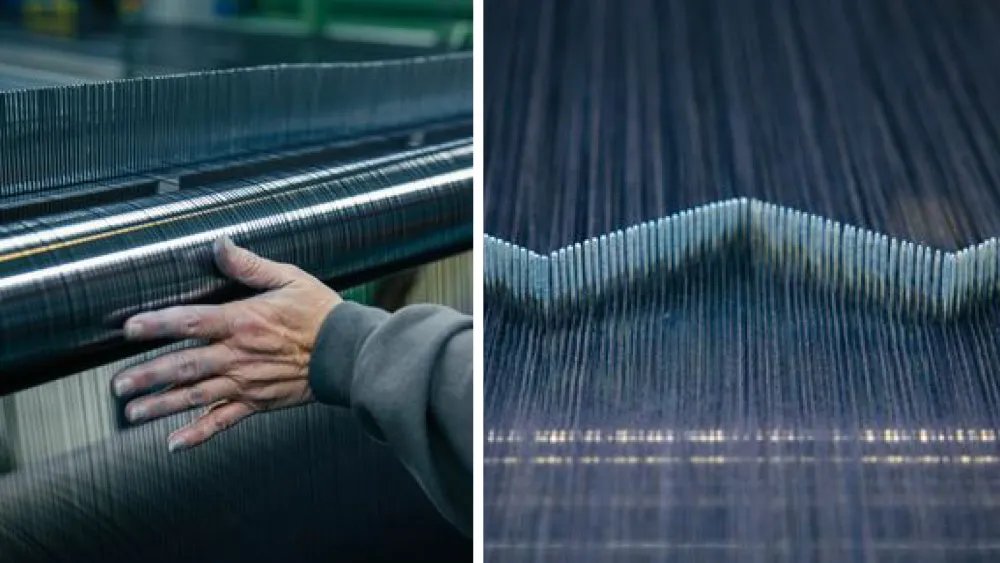
“We’re stubborn,” joked Bill Rogers, president and chief executive officer of Mount Vernon Mills — a simple explanation for how the 181-year-old company has maintained its foothold in the U.S. textiles industry and became the last U.S. denim manufacturer.
Trion, Ga.-based Mount Vernon Mills has ebbed and flowed to match the needs of the U.S. textile industry since 1845. After more than a century producing cotton yarn and cotton duck cloth, it was acquired in 1982 by R. B. Pamplin Corporation, providing the company the opportunity to invest heavily in state-of-the-art technology and pursue acquisitions.
As the company shed businesses related to fabric for paint rollers and seating surfaces and sold its Consumer Products Division, exiting hospitality items such as tablecloths and towels, it also made game-changing purchases like Wade Manufacturing Company’s yarn spinning and weaving facility in Rockingham, N.C., in 2022. The acquisition made Mount Vernon Mills a vertically integrated operation, from yarn production to finished fabric, in certain products, including denim.
In 2025, in a reversal from the industry norm to invest in automated machinery, Mount Vernon Mills entered a strategic partnership with KaKa Cotton LLC to acquire and relocate 45 historic Draper X3 shuttle looms once belonging to the iconic White Oak Plant in Greensboro, N.C., and 45 Picanol President shuttle looms to its Trion flagship facility.
Six months later, after “a lot of repair and upgrades,” half of the beloved shuttle looms are operational, and Mount Vernon has begun “real production sets,” Rogers said. Several clients are evaluating samples and production is already running for others. Most brands are requesting exactly what any denim head would imagine when it comes to traditional American selvedge: 14- to 16-ounce heavyweight denim in dark shades.
However, Rogers said the mill continues to innovate in yarn development and spinning techniques. He described one sample as “not a true slub yarn,” though it delivers a slub-like visual effect. Another features a longer slub appearance that is more subtle and dispersed throughout the fabric. Mount Vernon is also producing denim with multiple yarn counts, including in the warp. “This gives a little bit of a differential characteristic to the fabric,” he said. “In some situations, we’re seeing as many as four different yarns just in the warp.”
While the R&D in selvedge is likely to attract new customers (and inform the mill’s non-selvedge denim range), Rogers has a realistic outlook on the niche category. “The selvedge business will be a nice business to tack on to our existing markets, but we’re not going to live and die by the selvedge market,” he said. “If it got to be 5 to 10 percent of our denim sales, I’d be surprised.”
That level-headed perspective may be the missing piece to keep the historic shuttle looms running. Compared to previous ventures that tried to stand on selvedge alone, Rogers said Mount Vernon has the infrastructure that’s required to manufacture quality selvedge but is often ignored. A true indigo range for ring-dyed yarn, the proper finishing equipment to maintain shrinkage, the right warping equipment, a reliable supply chain, a facility with denim running every day — these will be the qualities that differentiate Mount Vernon from companies in the past, he said.
Though Mount Vernon Mills is widely regarded as the “last man standing” in U.S. denim production — excluding mills focused solely on flame-resistant denim — the category represents only 25 to 30 percent of its total output. The company’s core business remains piece-dyed fabrics, while its operations also span pocketing materials, textile sizing and finishing chemicals. Rogers said the mill produces “several million yards of denim each year,” with production currently “heavily skewed to flame resistant,” though he expects the product mix to diversify in the coming years.
The buzz surrounding Mount Vernon “restarting American selvedge” is creating a halo effect across the mill’s non-selvedge markets this year. Rogers said several brands have reached out about doing small capsules within their existing production, focusing on American denim.
While Rogers is firm that Mount Vernon is a “workwear-centered company,” the mill has started tacking on “ancillary pockets of business in different fashion segments” in the last couple of years. The company is expanding its capabilities in flannel and stretch fabrics and has a quilting operation in Mississippi. “Part of it is upscale, part of it is brands that really want ‘Made in USA’ fabrics,” he said. “Brands like Tecovas and Origin USA only want to source in the U.S.”
And there could be more if consumers and brands viewed U.S. suppliers differently, Rogers said.
Though “Made in USA” is a strong marketing story, he said most of the industry views domestic suppliers as a backup if something complicates their offshore supply chain.
“Some people just say, it’s nice to know you’re there, but we’re still going buy cheap out of Asia,” Rogers said. “But if something catastrophic were to happen, or if there was a major shift in tariffs, or some type of geopolitical issue, some of that could change on a dime.”