dailynewsnblog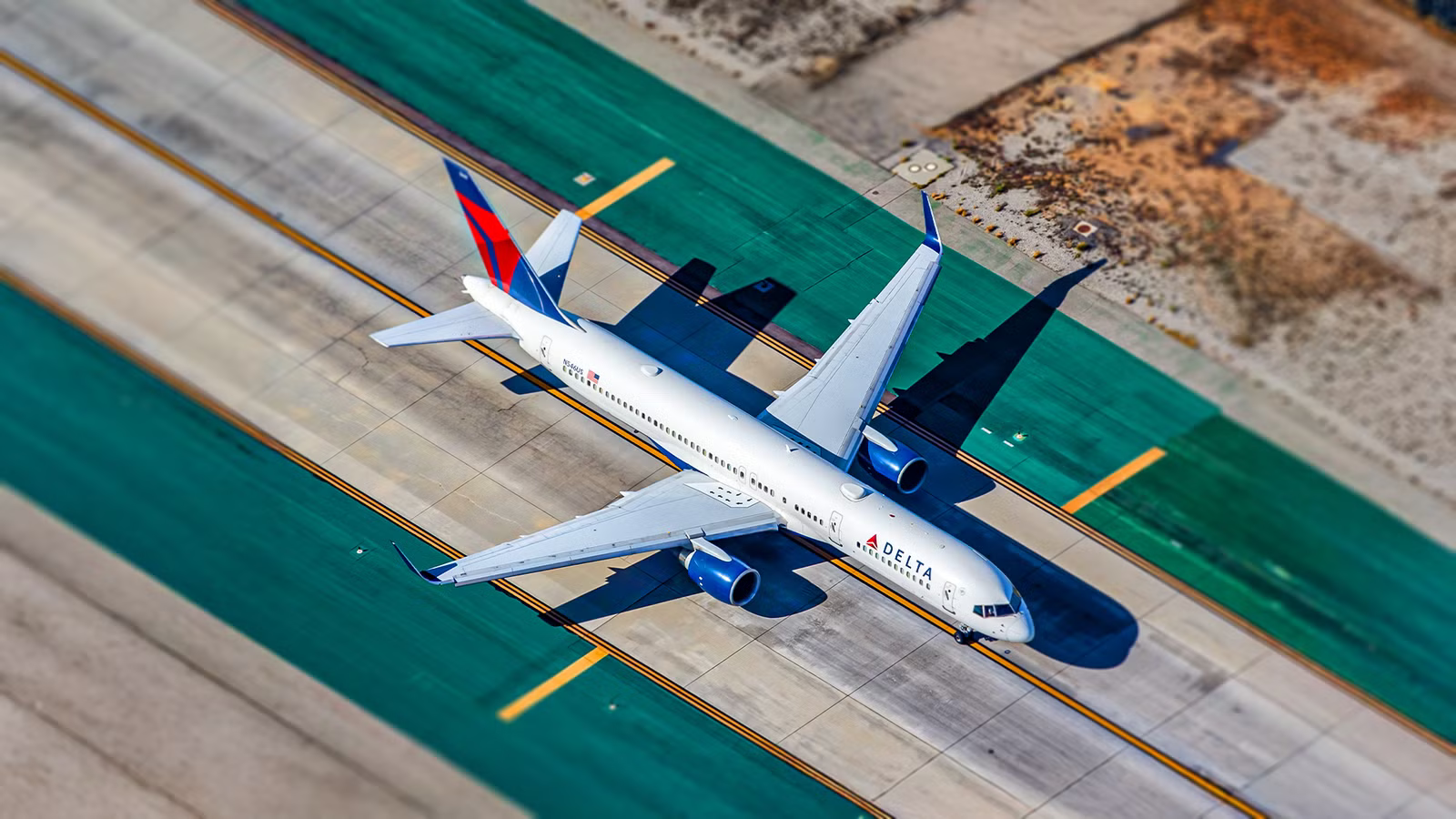
Raw fuel consumption is something that airlines pay very close attention to, with some arguing it is the single most important metric in modern aviation. Asking how many miles per gallon a Boeing 757 gets might sound like an automotive comparison, but fuel economy is something that can be the deciding factor when choosing an aircraft to operate. With rising jet fuel prices and carrier fleet retirements, determining the exact fuel burn of Boeing’s flagship single-aisle twin-jet shows exactly why the airframe remained a transoceanic workhorse for decades.
Engineered in the late 1970s and entering service in 1983, the 757 was designed as a high-powered narrowbody capable of flying long-haul routes once operated by widebody jets. While  Boeing does not publish an official miles-per-gallon rating in auto industry terms, its technical documents provide all the necessary parameters for an illustrative calculation. This article explores the fuel economy of the 757 across its major variants, contrasting specification-based figures against real-world airline cruise burn and passenger-mile efficiency metrics.
Taking On The Giants

On paper, a fully loaded Boeing 757-200 achieves approximately 0.36 miles per gallon, which translates to burning roughly 2.8 US gallons per mile (6.6 liters per kilometer). This specification-based estimate reflects a maximum takeoff weight scenario using Boeing’s published maximum fuel capacity of 11,489 US gallons (43,490 liters) across a design range of 4,154 statute miles (6,685 km). In steady cruise flight at lighter operating weights, airframe fuel burn improves to roughly 0.52 miles per gallon, consuming about 1.92 US gallons per mile (4.52 liters per kilometer).
Dividing aircraft fuel consumption by overall seat count shows why these figures make commercial sense for airlines. According to Boeing’s 757 airport planning document and data from Jet Advisors, a typical two-class 757-200 seating 200 passengers consumes about 1,020 US gallons (3,861 liters) of jet fuel per hour at Mach 0.80 cruise speed. Dividing that hourly consumption across 200 occupied seats equates to an impressive efficiency rating of roughly 80.7 passenger miles per gallon (2.91 liters per 100 passenger-kilometers).
When the 757-200 debuted in 1983 powered by Rolls-Royce RB211 engines (with Pratt & Whitney PW2000 options following shortly after), it delivered a 45% reduction in fuel burn per seat compared to the three-engine Boeing 727-200 that came before. Carrying over 200 travelers at high speeds, the airframe spreads its heavy fuel consumption across enough paying customers to outperform its competitor aircraft in per-seat energy efficiency.
What Can Affect The Fuel Burn Figure?

An aircraft’s total fuel burn changes constantly based on its gross takeoff weight, assigned cruising altitude, outside air temperature, and route length, as noted by ARC. On any given flight, a 757 departing with a full payload of passengers and cargo will burn significantly more fuel during its initial climb than an aircraft operating a lighter regional hop. For this reason, relying solely on a static number ignores the dynamic variables that affect true fuel economy.
Flight stage length plays an exceptionally large role in determining overall fuel efficiency because of the heavy fuel penalty incurred during takeoff and climb-out. During the first 20 minutes of flight, the 757’s twin turbofans operate at high thrust settings, burning fuel at nearly double their steady-state cruise rate. On short flights under 500 nautical miles (575 miles / 926 km), the initial climb phase accounts for a disproportionate share of total fuel consumed, reducing overall trip efficiency. Conversely, on long-haul routes above 2,000 nautical miles (2,301 miles / 3,704 km), the aircraft spends hours at cruise altitudes between Flight Level 350 and Flight Level 390, allowing its high-bypass Rolls-Royce RB211 or Pratt & Whitney PW2000 engines to achieve the best fuel efficiency per mile.
Aerodynamic retrofits and variant design differences also create notable shifts in fuel performance across different fleets. According to Simple Flying analysis, retrofitting Aviation Partners Boeing (APB) blended winglets onto the 757-200 reduces drag at cruise, generating a 5.0% reduction in total fuel burn on long-haul sectors. Meanwhile, the stretched 757-300 burns roughly 80 US gallons (303 liters) more fuel per hour than its smaller sibling due to increased fuselage weight and aerodynamic drag. However, because its elongated cabin accommodates 43 additional passengers, the 757-300 actually has a superior efficiency rating of 88.4 passenger miles per gallon (2.66 liters per 100 passenger-kilometers).
An Irreplaceable Jet?

Airline flight operations departments view the 757’s fuel burn through the lens of network strategy and capital expenditure, as opposed to focusing only on pure fuel-efficiency metrics. Major operators like  Delta Air Lines and
  United Airlines have kept sizable 757 fleets going well past their theoretical retirement dates because the airframe occupies a unique sweet spot in commercial aviation. Of course, a modern twin-jet burns less fuel, but the 757’s paid-off airframes carry zero monthly capital lease debt, offsetting higher hourly fuel expenditures on long, thin transatlantic and transcontinental routes.
From an operational standpoint, flight crews manage the 757 fuel burn by using step climbs as the aircraft consumes fuel and gets lighter throughout a long-haul trip. When departing at maximum takeoff weight, a 757-200 burns approximately 13,000 lb (1,940 US gallons / 7,343 liters) of jet fuel in its initial hour of flight while climbing to an initial altitude of 31,000 feet (9,448 meters). As the fuel weight burns off over several hours, dispatchers clear the jet to step-climb to 39,000 feet (11,887 meters), where thinner air reduces atmospheric drag and drops cruise fuel consumption to between 6,000 lbs and 7,000 lb (895 US gallons to 1,044 US gallons / 3,388 liters to 3,952 liters) per hour.
These operational realities explain why airline financial analysts continue to endorse the 757 on certain routes. When jet fuel prices remain stable, operating a fully depreciated 757 on a route like  Newark Liberty International Airport(EWR) to Edinburgh Airport(EDI) or
  Hartsfield-Jackson Atlanta International Airport(ATL) to
  Seattle-Tacoma International Airport(SEA) offers higher profit margins than deploying a brand-new $120 million aircraft with lower fuel burn. Until an aircraft comes along that matches the 757’s rare combination of hot-and-high airfield performance, heavy payload capacity, and transoceanic range, airlines are still quite content to pay the jet’s higher hourly fuel bill.
Are Modern Jets Better?

When evaluated against modern narrowbody airliners, the 757 shows its age in raw airframe consumption but still maintains a surprisingly competitive passenger-mile baseline. Next-generation twin-jets like the Airbus A321neo, A321XLR, and Boeing 737 MAX 10 rely on advanced aerodynamic designs and high-bypass turbofans to deliver a step change in fuel efficiency. As previously mentioned, a typical Boeing 757-200 burns roughly 1,020 US gallons (3,861 liters) of jet fuel per hour in cruise, whereas an Airbus A321neo burns approximately 928 US gallons (3,514 liters) per hour at maximum cruise weight, which drops to an average block cruise burn of roughly 680 US gallons (2,574 liters) per hour in typical airline service, a 33% reduction in total hourly fuel consumption.
Powerplants such as the CFM LEAP-1A and Pratt & Whitney PW1100G feature bypass ratios exceeding 10:1, compared to the roughly 4.3:1 ratio of the 757’s Rolls-Royce RB211 engines. In practical terms, these modern engines move significantly more unburned bypass air around the core engine, generating superior thrust per unit of fuel burned. When configured with high-density passenger cabins seating 200 to 220 travelers, modern narrowbodies achieve between 105 and 125 passenger miles per gallon (2.24 to 1.88 liters per 100 passenger-kilometers), easily outperforming the 757’s average of 80.7 passenger miles per gallon (2.91 liters per 100 passenger-kilometers).
Despite these statistical advantages, modern replacements involve clear operational trade-offs when trying to duplicate the 757’s complete mission profile. As explored in Simple Flying analysis, the 757 was over-engineered, with a high thrust-to-weight ratio that lets it depart short runways at high-altitude airfields in extreme summer heat without heavy passenger or cargo penalties. While the Airbus A321XLR matches and exceeds the 757’s transoceanic range by adding an integrated Rear Center Tank holding 3,408 US gallons (12,900 liters) of fuel, it lacks the raw takeoff performance that made the 757 an undisputed favorite for challenging airfields like Tegucigalpa in Honduras.
An Inevitable Decline

Average fuel economy statistics provide a useful baseline, though individual flight profiles can dramatically alter a 757’s actual fuel efficiency. Short-haul flights are the biggest operational exception to standard fuel-burn estimates. On sectors under 500 nautical miles (575 miles / 926 km), such as domestic shuttle routes between major airline hubs, the 757 spends a substantial portion of its total flight time in high-power climb maneuvers. Because twin-engine fuel flow during climb exceeds 12,000 lbs (1,791 US gallons / 6,780 liters) per hour, short hops degrade overall airframe efficiency to less than 0.30 miles per gallon (3.33 US gallons per mile / 7.84 liters per kilometer), creating a noticeable fuel penalty per passenger.
Environmental factors and seasonal atmospheric conditions also induce large swings in block fuel efficiency. Westbound transatlantic flights during winter months face strong jetstream headwinds over the North Atlantic Ocean, as noted by Flightradar24. To maintain safe fuel reserves when flying against headwinds on routes like EDI to EWR, flight dispatchers will load extra contingency fuel, increasing the aircraft’s gross takeoff weight. Carrying this extra fuel increases fuel burn throughout the trip, a situation known as fuel burn to carry fuel, and drops overall efficiency on winter transoceanic crossings by 10% to 12% compared to summer operations.
Global environmental mandates are tightening, and many airports are introducing carbon tax adjustments. As a result, the financial calculus for operating older, higher-emitting airframes is shifting rapidly. Furthermore, integrating Sustainable Aviation Fuel into legacy 757 fuel systems helps reduce net carbon emissions, but it does not alter the underlying mechanical fuel burn rate of engines designed four decades ago. As jet fuel prices fluctuate, these operational penalties have naturally accelerated the final retirement of remaining 757 fleets in favor of lower-burn narrowbodies.
What Is The 757’s Legacy?

Boeing’s official specification figures show that a high-gross-weight 757-200 achieves approximately 0.36 miles per gallon (2.8 US gallons per mile / 6.6 liters per kilometer) under maximum payload and fuel conditions. However, when those thousands of gallons are spread across a typical 200-seat cabin in steady cruise, the aircraft delivers an impressive rating of 80.7 passenger miles per gallon (2.91 liters per 100 passenger-kilometers), a figure that made the twin-jet an unbeatable long-haul earner for over four decades.
What the 757 has been able to achieve in its long history is nothing short of incredible; it bridged two distinct eras of commercial aviation. Delivering twin-engine long-range capability with mid-size narrowbody economics, the airframe pioneered long, thin transatlantic routes and opened up point-to-point markets that were previously unprofitable for widebody jets. Although modern replacements like the A321neo and 737 MAX 10 burn over 30% less fuel per hour, the 757’s rare combination of powerful climb performance, heavy payload capacity, and high-altitude airfield capability makes the aircraft special.
The progressive phase-out of the remaining 757 fleets will mark the end of an iconic chapter in single-aisle aircraft design. As legacy carriers in North America and Europe transition their long-haul narrowbody operations to the Airbus A321XLR, the aviation industry will shift away from rugged, high-thrust airframes toward ultra-efficient composite designs and high-bypass powerplants. The Boeing 757 will therefore be remembered as a textbook case study in aviation economics, showing how high raw fuel burn can still deliver extraordinary commercial efficiency when paired with smart network planning and high passenger capacity.