dailynewsnblog
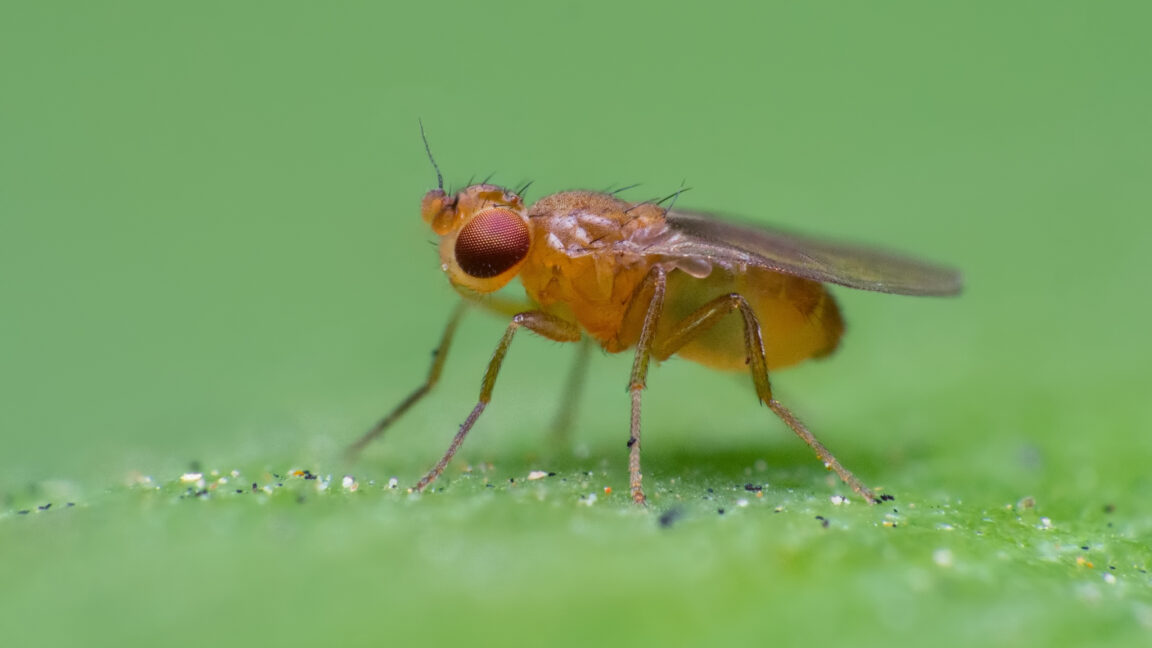
The team also worked with flies genetically engineered so light could switch their olfactory neurons on directly, in both antennae at once. When scientists swapped real odor for a beam of 660-nanometer red light, the insects tracked the edge of this light plume flawlessly.
The real surprise, though, came when the team took a close look at what the flies were doing when there was no smell at all to guide them.
Olfactory memories
When the researchers made a plume vanish while a fly was outside it, the insect kept heading back to where the edge should have been. Rather than searching at random, they were heading to where they knew the odorant should be. “It looked as if they had a stored memory that was still steering them in that direction,” Ruta says.
So, the team started looking for these stored olfactory memories. The first candidate was a brain structure called the central complex, which is like a navigation hub in the insect brain.
Using fluorescent imaging to watch neurons fire in real time, Ruta and her colleagues pinpointed neurons that acted as the fly’s compass. Throughout edge tracking, that compass stayed locked to the wind, indifferent to whether the fly was in odor or out. When the team silenced these neurons, the flies got lost entirely, wandering upwind with no idea how to get back.
The neuronal compass, though, was just one piece of the puzzle. To find the smell that got lost in the wind, the fly must have a goal—a memory of what to search for. The team went searching for that memory.
The team located olfactory memories in another group of neurons found in something called the fan-shaped body, already known to encode where a fly wants to go. Like in a compass, the activity of these neurons acts like a pointer, but in this case, the one that marks the fly’s intended destination. Out in the clean air, this pointer swung away from the compass to aim at the plume’s edge, several seconds before the fly physically turned to head back. Just as with the compass neurons, silencing the neurons encoding the odor’s edge position made it impossible for the flies to find it. “When they get out, they have no immediate sensory information to guide them back to the plume. That’s when the memory becomes important,” Ruta says.