dailynewsnblog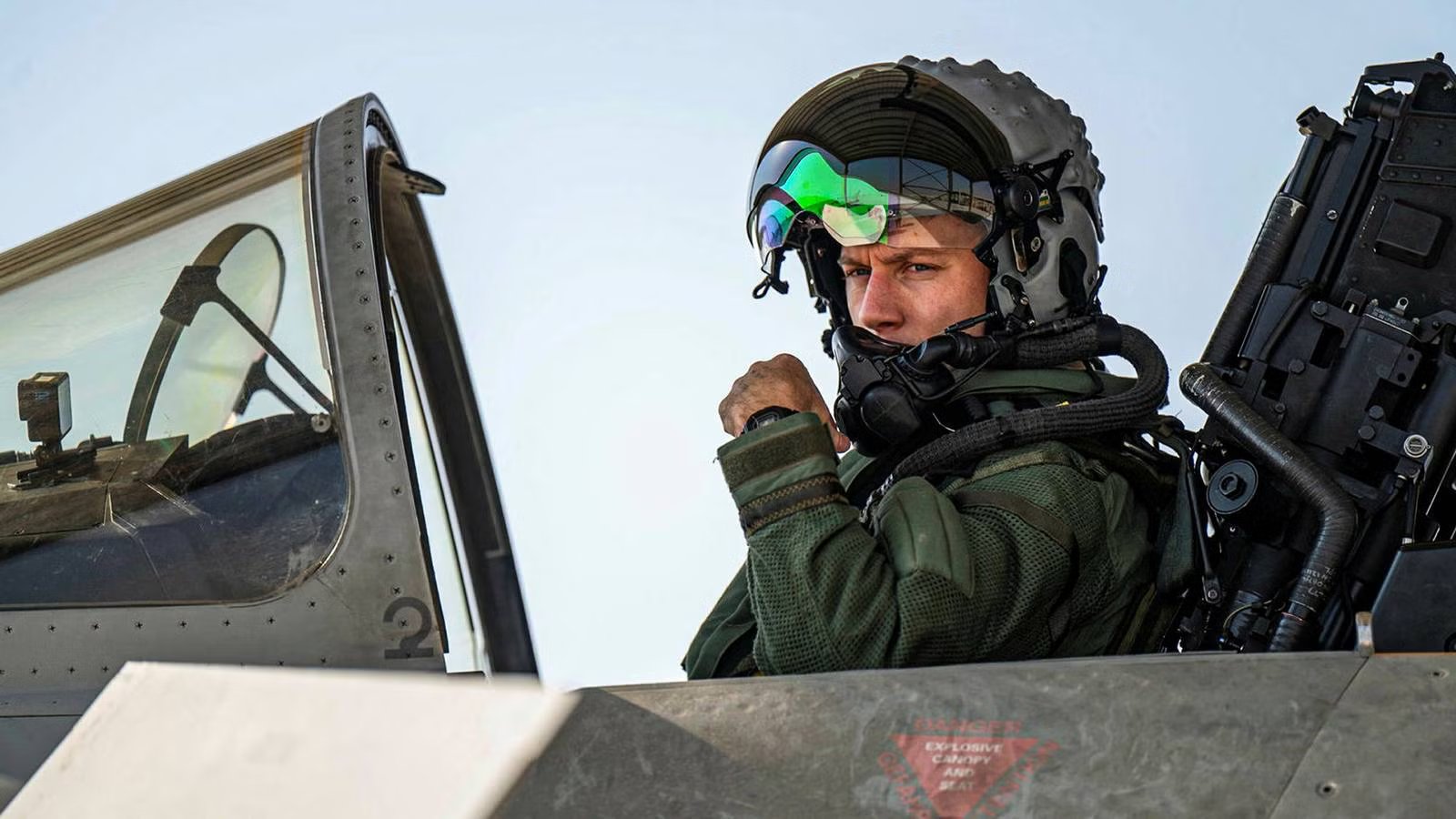
A bomber crew flying a marathon mission can trade positions for relief. One pilot can sleep on a fold-down cot behind the flight deck while the other one actually flies. A single-seat F-35 Lightning II pilot over the Pacific has no such option. Strapped into an ejection seat with a parachute pack for a headrest, that pilot can’t close their eyes for even a minute. That takes its toll as the tenth hour of a patrol mission wears on the body.
As the US Air Force reallocates more and more next-gen and legacy fighter squadrons to patrol the vast distances of the Indo-Pacific under its Agile Combat Employment doctrine, the fighter community faces a problem solved decades ago by bomber crews. Ultimately, fighter pilots cannot solve fatigue in the cockpit.
The ‘jet jockeys’ have to beat it before they ever strap in and start preparing for the next sortie as soon as they climb out. What does that preparation-and-recovery cycle actually look like? How far can nutrition, sleep discipline, and prescription stimulants stretch a single human being across a 10-hour combat sortie?
How ACE Is Stretching Fighter Endurance To New Limits

Fighter sorties of eight or more hours used to be the exception, reserved for the rare, headline-making mission. That is changing as a matter of routine planning. The Pacific Ocean is staggeringly large. In a conflict, American fighter jets cannot just take off from a massive, safe base close to the fight. A pilot might wake up on a tiny island ‘spoke,’ fly 1,000 miles (1,609 km) to a main ‘hub’ to pick up a payload of missiles. Then fly another 1,500 miles (2,414 km) to a combat zone, then have to find a completely different remote island airstrip to land on when the mission ends.
The large-scale war games held in the summer of 2025 illustrated the new evolving strategy. Last year, the US Air Force pushed F-15EX Eagle IIs to Japan for the first time as part of a rehearsal for Agile Combat Employment (ACE). Resolute Force Pacific scattered about 400 warplanes and thousands of troops across more than 50 different locations stretching over 3,000 miles (4,828 km), placing F-22 fighters on a rugged runway in Tinian and F-35s at Misawa Air Base.
The new doctrine relies on hot pit refueling, dispersed basing, and long-range patrols to strike deep into contested terrain. During that same summer, a matching military drill was conducted to survive an attack where the Air Force spread out its fighter jets to small, remote island runways. All of these planes had to fly long-haul across the massive ocean spaces between austere islands.
This challenge of geography and constantly shifting positions stretches single-seat fighter missions from their usual two-to-three-hour block times up to grueling 10-hour slogs. While midair refueling tankers can easily keep refilling the jet’s gas tank to keep it flying, nothing can refuel the exhausted pilot sitting in the cockpit.
The Next Test Comes From Geography Itself

What makes the Indo-Pacific different from the theater most existing doctrine is based on is not only the length of any single sortie, so much as how unpredictable the support available for each mission will be. For decades, the US military relied on massive, centralized hubs like Kadena Air Base in Japan or Andersen AFB in Guam. Today, those huge bases are seen as highly vulnerable to long-range enemy missiles.
Because historic Pacific mega-bases will be targeted immediately during a conflict, the Air Force is transitioning to a ‘push’ logistics model. Under ACE doctrine, those forces will be split up over dozens of smaller, remote island airfields which have a varying level of support facilities. Some of these are even sites unused since the end of WWII, like Tinian’s North Field or Wake Island. To sustain them, major hubs hold the majority of equipment, while remote ‘spokes’ are supplied with just enough supplies on-site.
The goal is to provide a cache of fuel, ammunition, parts, and other items to keep fighters armed and flying for a few days at a time. However, the Pacific forces the Air Force to spread out across vast distances to avoid enemy missiles. Pilots must fly much longer, more exhausting missions criss-crossing the First and Second Island Chains to evade enemy tracking. In the most extreme case, they have the option to use stimulation to overcome the limits of human exhaustion and complete the mission.
Mission Rituals From Sleep Scheduling To The Last Meal

Fatigue management for a sortie of this length starts a day or more before takeoff, not at the briefing. A review published in Military Medicine this year concluded that aircrew frequently begin flights already dehydrated. The physical deficits are worsened by cockpit heat, flight gear and limited access to fluids once airborne. It also recommended carbohydrate-centered, easily digestible meals timed ahead of a mission rather than heavy or greasy food that slows digestion and drains blood flow from the brain.
The same review flagged caffeine as a legitimate fatigue countermeasure only when its dosing and timing are planned around protecting the pilot’s individual circadian cycle. Indiscriminate use late on a duty day simply trades daytime alertness for a wrecked sleep cycle afterward, and negative effects follow on sorties. The Air Force Research Laboratory’s 711th Human Performance Wing has spent recent years trying to formalize what was previously left to individual instinct.
Airmen preparing for missions that cross multiple time zones or compress a normal night’s sleep into a few hours beforehand have had no real playbook for adjusting their body clock, according to Air and Space Forces Magazine. That is why the lab has been testing wearable sensors under a program called Smart Wearable Fatigue Tracking. None of that resolves the final challenge when preparation alone is not enough, and the mission cannot simply be scrubbed.
Inside The Go And No Go Pill System

The Air Force has a tightly controlled pharmacological system based on what pilots refer to as ‘go’ and ‘no go’ pills when fatigue hits hard in the middle of a mission, and there is no other option. Moody Air Force Base regulations for the 23rd Wing’s rescue and fighter units outline Air Force doctrine on the use of these stimulants. It states that a pilot feeling weariness may take a five- to ten-milligram dose of dextroamphetamine during a longer sortie only as a last resort.
Since the medicine is prescription-only, all requests must be managed through a flight surgeon’s office. The effects usually become apparent within 20 minutes of a dose. The length of the sortie limits approval from the doctor. Sorties lasting more than eight hours in a single pilot fighter are covered by the go pill program. This threshold corresponds directly to what ACE is expected to demand on a regular basis in the Pacific.
What The Data Says About Real-World Use

The most dangerous mistakes happen during the final leg of an exhausting flight when the adrenaline fades, not during the actual combat phase. Human biology is the weakest link in this fast-paced, scattered war strategy. After 12 hours of intense, high-stress flying, a pilot’s brain slows down, their reaction time drops, and they make fatal mistakes.
Military studies discovered that older, more experienced pilots were much less likely to rely on sleeping pills compared to younger pilots. A newer medical study from October 2025 looked at multiple pieces of military research and concluded that caffeine and a wakefulness drug called modafinil were the best tools to keep pilots sharp and fast during long flights.
Modafinil allows a pilot to stay perfectly alert for 24 to 36 hours without a sleep cycle. This gives commanders the flexibility to order long, unpredictable flight paths across the Pacific without worrying that the pilot will fall asleep at the controls. However, studies have also warned that drugs affect everyone differently, and neither can ever replace real, restorative sleep. These drugs affect every pilot differently. The Air Force relies on specialized flight doctors to make case-by-case prescriptions for each individual pilot.
Modafinil’s Growing Role And The Limits Of Stimulants

The US Air Force now primarily uses modafinil to combat pilot weariness during demanding, long-distance missions. It acts as an official ‘Go Pill’ to keep single-seat fighter pilots fully awake for eight, ten, or even forty-hour flights. In order to keep military personnel alert when lives are at stake, the medication took the place of older, riskier stimulants.
Modafinil is now permitted by US Air Force policy as a non-amphetamine substitute for dextroamphetamine. Modafinil was approved by the US Air Force after research showed that it kept pilots alert for more than 24 to 37 hours without sleep. Originally developed to treat narcolepsy, modafinil functions in a different way. It does not provide a frenetic ‘high,’ instead focusing on the brain’s alertness centers.
These drugs are reserved for extreme operational circumstances rather than treated as a substitute for rest. That framing matches the deliberately layered design already visible in the Moody instructions, where the pharmacological option sits behind flight surgeon approval and a formal request chain rather than sitting on the shelf as a first resort. The pill is the last layer, never the first.