dailynewsnblog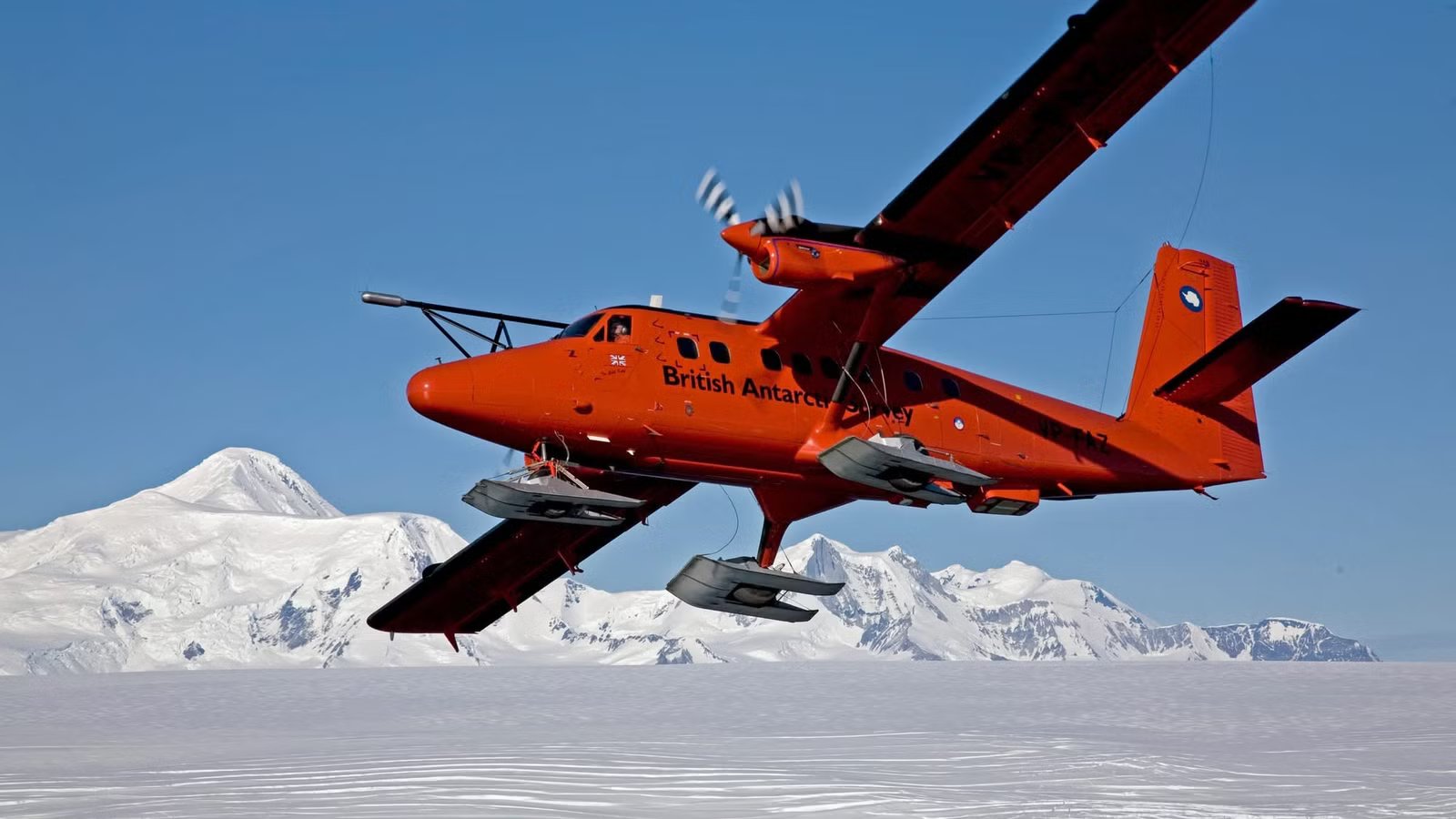
Flying from Canada to Antarctica is an extraordinary undertaking even for a modern aircraft, but the British Antarctic Survey is making the journey in aircraft that were designed decades ago for rugged, remote operations. Its De Havilland Canada DHC-6 Twin Otters are heading south from Calgary for another Antarctic season, carrying the aircraft, crews and equipment that will support science in one of the world’s most demanding environments.
According to the British Antarctic Survey, the ferry flight covers 9,065 miles (14,588 km) over approximately 11 days, with around 53 hours spent in the air. The first aircraft on this year’s journey include VP-FBB, around 44 years old, and VP-FBL, around 38 years old, demonstrating just how well the Twin Otter’s basic design has suited polar operations.
Why The Journey Happens Every October

The reason for making this enormous journey each year is tied directly to the Antarctic seasons. The British Antarctic Survey’s Twin Otters generally operate in Antarctica from October through March, when the return of the austral summer brings longer periods of daylight and conditions that allow aircraft to support field teams across the continent.
Aviation enthusiasts can use the Simple Flying Flight Tracker to follow the aircraft as they make their way south from Canada, while the tracker also provides a useful way to see how the long ferry flight develops from one stop to the next. During the Antarctic winter, operating small aircraft across the continent becomes considerably more difficult.
After all, darkness, extreme cold, and weather limit the opportunities for normal field operations. The Twin Otters therefore spend the off-season away from Antarctica, including maintenance activity in Canada, before heading south in time for the new scientific season.
Their arrival is consequently more than a simple repositioning flight, because it marks the beginning of another cycle of polar operations. Once in Antarctica, the aircraft can transport scientists, fuel, food, snowmobiles, sledges and scientific equipment to remote camps, while also supporting airborne research programs that cannot easily be conducted from the ground.
Following The Twin Otters South

The route is not a nonstop dash toward the South Pole, because the Twin Otters’ relatively modest range requires the crews to make numerous fuel and operational stops. Rather than following a conventional airline route, the aircraft are effectively hopping from one suitable airport to another, with each stage carefully planned around fuel, weather, maintenance, and the availability of facilities along the way.
The Simple Flying Flight Tracker has already shown the aircraft making stops at Great Falls, Cheyenne, Amarillo, Houston, Cozumel, and Panama, turning a long ferry flight into a fascinating moving map of their progress. The changing locations also show how the journey gradually transitions from North American operations to the much more challenging stages farther south.
The flight is therefore best understood as a series of individual legs rather than one continuous trip. Each departure brings the aircraft a little closer to Antarctica, while the crews must continually account for fuel, weather, and suitable landing locations as they move away from the dense airport network of North America and toward increasingly remote parts of the world.
The Twin Otter Is Built For This

The De Havilland Canada DHC-6 Twin Otter is almost the opposite of the large passenger aircraft that normally dominate long-distance aviation. It is a high-wing, twin-engine turboprop with a reputation for ruggedness, reliability and short takeoff and landing performance, characteristics that have made it particularly valuable in remote regions around the world. The British Antarctic Survey’s aircraft are especially adapted for polar work.
They use a wheel-and-ski configuration that allows them to operate from conventional runways as well as snow and ice surfaces. The aircraft can also be configured for scientific equipment, while double cargo doors make it easier to load instrumentation and other equipment into the cabin. The Twin Otter’s appeal extends far beyond Antarctica, with operators using the aircraft everywhere from Arctic communities to tropical islands.
Trans Maldivian Airways is the standout example, operating a fleet of 66 DHC-6 Twin Otters in early 2026 and running the world’s largest seaplane operation, according to the latest data from ch-aviation. The airline connects more than 80 resorts across 16 atolls, demonstrating how the same rugged design used by the British Antarctic Survey can also serve as a high-volume passenger aircraft in an entirely different environment.
Ranking | Airline | Number In Fleet |
|---|---|---|
1 | Trans Maldivian Airways | 62 |
2 | Kenn Borek Air | 15 |
3 | Grand Canyon Airlines | 13 |
4 | Maldivian | 11 |
5 | Transwest Air | 9 |
The airline’s fleet has since grown to 67 aircraft, according to its current fleet information. Canada is another major center for Twin Otter operations, particularly for companies specializing in remote and challenging flying. Kenn Borek Air, headquartered in Calgary, has long used Twin Otters for charter, cargo, medevac, survey and polar missions, with aircraft capable of operating on wheels, skis and floats.
Its experience in both the Arctic and Antarctic makes it particularly relevant to the British Antarctic Survey’s operation, while its Calgary base highlights the city’s importance as a center for specialized Twin Otter flying. The aircraft also remains relevant to modern commercial aviation rather than existing solely as a legacy type. In March 2026, De Havilland Canada celebrated delivery of the 1,000th Twin Otter, with the milestone aircraft and the 999th example joining Colombia’s state-owned SATENA.
In June, the manufacturer delivered the first production Twin Otter Classic 300-G to Switzerland’s Zimex Aviation. The continued arrival of new-build aircraft, alongside major established operators, shows why the Twin Otter has survived for so long. Its basic formula remains useful wherever operators need a reliable aircraft capable of working from short, remote or otherwise unconventional airfields.
Catch what other trackers miss
Emergency squawks, holds, NOTAMs — live signals, no signup.
Open tracker
Catch what other trackers miss
Emergency squawks, holds, NOTAMs — live signals, no signup.
Open tracker
From Calgary Through The Americas

The first part of the ferry flight illustrates why such a journey takes many days. Leaving Calgary, the aircraft must work their way south through the US before crossing into Mexico and Central America, with Great Falls, Cheyenne, Amarillo, and Houston some of the early locations visible on the tracking history. The table below details some of the airports visited.
Airport | Airport Code |
|---|---|
Great Falls International Airport | GTF |
Cheyenne Regional Airport | CYS |
Amarillo Rick Husband International Airport | AMA |
Houston Sugar Land Regional Airport | SGR |
Cozumel International Airport | CZM |
Balboa Panama Pacifico International Airport | BLB |
Cozumel represents another significant step south, after which the aircraft can continue toward Panama and eventually begin the much longer South American portion of the journey. The route is shaped by the practical limitations of the Twin Otter rather than by the shortest possible great-circle path, since airports capable of supporting the aircraft and crew must be available at suitable intervals.

Aviation enthusiasts following the journey can track the aircraft using the search feature on the Simple Flying Flight Tracker, providing another way to keep up with the aircraft’s progress between these widely separated stops. Seeing VP-FBB and VP-FBL move from one airport to the next gives some sense of the scale of the ferry flight, particularly when the individual stages are considered together against the British Antarctic Survey’s total figure of 7,878 nautical miles.
What Happens When They Reach Antarctica?

Reaching Antarctica does not mean the difficult part is over, because the Twin Otters are heading there specifically to operate in an environment where conventional airport infrastructure is often unavailable. The British Antarctic Survey uses skis to land on unprepared snow at remote field sites, allowing aircraft to reach teams working far from established research stations.
The aircraft can carry supplies as well as people, with missions involving fuel, food, sledges, snowmobiles and scientific equipment. They can also establish supply depots and stockpile fuel for field science parties, giving researchers the logistical support needed to spend extended periods working away from Rothera Research Station.
Scientific work is another major part of their role, because the Twin Otters can be equipped for remote sensing, meteorological research and airborne geophysics. Instruments can include ice-penetrating radar, gravimeters, magnetometers and laser scanners, meaning an aircraft that looks relatively small from the outside can become a sophisticated flying research platform once it is configured for a particular project.
Why These Old Aircraft Still Matter

VP-FBB and VP-FBL may be decades old, but their age is less important than the qualities that have kept the Twin Otter relevant to the British Antarctic Survey. The design combines relatively simple operation with excellent low-speed handling, short-field capability and the flexibility to carry people, cargo or scientific equipment, making it unusually well suited to places where a larger aircraft would struggle.
The British Antarctic Survey can also operate the Twin Otter as a single-pilot aircraft, while long-range fuel tanks and its ability to accept specialized equipment provide additional flexibility. Its unpressurized cabin and relatively low operating altitude are not weaknesses in the same way they might be for a passenger airliner, because the aircraft is primarily a field tool designed around access rather than passenger comfort.
That combination explains why the annual journey from Canada to Antarctica remains such an important part of the British Antarctic Survey operation. The aircraft are not being flown south simply because they need to be moved; they are being positioned for months of work supporting scientists and field teams across Antarctica.
For aviation enthusiasts, following their progress on the Simple Flying Flight Tracker offers a rare opportunity to watch a pair of decades-old utility aircraft undertake one of the world’s most unusual annual ferry flights. Among the other unusual aircraft that can be followed before they are retired are Lufthansa’s Airbus A340-600s.