dailynewsnblog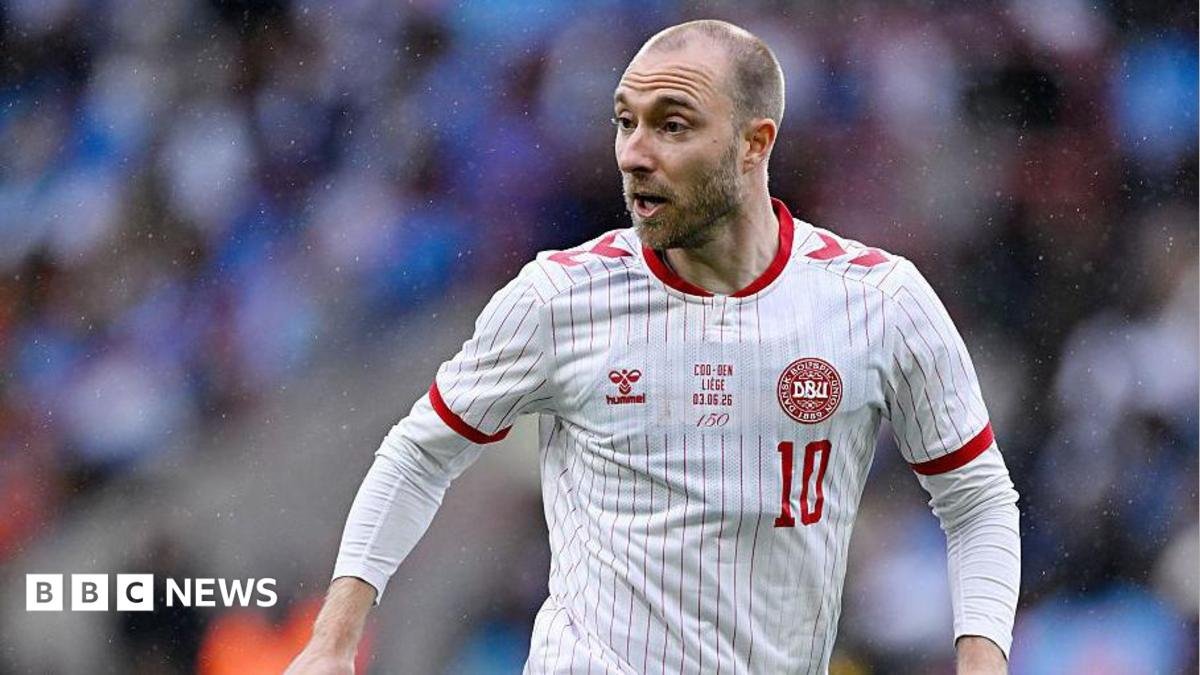
The ICD is a small life-saving device which detects problems with the heart’s rhythm and immediately tries to correct them.
It’s a treatment rather than a cure.
There are two main types of ICD – one is fitted under the skin, usually near the armpit and acts like a mini defibrillator with wires running under the skin to the chest.
The other main type is connected directly to the heart and, like a pacemaker, also sends regular electrical signals if the heart is beating too slowly.
In Eriksen’s case, the ICD is likely to have delivered an electrical shock after detecting a dangerously fast or abnormal rhythm, to restore the heart to its normal pattern.
And it would have been quite a jolt.
“It feels like being thumped in the chest,” says Prof Aneil Malhotra, sports cardiologist at the Institute of Sport, Manchester Metropolitan University.
Resetting the heart “is like switching a computer off and on again”, he explains, adding that ICDs are “highly effective devices”.
In 2021, mid-match at the European Championships, Eriksen had a cardiac arrest – when blood stops pumping around the body. He collapsed and lost consciousness.
Surrounded by concerned and emotional teammates, he was given CPR on the pitch, before a portable machine called a defibrillator was used to reset his heart.
Experts say the immediate medical attention he received saved his life.
This time, the defibrillator was inside his body – implanted during an operation several days after his previous collapse.
It acted as a safety net and kicked in straight away when his heart was in trouble, allowing him to recover much more quickly.
“Because he had the ICD in place, he didn’t have to wait,” explains Prof Malhotra.
Prof Michael Papadakis, cardiology expert at St George’s, University of London, calls the device a “shock box”.
“It looks after your [heart] rhythm and, if it detects a very fast, life-threatening irregularity, it will shock you out of it and jump-start the heart,” he says.