dailynewsnblog
Societies have fretted about the alleged danger of video games for decades. In “Power Play: Video Games, Politics, and the Battle for Global Influence,” author George E. Osborn recounts how China’s regime cracked down — after some dubious decisions by others paved the way.
China has become the world’s video game superpower. In the space of two decades, the country has transformed from a minor market on the fringes of the entertainment economy to a market of 701.6 million players spending $48.7 billion (all figures U.S.) each year. Tencent, the half-a-trillion-dollar tech giant, is one of the dominant players in the industry, investing in hundreds of businesses such as Epic Games (“Fortnite” and Unreal Engine), Riot Games (“League of Legends”), and the social media app Discord.
However, China’s rise as a gaming superpower presented the Chinese Communist Party (CCP) with a major problem. Where people play, they talk. Where they talk, they form groups. And groups, and the pesky ideas that they develop, have a tendency to challenge authoritarian leaders such as the CCP in ways that they don’t particularly like.
So, how could the CCP reap the benefits of a massive entertainment industry without ceding control? The answer was not to ban video games; it was to turn them into a new part of the Chinese government’s censorship net. By leaning into a global moral panic around “video games addiction,” the CCP cracked down on a creative industry that had previously been outside its control to bring it to heel.
There have been concerns that games are addictive for about as long as games have existed. Chess, for example, was viewed with skepticism in some corners of British society in the 1800s, with one physician fearing that the game was a “rather selfish and unsocial species of warfare” that wasted the time of those who pursued it (and deprived them of contact with other people).
Video games, unsurprisingly, suffered from similar associations. But the technological nature of the medium and its association with children’s entertainment has meant that the industry has long suffered at the hands of unfounded moral panics.
In his 2009 book “Risk: The Science and Politics of Fear,” Dan Gardner wheels out a 19-part taxonomy of risk devised by Paul Slovic, an American professor of psychology and the president of a collective scientific risk-research group called Decision Research. It identifies a series of qualities that are more likely to lead to someone overestimating risk, leading them away from a rational judgment of harm in the process. Video games hit nine of the 19 criteria. In particular, digital games touch on fears humans tend to have toward new technology and to anything that is seen to be targeted toward children. The result is that it is easy to overestimate their likelihood of causing harm.
For decades, this fed fears around the idea that video games could be “addictive.” The phrase, which was carelessly used by boneheaded video game marketers trying to sell to teenage boys, has stuck around the sector for decades. Early panics in the West focused on “Space Invaders” in the arcades in the 1980s, console games in the 1990s, and then “World of Warcraft” in the early 2000s.
By 2013, the panic had begun to crystallize into action. The American Psychiatric Association (APA) included Internet Gaming Disorder (IGD) in its handbook as a condition meriting further studies, on the basis that “gamers play compulsively, to the exclusion of other interests, and their persistent and recurrent online activity results in clinically significant impairment or distress.”
But an attempt by a group of 12 academics to present definitive criteria for what was now being called IGD was criticized at length by a 2014 paper organized by academic Mark Griffiths. It warned that there were “wide-ranging disagreements” over the nature of gaming disorder, that many of the questions used to diagnose its presence — such as asking whether or not a game felt “exciting or escapist” — were just reasons why people like video games, and that the paper had omitted empirical research into the condition from a number of countries.
The paper concluded with the reasonable suggestion that more research was needed. But in August 2016, the World Health Organization jumped ahead of the academic debate and tabled the addition of “gaming disorder” to the International Classification of Diseases. The final text of the condition would state that gaming disorder was “characterized by impaired control over gaming, increasing priority given to gaming over other activities to the extent that gaming takes precedence over other interests and daily activities, and continuation or escalation of gaming despite the occurrence of negative consequences” over the course of at least 12 months. It would also put video games into a category of harm known as “substance use and addictive behaviours.” Playing too much “Mario Kart” over an extended period of time was no longer a sign of enjoying too much of a good thing: it was medically akin to being a habitual drug user.
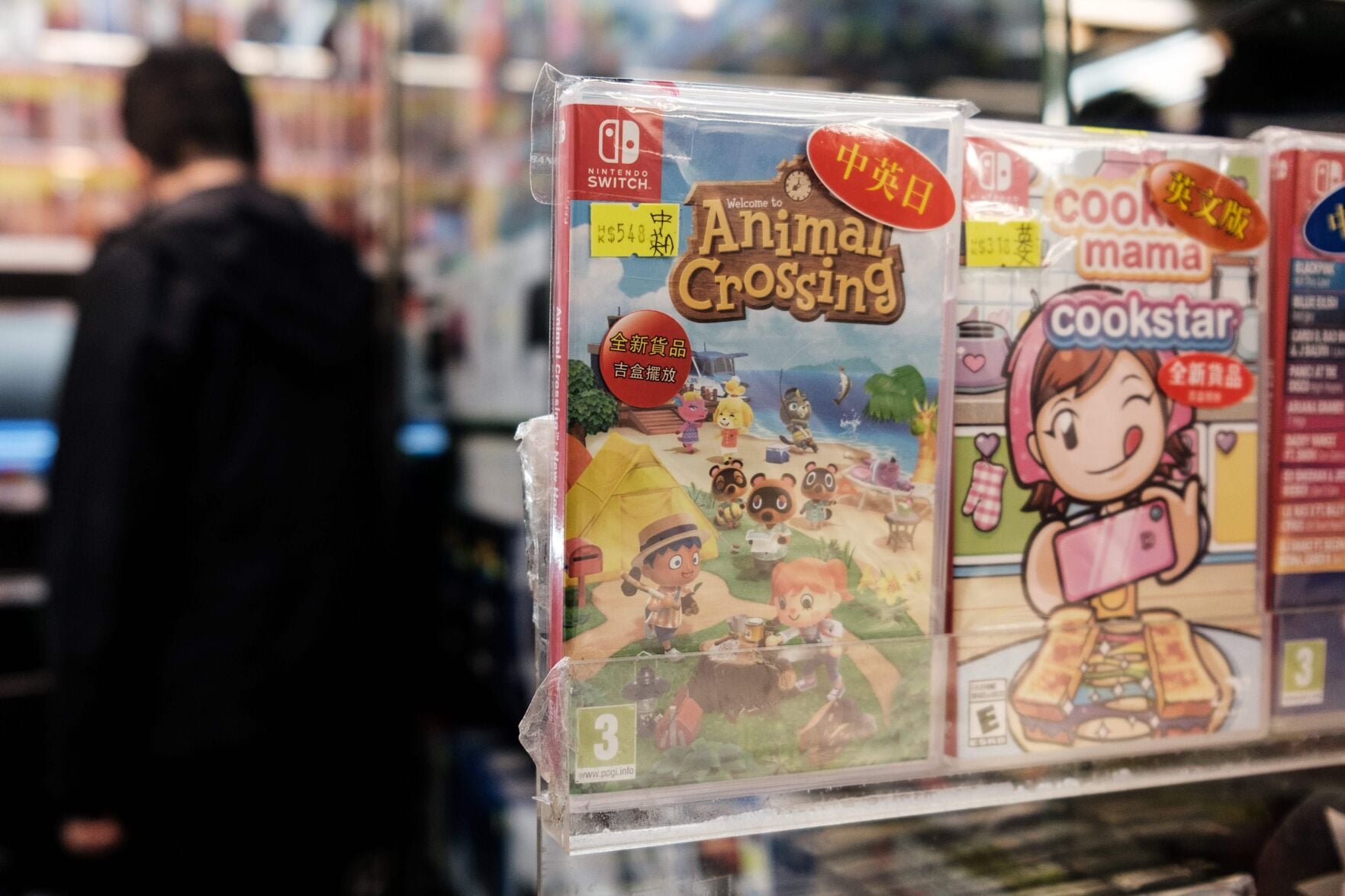
The Nintendo computer game “Animal Crossing: New Horizons” is seen for sale in a shopping mall in Hong Kong in 2020, before China banned the game in the wake of in-game “Free Hong Kong” messages created by players.
ANTHONY WALLACE AFP via Getty Images
Prof. Chris Ferguson at Stetson University wrote to the WHO on Aug. 20, 2016, to express five objections to the inclusion of the term in the ICD: comparing game use to substance abuse risks “pathologizing” normal behaviour; that there was no symptomology or way to assess problematic gaming; that there was no evidence that games had any additional risk than other behaviours like eating or overwork; and that it risked sparking a moral panic and could do “harm to the reputation of the WHO and medical community more generally.” He also mentioned in a later email, which I’ve also seen, that the APA was “getting slammed” on the matter.
Two days later, Ferguson was told an alarming truth. In an exchange of emails with a WHO official, Ferguson was told that the organization was coming “under enormous pressure, especially from Asian countries, to include this.” And while Ferguson was not told in writing which countries were imposing this pressure, he told me over a video call, “I am sure it was China and maybe South Korea” who were responsible.
“Obviously, this was a political thing more than a research or clinical thing,” he said. “They just kind of said ‘this was a thing,’ and they never really came up with any criteria for how to define it … Is that really a stand-alone disorder? Or is it simply a symptom of depression, anxiety, or other mental health disorders?”
The WHO disputed Ferguson’s points vehemently. Dr. Vladimir Poznyak, who was the co-ordinator of the management of substance abuse within the WHO, said that “there was not any pressure from WHO Member States to include ‘gaming disorder’ in the ICD, that there was no formal request” expressed, and that “the decision was based entirely on the available scientific evidence and experiences in different countries.” It then proceeded to include gaming disorder in the draft of ICD-11 in December 2017, ruining the Christmases of a lot of people working in the games industry in the process.
However, the WHO did not publish the evidence that suggested gaming disorder should be included within the ICD.
Prof. Andrew Przybylski from Oxford’s Internet Institute, whose evidence-based research into video games has consistently demonstrated a “neutral” effect from the medium on people’s mental health, wrote to the WHO asking whether it would publish the information that guided its opinion, in the interests of open science. Did the WHO release the evidence?
“No, they’ve not done any of that. They’ve just doubled down,” he said. He also stated that it was not normal for the WHO to conceal evidence in this way. “If it was cancer, it would be exceptionally unusual (not to publish the evidence base) … But on games I can say I know the science as well as anyone … and nothing they’ve provided is convincing.”

“Power Play: Video Games, Politics, and the Battle for Global Influence”
George E. Osborn
376 pages
Prometheus Books
$44.95
Prometheus Books
In an attempt to side-step the request to see the precise evidence it used to justify gaming disorders’ existence, the WHO instead commissioned a separate “meta-analysis” to analyze publicly available research to justify its decision. However, it backfired. The paper, which drew nearly 80 per cent of its data from studies conducted in South Korea and China, concluded that “the prevalence of IGD ranged from 0.21-57.50 per cent in general populations.” Based on today’s gaming population of roughly 3.5 billion people, the meta-analysis suggested that the number of people who could be suffering from the disorder was between 7.1 million people and 1.8 billion. “It’s garbage in, garbage out,” stated Przybylski, in reference to the comically wide range. But for the Chinese government, it didn’t matter whether or not the science was garbage. The country needed a reason to tighten its censorship net.
In July 2017, Tencent implemented a voluntary “anti-addiction” system in “Honor of Kings,” which limited the playtime of people ages 12 and under to an hour per day and of people ages 13 to 17 to a couple of hours. That system was underpinned by a “real name” identification system, with players linking their real-life ID to the game to manage interactions — explicitly tying the anti-addiction system’s goals to one of the main mechanisms through which the state monitors the lives of its citizens.
The government turned the legal thumbscrews on developers shortly after the WHO made major announcements about gaming disorder on two occasions before 2020.
The first announcement came on March 21, 2018, just three months after the WHO had included “gaming disorder” in the draft of ICD-11. The government dramatically froze the issuing of licences for any video game releases in the territory — stopping any new domestic or international games from releasing. Officially, the move was a result of China’s decision to reorganize its censorship bodies.
Unofficially, though, concerns over addiction were being weaponized to extend Tencent’s voluntary anti-addiction measures for “Honor of Kings” to encompass all of the most popular games played by the then-biggest company in the country. Tencent’s big release for the year, the mobile version of “Player Unknown Battlegrounds” (PUBG), a wildly popular multiplayer action game, was snared up in the licensing freeze. On the face of it, fears over the game’s violent content — which sees a hundred players fight one another to be the last player or team standing — led to dramatic changes to keep the censors happy. The globally known “PUBG” transformed in China only into “Game for Peace,” which saw a brutal battle royale narrative swapped out in favour of allowing players to participate in a blood- and gore-free “training exercise” by China’s military.
When game approvals restarted in December 2018, the number crashed — dropping to 130 games approved per month compared to more than 800 per month in 2017. Everything but the simplest domestically made mobile games (e.g., a simple puzzle game) were subjected to an approval process that examined a game, in depth, for forbidden content, and exploring whether the business seeking a licence followed relevant local rules (including having state-trained censors on its staff).
As part of its attempt to get government back onside and reopen the market to release, Tencent committed in September 2018 to roll out “anti-addiction” systems it had created for “Honor of Kings” across all of its games.
In May 2019, the World Health Organization finally published ICD-11 and included gaming disorder in it. This resulted in a flurry of research and clinic openings across the world, including the National Health Service’s game addiction service in the United Kingdom in October 2019. By 2023, the service had treated 745 people for gaming disorder. With approximately 60 per cent of the U.K.’s 69.3 million population playing video games, this amounts to a prevalence rate of 0.000017 per cent. That means you are only 17 times more likely to be addicted to video games than you are to be hit by lightning. A blessed relief for Wordle players everywhere.

Author George E. Osborn.
Gareth Dutton photo
But in the same month that the NHS opened up its clinic, China delivered a jolting change in the law that extended the “addiction” censorship that Tencent had willingly cloaked itself in over the whole industry. Companies were forced to identify who their players were and what their age was.
Later, in 2020, despite its being technically unavailable for release in the country, China banned Nintendo’s peaceful island life simulator “Animal Crossing: New Horizons” after players used some of its features to create signs that promoted messages like “Free Hong Kong.” The government also removed video games that happened to awkwardly contradict its own narratives. The video game “Plague Inc.”, a popular strategy game about spreading a pandemic around the world, shot to the top of the Chinese app stores in early 2020 as COVID raged through Wuhan. Shortly afterward, it was pulled from sale by the Chinese government on the basis that it featured “illegal content.”
Excerpted from “Power Play: Video Games, Politics, and the Battle for Global Influence” by George E. Osborn. Copyright © 2026 George E. Osborn. Published by Prometheus Books. Reproduced by arrangement with the Publisher. All rights reserved.