dailynewsnblog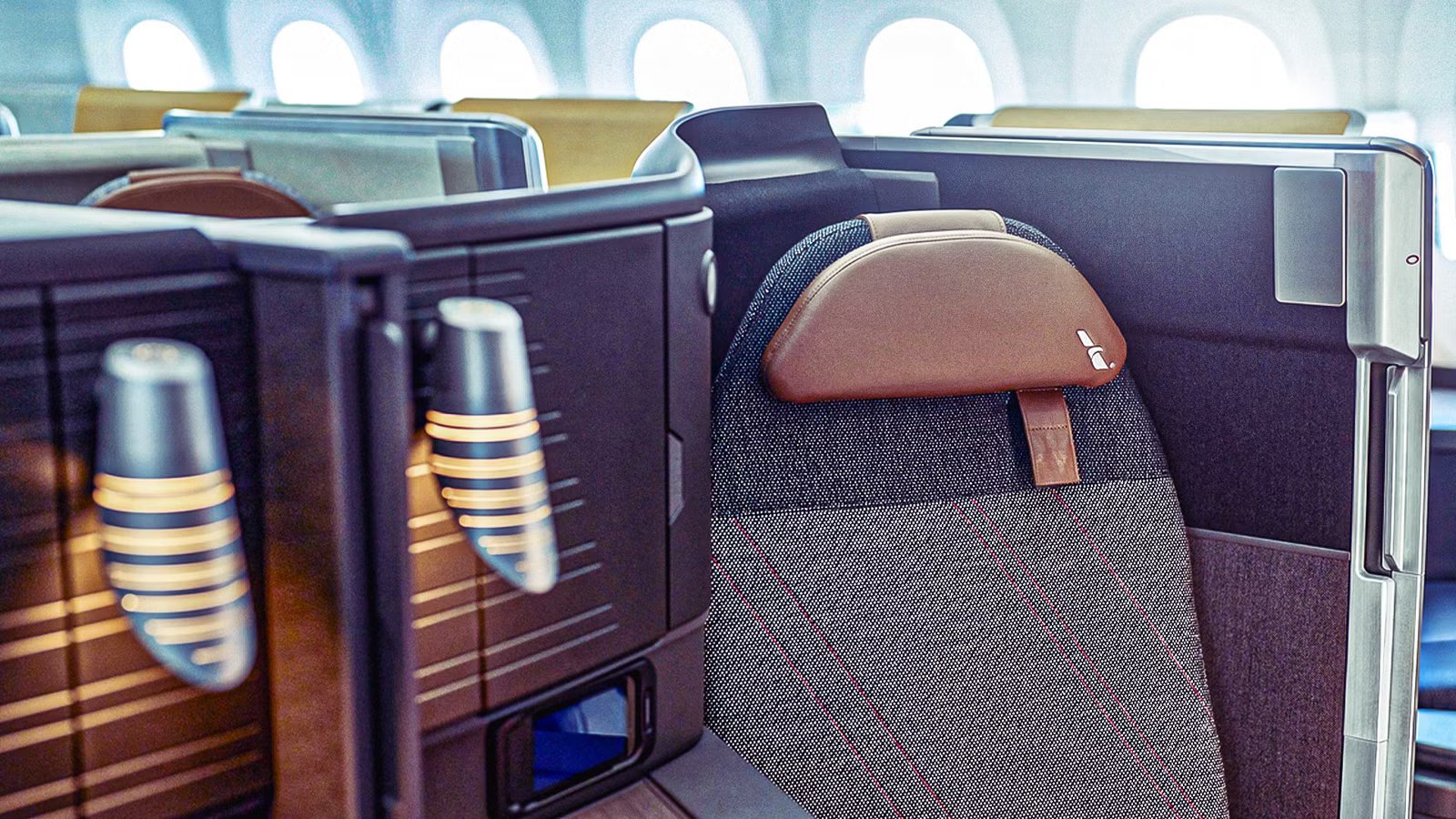
The launch of  American Airlines‘ premium-heavy Boeing 787-9P configuration addresses the desire for many carriers to operate flights with fewer economy seats and more premium seats in a way that will be highly profitable. With escalating fuel costs and shifting corporate travel patterns challenging the sustainability of traditional, high-capacity widebody operations, this new configuration is built for today’s market environment.
The global long-haul market has historically required airlines to pack the back of the aircraft with economy seating to balance the high operating costs of transoceanic flights. However, American Airlines’ introduction of the 787-9P subtype in June 2025 is a sharp break from this convention, moving toward an aggressive premium-first network strategy.
Dropping The Seat Count

The core operational strategy of the 787-9P centers on a drastic reduction in total seat capacity to maximize revenue from high-spending travelers. Total passenger capacity is capped at just 244 seats, a highly specialized widebody environment optimized for elite long-range routes where seats can be filled easily. The layout represents a significant drop from the 285 seats found on the standard 787-9 variant, making the new aircraft variant a targeted tool for premium network expansion.
The airline currently operates 11 of these premium-heavy aircraft as of May 2026, with plans to expand the sub-fleet to 30 airframes by 2029. The very intentional drop in seat count allows the carrier to deploy the aircraft on highly specific international routes that feature strong corporate demand but limited baseline economy traffic. Rather than struggling to fill hundreds of low-fare economy seats to break even, network planners can take advantage of a denser premium cabin to secure the economic viability of thin global corridors from day one.
The layout shift is the vanguard of an aggressive, carrier-wide strategy to boost international lie-flat and premium economy seating availability by 50% by the end of the decade. The premium-heavy model debuted on competitive transatlantic legs like  Chicago O’Hare (ORD) to
  London Heathrow (LHR) before transitioning to the much more demanding, ultra-long-haul transpacific routes. Where American can benefit most from this variant is being able to match the capacity of the aircraft to the specific yield profile of the market, keeping high-cost long-distance lines unaffected from broader macroeconomic downturns.
Supported By Economics

It almost goes against what would typically be expected of an airline, but removing economy seats in favor of a more premium-heavy layout is far from nonsensical. Every square foot of a widebody cabin is a direct trade-off between heavy infrastructure and potential ticket revenue. For the 787-9P, this space has been completely reallocated, dismantling the standard economy footprint to make way for luxury seating tiers.
The reality of this cabin change is clear when comparing the seat metrics directly. The standard configuration carries 234 economy passengers, whereas the premium 787-9P version slashes that number down to a mere 161 seats in the main cabin. This sacrificed space is repurposed to accommodate 51 Flagship Suites and 32 premium economy spots, creating an unbalanced system where premium seats control a significant percentage of the cabin length.
Overall, the layout makes perfect economic sense when viewed through the lens of industry revenue data. Next-generation business suites are far more enticing to corporate travelers, and premium economy products generate up to 33% more revenue per square foot of floor space than baseline economy setups, according to research from  Lufthansa. By heavily weighting the aircraft payload toward these high-margin zones, the airline can cover the immense fuel and operational costs of extended flights without needing massive coach volume.
What Are The Benefits Of Flying In American Airlines’ New Premium Economy?
The refreshed premium economy seats are more comfortable, aesthetically pleasing, and technologically advanced than older seats.
Less Of A Heavy Burden

Flying non-stop across vast oceanic gaps naturally demands an immense fuel load, which in turn increases the total weight of the aircraft and directly impacts payload limitations. The 244-seat layout resolves this operational challenge by stripping away passenger weight while elevating the monetary value of the remaining payload.
This strategy is perfectly illustrated by the deployment of the 787-9P on some of the absolute longest routes by distance in the global network. The airline uses the premium variant to service routes like  Dallas/Fort Worth to Brisbane, operating as flight AA7, alongside Dallas/Fort Worth to Auckland. On a 14-hour transpacific flight covering over 8,300 miles (13,357 km), carrying 41 fewer passengers drastically reduces the total weight of the cabin, saving fuel while allowing the carrier to focus entirely on capturing elite corporate yields and keep the route highly profitable.
Thin routes of this length were highly vulnerable to cancellation during off-peak seasons because economy demand would fluctuate wildly. American now possesses the ability to bring in a stable baseline of business travelers that can keep the route profitable year-round, all through structuring the 787-9P around a core of 51 luxury suites. For today’s American Airlines, the true value of next-generation widebody assets lies in their ability to survive volatile economic conditions through targeted yield generation.
Carefully Selecting What Works For The Cabin

The increased premium capacity of the 787-9P relies heavily on providing an upgraded onboard product that justifies these high-yield ticket prices. Passengers paying a massive premium for transoceanic flights expect more than just a basic seat; they demand a private, highly functional living space that mitigates the exhaustion of long-range travel. The focus for American is heavily on next-generation cabin architecture to bolster its approval with customers and keep the airline at the top of the list for those choosing to fly internationally.
The core of this experience is delivered via the Adient Ascent platform, which arranges the 51 premium business spaces in a private reverse-herringbone layout. Each suite features a fully closing sliding privacy door, a dedicated wireless charging pad, and an adjustable chaise lounge mechanism that allows for highly customized comfort positions. To extract even higher revenue from the forward cabin, the airline designated exactly eight of these accommodations as Flagship Preferred Suites, placing them exclusively in the spacious bulkhead rows where passengers are presented with 19% more bed space and 42% more living area than a standard suite.
American’s impressive added luxury is reinforced by premium soft products specifically chosen to enhance ultra-long-haul comfort on its longest global sectors. Passengers in the Preferred rows receive memory foam mattress pads, an expanded amenity kit, an extra-soft fabric blanket, and a dual-sided cool-touch pillow to facilitate deep sleep. Combined with individual personal air vents for precise climate customization and universal power access, including USB-C and traditional AC outlets, the hardware strategy almost replaces traditional international first class with a highly profitable business-plus tier.
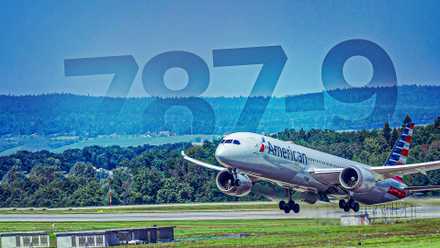
Just 244 Seats: American Airlines’ 5 Ultra-Premium Boeing 787 Routes In 2026
Where American Airlines is flying its premium heavy Boeing 787-9 aircraft.
Not Forgetting Those At The Back

If the focus really is on the premium factor, then naturally, the economy section has to give way, potentially compromising the flying experience for passengers traveling in the remaining sections of the aircraft. When an airline removes 73 standard economy seats to make room for luxury business suites, the remaining space must be carefully managed to prevent a cramped, uncomfortable atmosphere in the back of the bus. The solution involves installing enhanced comfort features and next-generation connectivity across all 244 available seats, not just the higher-priced seats.
The premium economy cabin benefits significantly from this cabin re-engineering, expanding to 32 seats arranged in a spacious 2-3-2 configuration. These upgraded seats introduce structural headrest wings for lateral head support and privacy, alongside dedicated calf rests, integrated footrests, and personal water bottle storage pockets. Adding wireless charging cradles to these mid-tier rows, the gap between basic economy and full business suites becomes much closer, providing a highly attractive option for premium leisure travelers.
Still, improving the baseline technology for the 161 passengers in the main cabin remains a priority for American, helping to keep customer satisfaction high despite the reduced overall size of the coach section. Every economy row receives high-definition 4K QLED monitors supplied by Thales, paired with universal Bluetooth connectivity that allows passengers to sync their personal wireless headphones directly to the seatback screens.
Catch what other flight trackers miss
Emergency squawks, holds, NOTAMs — live signals, no signup.
Open tracker
Catch what other flight trackers miss
Emergency squawks, holds, NOTAMs — live signals, no signup.
Open tracker
No Longer A Numbers Game

The broader rolling integration of the 787-9P is a good indicator of how the airline plans to manage its international widebody assets as a whole. This specialized layout shows that the airline is no longer purely chasing raw passenger volume and has started to look toward mastering high-yield, premium-first network execution.
The Flagship experience is by no means limited to this special layout, as American is actively retrofitting its existing Boeing 777-200ER and Boeing 777-300ER fleets to feature these identical Flagship Suite standards, ensuring a uniform passenger experience across the entire long-haul network. The massive fleet-wide harmonization project will aim for high-yield configurations to become the baseline standard rather than an occasional luxury upgrade.
The continuous delivery of these premium airframes, which will scale to 30 total 787-9P units by 2029, aligns perfectly with the upcoming induction of long-range single-aisle platforms like the Airbus A321XLR. Operating a dual-pronged strategy of ultra-premium widebodies on thin, long-range corridors and efficient narrowbodies on thinner secondary markets, the airline is truly rewriting the rules of international network sustainability.