dailynewsnblog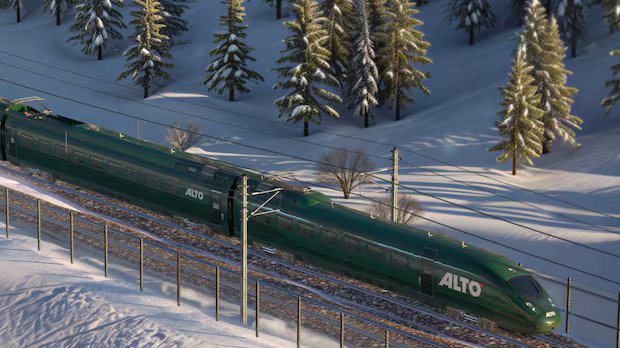
The Crown corporation behind Canada’s proposed high-speed rail line has released new details on how it plans to expropriate and compensate landowners to carry out the multibillion-dollar project.
The federal government plans build the first stretch of the network between Ottawa and Montreal. The complete, Toronto-to-Quebec City system is expected to cost between $60 billion and $90 billion.
Alto says that by this fall, it will narrow down the current study area corridor to a “final right-of-way” measuring about 60 metres in width.
Here are the latest details on what will happen next.
How will Alto approach acquiring property?
Alto has laid out its process on its webpage, promising to be “structured, transparent and responsive” in each case.
First it will decide on the route, identify the properties it needs within that tightened corridor, then send a formal letter to property owners. Alto says it will assign a “dedicated representative” for each landowner going through the process.
Then the negotiations begin.
We really want to start with a willing buyer, willing seller.– Martin Imbleau, Alto CEO and President
Offers will be made, a “tailored” timeline created, and appraisals conducted. Once both sides come to an agreement, offers will be signed. Alto expects this to take several months.
The goal is for the tracks to go along existing property lines and for Alto to avoid expropriations, though some will be necessary, Alto CEO Martin Imbleau told The Canadian Press.
“We really want to start with a willing buyer, willing seller,” he said.
“That does not mean that the expropriation process will not be used to expedite a transaction, even with a willing seller.”
How might Bill C-15 affect this?
The federal government’s Bill C-15, which includes the High-Speed Rail Act, makes amendments to the Expropriation Act that will apply to the Alto project. The bill received royal assent this March, becoming law.
Under it, the government will have no obligation to negotiate an amicable purchase agreement before acquiring land. The law also abolishes public hearings for property owners who want to contest expropriation in person.
The bill also gives Alto a right of first refusal in the event of the sale of property. That means if someone with notice from Alto wants to sell their property, they have to send the purchase agreement to Alto first. The Crown corporation will have 60 days to either refuse or buy the land.
Alto says in most cases, property owners within the current study area corridor won’t be barred — for the moment — from selling their property. But some landowners may see notices registered by Alto on their properties. That might be a potential right of first refusal, or a notice preventing owners from carrying out “new works that could enhance property values.”
While lawyers suggest there’s limited legal recourse for affected property owners to contest the route, Alto says expropriation will be used as a last resort and consultation will be prioritized.
On its updated webpage, Alto adds that if negotiations fail, the property owner will be given a heads up before being “undertaken.”
What will property owners be compensated for?
Landowners with parcels of land needed for the project will receive compensation based on several factors like the market value of the property, disturbance costs such as moving expenses, financial losses for business operations, and other “special difficulties” for properties that aren’t as easy to replace.
Should only portions of the property be expropriated, Alto says compensation will reflect any effect on the remaining land like loss of parking or “awkward” parcel shapes.
The dollar amount will be determined by independent appraisals, but Alto says property owners can get their own legal advice and appraisal and will be compensated for those fees.

In some cases, Alto says temporary access to some people’s land may be needed to store materials during construction. People will also be compensated for that.
“It’s not only just buying the land; it’s all inconveniences and nuisances with the projects for which landowners will be compensated,” Imbleau added when speaking to The Canadian Press.
There may also be compensation for tenants in rentals who may be impacted, Alto said.
When will compensations be paid out?
Alto says a portion of the agreed compensation may be paid upon signing an agreement or shortly after. The remainder will be paid at closing.
The structure and timeline of payments may differ for each landowner.
How will construction impact farmland?
Alto says there will temporary disruptions to agricultural operations in areas where it plans to build the rail.
If farmers’ land access is temporarily restricted in laneways and fields, Alto says it will financially compensate for that and provide notice and work with farmers to find alternative routes “where possible.”
There will be noise, dust and vibration, it warns, so there will be limits to contractors’ working hours and measures to control debris and noise near farms and buildings.
The project will also require contracts to specify proper topsoil management practices, Alto says, and there will be inspections for tile drainage systems. Compensation might also be offered if the drainage is affected.
What happens after construction?
Alto says it will aim to restore agricultural land to its previous condition by grading, draining and replacing topsoil and drainage systems.
And to make sure livestock are safe, it plans to install fencing along the future tracks.
Property owners will be able to report concerns, damages, commitments not kept and work carried out “outside agreed limits” after the construction. Those issues will be reviewed and addressed “as needed,” Alto says.

Will there be disruptions to roads?
Alto says some local roads will be cut off by the line, which could have implications for everyone from first responders to students riding the school bus.
On top of conducting traffic studies to look into those impacts, Alto says it’s going to build access roads beside tracks and crossings like overpasses and underpasses.
The Crown corporation says it will work with municipalities, property owners and agricultural associations to decide the location of those crossings, which farmers will have access to for business operations.