dailynewsnblog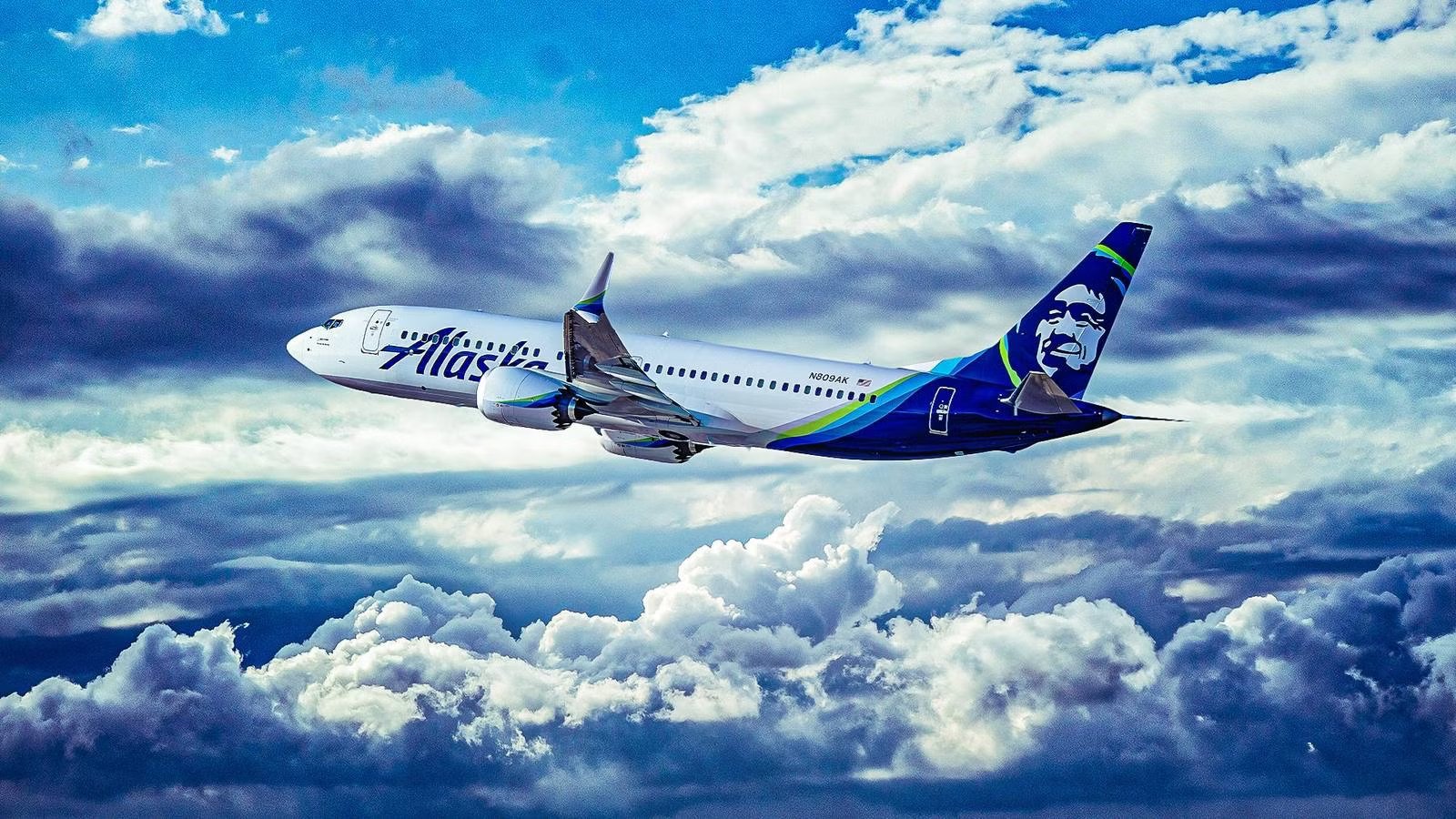
A pilot’s journey, on the surface, seems rather linear. Start at a regional feeder, log your hours, and set your sights on a legacy carrier for the ultimate widebody paycheck. Today, that traditional career ladder has been compressed. Mid-size carrier  Alaska Airlines now offers senior narrowbody captains hourly rates that sit within striking distance of the ‘Big Three’, erasing a historical wage gap that defined pilot recruitment for generations. It is a seismic shift in labor economics, altering how pilots view career destinations without ever setting foot on a widebody aircraft.
So how exactly did a hybrid airline close a generational pay chasm with legacy heavyweights, and what specific contract mechanism ensures their compensation tracks step-for-step with the industry giants? Alaska Airlines has grown massively over the last few years, and is now a real challenger across the board for the leading US carriers, and it is this approach to pilot pay that is making the airline stand out for those working on the flight deck.
Directly Challenging The Leaders

At the center of Alaska Airlines’ closing the legacy pay gap is the market-rate adjustment clause negotiated by the Air Line Pilots Association (ALPA). What this has done is automatically tie wage structures to the benchmark compensation patterns established by  Delta Air Lines,
  United Airlines, and
  American Airlines. It is a direct structural intervention designed to halt the historical drain of cockpit talent away from mid-size carriers, though it immediately raises the question of how a hybrid business model absorbs such high fixed labor costs without destabilizing operating margins.
Legacy carriers have held a tight monopoly on top-tier pilot recruitment because their collective bargaining agreements set the ceiling for the entire commercial aviation sector. When major carriers ratified agreements featuring historic double-digit raises, smaller networks faced an existential choice between losing captains or matching the terms. Alaska chose the latter by embedding parity clauses directly into its collective bargaining agreement, ensuring that any significant upward movement by the Big Three triggers a corresponding adjustment.
Yet anchoring hourly wages to the legacy heavyweights creates an entirely different operational puzzle when evaluating specific aircraft types. Especially for a narrowbody-dominant airline, it is quite hard to justify paying pilot rates that mirror global operators while relying primarily on single-aisle fleet deployments.
Almost Sitting At The Top

Operating a uniform single-aisle fleet changes the equation entirely when matching legacy hourly benchmarks. Legacy carriers balance multi-fleet complexity spanning regional jets up to widebody long-haul aircraft, whereas a focused narrowbody operation derives its efficiency from high aircraft utilization and rapid turnaround times. What this operational model does is allow carriers to channel revenue directly into front-end crew costs without requiring intercontinental routes to subsidize the pay scale.
The resulting figures demonstrate just how compressed the market has become. For first-year first officers flying the Boeing 737, compensation starts between $119.92 per hour (under 2025 schedules) and $124.72 per hour (effective under 2026 rates). At the top of the seniority list, senior captains command base hourly rates ranging from $361.29 to $375.74 per hour depending on the exact contractual step. When placed side-by-side with the Big Three, Alaska’s top narrowbody captain rate sits within a narrow margin of Delta Air Lines and United Airlines at $388.27 per hour, and actually exceeds American Airlines at $360.85 per hour.
The issue is that erasing the hourly rate gap introduces an immediate financial trade-off for crew planning. If hourly pay is nearly identical across network carriers, base wages alone no longer dictate where a pilot chooses to build seniority. Instead, airlines need to think outside of these base salaries to find different ways of attracting top talent.
What Makes Alaska Stand Out To Pilots?

Retirement matching and guaranteed monthly minimums make a massive difference in the real-world math of pilot compensation far beyond standard hourly figures. While base rates naturally capture headlines, a true assessment of career value can be found when examining total direct remuneration, particularly structural contributions that compound over a multi-decade aviation career. At Alaska Airlines, this total compensation package relies heavily on non-wage benefits designed to match or exceed legacy offerings without requiring widebody lineholder seniority.
The defining element of this package is a 17% direct company contribution to pilot 401(k) plans, a figure that ranks among the most lucrative in the commercial sector. Coupled with a 70-hour monthly minimum pay guarantee that protects crews against unexpected schedule reductions or weather cancellations, senior captains routinely push their total annual W-2 earnings past $400,000 when incorporating profit sharing and premium open-time flying.
Stacking these financial guarantees against traditional career paths often leads to a deeper structural question about how pilots evaluate long-term progression. If a narrowbody captain can achieve legacy-level earnings and retirement security at a regional-turned-national carrier, what happens to the historical motivation for chasing widebody transitions?
Not Just A Starting Point

In practice, this economic parity massively changes how pilots manage their career trajectories, because now, a regional-to-legacy pipeline is seen as a destination instead of just a starting point. Rather than viewing a narrowbody operator as an interim stop before transitioning to widebody international long-haul flying, pilots are finding that remaining on a single-aisle fleet provides comparable top-tier earnings without the displacement of reserve schedules or junior international lines. On the balance sheet and inside the flight deck, the operational reality of flying a uniform  Boeing fleet means crews enjoy predictable scheduling paired with legacy-matching remuneration.
To get a clearer understanding of what the reality is, consider the operational footprint of operating out of primary West Coast hubs like  Seattle-Tacoma International Airport(SEA) or Portland International Airport(PDX), where single-aisle aircraft manage dense domestic and transcontinental networks spanning over 1,500 nautical miles (2,778 kilometers). Flying variants such as the Boeing 737-900ER or the Boeing 737 MAX 9 across hundreds of destinations generates high utilization rates that directly support these elevated pay scales. When a senior captain operates transcontinental segments or key regional feeder routes across the network, the compensation matches or beats what a peer flying equivalent narrowbody domestic legs at American Airlines or United Airlines takes home.
Hub / Operational Base | Primary Aircraft Variant | Network Focus | Average Daily Departures |
Seattle (SEA) | Boeing 737-900ER / MAX 9 | Transcontinental & Regional | Over 7,500 monthly flights |
Portland (PDX) | Boeing 737-800 / MAX 9 | West Coast & Domestic | Over 3,500 monthly flights |
Anchorage (ANC) | Boeing 737 Family / Combi | Northern & State Routes | Over 1,200 monthly flights |
As individual pilots benefit immensely from this wage convergence, locking structural compensation to major legacy benchmarks is something that can bring with it financial exposure during broader industry downturns. A hybrid operating margin can become incredibly fragile when commercial demand softens, but contractual pay clauses prevent labor cost adjustments.
What Happens When Costs Rise?

At this deepest layer of the financial structure, maintaining parity with legacy carriers introduces structural tension into unit labor costs. When a mid-size carrier links its cockpit compensation directly to the bargaining results of Delta, United, and American, operating margins become acutely sensitive to macroeconomic volatility and fuel price fluctuations. In financial disclosures across 2025 and 2026, Alaska Air Group reported that unit costs excluding fuel increased roughly 1.3% year-over-year, reflecting tight cost control amid escalating crew expenses following union pay escalations.
Catch what other flight trackers miss
Emergency squawks, holds, NOTAMs — live signals, no signup.
Open tracker
Catch what other flight trackers miss
Emergency squawks, holds, NOTAMs — live signals, no signup.
Open tracker
The challenge lies in balancing fixed labor overhead with the revenue volatility inherent in a predominantly single-aisle network. During periods of robust corporate travel, which saw premium revenue climb 7% and corporate bookings rise 9% year-over-year, the carrier successfully absorbed senior captain wages exceeding $361.29 to $375.74 per hour. However, executives still need to work around tight operating margins, such as the adjusted pretax margin of 1.8% recorded in recent quarterly reports, where any sudden fuel spike or capacity restriction tests the resilience of the hybrid business model.
For now, at least, Alaska Airlines is making this balance work, even in the face of some of the most volatile events in recent aviation history. A mid-size hybrid operator has now proved that narrowbody-only airlines can successfully shoulder legacy wage structures without collapsing under fixed costs, so that naturally leaves many to wonder what changes for the broader industry.
The New Status Quo

The ultimate test of whether this model ends up working out for the long term will be found in upcoming collective bargaining agreement updates and multi-year aircraft delivery pipelines, particularly as airlines manage sprawling single-aisle order books for variants like the Boeing 737 MAX 10. How labor leaders and airline executives balance unit cost discipline against automated market adjustments will define the viability of hybrid carriers for years to come.
As Captain Will McQuillen, chair of the Alaska Airlines Master Executive Council, noted following contract ratification, the objective was to build a career where pilots could plant roots permanently rather than treat the airline as a stepping stone. Whether that vision withstands macroeconomic turbulence remains the defining question for the modern flight deck. At the moment, Alaska is proving to pilots that it is the place to be, even if there are larger airlines looming.