dailynewsnblog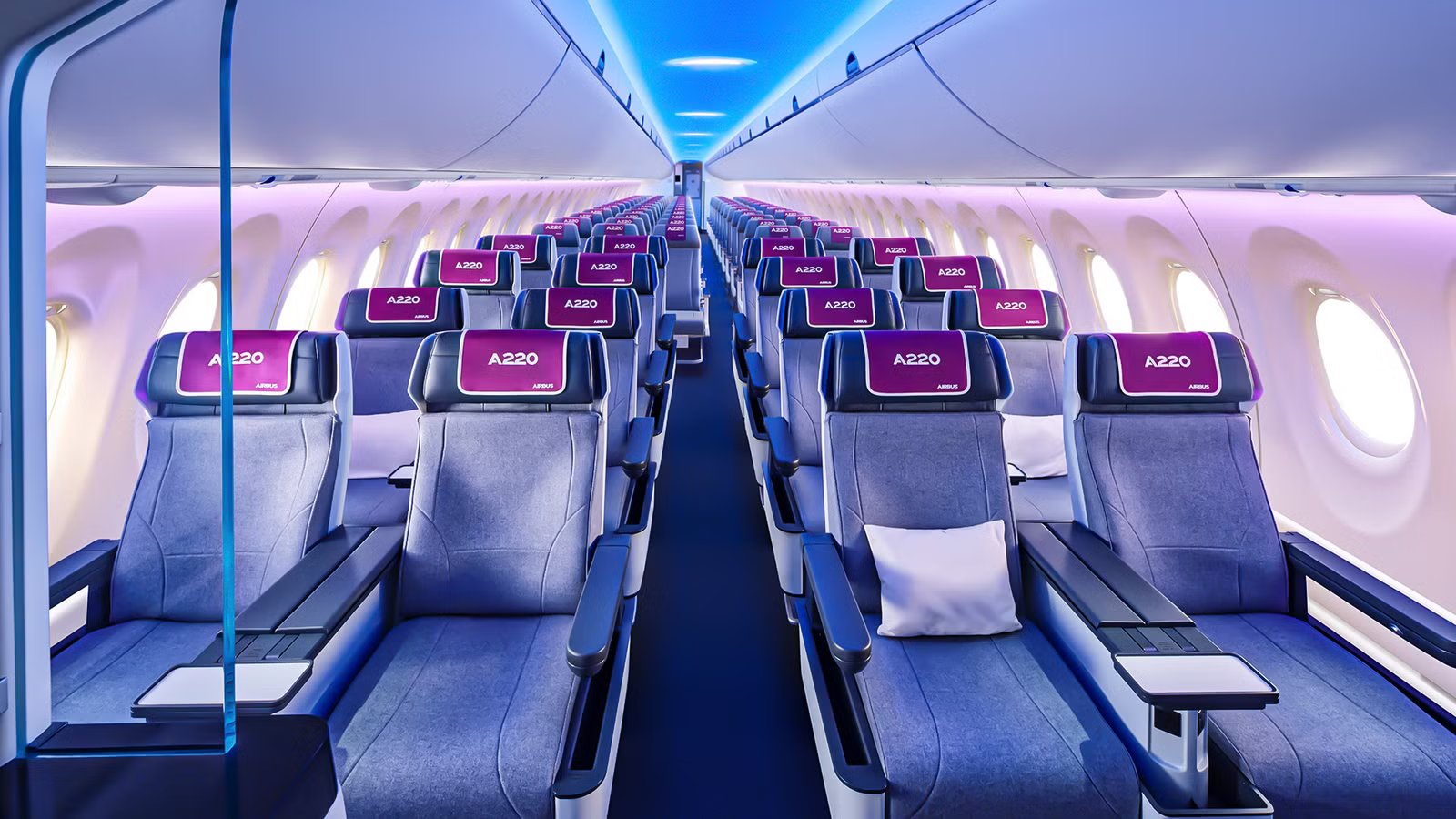
When Airbus and 3M announced a new long-term agreement covering advanced thermal and acoustic insulation for the Airbus A220 on June 23, 2026, the news appeared to be a routine supplier contract. In reality, it reflected a broader strategy that has been developing for years. As the A220 takes on increasingly longer missions, Airbus is investing in technologies that improve the passenger experience in ways that extend well beyond new seats or cabin layouts. The goal is to reinforce one of the aircraft’s defining strengths: an exceptionally quiet and comfortable cabin.
That focus comes as airlines increasingly deploy the A220 on transatlantic and other long-thin routes that can approach eight hours in duration. Flights of this length place greater emphasis on cabin comfort than traditional short-haul operations, making factors such as noise levels, temperature stability, and overall passenger fatigue increasingly important. Rather than simply offering another narrowbody capable of crossing the Atlantic, Airbus is quietly positioning the A220 as an aircraft that delivers a travel experience more commonly associated with larger widebody jets. The latest insulation agreement represents another step in that strategy, strengthening the A220’s competitive position just as its role continues to expand beyond the missions it was originally designed to fly.
From Regional Airliner To Transatlantic Specialist

The A220 was not originally conceived as a transatlantic aircraft. Developed as the Bombardier CSeries, it was designed to replace aging regional jets and smaller narrowbodies on two- to four-hour sectors while offering significantly lower fuel burn and operating costs. Following Airbus’ acquisition of the program in 2018, however, the aircraft’s role expanded considerably as airlines began recognizing that its combination of range, efficiency, and passenger comfort made it well suited to routes traditionally considered too thin for larger aircraft.
That shift has become increasingly apparent across the North Atlantic. Rather than relying exclusively on widebody aircraft carrying 250 to 350 passengers, airlines have used the A220 to connect secondary cities and underserved markets where demand does not justify larger jets. This “long-thin” strategy allows carriers to open nonstop routes that would otherwise require a connection through major hubs, reducing travel times while improving fleet flexibility.
Several operators have embraced this approach. JetBlue Airways has incorporated the A220 into its broader network strategy alongside the Airbus A321LR and A321XLR, while  Delta Air Lines continues to expand its A220 fleet across domestic and international operations. Breeze Airways has built much of its business model around connecting underserved city pairs with smaller, efficient aircraft, and airBaltic has demonstrated how an all-A220 fleet can support an expanding European network with the flexibility to operate longer sectors when market conditions warrant. Although these airlines deploy the aircraft in different ways, they share a common objective: matching capacity more closely to demand instead of relying on larger aircraft that may be more difficult to fill year-round.
Top Five Largest A220 Operators as of May 2026 | |||
|---|---|---|---|
Airline | A220-100 | A220-300 | Total |
Delta | 45 | 42 | 87 |
JetBlue | 65 | 65 | |
Breeze | 57 | 57 | |
Air France | 56 | 56 | |
airBaltic | 55 | 55 | |
As mission lengths increase, passenger expectations also change. A cabin environment that feels perfectly acceptable on a two-hour flight becomes much more important after six or seven hours in the air. Noise levels, vibration, temperature consistency, and overall comfort can influence how travelers perceive an airline’s premium product, particularly when competing against widebody aircraft offering larger cabins. That reality has encouraged Airbus to treat the A220 as more than an efficient narrowbody, investing in technologies that enhance the onboard experience as the aircraft assumes an increasingly prominent role on longer international routes.
Why The Airbus And 3M Agreement Matters

The latest step in Airbus’ strategy came on June 23, 2026, when the manufacturer announced a new long-term supply agreement with 3M to provide advanced thermal and acoustic insulation for the A220. While supplier agreements rarely attract widespread attention outside the aerospace industry, this partnership addresses one of the most important aspects of passenger comfort on longer flights: the cabin environment. Rather than focusing on highly visible features such as seats or inflight entertainment, the agreement targets elements that passengers subconsciously notice throughout a journey, including background noise and temperature consistency.
Under the agreement, 3M will supply insulation materials designed to be integrated throughout the A220 cabin. The acoustic components help absorb and reduce noise generated by both the engines and the aircraft structure, creating a quieter environment for passengers and crew. At the same time, the thermal insulation improves temperature management throughout the fuselage, supporting a more consistent cabin climate while contributing to overall aircraft operating performance. Although largely invisible once installed, these materials play an important role in shaping how passengers experience a flight, particularly on missions lasting six hours or more. Eric Forbes, Vice President of Aerospace and Defense at 3M, commented on its efforts.
“Together, we are helping enhance both comfort and performance through technologies that passengers can feel directly in the cabin and that airlines can rely on across the life of the aircraft.”
The partnership also builds on a longstanding relationship between Airbus and 3M. By extending that relationship to the A220, Airbus is signaling that cabin refinement remains a priority as the aircraft takes on longer, more demanding missions. Viewed in isolation, improved insulation may appear to be a modest engineering upgrade. In the context of the A220’s evolving mission profile, however, it represents another incremental enhancement that strengthens the aircraft’s appeal on longer routes. As airlines increasingly evaluate passenger experience alongside operating economics, investments in quieter cabins and improved environmental control become meaningful differentiators rather than routine product updates.
Cabin Noise Has Become A Competitive Advantage

For decades, airlines have competed on factors such as ticket price, schedule, onboard service, and fuel efficiency. Today, cabin noise is becoming increasingly important on longer narrowbody flights. As aircraft remain in the air for six to eight hours, the cumulative effects of engine noise, airframe vibration, and background cabin noise become far more noticeable than on traditional short-haul sectors. A quieter environment can reduce passenger fatigue, make conversations easier, improve sleep, and enhance the overall perception of comfort.
The A220 has long been regarded as one of the quietest narrowbody aircraft in commercial service. Its Pratt & Whitney PW1500G geared turbofan engines generate lower external and internal noise than many previous-generation narrowbodies, while the aircraft’s clean-sheet design incorporates modern aerodynamics and structural improvements that help minimize cabin sound levels. Rather than relying on insulation alone, Airbus designed the aircraft with noise reduction as a core characteristic from the outset. The new 3M agreement builds on that foundation by further reducing engine and airframe noise reaching the cabin, reinforcing an advantage that already distinguishes the A220 from many competing single-aisle aircraft.
Travelers boarding an eight-hour transatlantic service expect an experience closer to that of a widebody aircraft than a conventional short-haul jet. While the A220 cannot replicate the cabin width of larger twin-aisle aircraft, reducing background noise helps narrow the perceived gap. A quieter cabin contributes to a more relaxed atmosphere, particularly in premium cabins where passengers often work, dine, or sleep during the flight. For airlines, those improvements can influence revenue as much as customer satisfaction. On competitive transatlantic routes, premium travelers are often willing to pay for a more comfortable experience, even when the aircraft itself is smaller. By continuing to refine the A220’s acoustic performance, Airbus is helping operators market the aircraft on the quality of the journey rather than simply its range or operating economics. That strategy will become increasingly valuable as the A220 expands into missions that were once the exclusive domain of much larger aircraft.
The Benefits Extend Beyond Passenger Comfort

Although the Airbus and 3M agreement is primarily focused on improving the cabin experience, the insulation technology also delivers operational benefits important to airlines. Thermal insulation helps maintain a more stable cabin environment by reducing heat transfer through the fuselage, allowing environmental control systems to operate more efficiently. Over thousands of flight hours, even incremental improvements in thermal performance can contribute to lower energy demands and more consistent aircraft operation, particularly on longer sectors where cabin systems remain active for extended periods.
Catch what other flight trackers miss
Emergency squawks, holds, NOTAMs — live signals, no signup.
Open tracker
Catch what other flight trackers miss
Emergency squawks, holds, NOTAMs — live signals, no signup.
Open tracker
The long-term nature of the agreement also reflects an emphasis on lifecycle value rather than a one-time product upgrade. Cabin insulation is installed deep within the aircraft structure and is expected to perform reliably throughout years of commercial service. By selecting materials designed for durability and consistent performance, Airbus reduces the need for premature replacement while giving operators greater confidence in long-term maintenance planning. According to 3M, the technologies are intended to improve both passenger comfort and aircraft performance across the life of the aircraft, reinforcing the idea that the investment extends beyond the passenger cabin.
These operational gains become increasingly valuable as airlines deploy the A220 on longer missions. Long-haul flights place greater demands on environmental systems than a typical domestic sector, making thermal efficiency and cabin consistency more noticeable to both passengers and crew. At the same time, operators seeking to maximize aircraft utilization benefit from technologies that improve reliability without adding complexity. Taken together, these factors illustrate why Airbus views cabin refinement as part of the A220’s broader value proposition rather than a standalone comfort feature. Lower operating costs remain essential, but airlines are also competing on product quality in premium markets.
How Airbus Is Differentiating The A220 For Long, Thin Markets

The cumulative effect of Airbus’ strategy is a deliberate repositioning of the A220 within the narrowbody segment. Rather than competing solely on fuel efficiency or seat-mile economics, the aircraft is being shaped into a product that can credibly serve markets where passenger comfort increasingly influences airline revenue. This is particularly relevant on long-thin transatlantic routes, where demand is too limited for widebody aircraft yet still requires a level of onboard comfort that supports six to eight hours of continuous flying.
In these markets, Airbus is effectively narrowing the experience gap between narrowbody and widebody cabins. The A220’s baseline attributes already provide a strong starting point, including a modern fuselage design, lower engine noise from geared turbofan technology, and a cabin layout that typically offers more personal space than older single-aisle jets. The addition of enhanced acoustic and thermal insulation builds on these characteristics, reinforcing a perception that the aircraft delivers a more refined environment than competing narrowbodies of similar size.
This positioning becomes more significant when compared with alternative aircraft used on transatlantic missions. Larger narrowbodies such as the A321LR and A321XLR offer extended range and higher seating capacity, but they do not inherently prioritize cabin quietness in the same way. Conversely, widebody aircraft deliver superior space and comfort but often entail higher trip costs and require stronger demand to justify deployment. The A220 occupies an intermediate space, and Airbus is increasingly emphasizing comfort enhancements as a way to strengthen its competitive identity in that segment.
Airlines operating the A220 on long routes are already testing this value proposition in practice. Delta, JetBlue, and Breeze have all incorporated the A220 into networks that extend beyond traditional regional flying, including missions that push closer to transatlantic ranges. Airbus’ broader strategy therefore appears focused on long-term differentiation rather than incremental improvement. By continuously refining the A220’s cabin environment, the manufacturer is reinforcing a product identity centered on comfort.
Establishing A New Competitive Edge

Airbus’ partnership with 3M ultimately highlights that the competitive battleground for long-thin routes is shifting from airframe capability to perceived passenger fatigue economics. As A220 missions extend closer to eight hours, airlines are no longer evaluating the aircraft purely on seat-mile efficiency, but on how effectively it protects yield by limiting discomfort-driven demand erosion in economy and preserving premium willingness to pay. This reframes the A220’s role in a more strategic way. Its advantage is not simply that it can fly further, but that it can potentially sustain revenue quality over longer durations when smaller differences in cabin environment begin to influence booking decisions at scale. In that sense, Airbus is not just refining the aircraft’s comfort profile, but positioning it as a tool for managing long-haul revenue resilience in markets that were previously the domain of widebodies.