dailynewsnblog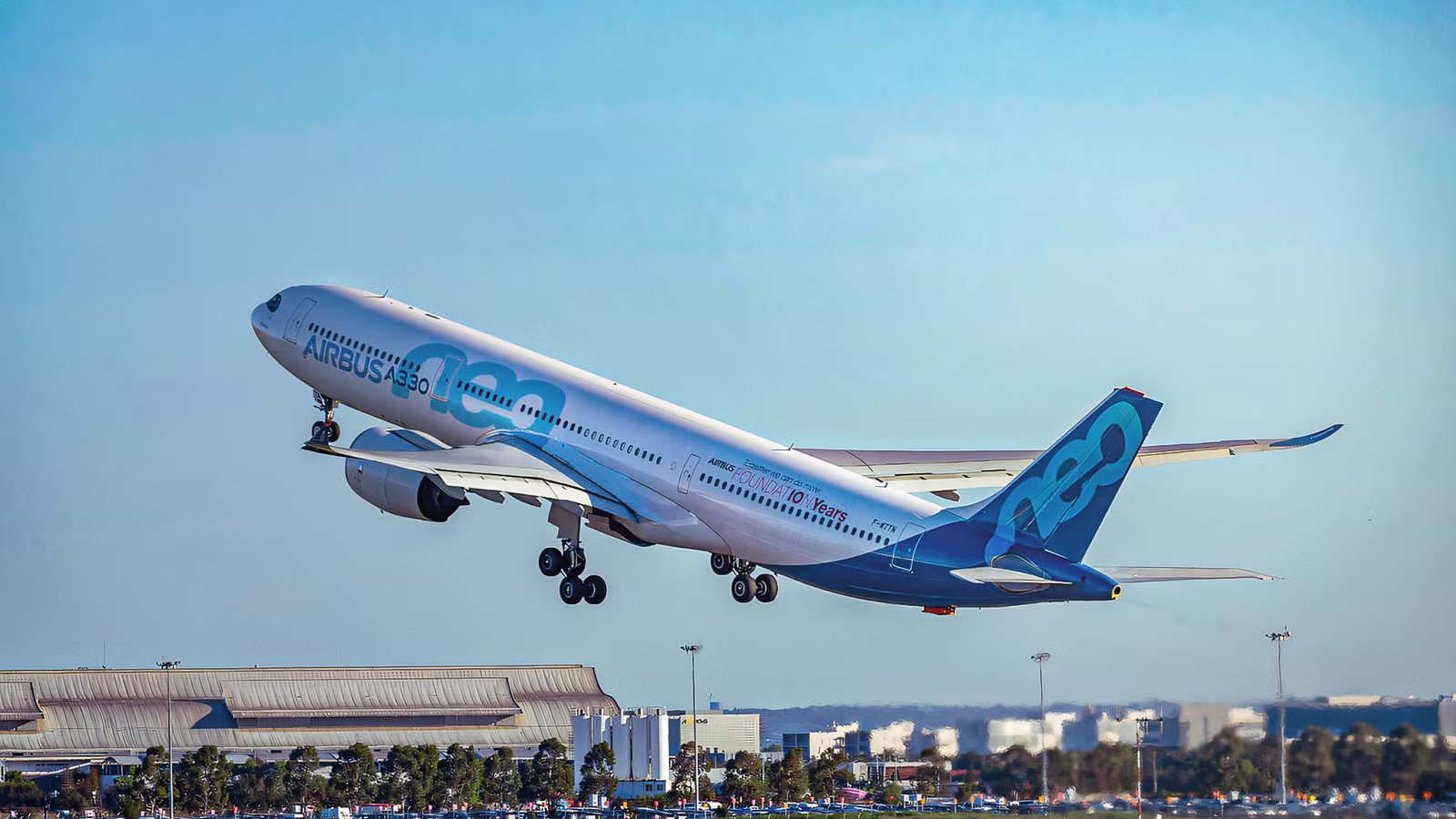
For much of the past decade, the widebody spotlight has been firmly fixed on next-generation carbon-composite aircraft like the Boeing 787 Dreamliner and Airbus A350. These jets have redefined long-haul efficiency and become the flagship choices for airlines seeking the latest technology. Yet away from the headlines, Airbus has steadily refined a different proposition. Rather than competing solely on revolutionary, cutting-edge design, the European manufacturer has positioned the A330neo as a budget-smart, low-risk widebody that pairs modern engine efficiency with an accessible price tag.
That strategy appears to be paying off. The A330neo entered commercial service in 2018, building on a proven aircraft family with a decades-long track record and tens of millions of flight hours logged worldwide. Growing adoption across a diverse range of global carriers suggests Airbus’ value-focused approach is resonating. Heading toward 2027, the manufacturer is increasingly marketing the A330neo not as the industry’s most technologically advanced widebody, but as one of its smartest financial investments.
Airbus Is Selling Value Rather Than Reinventing The Widebody

The A330neo represents an unusual strategy in today’s commercial aircraft market. Rather than spending huge development and marketing costs on an all-new aircraft program, Airbus chose to extensively modernize the proven A330 platform. The aircraft features new Rolls-Royce Trent 7000 engines, a redesigned wing with larger composite winglets, aerodynamic refinements, and the latest Airspace cabin, while also incorporating several technologies originally developed for the A350.
That approach has also allowed Airbus to price the aircraft aggressively. While published list prices for both aircraft hover around $290–$295 million, real-world market values tell a different story. In actual purchase negotiations, a new A330-900 typically sells for roughly $107 million, placing it significantly below the acquisition cost of a similarly sized 787-9.
Perhaps more importantly, Airbus estimates that airlines transitioning from earlier A330 variants benefit from around 95% operational commonality. Pilots and cabin crew require minimal additional training, maintenance crews remain familiar with the aircraft, and operators can continue using many existing spare parts and maintenance procedures. These lower transition costs can save airlines substantial amounts of money over the lifetime of a fleet, strengthening the A330neo’s value proposition beyond its purchase price alone.
Lower Costs Remain The Aircraft’s Biggest Selling Point

The improvements introduced on the A330neo extend well beyond acquisition cost. According to Airbus, the aircraft delivers approximately 14% lower fuel burn and CO2 emissions than the previous-generation A330ceo, primarily through the efficiency of the Trent 7000 engines, aerodynamic improvements, and an increase in overall engine bypass ratio. The Trent 7000 features a bypass ratio of around 10:1, making it both quieter and more fuel-efficient than the Rolls-Royce Trent 700 engines used on earlier A330 models, which had a bypass ratio around 5:1.
Airbus also says the A330neo offers up to 7% lower cash operating cost per seat than the 787 on comparable missions. While this figure comes from the manufacturer rather than an independent analysis, it forms a central part of Airbus’ marketing strategy. Instead of focusing purely on headline performance figures, Airbus argues that airlines can achieve similar profitability while spending significantly less to acquire and introduce the aircraft into service.
Performance remains highly competitive. The A330-900 has a range of approximately 7,200 nautical miles (13,334 km), allowing it to operate the vast majority of long-haul routes flown today. The aircraft was also among the first widebodies certified to the latest ICAO CO2 emissions standard, further strengthening its appeal as airlines work to reduce operating costs while meeting increasingly stringent environmental targets.
Recent Orders Suggest Airlines Are Buying Into Airbus’ Strategy

The clearest indication that Airbus’ repositioning is working has been the steady stream of recent orders. China Eastern Airlines agreed to purchase 25 A330-900 aircraft in a deal worth approximately $9.35 billion at published list prices. The agreement represented Airbus’ first major Chinese widebody order in several years and marked an important breakthrough in one of the world’s fastest-growing aviation markets.
Momentum has continued elsewhere. Scandinavian carrier SAS placed a firm order for 18 A330-900s as part of its long-haul fleet renewal program, while  Delta Air Lines ordered an additional 16 A330-900s, taking its future A330neo fleet to 55 aircraft and reinforcing its position as the world’s largest operator of the type. Brazilian carrier Azul also disclosed an order for four additional aircraft, while Saudi Arabian low-cost airline Flynas expanded its commitment to 20 A330neos as it continues its ambitious international expansion.
These deals demonstrate that demand extends well beyond traditional full-service network airlines. Leasing companies, flag carriers, leisure operators, and rapidly expanding airlines are all finding value in an aircraft that offers modern efficiency without the acquisition costs associated with all-new designs. Airbus has now secured more than 470 firm A330neo orders from around 35 customers worldwide, showing that the program continues to build momentum.
Delivery Availability Has Become An Unexpected Advantage

Another decisive factor working in Airbus’ favor is straightforward supply and demand: delivery availability, a metric that has become as critical to airlines as seat-mile costs. Both Airbus and Boeing face massive order backlogs stretching deep into the next decade. With production queues for flagship composite programs like the 787 and A350 effectively sold out for years, fleet planners face severe lead times that increase market risk and delay essential fleet renewal.
The A330neo offers a distinct tactical edge due to its mature assembly architecture. Because its production line relies on an established manufacturing footprint rather than complex composite supply chains, Airbus has offered delivery positions significantly sooner than rival programs. This availability advantage was highlighted by Cirium as a primary driver behind Cathay Pacific’s major order for 30 A330-900s, as the Hong Kong carrier sought to replace its aging A330-300 regional fleet without waiting years for alternative delivery slots. In a high-yield environment, securing factory-fresh widebody capacity on an accelerated timeline gives carriers an immediate operational edge, faster revenue generation, and crucial fleet-planning certainty.
This has become an increasingly important part of Airbus’ sales strategy. Rather than competing solely on technical specifications, the manufacturer is also selling certainty. Airlines can begin generating revenue sooner, retire older aircraft earlier, and avoid prolonged fleet shortages caused by extended production queues elsewhere in the market.
The A330neo Fits A Growing Number Of Airline Missions

Although it lacks the ultra-long-range capability of aircraft such as the A350-900ULR or 787-9, the A330neo offers more than enough range for the vast majority of routes currently operated worldwide. With a maximum range of approximately 7,200 nautical miles (13,334 km), it can comfortably connect Europe with Asia, North America, the Middle East and much of South America without operational restrictions.
The larger A330-900 typically accommodates between 260 and 300 passengers in a standard three-class layout, although it is certified to carry up to 460 passengers in a high-density configuration. That maximum capacity is significantly higher than many travelers realize and is only around 90 seats fewer than Airbus’ proposed A380plus configuration, which would have accommodated up to 575 passengers. While airlines rarely choose such dense layouts, the comparison highlights the A330neo’s versatility across a wide range of business models, from premium-focused flag carriers to high-density leisure operators.
Airbus also offers the smaller A330-800, which provides a similar range with fewer seats, although the overwhelming majority of customer demand has centered on the larger -900 variant. For many airlines, these capabilities strike the right balance. They simply do not require the additional range or acquisition cost associated with larger aircraft such as the A350-1000 or Boeing 777X. Instead, the A330neo delivers sufficient capacity, modern economics and proven reliability for the missions that make up the majority of long-haul flying.
What’s Next For The A330neo?

The A330neo is likely to remain an important part of Airbus’ widebody portfolio well into the next decade. Although the manufacturer is continuing to ramp up A350 production to meet growing demand, the A330neo occupies a different segment of the market, offering airlines a modern twinjet for routes that do not require the range or capacity of larger aircraft. With Airbus continuing to receive new orders from both airlines and leasing companies, there is little indication that demand is slowing.
Looking ahead, much of the program’s success will depend on broader industry trends. Global passenger traffic is forecast to continue growing over the coming decades, particularly across Asia-Pacific and the Middle East, where airlines are investing heavily in fleet expansion. At the same time, thousands of aging Airbus A330ceos, Boeing 767s and even some early Boeing 777s will eventually require replacement, providing Airbus with a sizable replacement market alongside new growth opportunities.
While newer aircraft programs will inevitably attract much of the attention, the A330neo appears well positioned to remain a steady contributor to Airbus’ commercial aircraft business. If the manufacturer can continue securing orders while offering competitive delivery slots and supporting existing A330 operators, the aircraft could continue playing an important role in airline fleet planning through the remainder of the decade and beyond.