dailynewsnblog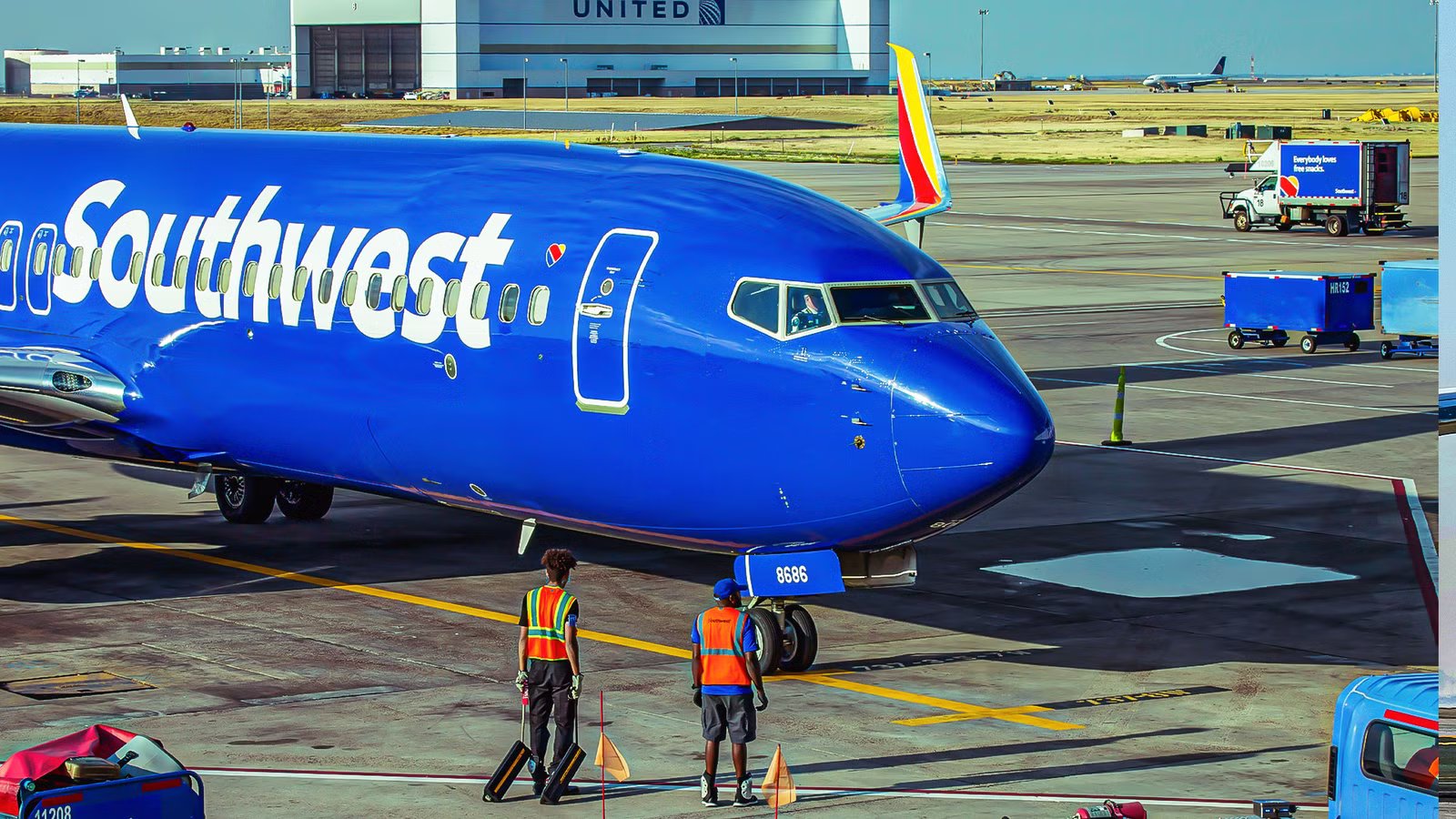
For decades,  Southwest Airlines built its business around a remarkably simple formula: one aircraft family, one cabin class, high aircraft utilization, and some of the fastest turn times in the airline industry. That model helped transform the carrier from a regional upstart into one of the largest domestic airlines in the United States. Even as competitors increasingly segmented their cabins and introduced premium products, Southwest remained committed to operational simplicity.
The airline’s biggest recent change arrived on January 27, 2026, when assigned seating officially replaced Southwest’s long-standing open seating model. At the same time, the carrier introduced Extra Legroom seating zones and premium fare bundles designed to generate additional revenue from passengers willing to pay for more comfort and priority services. Yet despite implementing one of the most significant commercial transformations in its history, Southwest still refuses to add a dedicated first-class or business-class cabin.
At first glance, that decision appears counterintuitive as competitors, Delta Air Lines, United Airlines, and American Airlines, are investing heavily in premium products because higher-paying travelers increasingly drive airline profitability. However, Southwest operates under a different economic structure. The question is not whether first class could generate more revenue per passenger. The question is whether a premium cabin would disrupt the operational system that makes Southwest successful. When viewed through the lens of aircraft utilization, fleet design, boarding efficiency, and seat economics, the answer becomes clearer. The airline’s sub-30-minute turn times create a business model in which first class often destroys more value than it creates.
Southwest’s Business Model Depends On Simplicity

Southwest’s strategy has always differed from that of traditional network carriers. While legacy airlines operate multiple aircraft types, multiple cabin configurations, and extensive international networks, Southwest focuses almost entirely on domestic and near-international routes using an all- Boeing 737 fleet. This standardization produces significant advantages. Pilots, flight attendants, mechanics, and ground personnel work with largely identical aircraft. Maintenance procedures become simpler. Spare parts inventories are streamlined. Crew scheduling becomes more flexible. Aircraft can be swapped between routes with minimal disruption.
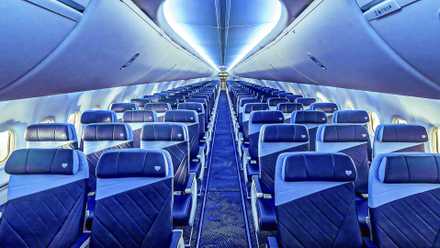
The airline’s recent seating transformation preserved that philosophy. Rather than introducing separate cabin classes, Southwest redesigned the customer experience while maintaining a single-class layout. Standard seats continue to offer approximately 31 inches (79 cm) of pitch, while Extra Legroom seats provide between 34 and 38 inches (86 and 97 cm) of pitch depending on location. Importantly, the seats maintain the same six-abreast 3-3 configuration used throughout the cabin.
This distinction matters because a true first-class cabin requires far more than additional legroom. Premium cabins typically feature wider seats, larger recline angles, dedicated service areas, and significantly lower passenger density. Such modifications create operational complexity that Southwest has historically worked to avoid. The assigned seating transition demonstrates how carefully the airline balances revenue opportunities against operational efficiency. Southwest sought additional income through seat selection and premium positioning without fundamentally changing the aircraft’s layout or introducing new cabin categories. That approach reflects a belief that preserving operational simplicity remains more valuable than chasing premium-cabin revenue.
Cabin Configuration on Southwest 737-800/MAX 8 | |
|---|---|
Seat Type | Seat Count |
Standard | 134 |
Extra Legroom | 46 |
Why Aircraft Turn Time Is The Critical Variable

The strongest argument against first class at Southwest is not passenger demand, but aircraft productivity. Airlines make money when aircraft spend time flying rather than sitting at the gates. Every additional minute on the ground reduces daily utilization and spreads fixed costs across fewer flights. Southwest has long treated rapid turnarounds as a core competitive advantage, with many flights turning in less than 30 minutes.
A sub-30-minute turn requires an extraordinarily coordinated process. Passengers must deplane quickly. Cleaning crews need rapid access to the cabin. Catering requirements must remain limited. Boarding must begin promptly. Baggage loading and fueling occur simultaneously. Every step is designed around speed. Premium cabins complicate nearly all these functions. First-class passengers often expect enhanced catering, including fresh meals, beverages, and specialized service items. Those products require additional loading procedures and inventory management. Premium seats themselves occupy more physical space, making cabin cleaning and maintenance more time-consuming. Dedicated service equipment increases logistical requirements.
Catch what other flight trackers miss
Emergency squawks, holds, NOTAMs — live signals, no signup.
Open tracker
Catch what other flight trackers miss
Emergency squawks, holds, NOTAMs — live signals, no signup.
Open tracker
Boarding procedures can also become more complex. While premium passengers typically board first, airlines must coordinate multiple boarding groups and service expectations. Legacy carriers accept these complications because premium revenue offsets the operational costs. Southwest’s model, however, depends on minimizing friction at every stage of the turnaround process. The result is a fundamental economic tradeoff. A first-class cabin might generate more revenue per seat, but if it increases ground time across thousands of daily operations, the productivity loss could outweigh the financial gain. For Southwest, aircraft utilization is not simply one variable among many. It is a central pillar of the airline’s cost structure. Any product that slows aircraft movement through the network faces a much higher hurdle than it would at a traditional carrier.
Seat Math Works Against First Class On A Boeing 737

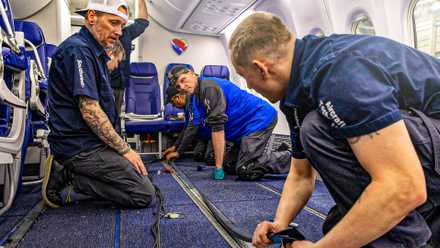
Even if operational complexity were ignored, the physical dimensions of the 737 create another challenge. Southwest’s Boeing 737-800 and Boeing 737 MAX 8 aircraft currently operate with approximately 175 seats in a six-abreast configuration. Following the assigned seating rollout, more than 40 of those seats are designated as Extra Legroom positions while retaining the same basic seat width and cabin layout. A true domestic first-class cabin would require substantially more space. Most domestic first-class products on competing airlines use four-abreast seating in a 2-2 arrangement rather than six-abreast seating. Wider seats and greater pitch dramatically reduce the number of passengers an aircraft can carry.
For Southwest, every removed seat represents lost revenue potential. Unlike international airlines that can charge several thousand dollars for premium cabins, Southwest primarily serves shorter domestic routes where pricing power is more limited. Replacing two or three rows of standard economy seating with first-class seats may remove a dozen or more revenue-generating positions. To justify that decision, premium travelers must consistently pay enough to offset both the lost seats and the increased operational costs.
That equation becomes particularly difficult when Southwest already sells Extra Legroom seating and premium fare bundles. Customers seeking additional comfort can purchase seats offering up to five extra inches (13 cm) of pitch while retaining the same overall cabin density. This strategy allows Southwest to monetize passenger preferences without sacrificing large numbers of seats. Instead of dedicating valuable cabin space to a relatively small premium section, the airline distributes higher-value seating throughout the aircraft. In effect, Southwest has found a middle ground. Passengers willing to spend more receive enhanced comfort and benefits, while the carrier preserves the high seat count that supports its low-cost structure.
Legacy Airlines Play A Different Revenue Game

Comparisons between Southwest and legacy airlines often overlook a critical difference: they are optimizing for different business models. Delta, United, and American increasingly rely on premium revenue to drive profitability. Many of their most lucrative customers are corporate travelers who prioritize flexibility, lounge access, premium seating, and onboard service. These travelers often pay significantly higher fares than leisure passengers. The economics become even more compelling on transcontinental and international routes where premium seats command substantial price premiums. Lie-flat products, business-class cabins, and premium services can generate outsized returns relative to the space they occupy.
Southwest operates in a different environment. Its customer base historically includes a larger proportion of leisure travelers, families, and price-sensitive passengers. While the airline attracts business travelers, its network and brand identity remain centered on simplicity and value. This distinction helps explain the introduction of products such as Choice Extra. Rather than creating a traditional premium cabin, Southwest bundles benefits like priority boarding, preferred seating access, and complimentary alcoholic beverages into higher-priced fare categories.
The pricing gap is revealing. Choice Extra fares may cost roughly $100 to $350 more than standard options on shorter domestic routes. By contrast, domestic first-class tickets on competing airlines often command premiums ranging from several hundred dollars to significantly more, depending on market conditions. Southwest appears to believe there is substantial demand for incremental comfort, but less evidence that its customer base would consistently support a full first-class product. Extra Legroom seating captures much of that willingness to pay without fundamentally changing the airline’s operating model. In other words, Southwest is not ignoring premium demand. Rather, it is pursuing that demand in a form compatible with its cost structure.
Why Southwest Airlines’ New Assigned Seating System Created Problems It Didn’t Anticipate
The airline recently changed its long-standing boarding process.
Brand Identity And Operational Consistency Still Matter

Another often overlooked factor is brand positioning. For much of its history, Southwest marketed itself as an airline where customers shared essentially the same onboard experience. While fare differences existed, the cabin itself remained relatively egalitarian. The introduction of assigned seating and premium seating zones represents a meaningful shift, but it stops short of creating sharply divided travel classes.
A dedicated first-class cabin would alter that identity more dramatically than many observers realize. Introducing premium cabins creates new customer expectations regarding service levels, onboard amenities, catering standards, and loyalty benefits. Once established, those expectations become difficult to reverse. Airlines must invest continually to remain competitive with rival premium products. Southwest leadership has consistently emphasized operational reliability and value over luxury. Maintaining a single-cabin philosophy supports that message while helping preserve consistency across a fleet numbering hundreds of aircraft.
There is also the issue of fleet flexibility. Today, virtually any Southwest aircraft can operate virtually any Southwest route. Uniform cabin layouts simplify scheduling and aircraft substitutions. Introducing multiple configurations would reduce that flexibility and increase complexity throughout the network. These considerations may not appear directly on financial statements, but they influence profitability over time. Operational consistency allows Southwest to maintain efficiencies that competitors often struggle to match. The airline’s recent seating changes demonstrate a willingness to evolve when revenue opportunities justify the adjustment. However, management appears determined to avoid changes that undermine the structural advantages underpinning the broader business model.
Following Business Logic

Southwest’s transition to assigned seating and Extra Legroom products shows an understanding that passengers are willing to pay more for comfort and convenience. Yet the airline has deliberately chosen enhancements that preserve cabin density, fleet commonality, and operational speed. A true first-class cabin would require wider seats, lower passenger capacity, more complex service procedures, additional catering requirements, and potentially longer turn times. Those changes might work for airlines built around premium travel, but they conflict with Southwest’s foundational strengths.
Southwest’s sub-30-minute turn philosophy enables more daily flying, higher productivity, and lower costs across its operation. When evaluated through that lens, first class becomes less attractive. The additional revenue generated by premium seats may not compensate for the reduced efficiency created throughout the network. The airline is not resisting industry trends out of stubbornness. Instead, it is following the logic of a business model where speed, simplicity, and consistency remain more valuable than dedicating cabin space to a traditional premium product. In that environment, the economics of first class are fundamentally misaligned with the system that has defined Southwest’s success for decades.