dailynewsnblog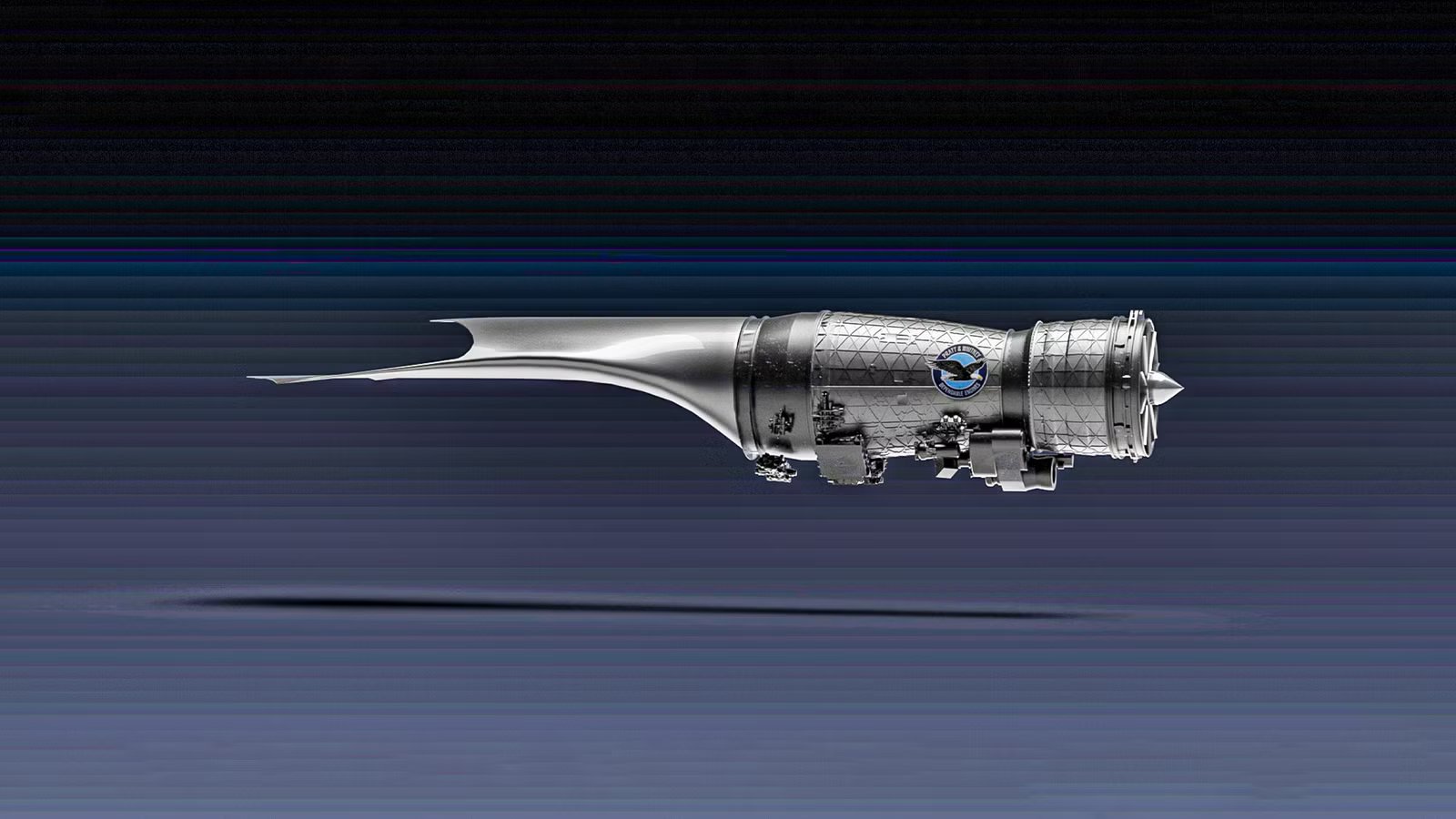
Many lists online seek to rank fighter jets by “best” or by some singular characteristic (e.g., speed, range, payload, reported RCS). But to a large extent, this is a fool’s errand. Fighter jets are built to solve different problems and for different operating environments. They are also built to match the available resources of the intended operator. When it comes to the upcoming Chinese J-36 and US F-47 next-generation fighters, it appears they are being built for different missions and that they aren’t necessarily analogues.
That said, one important overlap in core requirements appears to be range. Both are being built to overcome the tyranny of distance in the Asia Pacific. It should be emphasized that very little is known about the J-36 and F-47. Almost everything known about the J-36 is based on making deductions and assumptions based on available images. There is essentially no official Chinese reporting. F-47 has the opposite issue. What is known is mostly based on USAF statements, industry reporting, and assumptions based on it replacing the F-22 Raptor. There are no images of it, and official partial renders are thought to contain misdirections (e.g., the canards are suspect).
Role Of F-47/NGAD Fighter

The United States is developing the F-47 as a dedicated cutting-edge air superiority fighter jet to replace the F-22 Raptor. The role is in the name of the program “Next Generation Air Dominance.” The program not only includes the manned F-47, but also the Collaborative Combat Aircraft (CCAs) under development. The F-22 is widely seen as the world’s most capable air superiority fighter, but its competitive edge is seen as having eroded somewhat since it entered service due to new fighter jets and radars.
Significant ongoing upgrades are expected to see the F-22 remain competitive into the 2040s, but its dominance is expected to erode. The F-47 is intended to restore a “silver bullet” or “cheat code” in the US Air Force’s arsenal to enable it to unfairly secure air superiority. The US also has its gaze fixed on China and the vast distances of the Asia Pacific.
Making matters worse, China’s J-20 and other long-range systems are widely viewed as posing a growing threat to high-value support aircraft such as tankers and AEW&C platforms. The development of ballistic missiles and various one-way attack drones is also putting forward bases and any fighter jets parked there at risk. This is adding to pressure for the F-47 to have an extra-long unrefueled combat range. The Air Force has said the aircraft is being designed with a combat radius of 1,000+ nautical miles (1,852 + km).
China’s J-20 & J-36 Fighter Jets

Meanwhile, China is developing aircraft, naval forces, and missile systems that appear intended to challenge US military operations in the Western Pacific and complicate the ability of US-led forces to operate close to China’s periphery. A goal may be to push US-led forces away from China. The growing force structure appears to be focused on breaking the First Island Chain and operating beyond it.
For that, China is developing missiles that put forward airbases and warships at risk, potentially forcing them to pull back. At the same time, Chinese planners are operating with some limitations compared with the USAF. The PLAAF lacks the enormous numbers of tanker aircraft that the USAF has, as well as a network of allies offering forward basing that the United States does. It is rapidly building a carrier force, but for now at least, it remains constrained in projecting and sustaining power outside of the region.
Select fighter jets (per USAF Infographic) | Combat radius |
|---|---|
F-16 Fighting Falcon | 400 nautical miles (740 km) |
F-15E/EX | 690 nautical miles (1,277 km) |
F-22 Raptor | 590 nautical miles (1,092 km) |
F-35A Lightning II | 670 nautical miles (1,240 km) |
F-47 | 1,000+ nautical miles (1,852 + km) |
J-36 | Unknown (assumed large) |
In this context, the J-20 and J-36 appear to have been designed to carry a large amount of internal fuel to boost their combat radius. The J-20 is notably large for a fighter and is generally believed to prioritize range and endurance. Very little is known about the J-36, but its large size and its three-engine design imply a long unrefueled range.
Why The Country That 1st Flew A 6th-Gen Fighter May Now Be A Decade Behind
The global race to fly the ultimate stealth fighter.
Boosting The F-47’s Range

According to recent reporting by The Aviationist, GE Aerospace and Pratt & Whitney are preparing to assemble the first full variable-cycle combat engines for the NGAP (Next-Generation Adaptive Propulsion) program. These are the adaptive cycle GE XA102 and PW XA103 engines being developed as options for the F-47.
Adaptive cycle engines are seen as critical for the next-generation fighter jet range. Adaptive cycle engines add a third airflow channel surrounding the core and traditional bypass flow. Traditional fighter jet engines (turbofans) have two main air paths: the core stream and the bypass stream. Adaptive cycle engines add a third airstream, which is an extra bypass duct with variable controls (doors, injectors, and valves). The engine dynamically redirects air between these three paths depending on what the mission requires.
These engines can use valves and variable geometry to redirect airflow between the core stream, bypass stream, and third stream. They enable the fighter jet to become more efficient by having more than one operating mode. As an analogy, it is somewhat like a car transmission selecting different gears for different driving conditions. The engine can prioritize fuel economy, cooling, or maximum power output depending on the situation.
Third Stream Aids Heat Management

As indicated in the intro, while many lists will talk about range and payload, engineers are often more preoccupied with other, seemingly mundane, factors. One of the most important and under-reported aspects of developing 6th-generation fighter jets is heat management. Simple Flying recently reported how various aspects of heat management have been major issues for the F-35. The F-35 was engineered with advanced heat management, but Block 4 upgrades are straining its ability to manage heat.
As an analogy, this is somewhat comparable to when a smartphone overheats when charging, running power-intensive apps, making a call, and being exposed to sunlight all at the same time. 6th-generation fighters also have to manage infrared signatures as part of their stealth profile, so hiding from a thermal camera can also be added to the overheating smartphone analogy. While many headlines have been written about the J-36 being a tailless design, perhaps one of the more revealing questions is how the aircraft manages heat (we don’t know). Thermal management is one of the key limiting factors of modern 5th-gen fighter jets.
One of the most appealing aspects of adaptive-cycle engines for the 6th-generation fighter is that the third stream provides cool air and absorbs heat from the avionics, electronics, and power systems. It is not a silver bullet, and advanced fighters will also need other solutions like fuel as a heat sink, advanced heat exchangers, and more. Thermal management may prove just as critical to future fighter performance as gains in range.
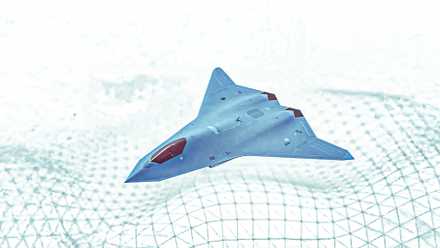
Boeing F-47: Everything We Know So Far
There’s been a lot of mystique around the F-47.
CCA’s & China’s New J-36

In an infographic, the USAF listed the combat radius of its CCAs as being 700+ nautical miles (1,296 + miles). This is further than what it reports for any of its in-service manned fighter jets. Importantly, the Air Force is studying non-afterburning derivatives of the adaptive engines for “supporting mission roles” like the CCAs, as well as bombers, tankers, and other platforms for aircraft where endurance and range are prioritized over maximum combat thrust.
At the same time, very little is known about the Chengdu J-36. It is large and has a unique trijet arrangement. These prototype engines (perhaps as an interim solution) are likely WS-10 variants. It seems to have afterburners and two-dimensional thrust-vectoring nozzles (similar to the F-22). It is widely believed that there remains a qualitative gap between Chinese and US fighter jet engines, and this may have contributed to the three-engine choice (we don’t know).
That said, it would be unwise to assume China’s engines will always remain inferior, or at least that the gap won’t continue to narrow. In December 2025, Zona Militar reported, “It has also been reported that China has completed ground tests of an adaptive cycle engine (ACE), comparable to the U.S. XA102 and XA103 programs, although there is no confirmation that this system is intended for the J-36.”
Aircraft Designed For Different Missions

The adaptive cycle engines are intended to be a leap over the F-22’s existing PW F119 engines and the fighter’s ability to supercruise. Not only should it enable the F-47 to have superior range, but also superior cooling, enabling it to carry more advanced systems. But while it may be defensible to compare the F-47 with the F-22, it may not be appropriate to compare it with the J-36.
As stated, it seems the F-47 and J-36 are being designed to solve different problems and carry out different missions. From images, it appears the J-36 is emphasizing size, payload (possibly a heavy internal missile load), and long-range strike (or potentially long-range air superiority, missile trucking, command-and-control). Available information suggests the F-47 is being optimized for air dominance, survivability, networking, and long-range operations in highly contested airspace and is possibly a smaller aircraft. The Air Force appears to be focusing on advanced sensors, networking (MUM-T), survivability, etc.
Notably, there is another 6th-generation fighter jet being designed for the Western Pacific region; the GCAP/Tempest being developed by the Japan/UK/Italy coalition is quite different again. With its large tail stabilizers, it looks externally more like a conventional fighter jet, and its design appears to emphasize multirole. Japan is designing the aircraft to defend against future Chinese fighter jets and to ensure it can continue to provide sufficient deterrence and area denial over its islands.