dailynewsnblog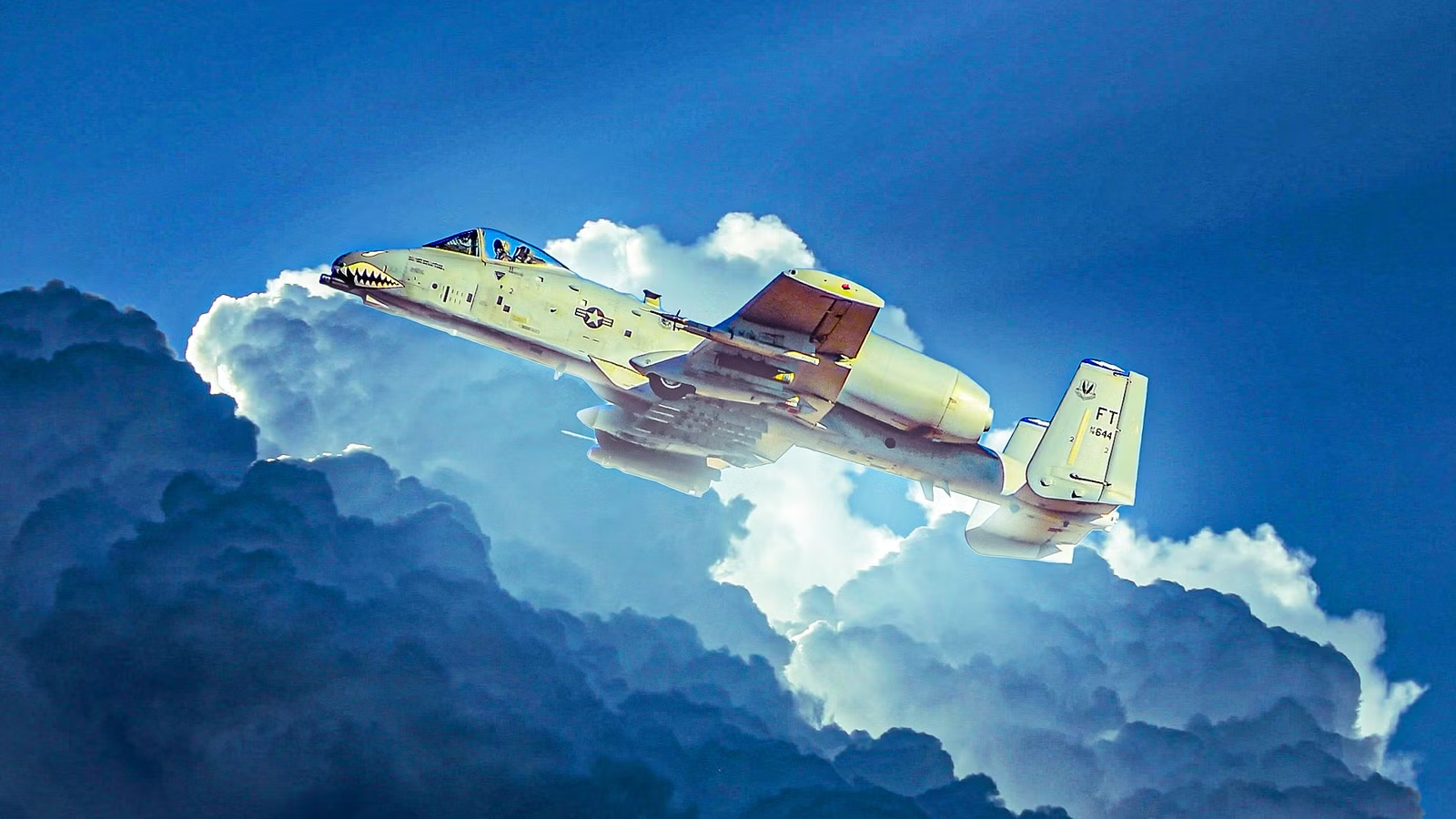
The future size of the United States Air Force fighter fleet has become a growing point of debate as military planners balance next-generation programs, aging aircraft retirements, and evolving global threats. While advanced platforms promise greater capability in the decades ahead, maintaining enough combat-ready aircraft in the near term remains a challenge. Understanding how the service arrived at this position helps explain one of the most important force-structure discussions currently shaping American airpower.
This article examines the two key decisions that contributed to the projected fighter shortfall expected by 2030, including reduced Lockheed Martin F-35 procurement and the complex politics surrounding Fairchild-Republic A-10 Warthog retirement. It also explores how combat operations unexpectedly altered the Warthog’s future, why Congress intervened through the Airpower Acceleration Act, and whether increased  BoeingF-15EX production and other measures can close the gap before it affects operational readiness.
The Baseline: What The Law Actually Requires Of The Fighter Fleet

Before tracing the two decisions that created the gap, it is worth establishing the statutory baseline against which the Air Force‘s trajectory is measured. According to Cornell Law School, 10 US Code § 9062 legally mandates that the Air Force maintain a minimum of 1,800 total fighter aircraft and 1,145 aircraft in the Primary Mission Aircraft Inventory: these are the jets formally designated for combat use. Congress inserted this requirement precisely because it did not trust the Air Force to manage its own fleet size without a statutory floor. That floor is set to expire on October 1, 2026, which is a significant part of why the current legislative debate around the 2030 gap has taken on such urgency.
The Air Force and Congress do not even agree on how to count the fleet. In an August 2025 report to Congress, the service adopted a new metric it calls the Combat-Coded Total Aircraft Inventory, a category combining the Primary Mission Aircraft Inventory, backup aircraft, and attrition reserve into a single figure.
According to Air & Space Forces Magazine, critics, including former Acting Secretary of the Air Force Matt Donovan, argued the new metric appeared to mask the true state of the fleet. Donovan framed the deeper issue with characteristic directness: It really comes down to readiness and aircraft availability, right? You can have 10,000 airplanes, but if you can only fly, say, 2,000 because that’s all the parts you have and all the maintainers you have to take care of them, then the overall aircraft inventory is kind of moot. The 2030 gap of 65 aircraft is calculated under the Air Force’s own preferred combat-coded metric, meaning the shortfall exists even by the counting method the service designed to present its fleet in the most favorable light.
As written by Simple Flying, the USAF in 2026 is already operating several aircraft types older than the pilots flying them. This is a reality that makes the retirement-versus-replacement tension viscerally legible. Thus, the 2030 gap is the near-term consequence of decisions being made right now about which jets to buy and which to stop flying.
Cause One: Why Cutting The F-35A Buy To 24 Jets Started The Problem

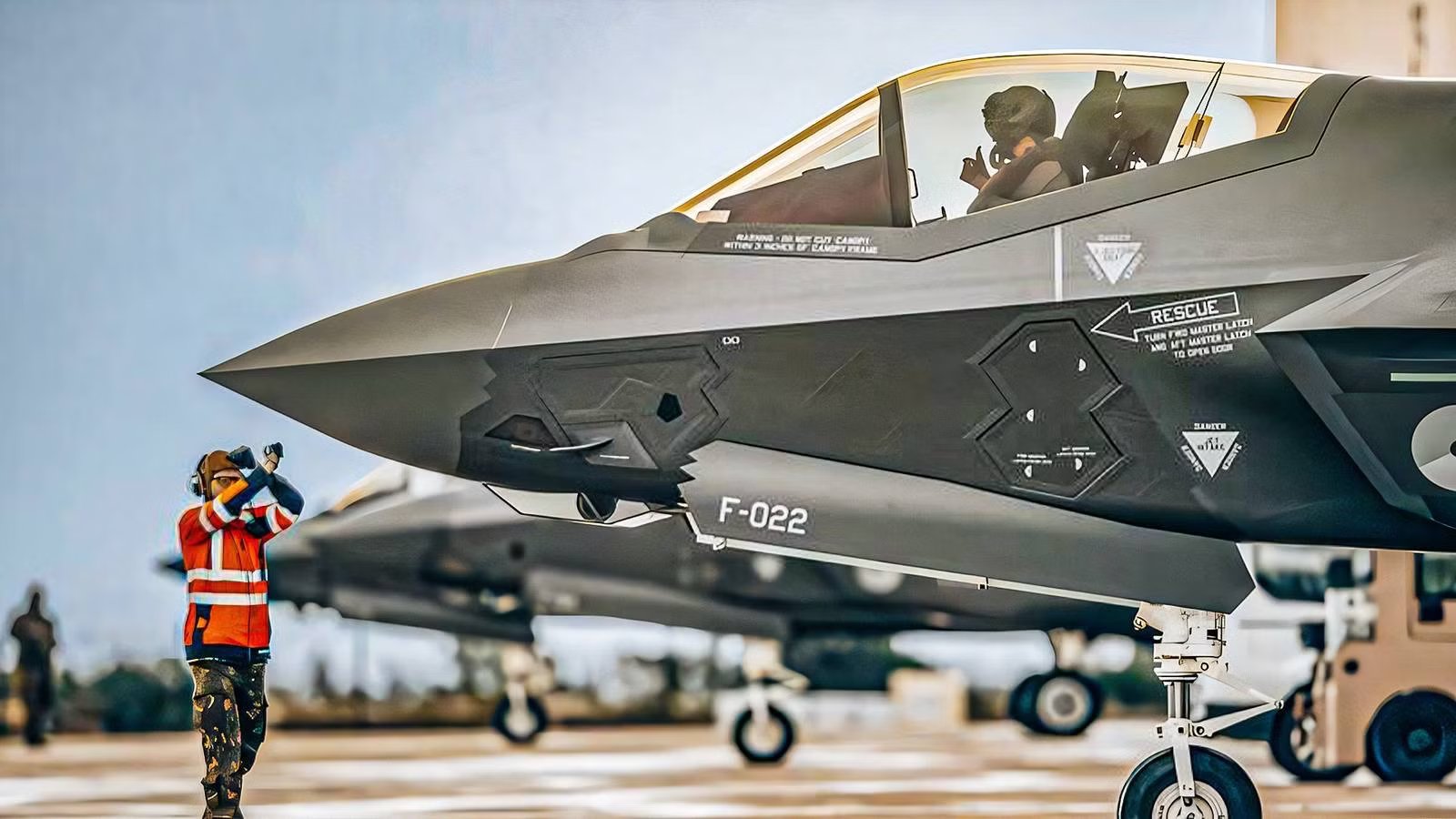
The F-35A procurement cut is the single most consequential driver of the 2030 gap. Reducing the annual buy from an expected 48 aircraft to 24 does not simply mean the Air Force will have 24 fewer F-35As in a given year. It means the gap between retiring legacy jets and replacing them with fifth-generation aircraft widens by 24 airframes per year, a deficit that compounds across every subsequent fiscal year in which the purchase remains below the planned rate.
According to Air & Space Forces Magazine’s analysis of the FY2026 budget, the halved buy was paired with a $3.5 billion investment in the Boeing F-47, the sixth-generation crewed component of the Next Generation Air Dominance family, contracted to Boeing in 2025 and expecting its first flight in 2028.
The Air Force’s internal logic was coherent in isolation: invest in the platform that will define the 2030s and 2040s rather than buying more of a design that, however capable, will not provide long-term air superiority against a peer adversary fielding sixth-generation aircraft. The problem is that the F-47 is not included in the Air Force’s own FY2030 combat-coded projection of 1,304 aircraft; it will still be in development by then.
Buying 24 F-35As instead of 48 in FY2026 created an immediate inventory hole; investing those savings in a program whose first operational aircraft are years away provided no near-term offset. The cut drew immediate and unusually sharp public criticism. According to Aerospace Global News, 16 retired four-star generals, including six former Chiefs of Staff, sent a letter to congressional leaders urging them to reverse the cuts, a degree of public pushback from the retired officer community that is rare in American civil-military relations.
Congress partially corrected the F-35 cut in the FY2026 NDAA, with the Senate Armed Services Committee adding 10 aircraft to bring the buy to 35. But 35 is still not 48, and the cumulative shortfall from a single year of reduced procurement carries forward into every subsequent fleet projection. As mentioned on Simple Flying, Congress simultaneously pushed the Air Force toward the F-15EX Eagle II as a faster production-line solution for fleet size growth, adding $271 million for 24 additional EXs in FY2026, precisely because the F-35’s reduced buy rate created an inventory gap that only a currently-producing fourth-generation-plus platform could help close in the near term.
Upgrade Or Replace? Why The US Air Force Is Reconsidering The F-15EX Over A New 5th-Gen Fighter
USAF expands F-15EX fleet to 267 jets as the Eagle II emerges as a key partner to the F-35 and future F-47 fighter.
Cause Two: Why The Halted A-10 Retirement Made The Gap Wider — Then Smaller

The second cause of the 2030 gap operated in the opposite direction: not too few jets coming in, but too many proposed to go out at once. The FY2026 budget proposed retiring all 162 remaining A-10s in a single fiscal year, two years ahead of the previously planned timeline, alongside 36 F-15C/Ds.
The retirement logic was consistent with the Air Force’s threat-centric planning framework: the Warthog’s maximum speed of 439 mph (706 km per hour) makes it acutely vulnerable in contested airspace, and its Cold War close-air-support mission has been progressively displaced by standoff strikes, F-35A sensor fusion, and drone-enabled targeting.
According to Task & Purpose, the Air Force trained its final class of Warthog pilots at Davis-Monthan AFB in April 2026 and had already closed the specialized A-10 maintenance hub at Hill AFB, Utah, in anticipation of the retirement proceeding as planned.
The problem was not the retirement’s strategic logic but its timing. Removing 162 aircraft from the combat-coded inventory simultaneously, without a confirmed and equal number of replacement jets entering service to cover them, widened the 2030 gap directly. As Simple Flying’s analysis of the six fighter types currently being phased out details, the A-10’s retirement has been a cyclical negotiation between Air Force preference and congressional mandate for over four decades.
The FY2026 NDAA blocked the full retirement and required the Air Force to maintain at least 103 Warthogs through September 30, 2026, preventing a 162-aircraft inventory reduction but simultaneously preventing the Air Force from redirecting the maintenance funding, workforce, and logistics overhead of those 59 blocked retirements toward newer platforms.
Paradoxically, Congress’s intervention both helped and hurt the gap: it preserved 59 combat-coded aircraft that would otherwise have been zeroed, but also preserved 59 aircraft whose operating cost of approximately $20,000 per flight hour competes for resources with the F-35A’s $34,000 to $36,000 per hour and the F-47’s R&D budget.
Operation Epic Fury: How Combat Rewrote The A-10’s Role In The Gap

The Air Force appeared to be moving toward further A-10 reductions in early 2026, tracking toward the NDAA’s 103-aircraft floor, when Operation Epic Fury, the US air campaign against Iran, introduced a variable no procurement document had modeled. A-10s deployed to the region performed a mission that the retirement calculus had never adequately weighted: drone hunting with the Advanced Precision Kill Weapon System II (APKWS II), a laser-guidance kit that converts standard 2.75-inch (70-millimeter) unguided rockets into precision munitions at $25,000 to $40,000 per shot. The cost-exchange the Warthog offered was decisive in a conflict that exposed a fundamental vulnerability in the US munitions inventory.
According to Forecast International, within seven weeks of Operation Epic Fury’s opening phase, the US had depleted approximately 45% of its Precision Strike Missile stocks, 50% of its THAAD interceptors, and nearly half its Patriot missile inventory. High-value interceptors costing over $1 million each were being expended against Iranian drones costing a small fraction of that — a cost-exchange ratio that could not be sustained across extended operations.
The A-10 equipped with APKWS II offered roughly 70 to 80 precision shots at drone-range targets for the price of a single AMRAAM. A-10s returned from CENTCOM deployments with Shahed-type drone kill silhouettes painted on their noses. The aircraft had found a new mission that justified its continued existence in entirely different terms from the ones its defenders had used for forty years.
On April 21, 2026, Air Force Secretary Troy Meink announced the reversal on X: “In consultation with [Defense Secretary Pete Hegseth], we will EXTEND the A-10 ‘Warthog’ platform to 2030.” According to Military Times, the new fleet structure retains three operational A-10 squadrons with approximately 54 aircraft through 2030. The extension is significant for the 2030 gap in a specific way: the A-10 is not included in the Air Force’s 1,304 combat-coded projection, meaning the 54 retained Warthogs represent an inventory contribution above that baseline figure — a buffer that partially offsets the gap created by the F-35 cut, even if it does so with an aircraft the Air Force does not want to keep, doing a mission it did not originally intend the type to perform.

The World’s Largest Air Forces By Number Of Fighter Jets
This guide ranks the world’s largest fighter forces in 2026
The Airpower Acceleration Act: Congress’s Attempt To Write The Gap Out Of Existence

With the two causal decisions now producing a measurable and documented FY2030 shortfall, Congress moved to address the gap through legislation rather than rely on year-by-year NDAA interventions. The Airpower Acceleration Act, introduced on April 24, 2026, by Senator Ted Budd (R-NC) and Senator Jeanne Shaheen (D-NH), is the most comprehensive attempt to write fighter inventory floors into permanent law since the original 1,800-aircraft mandate. Budd framed the bill’s strategic urgency directly:
“The future of American military dominance relies on maintaining our air superiority, and the path forward is clear rebuild our Defense Industrial Base through restoring our combat aircraft forces and retaining experienced aviators.”
The bill’s provisions address the gap from multiple angles simultaneously. It extends the 1,800-aircraft total inventory floor to October 1, 2035, preventing the current requirement from expiring this year. It codifies 1,369 combat-coded fighters as the required minimum by the end of FY2030 — directly targeting the 65-aircraft shortfall in the Air Force’s own projections — and raises that floor to 1,558 by the end of FY2035.
It authorizes the Air Force to acquire up to 329 F-15EXs, nearly 100 more than currently planned, with any EXs beyond the initial 129 on contract directed toward recapitalizing the F-15E Strike Eagle fleet. And it empowers multiyear procurement contracts for both the F-35A and F-15EX, a mechanism that a Congressional Research Service analysis indicates can save the government between 5 and 15% per unit through predictable long-term production demand.
Christian McMullen, Senator Budd’s spokesperson, told Air & Space Forces Magazine bluntly: “There is bipartisan concern about the overall state of our fighting force in the air, especially as it would pertain to a China threat.”
The bill’s F-15EX authorization reflects the same logic that drove Congress to add EXs during the FY2026 NDAA debate: Boeing’s production line is operational today, the EX’s APG-82 AESA radar and 20,000-hour airframe make it a credible fourth-generation-plus platform, and its delivery timelines are measured in months rather than years. As of mid-2026, the Air Force has already increased its planned F-15EX fleet to 267 airframes, acknowledging that the gap left by the F-35 cut and the compressed legacy-aircraft retirement schedule requires a bridge solution that current production capacity can actually deliver before 2030.
Why Closing The 2030 Gap Is Harder Than The Numbers Suggest

The 65-aircraft gap between the Air Force’s 1,304 FY2030 projection and the Airpower Acceleration Act’s 1,369 floor sounds small in a fleet of over a thousand jets. It is not. Each of those 65 aircraft represents a squadron slot, a deterrence presence in a forward theater, a training pipeline position, or a maintenance establishment that exists only on paper until the aircraft filling it is actually delivered and made mission-capable.
Air Force Vice Chief of Staff Gen. John Lamontagne made the underlying industrial constraint explicit in early June 2026, telling reporters that demand for new airplanes is outstripping production, that the Air Force wants to buy more aircraft than contractors can currently build, and that no bill can legislate a factory into producing faster than its current capacity allows.
The F-47’s timeline illustrates why the gap cannot be solved by simply investing in the next generation. The sixth-generation program absorbed $3.5 billion in FY2026 funding, but its first flight is not expected until 2028 and the aircraft will almost certainly still be in development by FY2030 — it does not appear in the Air Force’s 1,304 combat-coded projection at all. The gap was created by cutting near-term buys to fund long-term programs whose delivery schedules cannot bridge the interim.
The A-10 extension to 2030, despite the fact that the Air Force tried to retire its platform in bulk just months earlier, is the most visible acknowledgment that the gap is real and that the original plan to close it through rapid legacy fleet reduction combined with reduced near-term procurement did not work. Fifty-four Warthogs hunting Iranian drones and boats with 30-dollar-a-round precision rockets are, in 2026, doing more to manage the gap between the fleet the Air Force has and the fleet it needs than any number of long-range F-47 planning documents.
The 2030 gap, stripped of its budget jargon, is the cost of a procurement strategy that tried to move too fast in two directions simultaneously: retiring the old before the new arrived, and cutting the new to fund the future. The Airpower Acceleration Act, the F-15EX production push, and the A-10 extension are all corrective actions converging on the same underlying problem. Whether they converge fast enough to close 65 aircraft worth of inventory shortfall by the end of fiscal year 2030 will depend not on legislation, but on whether the American defense industry can produce aircraft faster than it currently does — and on whether the Air Force and Congress can agree on which jets, at what price, in what quantities, that future requires.
Catch what other trackers miss
Emergency squawks, holds, NOTAMs — live signals, no signup.
Open tracker
Catch what other trackers miss
Emergency squawks, holds, NOTAMs — live signals, no signup.
Open tracker