dailynewsnblog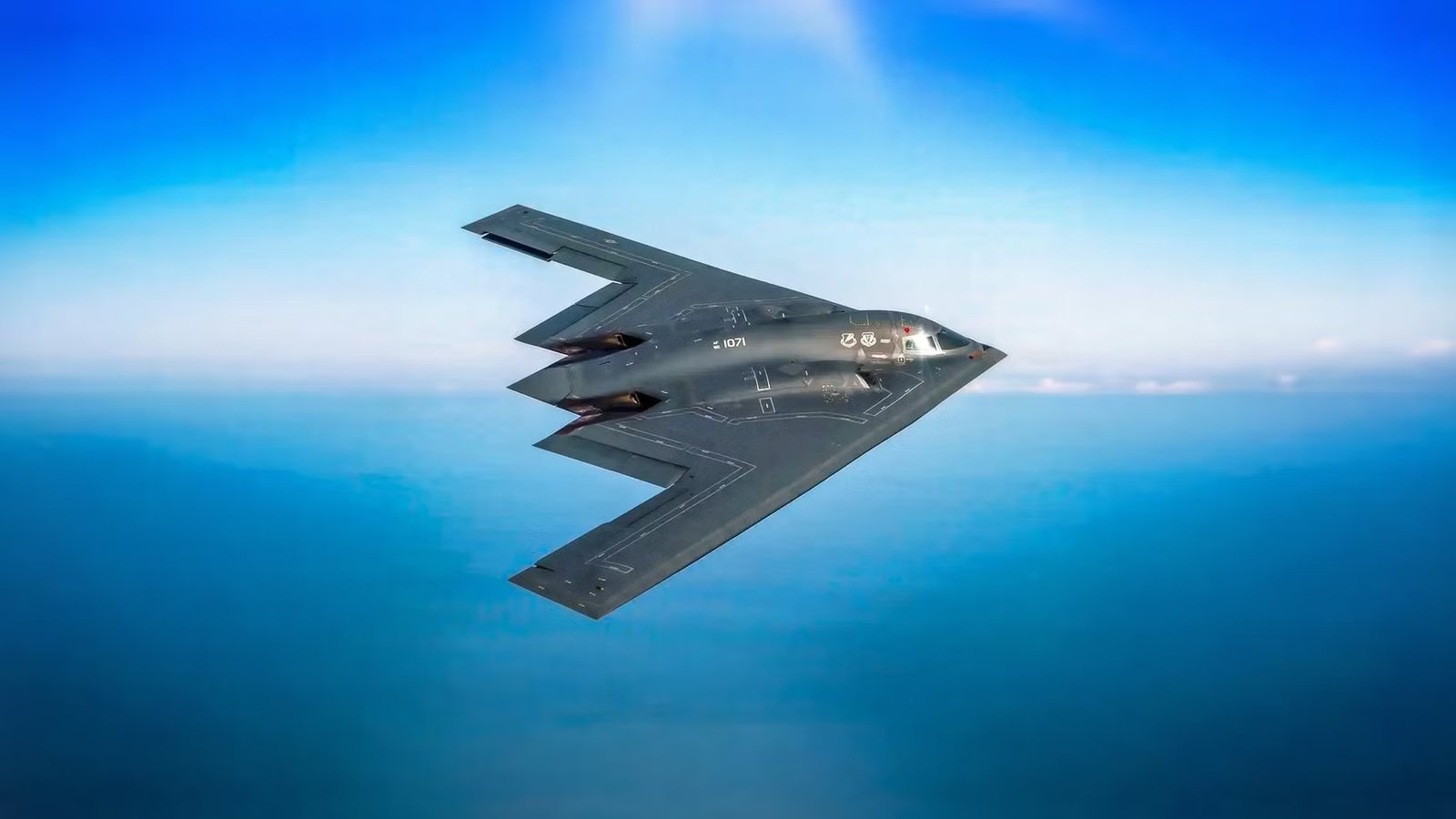
Operation Midnight Hammer isn’t really a story about seven bombers and 14 bunker-busters; it is a story about why one Missouri base and a fleet of tankers is the real weapon system. The Northrop Grumman B-2 Spirit may be the most visible component, but its ability to conduct a mission thousands of miles from home depends on specialized infrastructure, highly trained maintainers, aerial refueling crews, and weapons specialists.
Together, these mission enablers allowed the stealth bomber to execute one of its most ambitious combat missions. The results left Iran‘s nuclear infrastructure severely damaged, demonstrating the destructive capability of a system that extends far beyond the bomber itself. Behind the aircraft was a vast network of personnel, facilities, and support aircraft that made the strike possible.
The Mission Enablers Are The Real Story Behind Operation Midnight Hammer

For any job, preparatory and behind-the-scenes work lays a firm foundation for success. This is no different from the essentially perfect execution of the B-2 raid over sites in Iran during Operation Midnight Hammer.
The effectiveness of the Spirit lies in its highly sensitive radar-absorbent and other low-observable materials, maintained by highly trained, specialized technicians in the climate-controlled environment of their hangars. Each hangar is designed to accommodate two bombers and, according to Ivey Mechanical, a contractor that has worked on these facilities, features a range of systems. These systems use domestic water, chilled and hot water, steam, nitrogen, vacuum, compressed air, hydraulics, and constant climate-controlled air.
The specialized hangars are necessary given that the B-2’s coatings can rapidly degrade under the stresses of flight and certain weather conditions, such as precipitation. After each mission, the Air Force’s Low Observable maintainers carefully reapply radar-absorbing paint, a tedious, time-consuming process that requires specific procedures, since any inconsistencies in the paint’s thickness or texture could compromise the bomber’s stealth. This work is performed by airmen of the 509th Maintenance Squadron.
Getting Over The Target: Aerial Refueling

The ability of a group of B-2s to take off from Whiteman Air Force Base in Missouri and hit targets in Iran, a distance of 7,000 miles (11,300 km) — or a little more, depending on the target site — is largely due to the fact that the bombers had access to flying gas stations known as refueling tankers.
The Air Force maintains an active-duty fleet of 153 Boeing KC-135 Stratotankers, the Air National Guard has 153, and the Air Force Reserve possesses 72. This aircraft model, which entered operational service in the late 1950s, has been a mainstay of US global reach and has a maximum transfer fuel load of 200,000 pounds (90,719 kg). Additionally, the Air Force’s newest refueling aircraft, the Boeing KC-46A Pegasus, has a fuel capacity of 212,299 pounds (96,297 kg) and is the replacement for the Stratotanker.
Regarding the fuel transfer process, Colonel Joshua Wiitala (USAF), B-2 pilot and commander of the 509th Bomb Wing at Whiteman Air Force Base, stated that aerial refueling “is the hardest stick and rudder, hand-flying piece of what we do.” The process involves aligning within 10 feet (3.05 meters) below a KC-135 or KC-46 tanker and connecting the end of the extended boom to the refueling port on top of the bomber. This process, which can deliver up to 167,000 pounds (75,750 kg) of fuel, can last 15–30 minutes.
The Air Force’s fleet of aerial-refueling tankers makes it possible for the US to achieve and maintain global reach within hours. This capability allows US military planners to rapidly deploy combat personnel for contingency operations, deliver much-needed munitions to critical operations, or provide humanitarian assistance essentially overnight. America’s global response and global strike architecture depend heavily on effective, timely in-air refueling and forward-based rights.
The B-2’s Weapons And The Airmen Who Handle Them

The Spirit has a payload of 60,000 pounds (27,216 kg), which can take many forms of ordnance, all of which are maintained and loaded by specially trained personnel known as Armament Systems specialists. These airmen store and load the weapons each mission may call for.
The B-2 Spirit can carry a wide range of nuclear and conventional weapons. For nuclear missions, it can carry up to 16 B61-7, B61-12, or B83 bombs, or eight B61-11 bombs using its rotary launchers. Its conventional weapons load can include up to 80 Mk 62 sea mines, 80 Mk 82 500-pound (227 kg) bombs, 80 GBU-38 Joint Direct Attack Munitions (JDAMs), or 34 CBU-87/89 cluster munitions using rack assemblies. Alternatively, the bomber can carry 16 GBU-31 JDAMs, 16 Mk 84 2,000-pound (907 kg) bombs, 16 AGM-154 Joint Standoff Weapons (JSOWs), 16 AGM-158 Joint Air-to-Surface Standoff Missiles (JASSMs), or eight GBU-28 laser-guided bombs.
The heaviest weapon that the B-2 is certified to carry is the GBU-57A/B Massive Ordnance Penetrator (MOP), and the bomb weighs 30,000 pounds (13,608 kg). The Spirit can carry two of these massive bombs in its cavernous weapon bay. This MOP is purpose-built to drive deep within the earth and destroy hard-to-hit infrastructure, such as bunkers, command nodes, and weapon storage or production facilities.
In order to be certified to load the MOP, Aircraft Armament Systems specialists with the 509th Aircraft Maintenance Squadron train for 21 days to become proficient and certified in the loading process for the MOP. The procedure involves securing the bomb into the weapon bay of the B-2 using two steel touchpoints, according to Chief Master Sgt. Frank Espinoza, 509th Maintenance Group wing weapons manager.
The Surgical Strike On Iran And The B-2 Early Days

In light of Iran’s nuclear ambitions and the belief that it was approaching the threshold at which it could produce nuclear weapons, the B-2 was called upon to engage in what was quite possibly the aircraft’s riskiest mission, Operation Midnight Hammer. Had the strike gone wrong, and one or more of the bombers been brought down, it would not only have been a public relations coup for the Iranian regime, but also a technological harvest that could potentially benefit America’s adversaries.
On June 21, 2025, Operation Midnight Hammer commenced. The mission involved a total of 4,000 personnel and 125 aircraft, including dozens of refueling tankers, in addition to fighters moving ahead of the bombers to sweep for any possible Iranian interceptors and suppress air-defense infrastructure. As for the B-2, this would be the largest strike package in its history, with the bombers flying for 36 continuous hours in order to target and destroy Iran’s Fordow and Natanz nuclear sites. The latter were believed to be producing highly enriched uranium that could enable the regime to produce material for nuclear weapons.
In one of the greatest diversions in recent history, the Air Force states that 13 B-2s departed from Whiteman, with six flying west as decoys, while seven flew to target sites in Iran. Once in its airspace, six of the bombers delivered 12 of the 30,000-pound MOPs against the Fordow facility, while the seventh dropped two on Natanz. The raid was subsequently described as flawless. The Institute for Science and International Security (ISIS) has stated that “Overall, Israel’s and U.S. attacks have effectively destroyed Iran’s centrifuge enrichment program.”
ISIS further states that, in sum, the Israeli and American attacks included:
” . . . the elimination of, or severe damage to, the majority of the centrifuges at the Natanz site, significant damage to the Fordow underground site, destruction and damage to several facilities at the Esfahan Nuclear Complex, including one used in the conversion of enriched uranium to uranium metal and another that converts natural uranium into uranium hexafluoride. Related, the attack on the IR-40 Arak Heavy Water Reactor has likely destroyed the reactor, eliminating a potential future source of plutonium that could be used in nuclear weapons.”
The B-2 bomber had its first public display on November 22, 1988, and the first Spirit was delivered to the Air Force on December 17, 1993. The aircraft made its combat debut during Operation Allied Force in 1999, demonstrating its ability to conduct long-range stealth precision strikes from its home base at Whiteman AFB, Missouri. During this operation, the bomber destroyed 33 % of all Serbian targets in the first eight weeks. A mere four years later, during Operation Iraqi Freedom, the B-2 engaged in 49 missions from both Whiteman and a forward location and released 1.5 million pounds (680,389 kg) of munitions.
The B-2 Remains A Vital Part Of US Global Strike

Operation Midnight Hammer demonstrated that the B-2 Spirit remains a capable component of the US global strike arsenal. However, with just 20 aircraft in the active force, including one for testing, the fleet is limited in size. The mission also demonstrated that the bomber is only one part of a much larger system, requiring specialized personnel, facilities, weapons, and aerial-refueling aircraft to turn its capabilities into combat power.
The Northrop Grumman B-21 is being developed to incrementally replace the B-2 and provide a new generation of penetrating stealth strike capability. Until the Raider assumes that role, the B-2 and its extensive support network will remain essential to America’s long-range strike capability.