dailynewsnblog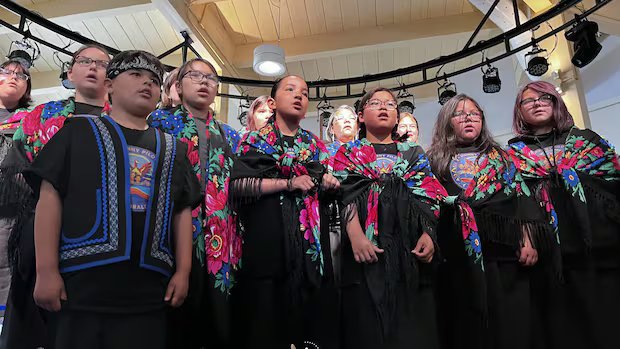

Listen to this article
Estimated 3 minutes
The audio version of this article is generated by AI-based technology. Mispronunciations can occur. We are working with our partners to continually review and improve the results.
The Uashat mak Mani-utenam band council is officially taking control of its youth protection services, implementing its own community-led legal framework.
On Friday, the Innu Takuaikan Uashat mak Mani-utenam (ITUM) Council signed a historic tripartite agreement with the federal and Quebec governments in front of an audience of elected officials, families, and children.
The agreement marks a major milestone toward enforcing the Tshisheuatishitau Law, which was adopted by ITUM in February 2025. The legislation aims to keep children within extended families and the broader Innu community.
Under the new framework signed Friday, the ITUM law will hold the same weight as federal legislation. All cases currently managed by Quebec’s youth protection authority, the Direction de la protection de la jeunesse (DPJ), will be transferred to the community to be overseen by its own governance system.
To support this transition, the federal government has pledged $137 million in federal funding.

Federal Indigenous Services Minister Mandy Gull-Masty and Quebec Social Services Minister Lionel Carmant both travelled to Uashat mak Mani-utenam to sign the agreement, officially recognizing the band council’s jurisdiction.
In an interview, Carmant called the deal “fantastic news,” especially for the children of the community.
He underlined how Ian Lafrenière, Quebec’s minister responsible for relations with the First Nations and the Inuit, and the election of Kateri Champagne Jourdain, MNA for Duplessis, have “changed the way we interact” with First Nations in Quebec.
“As we put into the law, First Nations and Inuits are the best to take care of their children and we need to facilitate discussions on the administrative side to make these changes in law or changes in protocol easier,” Carmant said.
Under the deal, a permanent oversight committee will also be created to manage ongoing collaboration between the three governments.
Marie-Claude André-Grégoire, the band council’s lawyer who helped draft the legislation, was visibly moved by the milestone.
“This is a truly historic moment because, for once, we are co-ordinating all services and the transition between the Tshisheuatishitau Law and the Youth Protection Act,” she said.
A major shift for Quebec
The agreement marks a major political shift for the province.
The agreement with ITUM is the very first of its kind between Quebec, the federal government and a First Nation signed since the federal law, Bill C-92, took effect in 2020.
The federal Act respecting First Nations, Inuit and Métis children, youth and families, affirms Indigenous nations have jurisdiction over child and family services and outlines national minimum standards of care.
While Opiticiwan is the only other community in Quebec to take control of its child welfare under the federal framework of Bill C-92, Quebec previously refused to sign an agreement with that Atikamekw community.
At the time, the province was actively contesting the legislation.
However, after the Supreme Court of Canada upheld the legislation in a landmark 2024 ruling, the doors opened for Friday’s historic signing.
It sets a precedent for the province, where a dozen other First Nations communities and coalitions are currently preparing to follow suit.