High schoolers win prize for eco-friendly ECG sensors made from lobster shells


SAINT JOHN — A New Brunswick high school student has proposed environmentally-friendly heart monitoring sensors that use excess material sourced from lobster shells — and she hopes they can be adopted at hospitals across the province.

Melody Ovuakporoyecha, an advanced placement student at St. Malachy’s Memorial in Saint John, has researched and developed alternative electrodes that are are biodegradable, compostable and reusable.

The electrodes traditionally used in hospitals are chemically-heavy plastic sensors that end up in landfills.

Ovuakporoyecha says the ones she researched are also less irritating on a patient’s skin, leading to greater comfort in particular for older people while still reliably conducing the electrical signal needed to monitor heart rates.

And, she hopes it’s an innovation that one day be used widely.

“I’m originally from Nigeria, so I’ve seen first-hand how gaps in health-care systems can affect people and that stayed with me,” Ovuakporoyecha said in a recent phone interview.

“So it made me want to explore solutions that are not only innovative, but also accessible. I also wanted to make an impact locally, starting in Saint John, and to think about how innovations like this could benefit my communities before scaling it further.”

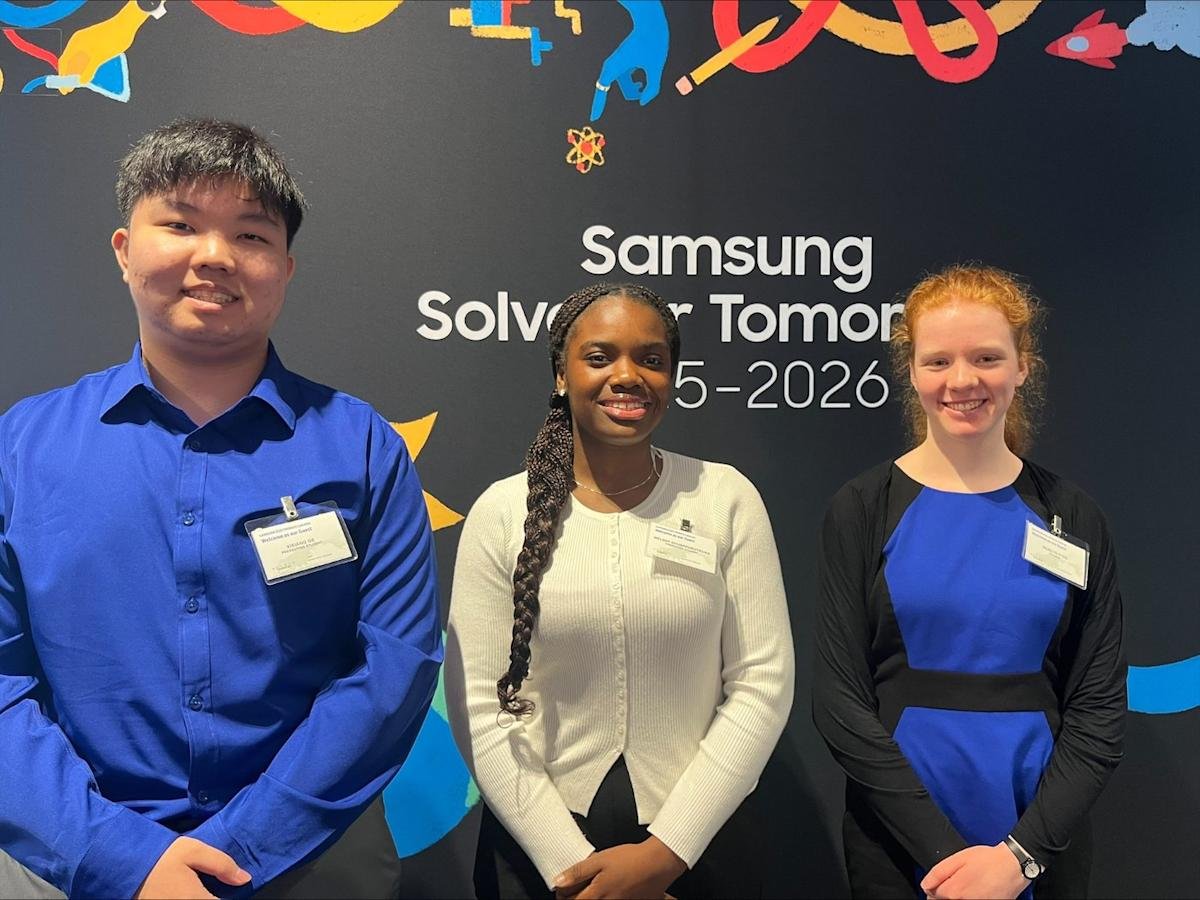
The work by Ovuakporoyecha and 10 of her younger peers, along with guidance from three teachers, won national recognition last month in Toronto.

St. Malachy’s Memorial High School was named the winner out of eight finalists for Samsung’s Solve for Tomorrow challenge — and claimed $50,000 in Samsung technology vouchers for upgrades to their school.

Ovuakporoyecha was researching how prosthetic limbs interact with the nervous system when she came across hydrogels — a plastic-like material that can absorb and hold large amounts of water while maintaining a shape.

And she figured out they work well as bio sensors because they’re conductive, don’t irritate the skin and have anti-bacterial properties.

Raw shell waste is a byproduct of the commerical seafood industry. The students’ innovation proposes isolating a polymer called chitin that is then processed into a biocompatible powder called chitosan.

That powder is then formed into the hydrogel that, say the researchers, is safe to use as a bio sensor on patients.

Ovuakporoyecha didn’t do the work alone.

Earlier in the school year, she and her Grade 12 AP research peers pitched AP seminar students a year younger on their projects.

Rhailyn Pyke, one of the Grade 11 students who signed up to Ovuakporoyecha’s project, was tasked with looking into a potential adverse effect of the idea: seafood allergies.


However, Pyke said she discovered the hydrogels don’t cause allergic reactions because allergy-triggering proteins are absent in chitosan.

The student research team looked at other potential challenges, too.

For example, students examined the real-world changes that would be required for proper disposal of the biodegradable sensors so they didn’t end up in the landfill after all.

“Instead of looking at it just as a theory, it’s something that could actually be implemented and carried out,” Pyke said in an interview.

While the students didn’t test the sensors on people, human trials could be works in the future, according to the research team.

Ovuakporoyecha is graduating from St. Malachy’s Memorial this year and attending Western University in London, Ont., for a Bachelor’s degree in medical science.

However, she plans to keep studying the feasibility of the bio sensors and hopes the next wave of AP students considers picking up the idea where her cohort left off.

In response to a request for comment, New Brunswick’s English-language health network noted Ovuakporoyecha’s idea would need to go through rigid Health Canada testing before adoption.

In a statement, Horizon Health Network’s chief innovation officer Jennifer Sheils called the project a “bold, solution-focused innovation.”

“It is exciting to see young New Brunswickers thinking critically about real-world clinical needs and opportunities to improve patient care.”

This report by The Canadian Press was first published May 16, 2026.

–By Eli Ridder in Fredericton

The Canadian Press


Source link

  • Related Posts

    Ice cream sold in 17 states recalled over possible metal contamination

    California-based Straus Family Creamery is recalling multiple organic ice cream products in pint and quart sizes due to the potential presence of metal fragments, according to a notice published Friday…

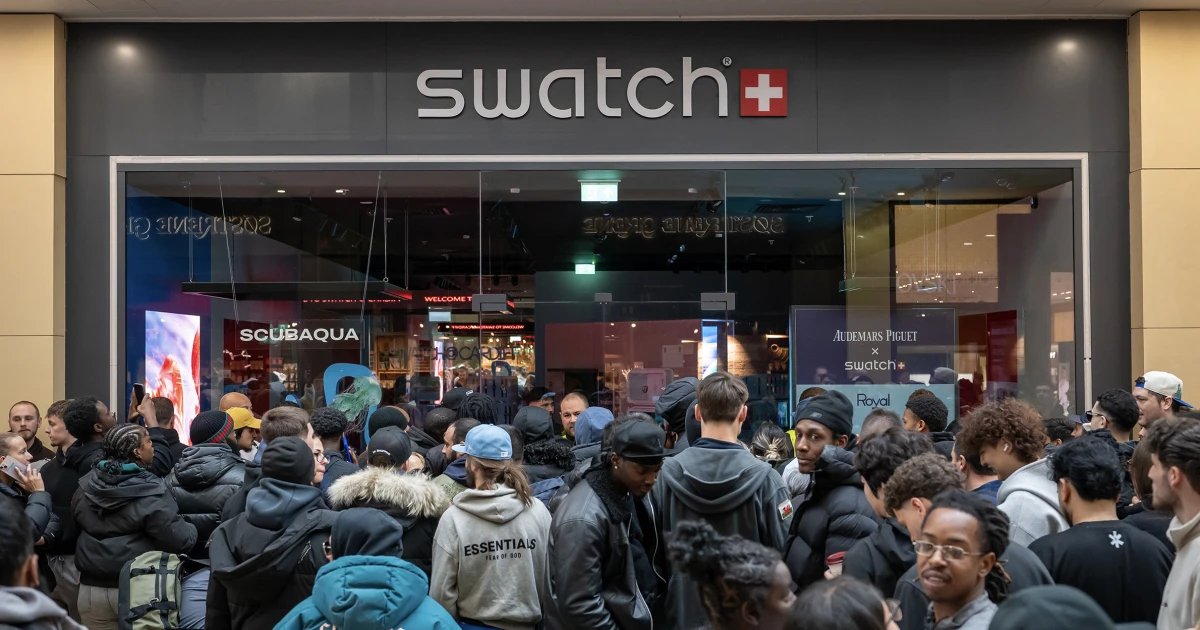
    Swatch stores shutter amid long lines for highly-anticipated collaboration release

    Chaos erupted at Swatch stores from New York to London as watch enthusiasts lined up for a highly anticipated new release — only for the massive crowds to force several…

    Leave a Reply

    Your email address will not be published. Required fields are marked *

    You Missed

    22-Hour Flights: Air India Suspends 3 Ultra-Long-Haul Routes To The US

    22-Hour Flights: Air India Suspends 3 Ultra-Long-Haul Routes To The US

    Train Crashes Into Bangkok Traffic, Killing at Least 8

    Train Crashes Into Bangkok Traffic, Killing at Least 8

    Mole is the best new app for cleaning up your Mac

    Mole is the best new app for cleaning up your Mac

    Part I, Volume 155, 1st quarterly index

    Here's how to get a free mattress — courtesy of Drake's Sleep Country Canada shout-out

    Here's how to get a free mattress — courtesy of Drake's Sleep Country Canada shout-out

    Palestinian pseudo-stealth game Dreams on a Pillow paints a difficult, poetic picture in its first look at gameplay

    Palestinian pseudo-stealth game Dreams on a Pillow paints a difficult, poetic picture in its first look at gameplay