dailynewsnblog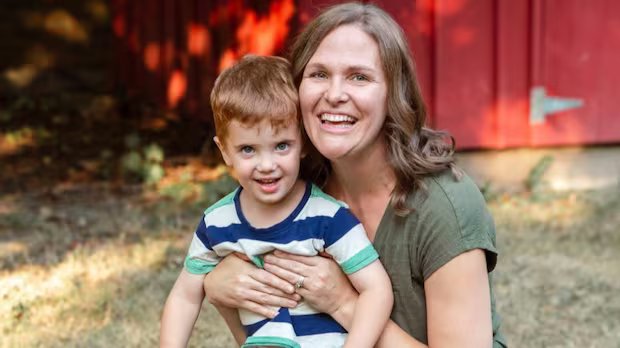
A Guelph, Ont., mother says her four-year-old son needs intensive therapy for a rare neurological condition that’s not fully covered by provincial health care, which means she has to find alternative ways to pay for his care.
Elaine Goldberg says her son, Jayce, is full of ideas, curiosity and personality, but childhood apraxia of speech makes it difficult for him to speak.
“His brain knows what to say,” Goldberg said. “But his mouth doesn’t know what to say.”
Childhood apraxia of speech is a motor speech disorder that affects how the brain plans and coordinates the movements needed to talk. Goldberg first noticed an issue when Jayce was an infant because he wouldn’t babble.
“He wouldn’t make really any noises,” she said.
By the time he was a year old, Jayce was falling behind on developmental milestones. At three he was diagnosed.
Goldberg says her son understands everything happening around him but struggles to respond verbally.
Goldberg says the Ontario Health Insurance Plan (OHIP) does not cover private speech therapy. Currently, Jayce sees a speech-language pathologist for two sessions a week at just over $100 per session.
Jayce is currently receiving provincially funded speech therapy through KidsAbility, an agency in Waterloo region and Guelph that provides pediatric rehabilitation programs and services including for children with disabilities and developmental delays.
But Goldberg that support is scheduled to end in September as Jayce ages out of the program.
With additional therapy needed to replace the supports currently provided through KidsAbility, she worries about how she will afford it all.
“When I found out we were going to have to pay, I panicked,” Goldberg said. “It’s expensive. And you’re thinking, how are we going to afford to get him what he needs?”
CBC News reached out to Ontario’s Ministry of Health for comment on Jayce’s speech therapy not being covered by OHIP, but did not receive a response in time for publication.
“If we don’t get him what he needs, he’s not going to succeed,” Goldberg said. “He’s going to be stuck as a child who doesn’t know how to communicate.”
‘He’s trying so hard to tell us something’
Speech-language pathologist Brooke Rea, owner of the Childhood Apraxia and Speech Therapy Centre in Guelph, is currently working with Jayce providing therapy.
She says children with apraxia understand language and often know exactly what they want to say, but have difficulty planning the precise movements of the tongue, lips and jaw to produce consistent sounds.
“They are very intelligent,” she said. “Unfortunately, the way their speech comes out can make them sound quite unintelligent.”

She says the condition is rare, affecting roughly one to two in every 1,000 children.
Jayce communicates using a mix of gestures, pointing and spoken words.
He will often point to objects or areas of the home and use simple signs and visual cues to indicate needs like food, drink or activities. He is also able to say a small number of words, though they are not yet consistent or always clear enough for others to understand.
Goldberg says these methods are limited when it comes to more complex thoughts. She worries that as Jayce gets older, he will have more he wants to say but still will not be able to express it.
“You can see it in his face,” she said. “Sometimes he just breaks down and starts crying because he’s trying so hard to tell us something.”
Therapy that comes at a cost
Goldberg says Jayce requires ongoing support to build and maintain his speech skills.
“It is such an intensive therapy schedule that is going to be going on and on for years,” she said.
With Rea, Jayce receives targeted, motor-based therapy. Rea says that kind of frequent repetition is essential for children with apraxia, because they must repeatedly practise the precise mouth and tongue movements needed to form words.
“Over time what we’re doing is providing a lot of support to help them scaffold that movement, but then slowly reducing those cues so that they can then go on to do it themselves,” Rea said.
She adds Jayce has made steady progress over the past year and a half, including improved control of airflow for clearer speech and a growing ability to recognize when a sound or word is incorrect.
Rea says Jayce will continue to require a higher overall level of therapy than any single provider or the public system can offer. Children with apraxia typically need multiple sessions per week over many years, because speech is a motor skill that must be constantly reinforced and rebuilt.
“We’re working on really ensuring accuracy of all of the sounds in the syllable that we’re putting together,” she said.
A Voice for Jayce
The financial pressure led Goldberg to organize a fundraiser to help cover the costs of ongoing therapy.
The family friendly event, called A Voice for Jayce, will be held Saturday from 2 p.m. to 5 p.m. at Elora Road Christian Fellowship in Guelph and will include games, face painting and other family-friendly activities.
Goldberg says she also hopes to raise awareness about apraxia through the event because it’s a condition she says is often misunderstood.
“A lot of people think he’ll talk when he’s ready, or that he’s choosing not to,” she said. “But he can’t. His brain is having trouble sending those signals.”
She says the response from the community so far has been overwhelming.
“I was feeling very alone at first,” she said. “They’ve been so supportive.”
She added, “We’ll do whatever we can to help our little boy learn how to communicate.”



![15-Hour Nonstop Flights: Explore Virgin Australia’s 10 Longest Routes In 2026 [Map]](https://dailynewsnblog.com/wp-content/uploads/2026/06/qatar-airways-777-300er.jfif.jpeg)