dailynewsnblog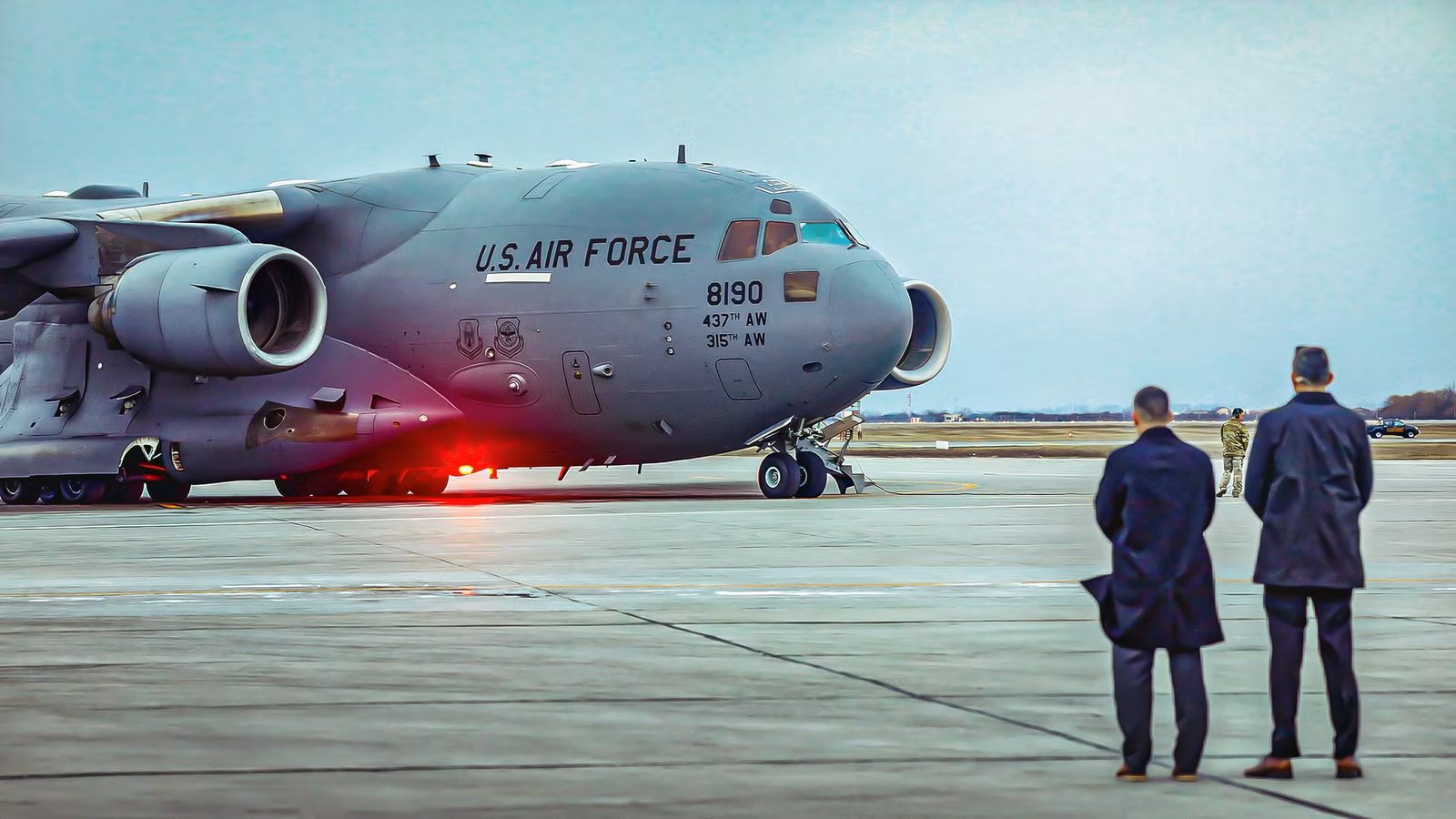
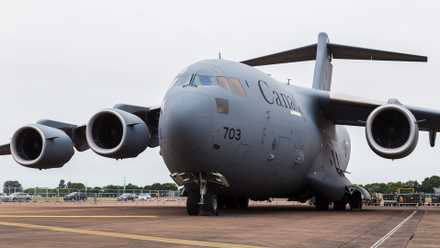
The  Boeing C-17 Globemaster III is the primary heavy-lifter of the United States Air Force (USAF). The first production delivery was made in 1993, and it reached operational readiness in 1995. Since that point, the Globemaster has been an indispensable asset for US military operations on a global basis.
This incredible aircraft was purpose-built for versatility. To this point, the C-17 is capable of transporting large amounts of cargo, including military vehicles, enabling airborne assault missions, supporting humanitarian aid/disaster relief efforts, and medical evacuation.
Virtually anywhere in the world where a military operation is underway, including in austere environments, the Globemaster will be involved in some capacity. Given the significance of this aircraft, the USAF is going to great lengths to keep its fleet of C-17’s operational as it seeks to design and field a suitable replacement.
Sustainment And Modernization Funding For The C-17

While the final Globemaster delivery for the USAF was completed on September 12, 2013 (to Joint Base Charleston, SC), the fleet is expected to remain in use until at least the 2060s. With current modernization planning, they may very well serve the needs of the US military until the 2070s. In order to keep these airlifters operational and effective, Boeing provides and manages a significant amount of the worldwide sustainment effort for the C-17; this falls under the Globemaster III Sustainment Program (GISP).
In 2021, the USAF extended Boeing’s sustainment partnership under a contract potentially worth up to $23.8 billion (£17.6 billion). This work is expected to last ten years. Additionally, as recently as last year, the USAF awarded Boeing a $2.46 billion (£1.82 billion) contract modification for C-17 sustainment. This recent adjustment increased the total contract value to approximately $7.6 billion (£5.63 billion) with maintenance efforts scheduled through October 31, 2027.
Is The Boeing C-17 Globemaster Bigger Than The Airbus A380?
A closer look into the true size, design, and mission role of the legendary C-17 Globemaster.
Keeping the C-17 In The Air

The aforementioned funding is allocated to various areas such as, depot maintenance, worldwide sustainment operations, engineering support, the production of spare parts and ongoing aircraft modernization efforts. Specific areas of repair or modernization include the replacement of aging avionics which, in some cases, were manufactured over 20 years ago. This effort will see the swapping out of mission computers, cockpit electronics, and modular open-architecture systems, making future upgrades easier and less expensive.
Engine sustainment is being handled by Pratt & Whitney. This contract was awarded in 2023, and it is worth $5.5 billion (£4.3–£4.4 billion). The work entails improving the compressor blade coating and engine improvements, which will lower lifecycle costs and improve fuel efficiency.
Finally, the airframe is under constant inspection due to the C-17 Globemaster III’s sustained operational tempo and extensive global deployments. For this reason, attention is given to fatigue, cracking, corrosion, and heavy-use wear. Areas frequently repaired or replaced include gear wells, load-bearing fittings, and fatigue-prone structural components such as fuselage frames, the center wing box, landing gear attachment structure, and cargo floor beams and rollers.
Catch what other flight trackers miss
Emergency squawks, holds, NOTAMs — live signals, no signup.
Open tracker
Catch what other flight trackers miss
Emergency squawks, holds, NOTAMs — live signals, no signup.
Open tracker
Background: How the C-17 Came To Be

The origins of the C-17 date back to the late 1970s following the end of the Vietnam War. During this period, the USAF faced growing concerns regarding the effectiveness of its transport fleet. Existing aircraft, particularly the Lockheed C-141 Starlifter and the Lockheed C-5 Galaxy, were increasingly viewed as inadequate for the Air Force’s evolving Cold War airlift requirements, especially as tensions with the Soviet Union continued to raise the possibility of a large-scale conventional conflict.
Specifically, the C-141 lacked the payload capacity and short-field performance needed for rapid deployments to austere areas with limited infrastructure. On the other hand, the C-5 was more than capable of handling large volumes of cargo and transporting it over vast distances; its operation was restricted to major airbases with long, reinforced runways.
The US military required a new transport aircraft with strategic reach capabilities, yet could also be a valuable asset on a tactical level. The new aircraft would need to deliver tanks, armored personnel carriers, soldiers (airborne or standard infantry), and handle medical evacuations.
These requirements led to the CX competition in 1981, with McDonnell Douglas winning the development contract for the C-17. Ten years later, the aircraft made its maiden flight, and by 1993, it entered service with the USAF, just in time for the post-Cold War years. The Globemaster would be ideally suited for contingency operations, humanitarian interventions, peacekeeping and stabilization missions, and expeditionary operations.
The Striking Differences Between The C-17 Globemaster & The C-5 Galaxy
From strategic airlift to tactical flexibility.
Remaining An Important US Military Cargo Lifter For Years To Come

In terms of the rapid, tactical delivery of combat units to an area of operations, the C-17 is highly capable, combining substantial payload capacity with the ability to operate from relatively austere airfields. As such, the aircraft can operate from a landing strip with a minimum of about 3,000 ft (914 meters), and accommodate a payload of 170,900 lb (77,500 kg).
If the US military needs to surge combat personnel to a high-need operational zone, the USAF can launch and maintain an air-bridge. This is a continuous, high-frequency flow of cargo or personnel between two points, generally a regional main airbase (used as a staging area) and a forward tactical operational node.
|
Capability (dependent upon varying configurations) |
Approximate Capacity |
|---|---|
|
Main battle tanks |
1 × M1 Abrams tank |
|
Helicopters |
Generally, up to 3–4 Apache-sized helicopters, depending upon the variant and disassembly |
|
Light/general vehicles |
About 12–18 Humvees (configuration dependent) |
|
Standard or Airborne Infantry |
102 fully equipped soldiers |
|
Cargo payload |
170,900 lbs. (77,519 kg) |
In such a scenario, C-17 aircraft can deploy a brigade combat team (approximately 3,500–5,000 soldiers), along with several hundred vehicles, artillery, and associated sustainment supplies, within roughly one week. The full sustainment package could be in place within one to two weeks, with the lead elements on the ground and operational within 12 to 24 hours.
A larger force, such as an infantry division, with all of its vehicles and equipment, and supplies (10,000 to 18,000 soldiers) could be brought to a combat zone within a month. Most of the combat units of this force would be operating within one to three weeks.
C-17 Operational Case Study: Operation Joint Endeavor, Bosnia, 1995

By 1995, the Bosnian war had caused widespread ethnic violence, chiefly among the Bosnian, Croatian and Serbian populations. This resulted in the large-scale displacement of civilian populations and a resulting humanitarian crisis. Operation Joint Endeavor was initiated in 1995 following the Dayton Peace Agreement, which led to the deployment of a NATO-led multinational peacekeeping force (IFOR) in Bosnia and Croatia.
In sum, IFOR consisted of approximately 60,000 personnel from 36 nations, with France, Britain, and the United States being the principal contributors. The United States provided around 28,000 troops, largely drawn from the 1st Armored Division, many of whom were based in Germany prior to deployment. An additional 10,000 U.S. personnel were stationed across Bosnia, Hungary, and Croatia, supporting IFOR operations through the U.S. National Support Element.
Under these trying and important circumstances, the C-17 experienced widespread and systematic use in a major contingency operation. Missions utilizing the aircraft began in December 1995, when US and allied forces began deploying peacekeeping forces in Bosnia. According to the Congressional Research Service, in the first three months of operations:
Air Force mobility forces flew 3,827 missions, carried over 18,539 troops and delivered more than 45,000 short tons of cargo. The C-17 — used to satisfy the Army’s need for high-capacity, short-distance air transport to move peacekeepers, equipment and outsize cargo from Central Europe to the Bosnia area of operations — flew slightly more than 26 percent of the missions but delivered over 44 percent of the cargo.
During the initial phase of Joint Endeavor, Globemaster crews reportedly offloaded vast amounts of cargo, including loads of 165,000 pounds, in less than 15 minutes. These efforts are not only a testament to the skill and efficiency of the personnel undertaking this operation but also a statement of the ergonomic design of the C-17, allowing it to offload cargo as expeditiously as possible.
This is due to features such as a large aft cargo ramp and a roll-on/roll-off design with a dual-side loading system. The latter consists of internal rollers and locking mechanisms, combined with a low cargo floor height, allowing crews to rapidly load or unload pallets without heavy external ground support equipment.
The C-17 played a very important role in Operation Joint Endeavor, by reducing reliance on longer, more complex logistics chains. In doing so, the Globemaster fleet rapidly moved soldiers and their equipment (including light vehicles and helicopters) from staging areas in Germany to relatively austere forward airfields in Bosnia, a distance of roughly 500–650 miles (805–1,046 km).

The 9 Countries That Operate The C-17 Globemaster III
The United States operates the largest C-17 Globemaster III fleet.
Blended Strategic And Tactical Capability A Hallmark Feature Of The C-17

The C-17 Globemaster is a highly capable aircraft capable of transporting various types of cargo in support of diverse mission-sets. For this reason, the United States Air Force continues to support and maintain this highly valuable aircraft. One of the unique features of the C-17 is the fact that it blends strategic capabilities with tactical delivery. In doing so, it can undertake intercontinental lift missions from large main operating bases and deliver that cargo to some of the most austere operating environments.
While this aircraft is out of production, it will remain one of the most important assets in the US military’s logistics chain. Until the US defense industrial base can produce the Next-Generation Airlifter, the C-17 will continue to fulfill its unique blended logistical role for the near future.