dailynewsnblog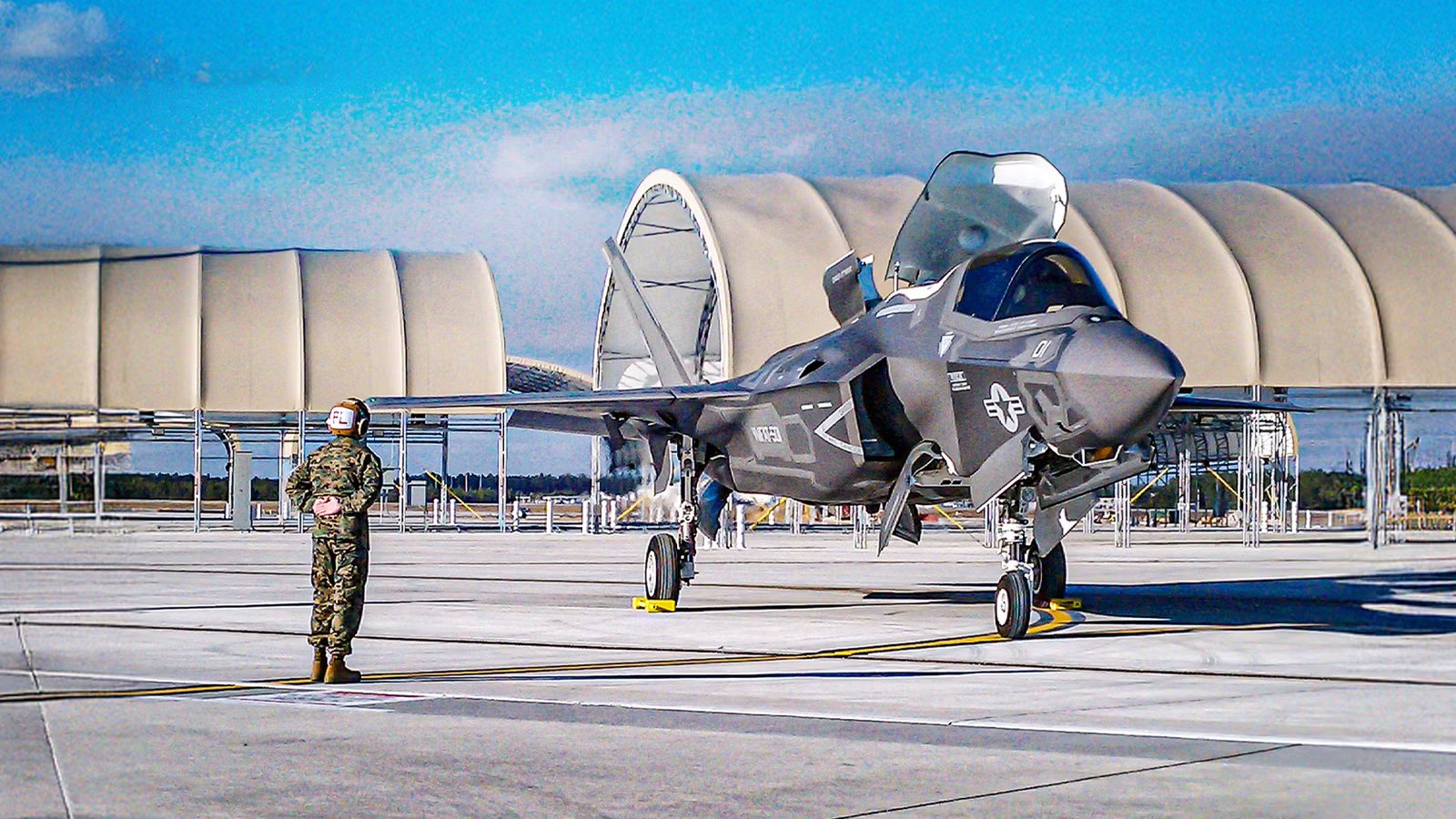
The 2026 Aviation Plan of the US Marine Corps describes a three-stage timeline of continuous transformation between now and 2040 with the predominant theme being an expansion of stealth fighter squadrons and dispersed deployment to expeditionary sites across the Pacific. The AVPLAN is structured under Project Eagle according to Defense.info, with three Future Years Defense Programs divided between Fight Tonight (2026-2030), Bridge the Gap (2031-2035), and Future Fight (2036-2040).
The introduction of the Lockheed Martin F-35B Lightning II transformed the Tactical Aviation division of the Marine Corps by introducing the first stealth aircraft in the history of the department. These aircraft not only replace the Legacy Boeing AV-8B Harrier jump jet with a far more capable VTOL platform but also bring a host of new capabilities.
Supporting the stealth fighters will also be a massively expanded land-based anti-air network known as MADIS, or Marine Air Integrated Defense System. The two-pronged approach to build a new era of air warfare in the Marines represents a paradigm change for the Devil Dogs.
Pivot To The Pacific

Distributed Aviation Operations is the central warfighting concept of Project Eagle. The F-35 fifth-generation stealth fighter is the primary driver enabling the Marine Corps’ return to a highly mobile, “Raider-style” expeditionary force specifically tailored for the Indo-Pacific. It does this by operating from austere, temporary landing sites rather than just large, vulnerable airbases.
As the US Marines have been transitioning to a greater ‘Raider’ stance over the past years alongside the pivot back to the Pacific, these new fighter jets have significantly empowered the Marines’ strategic capabilities. Using stealth and ‘shoot-and-scoot’ tactics, the F-35 can strike from a distance and withdraw before being detected by advanced adversary air defenses.
The F-35B’s Short Takeoff and Vertical Landing, or STOVL, capability allows amphibious assault ships to operate as Lightning Carriers. These smaller vessels can carry up to 20 F-35Bs, providing a lower-profile, more flexible alternative to traditional supercarriers. They can operate from smaller ports and shallower waters, which is critical for maneuvering through the island chains of the Pacific.
Sensor Node

To maintain this high-intensity Raider posture, Project Eagle focuses on data-driven sustainment. The F-35B acts as a mobile sensor hub, gathering and sharing critical data across the ‘kill-web’ to support small, lethal teams on the ground. Stealth and advanced electronic warfare suites allow it to conduct intelligence, surveillance, and reconnaissance missions in contested environments where older aircraft cannot survive.
Fat Amy, as the F-35 was nicknamed, functions as a mobile command and control hub that links land, sea, and air assets across a Joint Force Network. The data aircraft’s ability to integrate data across not only different service branches but also international allies and then broadcast it to the Joint Forces network is incredibly valuable.
The F-35B is a primary node for Joint All-Domain Command and Control, or JADC2. The ability to share high-fidelity data instantly transforms it from a lone fighter into a force multiplier for the entire theater. The aircraft’s advanced sensor suite creates a single, comprehensive battlespace picture that is shared in real-time with Army ground units, Navy destroyers, and Air Force assets. It connects every sensor and shooter across all branches of the US military and partners.
Defending The Skies: MADIS

MADIS, or the Marine Air Defense Integrated System, uses a fighting pair of vehicles equipped with radars and Stinger missiles to counter drones and aircraft. The F-35B can feed its high-altitude sensor data into the Common Aviation Command and Control System, alerting MADIS operators to incoming threats long before ground-based sensors could detect them. It is the primary expeditionary short-range air defense solution to protect these distributed sites, according to Army Recognition.
MADIS operates in pairs on JLTVs: the Mk1 provides kinetic defeat via 30mm cannon or Stinger missiles, while the Mk2 provides sensor and electronic warfare capabilities with the RPS-42 radar and Modi II EW. According to FW-MAG, the USMC is scaling MADIS massively, with an acquisition objective of 190 systems to reach Full Operational Capability by FY2031.
Tailored for expeditionary environments, L-MADIS can be deployed alongside F-35Bs at austere landing sites to provide immediate counter-UAS (unmanned aerial system) protection while the jets are being serviced. Together, the F-35B and MADIS create a tiered defense. The F-35B handles high-altitude and long-range threats, while MADIS secures the immediate airspace around distributed ground forces.

Here’s Why Landing An F-35 On An Aircraft Carrier Is So Difficult
What it takes to be in the tailhook club.
Quantity And Quality In One Package: Bigger Stealth Squadrons

The Marine Corps is restructuring its F-35 force by increasing individual squadron sizes while simultaneously shifting its overall procurement balance toward carrier-based variants to better support long-range, high-intensity operations in the Pacific. While the total number of F-35s to be purchased remains unchanged at 420, the Corps has significantly increased its order for the Navy’s carrier-based F-35C variant at the expense of the short-takeoff F-35B.
Force structure analysis indicates that larger 12-jet squadrons provide better deployment flexibility and more robust maintenance capacity. Squadrons based in Iwakuni, Japan, already transitioned to 12 aircraft in 2024 to meet immediate Indo-Pacific requirements. In tests, F-35Bs have provided precision targeting coordinates to Army long-range fires and Navy missile systems, allowing the Joint Force to strike deep into contested areas from multiple vectors.
Larger squadrons are intended to better support the data-heavy requirements of DAO and upcoming Manned-Unmanned Teaming with drone platforms. As part of Project Eagle, the F-35B relies on decentralized Forward Arming and Refueling Points, which allow it to stay in the fight longer without returning to large, vulnerable airbases. The F-35C offers more fuel and a larger payload capacity than the F-35B, making it better suited for the vast distances and high-altitude efficiency required in the Indo-Pacific theater.

How The Boeing F/A-18 Super Hornet Stacks Up Against The F-35C In 2026
The US Navy’s strike fighters go head-to-head.
Aviation Ground Support

Under the new AVPLAN, Aviation Ground Support has been elevated to the Seventh Function of Marine Aviation. AGS is officially designated as the backbone of DAO because it provides the essential infrastructure and services that allow the F-35B to operate without permanent airbases, directly enabling its Raider-style posture.
Marine Wing Support Squadrons establish these Forward Arming and Refueling Points in remote locations. AGS provides specialized capabilities like airfield damage repair and the installation of VTOL surfacing systems. At the ‘lily pads,’ MWSS supports F-35Bs to land, refuel, and re-arm closer to the fight, drastically increasing their operational reach and mission frequency.
To keep pace with the F-35B’s advanced technology, AGS is undergoing its own recapitalization program. Predictive maintenance will use data to forecast when a distributed F-35B will need parts or fuel before it actually runs out. The 2026 AVPLAN has put an emphasis on the Tactical Aviation Ground Refueling System, with 78 systems expected to reach full capability after this year. These systems allow AGS to quickly move and distribute fuel in high-threat areas.
New hardware is being fielded to help F-35B pilots land safely in zero-visibility or contested environments. If an F-35B suffers mechanical issues at an austere site, AGS provides aircraft recovery and transport to get the platform back to a maintenance hub. AGS is being linked into the Marine Air Command and Control System to provide real-time situational awareness at remote sites.

Why The US Navy Is Quietly Expanding Its Aircraft Carrier Fleet
America is getting more of the mighty flat tops.
International Operations And Alliance Interoperability

The F-35B’s stealth and STOVL capabilities are tailor-made for the Pacific’s “tyranny of distance” and island-hopping requirements. The F-35 program is built on a foundation of global partnership, ensuring that US Marines can fight seamlessly alongside allies. Regular exercises, such as Nordic Response in Norway and bilateral drills in Australia, standardize maintenance and mission planning across international borders.
Interoperability has evolved into interchangeability, where Marine pilots can fly from allied ships and vice versa. Marine F-35Bs frequently operate from allied ships, such as the UK’s HMS Queen Elizabeth and Japanese helicopter destroyers, effectively expanding the reach of the Lightning Carrier concept across the coalition. Regular high-level drills like Talisman Saber and rotations to South Korea, among other exercises, allow maintainers and pilots from different nations to practice autonomous, organic-level support together.
The F-35B Lightning II is the central lynchpin of the pivot to the Pacific. The Marine Corps actually maintains its only permanently stationed forward-deployed 5th-generation squadrons in Iwakuni, Japan, thanks to VMFA-121 and VMFA-242. Because partners like Japan, Australia, South Korea, Italy, and the United Kingdom operate the same platform, they share the same data-link protocols, like MADL, enabling plug-and-play integration during regional crises.
The most critical link of this strategy in the Pacific is between the USMC and the JMSDF’s Izumo-class destroyers. These ships are being modified into light carriers to host F-35Bs, effectively creating a combined Lightning Carrier force. USMC F-35Bs from VMFA-242 regularly conduct takeoff and landing trials on Japanese ships like the JS Kaga. Under Project Eagle, the USMC is also leading the effort to train JMSDF LSOs in the U.S. to ensure they are proficient in the specific recovery procedures for the F-35B.
This training ensures that a Marine pilot can land on a Japanese ship, or a Japanese pilot on a Marine amphib, using identical signals, radio calls, and safety protocols. During trials on the JS Izumo and JS Kaga, USMC LSOs and deck crews work directly with their Japanese counterparts to certify the ships for flight operations. By being interchangeable, the USMC and Japan can distribute their F-35Bs across dozens of small islands and several different ‘big deck’ ships, making it nearly impossible for an adversary to target the entire force at once.