dailynewsnblog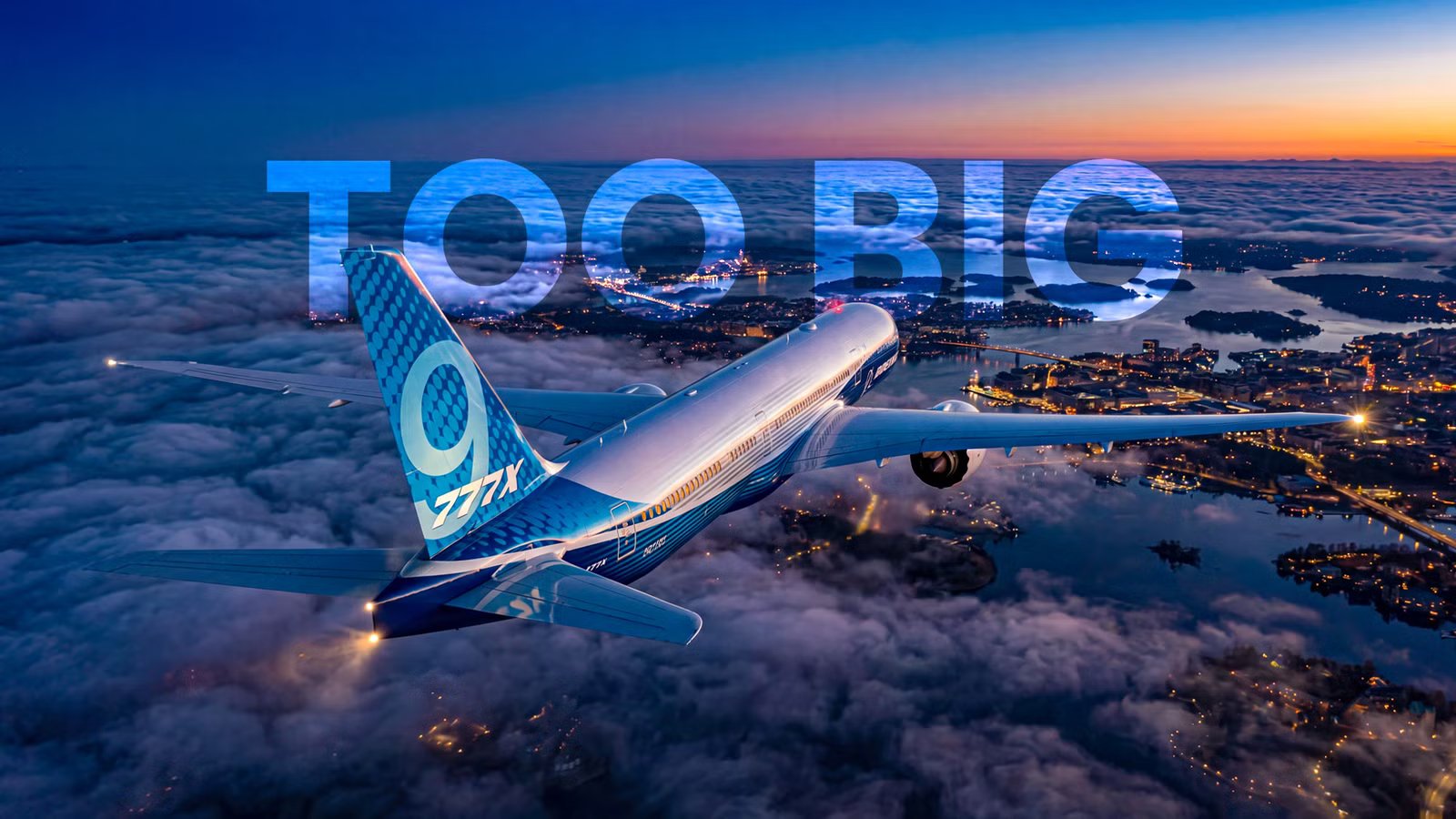
Scandinavian Airlines (SAS) is currently weighing a substantial widebody order, placing the Boeing 777X alongside established rivals like the Airbus A350 and the Boeing 787. With the airline already operating the A350, questions are being asked over whether bringing in Boeing’s hopeful flagship is the right step forward. This guide explores the technical and economic tension of introducing a 400+ seat giant into a market traditionally served by smaller, more flexible airframes.
The timing of this evaluation is critical as SAS undergoes a radical transformation under new ownership. With Air France-KLM set to increase its stake to approximately 60.5% in 2026, the airline is moving away from its  Star Alliance roots toward the
  SkyTeam ecosystem. Replacing its aging fleet of eight Airbus A330-300s is an operational necessity, but opting for the Boeing 777X represents a massive bet on high-demand trunk routes that could redefine Scandinavian aviation.
A Complete Change In Network Strategy

Shutterstock | Simple Flying
The primary challenge for SAS lies in the sheer scale of the Boeing 777-9, which can accommodate over 400 passengers in a standard long-haul layout. While the aircraft offers unparalleled range and cabin volume, filling that many seats on a daily basis from hubs like Copenhagen or Stockholm is a daunting task. Most Scandinavian routes currently thrive on aircraft seating between 250 and 300 travelers, making the jump to the 777X a significant departure from existing demand patterns.
Looking at the orders already placed for the 777X, a carrier would likely need at least 18-20 units of the 777X family to justify the specialized maintenance and training infrastructure required. For SAS, which currently operates only six Airbus A350-900s, adding a small sub-fleet of 777X giants could lead to disproportionately high operating costs. If the airline cannot consistently generate the necessary trunk-route traffic, the 777X risks being an underutilized asset that drags down the airline’s recovery margins.
The 777-9 is designed for mega-hubs like Dubai or Doha, where connecting traffic is measured in the tens of millions. SAS, by contrast, operates a more decentralized Scandinavian network that prioritizes frequency over raw capacity. Opting for a 400+ seat jet might force the airline to reduce flight frequencies to maintain high load factors, potentially alienating the high-yield business travelers who value flexibility over the sheer size of the aircraft.
Updating An Aging Fleet

Shifting from an all-Airbus widebody operation to a mixed fleet involving Boeing would be a monumental decision for the Scandinavian carrier. SAS currently relies heavily on its six A350-900s, with an average age of only 3.8 years, to handle its most efficient long-haul sectors. Introducing the 777X would break this technical commonality in half, requiring a fresh investment in pilot type ratings, spare engine inventories, and ground handling equipment specifically designed for the folding wingtips of the 777-9.
The competition is not just about size but also about the long-term relationship with manufacturers. Evaluating the A330neo and A350 alongside the 787 and 777X allows SAS to use its position in the SkyTeam alliance to secure better pricing. However, the 777X offers a unique capacity tier that Airbus has not yet found a definitive answer to with a twin-engine jet, placing Boeing in a strong position for high-density routes if SAS decides to compete directly with Gulf carriers.
|
Aircraft |
Capacity (Standard) |
Average Fleet Age |
Role |
|
A330-300 |
266 seats |
14.0 years |
Retiring Trunk Routes |
|
A350-900 |
300 – 320 seats |
4.8 years |
Current Efficiency Flagship |
|
Boeing 777-9 |
400 – 426 seats |
N/A |
Potential Mega-Trunk Jet |
|
Boeing 787-9 |
290 seats |
N/A |
High-Efficiency Alternative |
Being at the forefront of legacy carriers is a goal that SAS strives to achieve, with the recent developments of the airline demonstrating this rather clearly. Showing a serious interest in the Boeing flagship, the airline can push for better pricing and earlier delivery slots for competing European models. However, if the 777X is selected, it would represent a permanent shift in the technical DNA of the airline. This decision will determine whether SAS remains a focused Airbus operator or transitions into a multi-type carrier to support its 2026 expansion goals.
Boeing 777X Vs. Airbus A350-1000: Who Will Win The Battle For Tomorrow’s Flagship?
The 777X is nearly ready for service, how will it fare against Airbus’s A350?
Is It Really Too Big?

The heart of the appeal for the 777X is the GE9X powerplant, a massive engineering feat that provides enough thrust to propel the 400+ seat jet across 8,745 nautical miles (16,196 km). This range opens the possibility of non-stop flights from Scandinavian hubs to deep Asian markets or the western coast of South America that were previously unreachable with high payloads. For an airline like SAS, this range provides a strategic buffer, allowing it to bypass traditional European mega-hubs and offer direct long-haul connectivity to its local market, something that would make SAS a far more interesting option for travelers.
The GE9X shows a 10% improvement in fuel efficiency compared to previous generations, but this efficiency is highly dependent on how the aircraft is actually deployed. With the folding wingtips, the aircraft boasts a wingspan of 235 feet (71.6 meters) in flight, which is reduced to 212 feet (64.6 meters) on the ground. This feature allows the massive jet to use existing Category E gates at airports like Copenhagen, which were originally designed for smaller aircraft like the A330.
The technology is impressive, no doubt, but there is still a “too big argument” that stems from the physics of carrying such large engines on shorter routes. The GE9X is optimized for long-duration, high-altitude cruise, and using it on routes under 4,000 miles (6,437 km) can result in a weight penalty that negates the fuel savings per seat. For a more traditionally regional carrier like SAS, the risk is that the technical brilliance of the 777X remains underutilized on its standard transatlantic network. What this inevitably means is unless SAS significantly expands its ultra-long-haul route map, the smaller 787 or A350 might offer better day-to-day economics.
New Partnership Focus

The move over to the SkyTeam alliance will have a great effect on how the carrier routes its long-haul traffic. With Air France-KLM set to increase its ownership stake to 60.5% in 2026, the widebody fleet must now harmonize with the established networks of Paris and Amsterdam. The ownership shift suggests that any new aircraft order is not just for the Scandinavian market, but serves as a capacity tool for the entire airline group. It means that the Boeing 777X could act as a relief valve, absorbing high-volume passenger flows that currently congest the major hubs of Central Europe.
Integrating a 400-seat jet into this new ecosystem allows the airline to use the massive connecting banks of its French and Dutch partners. For a Scandinavian carrier, the ability to funnel passengers from regional cities into a single large aircraft bound for New York or Tokyo creates an economy of scale that has never been seen before here. Integration is particularly important as the airline looks to replace its eight aging A330-300s, which lack the efficiency and range required for modern global competition within a large airline group. Through consolidating traffic onto fewer, larger airframes, the group can maximize the value of its limited slots at congested international gateways.
The focus on the East Asian market remains a cornerstone of this expansion strategy. Flying the 777-9 on routes here would allow the airline to capture a significant portion of the premium leisure and business market that prefers direct Scandinavian connectivity. The incredible range of the aircraft will be key for the carrier to maintain high cargo payloads alongside a full passenger cabin, which is a critical factor for the profitability of long-range Asian sectors. It makes the 777X a compelling, albeit massive, candidate for the next phase of the airline’s growth and helps to explain why the airline is leaning into the 777X project.
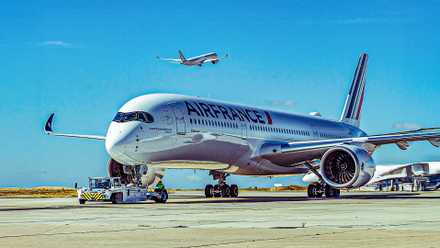
No More Air France-KLM: Group To Scrap 22-Year-Old Name Amid SAS & TAP Moves
A significant rebranding could be on the cards for one of Europe’s biggest airline groups.
The Industry Is Watching Closely

The 777X program is currently running roughly six years behind its original schedule and has incurred over $15 billion in development charges. For an airline like SAS, which needs to replace aircraft with an average age of 14.8 years, the uncertainty of the Boeing delivery calendar is a significant risk factor. The airline must weigh the theoretical benefits of the 777X against the immediate availability of the Airbus A350 or the Boeing 787 because claims will stay as claims until real world progress has been made.
The first production-standard Boeing 777-9 recently made its inaugural flight, a milestone that the industry has been watching with intense scrutiny. This flight is a critical indicator of whether the jet can meet its promised performance targets and stay on track for a 2027 entry into service. If the flight test program reveals further technical hurdles, then SAS may be forced to stick to Airbus to avoid a capacity shortfall. The pressure to modernize is immense, as the existing A330 fleet becomes increasingly expensive to maintain and operate in a high-fuel-price environment.
Choosing the 777X would require a level of patience that few struggling airlines can afford. The 400-seat capacity is attractive for future growth; the immediate need is for reliable, fuel-efficient frames that can be deployed today. It creates a strategic tension as a result; does the airline buy for the needs of today or the ambitions of the next decade? If SAS chooses to wait, it must ensure its eight A330s can remain airworthy and competitive for several more years, a feat that requires significant incremental investment in cabin refurbishments and engine overhauls.
A Mid-Size Test

So what does this fleet decision signal to the broader European aviation market? If a mid-sized carrier like SAS commits to the 777X, it suggests that the aircraft has a future outside of Middle Eastern and Asian giants. Currently, most European flag carriers have favored the smaller, more flexible twin-engine jets, viewing the 400-seat category as a niche market. An SAS order would validate the 777X as a viable tool for secondary hubs that are looking to consolidate their long-haul traffic and compete on a global scale.
The 777X is only viable when paired with a strong feeder network, and for SAS, this means the success of the aircraft is entirely dependent on the successful integration with Air France-KLM and the ability to draw passengers from across Northern Europe and the Baltic States. Without this massive influx of connecting traffic, the aircraft is simply too large for the local Scandinavian market.
The future of the 777X at SAS will be a difficult test for the big jet philosophy in a post-pandemic world. If the airline can successfully fill the aircraft and adapt to its technical range, it may lead to a resurgence of high-capacity flying in Europe. However, if the economics fail to materialize, it will serve as a definitive lesson that efficiency and flexibility remain the true priorities for regional flag carriers. The decision made in the coming months will resonate throughout the halls of Boeing and Airbus for the next two decades, defining the limits of aircraft size in the modern era.