dailynewsnblog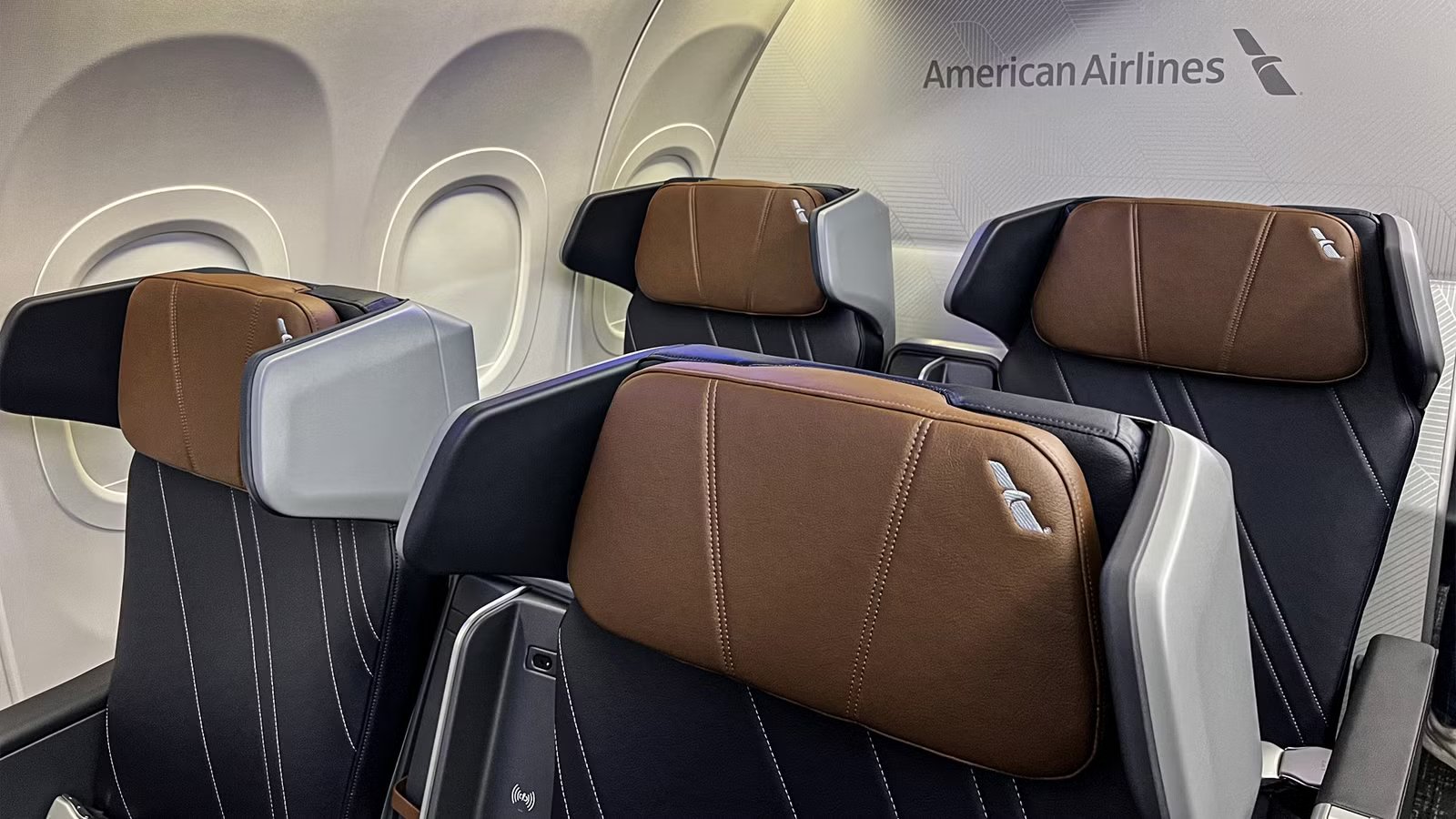
The Airbus A321XLR is a standalone narrowbody in the world of commercial aviation today since  Boeing elected not to build a successor to its once-vaunted 757 twinjet. The intercontinental-capable single-aisle is flown by six airlines today, with many more expected over the years, but notably, only two have added premium economy seating sections onboard.
Widely considered the ‘hottest’ cabin product in the post-COVID era of air travel, it is unusual to see the total absence of such an airfare option on most airliners today. The two are  American and United Airlines. However, each has only a small number of seats dedicated to it aboard the new planes. The other four operators who opted out are Iberia, Aer Lingus, Air Canada, and Qantas.
This divide highlights a critical question within the aviation industry: does a premium economy section truly generate enough revenue to justify its footprint on a narrowbody aircraft? Or is it simply a legacy strategy that two specific airlines are attempting to replicate on a small twinjet that lacks a widebody’s extra floor space to justify inclusion?
Six Airlines, Six Bets On Customer Demand

American Airlines configured its A321XLR with 20 Flagship Business suites, 12 premium economy recliners, and 123 economy seats, totaling 155 seats. United Airlines, scheduled to enter service later this year, mirrors this approach with 20 business, 12 premium economy, and 118 economy seats, resulting in a 150-seat total that stands as the most spacious layout of the group.
Operating the same aircraft, Air Canada eliminated premium economy, squeezing 168 economy seats behind 14 business suites for a total of 182 seats. Aer Lingus expands its total to 184 seats by pairing 16 business suites with that same 168-seat economy count. Qantas went even further with the highest density at 200 seats, combining 20 recliner business seats with 180 economy seats and omitting a premium economy cabin entirely. In contrast, Iberia and Air Canada each installed 14 business suites ahead of 168 economy seats, for a total of 182 passengers.
The Back Of The Cabin Tells The Real Story

An important consideration is the galleys and lavatories. None of the six launch carriers originally fitted with a mid-cabin lavatory, which puts real pressure on an economy section that can spend eight to 11 hours in the air. American’s economy flyers share three lavatories at the rear, a ratio of roughly 41 to one.
Three restrooms for 168 economy passengers make Iberia’s stats seem better on paper. However, they are all located at the very back of the aircraft. AeroLOPA quoted Runway Girl Network’s account of Iberia’s first flight, which detailed a continuous line of passengers building at the rear galley during service. This resulted directly from Iberia and Aer Lingus sharing a cabin configuration that, for the sake of uniformity, does not have a mid-cabin lavatory.
With only two economy restrooms at a ratio of almost 90 to one, Qantas does significantly worse. This is far less than the approximately 42 to 49 passengers per lavatory that Qantas provides on its widebody fleet, making it one of the worst in the business. According to AeroLOPA, the airline has already changed its direction, equipping the first three aircraft with a mid-cabin restroom and deleting a row of three economy seats from the fourth aircraft onward.
American and Air Canada rank in the center of the group, with a healthier three-lavatory split at the back than Qantas, despite lacking a mid-cabin option of their own. Nonetheless, AA does not devote any money to premium economy, particularly, raising an obvious concern. If the 12 superior seats share every lavatory and galley shelf with economy, what exactly does the extra airfare expense cover?
American’s 12-Seat Premium Economy

According to Runway Girl Network, which flew American’s inaugural A321XLR revenue aircraft with its debut premium economy class, the seats are the biggest upgrade. The Recaro R5 recliners have 37 inches of pitch, 21 inches of breadth, and eight inches of recline. This footprint compares favorably to American Airlines’ Boeing 787 twinjets. The publication described it as one of the better spaces the airline now flies.
The article also noted that the galley, which serves both the main cabin and premium economy, is incredibly small and has a small oven. The crew apparently became audibly irritated during meal service as a result. The context of the experience also becomes clear when you consider the price difference.
This premium fare is nearly triple the price of Basic Economy and comes within a few hundred dollars of Flagship Business on certain dates. Travel Codex reported the pricing gap directly on a flight from JFK to Los Angeles. On his sample dates, Basic Economy cost $379, Main Cabin was $421, Main Cabin Extra ran $526, and premium economy reached $1,050.
Catch what other flight trackers miss
Emergency squawks, holds, NOTAMs — live signals, no signup.
Open tracker
Catch what other flight trackers miss
Emergency squawks, holds, NOTAMs — live signals, no signup.
Open tracker
The primary criticism focused on what America omitted rather than what it built. The airline installed just a dozen Main Cabin Extra seats, all of which are confined to the exit rows. By declining to remove a standard economy row to create a larger extra-legroom section, the analysis described the decision as a significant miss. The omission is especially stark given the steep price jump required to step up to premium economy.
Why Four Airlines Passed

Air Canada skipped premium economy entirely. Instead, the airline chose 14 lie-flat business suites and 36 extra legroom seats, filling the rest of the plane with a dense coach cabin. Iberia and Aer Lingus made the same practical choice. They offered high-end business suites and standard economy rows with absolutely nothing in between.
Qantas pushed passenger density even further. This clear divide proves that most international launch airlines want raw passenger volume instead of middle tiers. Single-aisle space is just too valuable to give up for a third cabin. United Airlines is a bit different from the American layout, with one variant matching at 20 business suites and 12 premium economy seats, but its ‘Elevated Interior’ model offers more luxury with 56 Polaris business and 35 Premium Plus seats. This is the most spacious layout among the six launch airlines.
United caps economy at 118 seats for a roomy total of 200 passengers on its standard floor plan and a very comfortable 150 on the Elevated variant. In addition to more ‘elbow room,’ the lower seat count also lets United fly with four flight attendants instead of five.
Saving money on crew costs means the airline does not have to rely as much on cheap economy tickets to pay for the flight. This four-to-two split shows that most airlines prefer packing the plane with coach seats rather than building miniature versions of widebody cabins. Whether the gamble by American and United works out will become clear over the next few years as single-aisle schedules mature on secondary transatlantic routes.
How Premium Economy Usually Pays Off

On a widebody, the business case for premium economy is well documented and remarkably strong. Lufthansa’s commercial leadership has called the cabin a money-generating machine. According to Apex, it generates revenue per square foot that runs a third higher than the economy and several percent higher than business class across the long-haul fleet, on average. Given a case like that, adding the cabin to a three-class narrowbody should be close to an automatic decision. American Airlines made an identical case in 2019, telling investors that premium economy fares run double standard economy prices, making it the most profitable use of widebody space.
The fundamental complication is that a single-aisle jet does not carry a widebody’s square footage. On a twin-aisle, premium economy typically sits near its own dedicated lavatories and galleys, safely insulated from the crowding behind it. Furthermore, every seat devoted to that premium cabin costs the same stretch of fuselage that could instead have gone to another row of economy. On two-class jets, that space goes to seats with none of the premium economy service overhead at all. That is the exact trade-off four of the six launch carriers considered and ultimately declined, preferring to invest in density over a niche middle-cabin product.
Alone In The Mid-market Of Global Aviation

For years, the aviation world relied on the Boeing 757 to connect smaller cities across long distances, like flying from Newark to Stockholm. When Boeing stopped making it, they assumed airlines would simply buy their bigger widebody jets or settle for slightly larger versions of standard short-haul planes. That gamble failed.
The big widebody jets were too expensive to run on those routes, and the smaller planes simply could not fly far enough. Airbus saw this gaping hole in the market and jumped on it. Instead of spending billions to build a brand-new plane, they took their popular short-haul jet and added a massive, permanently built-in fuel tank.
In late 2025, the Airbus A320 family officially surpassed the Boeing 737 in total lifetime deliveries. Driven heavily by the success of the A320neo line and the unprecedented demand for the long-range A321XLR, Airbus holds a colossal total backlog of roughly 9,362 aircraft. Over 7,000 of those orders belong strictly to the A320neo family. Airbus has effectively dethroned its American rival in the narrowbody sector.
The A321XLR boasts a standalone backlog of over 500 orders. While airlines must grapple with the tight layout constraints of a single center aisle, the economics make it the only game in town. It runs the same long-range, thin-route missions as its predecessor but burns roughly 30% less fuel per seat, ensuring its status as the backbone of mid-market long-haul flying for the foreseeable future.