dailynewsnblog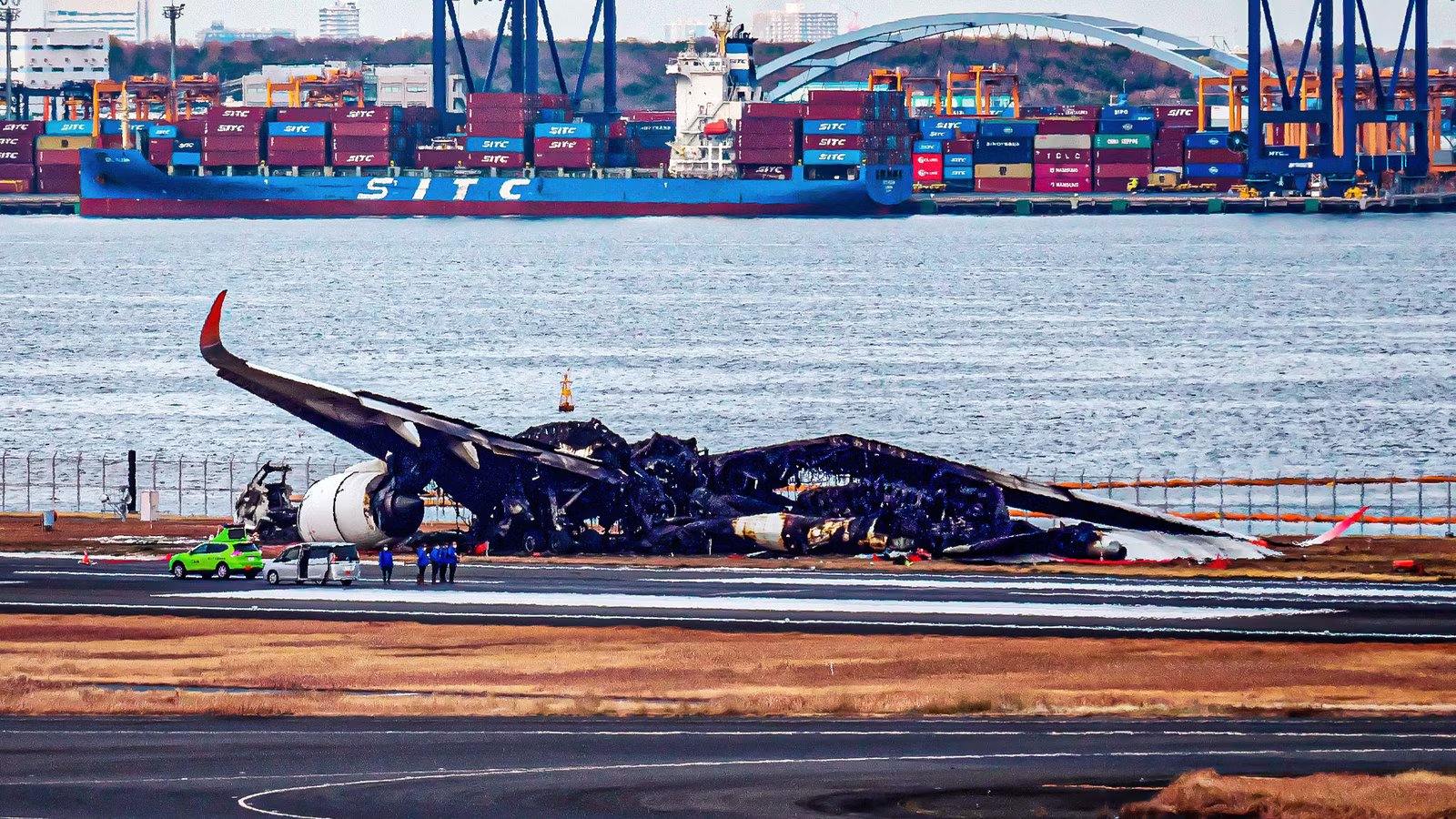
Every time a commercial aircraft crashes, the world’s attention turns immediately to the investigators. Traditional commercial narrowbodies like the Boeing 737 or Airbus A320 are composed of roughly 70–80% aluminum by structural weight, a figure confirmed by the National Academies of Sciences in its landmark report on aerospace materials. The path that material travels after the cameras leave, from cordoned wreckage field to secure forensic facility to industrial smelter, is far more complex, regulated, and technically demanding than most people ever consider.
This article relies on NTSB investigation manuals, ICAO technical standards, and aerospace materials data combined with documented case studies such as large-scale wreckage reconstructions and recent recovery operations, to discover what happens to the aluminum after a plane crash, following it through its life cycle.
The Regulatory Hold: Why The Aluminum Stays Put

Before any piece of wreckage is moved, a precise legal and procedural framework locks the entire site in place. In the United States, aviation accident investigation authority flows from 49 CFR Part 831, which grants the NTSB exclusive jurisdiction over accident sites and all physical evidence within them.
Internationally, the governing document is ICAO Annex 13 to the Convention on International Civil Aviation, which assigns investigative authority to the State of Occurrence and mandates the preservation of all physical evidence until a competent authority has documented and authorized its removal. These two instruments together create a situation where the aluminum lying in a debris field carries a legal status closer to evidence in a criminal proceeding than to industrial scrap.
The NTSB’s response to a major commercial accident is organized around a Go Team — a multidisciplinary group of specialists deployed within hours of the event. As detailed in the NTSB Aviation Investigation Manual, a major investigation can involve more than 100 technical specialists representing as many as a dozen parties and multiple federal and local government agencies. The team is organized into functional groups covering structures, powerplants, systems, flight operations, air traffic control, meteorology, and human performance.
The first task of structures specialists and materials engineers on arrival is to create a systematic spatial record of the debris field using GPS positioning, photogrammetry, and high-resolution video, producing a georeferenced map of every fragment before any collection begins. The orientation, position, and separation distance of pieces relative to each other carry information about the in-flight or ground-impact breakup sequence that is destroyed the moment a piece is moved without documentation.
Component priority governs the order of physical removal, depending on the type of accident. The Flight Data Recorder and Cockpit Voice Recorder are encased in titanium and designed to survive 3,400 g of impact force and 2,012°F (1,100°C) flame, and they are recovered first. After the recorders, components with the highest investigative value are extracted and tagged: actuators and control surfaces, engine fan blades and turbine sections, and primary structural joints where fatigue or corrosion cracking may have originated. Secondary aluminum structures remain in place until investigators have cleared it for removal. The aluminum eventually moves, but only after the science is finished.
Getting It Off The Ground: The Industrial Phase Of Removal

With investigative documentation complete and removal authorization granted section by section, the operation shifts from forensic to industrial. Large aluminum structures, such as fuselage barrel sections, wing skins, and floor beams, usually arrive in the removal phase mangled, folded, and frequently fused with soil in case of serious accidents, fuel residue, and cargo debris.
Excavators crush and reduce these sections into transportable pieces, which are loaded into roll-off containers or open-top bins for off-site transport. A crane gently lowering a recognizable fuselage section onto a flatbed accounts for a minority of primary structural components selected for forensic reconstruction; the bulk of the aluminum leaves the site in fragments, in bins, under the supervision of the contractor handling site remediation.
The logistics of that remediation scale dramatically with terrain and accident type. A runway overrun at a major airport produces a compact, accessible debris field manageable within days. A controlled-flight-into-terrain event in mountainous country can scatter wreckage across a vast area, requiring road construction or helicopter lifts before heavy equipment can operate. Underwater accidents carry their own layer of difficulty: the January 2025 collision between an American Eagle CRJ700 and a US Army Black Hawk helicopter in the Potomac River required six days of diving operations in cold, dark, current-affected water before all bodies were recovered, with structural debris removal extending considerably beyond that. In each case, the pace and method of aluminum removal are shaped by the following variables:
- Terrain and access: mountainous or densely forested sites require trail-cutting and airlift operations before excavators can be deployed; underwater sites require diving and remotely operated vehicle support.
- Investigation status: removal proceeds section by section as the NTSB or relevant authority grants clearance; no area is released for disposal operations until documentation is complete.
- Fuel and hazardous material contamination: jet fuel, hydraulic fluid, oxygen generator charges, and composite fiber dust each require their own handling protocols, and contaminated soil adjacent to the aluminum must often be excavated and treated separately.
- Fire damage extent: a post-crash fire that burns for hours changes the metallurgical condition of the aluminum and the downstream recovery value; fire-damaged alloy is harder to sort and yields lower-grade scrap.
- Ownership and liability disputes between the airline, the airframe manufacturer, and underwriters over the legal status of the wreckage can delay final site clearance beyond what the investigation itself would require.
Even after the wreckage is gone, the work isn’t finished. Soil testing, contamination cleanup, and regulatory checks can extend for weeks, especially after fires or fuel spills. Meanwhile, recovered material enters a controlled chain of custody, where its fate—recycling, disposal, or retention—depends on investigative and legal outcomes.
From Waste To Wonder: Avolon Is Flipping Old Aircraft Materials To Art
The leasing company is working in collaboration with Mexico’s Tarahumara tribe.
The Reconstruction Room: Reading Aluminum Like A Language

Components selected for detailed forensic analysis travel to a secure facility, a dedicated large-wreckage hangar in Ashburn, Virginia, where NTSB metallurgists and structures engineers begin what is essentially a physical reading of the metal. Enough of the aircraft is spatially reassembled to allow investigators to visualize the breakup sequence and identify the origin of any structural failure.
Aluminum fracture surfaces carry precise information about the failure mode. The progressive growth of a crack under repeated cyclic loading, known as fatigue cracking, produces a characteristic beach-mark pattern of concentric arcs visible under low magnification, typically surrounding an inclusion or surface defect that served as the initiation site.
Overload fracture produces a rougher, more granular surface texture. Stress corrosion cracking, a particularly insidious failure mode in the 7xxx-series alloys used in upper wing structures, presents a brittle, intergranular fracture appearance distinct from the transgranular pattern of mechanical fatigue. A metallurgist examining a fractured 7075-T6 spar cap under a scanning electron microscope can distinguish between these modes with high confidence, and that distinction is frequently the difference between a finding of structural inadequacy and a finding of maintenance failure.
As Simple Flying has covered in its guide to the most important stages of an air crash investigation, this material analysis phase runs in parallel with the human factors and operational review, feeding into the integrated final report.
The most extensively documented example of wreckage reconstruction remains TWA Flight 800, the Boeing 747-100 that exploded over the Atlantic in July 1996. NTSB investigators recovered approximately 95% of the aircraft’s structure from up to 100 feet (30 meters) below the ocean surface and spent months reassembling it inside a purpose-built hangar, ultimately establishing that the center wing fuel tank had ignited due to an electrical fault. That reconstruction was retained by the NTSB for over two decades of training use before being decommissioned in 2021 and replaced with high-fidelity 3D photogrammetric scans. The aluminum itself, preserved as evidence for 25 years, was only then finally released from its forensic hold.
Where Aluminum Actually Goes: Alloy Sorting, Smelting, And Second Lives

Once the NTSB or equivalent authority formally closes an investigation and releases all wreckage from evidentiary hold, the recovered aluminum enters the commercial scrap stream. The sorting step is the first bottleneck. Aircraft aluminum falls primarily into two alloy families: the 2xxx series (alloyed principally with copper and magnesium, exemplified by 2024-T3) and the 7xxx series (alloyed principally with zinc, exemplified by 7075-T6 and 7150-T6).
Their roles in the airframe are determined by loading environment: as confirmed by Total Materia’s aerospace structures database, 2xxx alloys dominate the fuselage and lower wing skins, where tension loading and fatigue resistance take priority, while 7xxx alloys govern the upper wing skins and spar caps, where structures run in compression during flight and maximum strength per unit weight is the dominant design requirement. Mixing these families in a smelter produces an alloy with compromised properties, so experienced scrap handlers sort by markings, component origin, and spectrographic spot-testing before any material goes into a furnace. The sorting adds cost but determines the downstream market value of the recovered metal.
The energy economics of aluminum recycling make sorted crash-wreckage scrap genuinely attractive feedstock. As Airbus has confirmed in its circularity research, remelting secondary aluminum requires only 5% of the energy consumed in producing primary aluminum from bauxite ore through the Hall-Héroult electrolytic process, generating 95% fewer CO₂ emissions per weight.
For secondary smelters, aerospace-grade scrap offers high-purity alloys with known compositions — provided contamination from fire or chemical exposure has been minimized during recovery.
The recovered metal flows into automotive castings, industrial tooling, construction profiles, and consumer goods. It will carry no traceability documentation back to a certified primary producer, which is a requirement for re-entry into commercial aircraft production. The aluminum that formed a Boeing 737’s fuselage may eventually become part of an engine block or a structural extrusion in a building, but it will not fly again.
Severely fire-damaged airframe scrap is directed to lower-specification casting alloys rather than wrought products, and the financial recovery per weight drops accordingly. The comparison with planned aircraft retirement is instructive: Airbus has reported that TARMAC Aerosave, its recycling subsidiary based in France and Spain, routinely recovers and recycles 92% of a retired aircraft’s total weight under controlled industrial conditions.

The Real Reason Why Aircraft Recyclers Dread The Retirement Of The Airbus A350 & Boeing 787
A closer look at the challenges of recycling composite airliners.
When Military Jets Go Down: A Different Disposal Chain

Military aircraft crash recovery operates under a parallel but structurally different authority framework. The Defense Logistics Agency (DLA), through its Disposition Services branch, governs the final disposal of US military aircraft debris. The process of classifying, demilitarizing, and contracting out the remediation of a military crash site involves procurement of vehicles and security clearances that extend the timeline significantly beyond what a comparable civilian accident would require.
The security requirement and the recovery value exist in direct tension, and the resolution of that tension is a matter of contract specification, with the DLA managing the process through its specialist disposal contractors — as documented in its own coverage of the Andersen Air Force Base b-52 wreckage removal in Guam, an operation that required both classified demilitarization protocols and large-scale environmental remediation on the same site simultaneously.
The environmental remediation component of military crash recovery can reach an industrial scale. In the cleanup of a US Navy F/A-18 Super Hornet crash managed by Chase Environmental Group, contractors removed approximately 2,000 pounds (1,000 tons) of non-hazardous, hydrocarbon-impacted soil and aircraft debris from the site. Workers operated under Level C personal protective equipment, which includes full-face air-purifying respirators and chemical-resistant coveralls, to manage exposure to fractured carbon fiber particles, that can become a respiratory hazard when shattered composite panels release fine fiber dust into the surrounding soil and air.
The downstream destination for military aluminum scrap is broadly similar to its commercial equivalent: sorted, smelted, redirected to non-aviation industrial applications. But the demilitarization step introduces handling costs and delays that reduce the net recovery value per kilogram. In practice, the financial outcome of military aluminum recovery is less relevant to the DLA’s decision-making than the combination of security compliance and environmental liability management. The metal’s value is a byproduct of a process driven by other priorities entirely.
The Carbon Fiber Problem: A Preview Of What Comes Next

The growing share of carbon-fiber-reinforced polymer (CFRP) in modern commercial airframes introduces a material category that responds very differently to both crash forces and post-crash recovery. The Boeing 777 is 8% CFRP by weight; the A320 is 10%; the Airbus A380 is 25%; and the 787 and A350 are majority composite by structural weight. A fractured CFRP panel releases fine carbon fiber particles that are invisible, persistent, and penetrating into standard dust masks. That is why Level C personal protective equipment is the minimum standard for workers handling crash-site composite debris.
The chemical bonding between the carbon fibers and the epoxy resin matrix places CFRP in a different regulatory and commercial category from the aluminum sitting alongside it in the debris field, and the processing chain that follows the aluminum toward the smelter has no direct equivalent for composite material. A functioning recycling market for carbon fiber does exist and is growing rapidly.
Pyrolysis is currently the dominant commercial recycling method, holding roughly two-thirds of the recycled carbon fiber market. Recovered fiber from this process currently trades at approximately $8–11 per pound (around $18–25 per kilogram), a significant discount to virgin aerospace-grade carbon fiber, which commands between $45 and $120 per pound ($100 to $265 per kg) depending on specification and grade. That price differential channels recovered CFRP from crash wreckage into secondary-market applications: automotive structural components, industrial tooling, and construction profiles, where the slightly reduced mechanical properties of recycled fiber remain acceptable. Boeing has demonstrated the model at production scale, with Chief Sustainability Officer Chris Raymond stating to Simple Flying at the Dubai Air Show 2021:
“We have a sidewall panel on this airplane that is made out of recycled carbon fiber from our 777 and 787 production lines… the material is recyclable itself, so when the aircraft is broken up, that can be recovered and reused again.”
The difficulty is that the aviation industry still lacks comprehensive solutions for recovering CFRP at the scale the coming wave of 787 and A350 retirements will demand. As previously analyzed by Simple Flying, aircraft recyclers already regard the composite-heavy fleets with a degree of dread, because the economics and technology of composite recycling remain far less mature than those of aluminum. With an estimated 6,000–8,000 aircraft expected to reach end-of-life by 2030, crash recovery represents the most extreme version of a problem the entire industry will encounter at far greater volume through planned retirements.
The aluminum from a crashed airliner follows a well-worn road: through the forensic hold, through the sorting yard, through the smelter, and into a new product. It loses its traceability, its certification status, and its aeronautical purpose, but it remains a commodity with a clear and established destination.