dailynewsnblog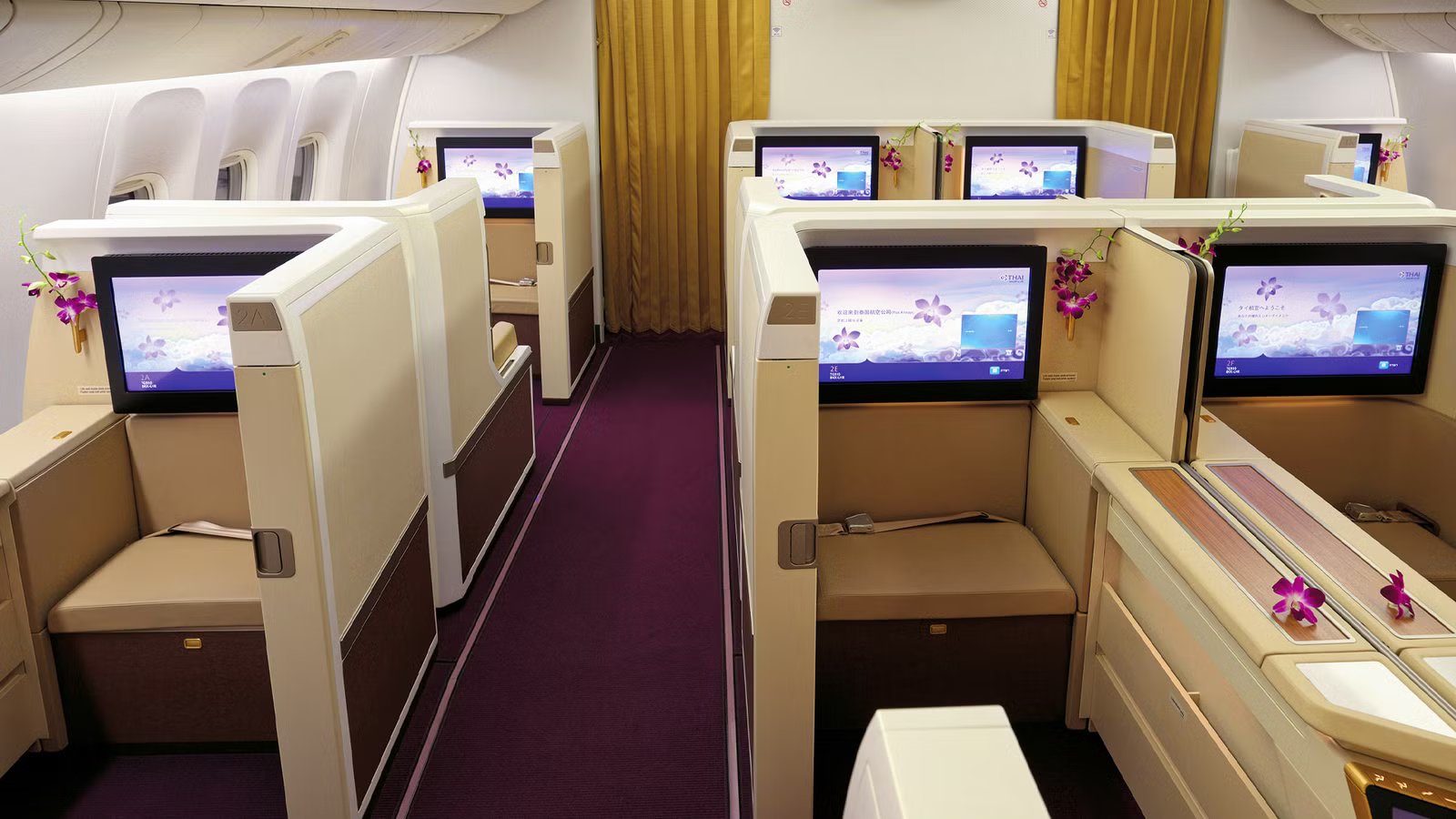
First class cabins are no longer disappearing quietly. Rather, the cabin is being fully redesigned out of most aircraft plans. Thai Airways, for example, has made this shift quite explicit, with the airline’s CEO, Chai Eamsiri, confirming that the airline will phase out what remains of its First Class cabins within the next two to three years and standardize around Business, Premium Economy, and Economy.
This ultimately matters because Thai Airways was once closely associated with a full luxury ritual of private-feeling suites, dedicated ground handling, premium lounges, and the famous Bangkok spa treatment that made the journey feel different before boarding even began. What is set to replace this cabin is not pure austerity, but rather a more commercially efficient kind of luxury.
Thai Airways’ planned Business Plus or front-row Royal Silk product is expected to offer bigger screens, more space, longer beds, and companion dining, while occupying far less cabin real estate than traditional first class. For passengers, the change captures the central trade-off reshaping premium travel.
More people may get access to excellent business-class seats, but fewer will experience the rarer, more indulgent world that First Class represented. Thai’s 150-aircraft growth plan, reportedly with no future First Class cabin, shows that this is not a temporary elimination. This is a fundamental sign that the industry’s long-established four-class hierarchy is giving way to a new kind of premium economy product.
What Is The Role Of A First Class Cabin?

Traditional First Class was rarely about selling a bigger seat. For legacy airlines, it functioned as a flagship product, as it is a visible symbol of national prestige, service culture, and overall technical sophistication. Even when the cabin contained only a handful of seats, it helped shape the entire airline’s perception. A carrier with a serious First Class product could signal that it belonged in the same conversation as the world’s most premium long-haul brands.
That unique halo effect mattered a lot for corporate contracts, loyalty programs, high-yield passengers, and national image, especially for flag carriers. Thai Airways is a strong example. The airline’s Royal First Class was part of a broader identity built around Thai hospitality, ceremony, and soft luxury. The product was not only the onboard suite, but the entire journey.
There was a premium check-in available, passengers had lounge access, and they were attended to by ground service teams that specialized in high-end passenger operations at the carrier’s principal Bangkok hub. The airline also offered spa-style touches that made the experience feel distinct from ordinary premium travel. For a state-linked flag carrier like Thai Airways, that really mattered because First Class helped turn the airline into an ambassador for Thailand as the country itself.
The problem is that this symbolic role has become harder to justify in a commercial manner. Modern business class now offers lie-flat beds, privacy doors, large screens, and restaurant-style service. When business class starts to deliver much of the practical comfort once reserved for First, the airline must ask whether a tiny cabin with limited revenue density still earns its space. Thai’s move toward Business Plus suggests that the answer to that question is increasingly no.
Why Has Thai Airways Decided To Phase Out The Product?

There are a handful of reasons why the Thai flag carrier decided that now was the right time to begin phasing out First Class. The first of these reasons is that the product no longer fits the economics or operating logic of its future fleet. The airline has only a tiny remaining First Class footprint, limited to its three  Boeing 777-300ER jets, which makes the cabin hard to market consistently across the network. For passengers, the bigger issue is that it offers an inconsistent experience.
A passenger booking the airline’s most premium experience today cannot expect the same product on most aircraft, and that inconsistency across the board weakens the brand’s promise and offering significantly. By moving towards a three-class model, the airline can offer a much clearer structure. It can offer Business, Premium Economy, and Economy, with a ‘Business Plus’ product acting as an upsell inside the business cabin rather than a separate class on its own. This carries along with it a much stronger financial logic.
A traditional First Class cabin uses a large amount of floor space for a very small number of passengers. Business Plus lets Thai preserve some of the prestige (such as longer beds, larger screens, and companion dining) while putting more revenue-generating seats into the same aircraft. This also simplifies the catering, staffing, training, and fleet planning processes. That matters as Thai rebuilds after restructuring and prepares for major growth efforts that will ideally lead it to field a 150-jet fleet, according to Aerospace Global News.
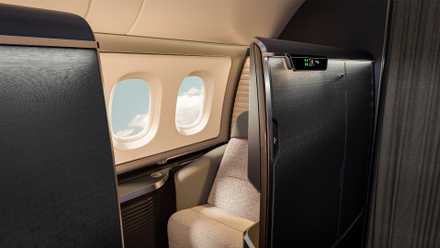
What Are The Benefits Of Flying First Class?
Discover the secrets of first class travel and whether its perks extend beyond mere indulgence.
Where Can You Still Fly Thai First Class Today?

Today, Thai Airways First Class survives on only a small sliver of the airline’s overall operational network. As of late April 2026, the airline’s Royal First product is still being sold on select Boeing 777-300ER flights between Bangkok and three specific cities: flights to  London Heathrow Airport (LHR), Tokyo Narita Airport (NRT), and Osaka Kansai Airport (KIX) all still feature the cabin.
The airline still markets Royal First as a 777-300ER exclusive product, and multiple current route guides published by the carrier identify those three destinations as the only First Class markets still served by the carrier. That means, in practical terms, that the remaining opportunities for passengers to fly this route are from Bangkok to London, Tokyo, or Osaka in either direction, and only on certain days when this cabin serves those routes. That is an important caveat because the airline only has three aircraft still equipped with the cabin.
This means that First Class availability is extremely narrow, and operational swaps can affect whether the cabin appears on a given day. The window is also closing fast. Recent reports have indicated that no additional first-class routes will be introduced, and the airline’s wider fleet strategy points toward the elimination of coach as a cabin altogether over the next two to three years.
What About The Airline’s A380s?

For years, Thai Airways’ Airbus A380s were the natural home of the airline’s flagship First Class product. The superjumbo gave Thai the scale and theatre that suited a Royal First cabin. This was a small and exclusive space at the very front of the upper deck, paired with the full ground experience of a first-class ticket in Bangkok. This helped make Thai Airways’ premium brand feel quite special. The airline used the A380 on marquee long-haul routes to destinations like London and Tokyo.
These were places where the aircraft’s size and symbolism matched the airline’s ambition to be seen as a top-tier global flag carrier. The phase-out was ultimately gradual, but the turning point was the pandemic. The airline’s six A380s were grounded in 2020, and, in 2021, it moved to retire the entire fleet as part of a broader restructuring that also swept out its 747s.
There was some later discussion about reviving part of the A380 fleet, but, by late 2022, that idea was dropped because the aircraft was far too expensive to bring back into service, and, in 2024, the airline confirmed the withdrawal of all six A380s. Once those jets disappeared, First Class lost its main platform and shrank to just three 777-300ERs. What had once been a defining Thai flagship product was reduced from a fleetwide prestige offering to a niche leftover, before the airline finally decided to phase it out entirely.
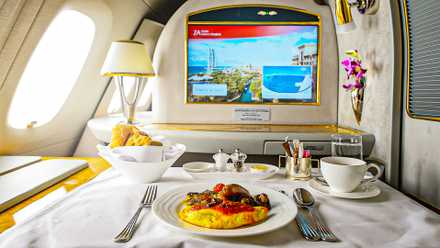
Here’s How Much A First Class Ticket On Emirates’ Airbus A380 Actually Costs In 2026
Emirates Airbus A380 first class is one of commercial aviation’s most iconic and luxurious products. A round-trip costs well into five figures.
Are Other Airlines Also Retiring First Class?

This decision by Thai Airways is part of a broader industry shift in which airlines have either already abandoned traditional First Class or replaced it with a super-premium business-class product. United Airlines is a clear example, as it has long centered its long-haul premium strategy on Polaris rather than international First, and it is now adding larger Polaris Studio suites instead of reviving a separate top cabin.
Virgin Atlantic has taken a similar path, building its brand around Upper Class and newer Retreat Suites rather than a dedicated First cabin. Air New Zealand is doing much the same with Business Premier Luxe, a more exclusive front-row business seat that offers extra privacy and space without creating a full First Class section.
With that being said, the trend is not universal. Lufthansa is actively investing in new Allegris First Class suites, showing that some airlines still believe a true flagship cabin has branding and revenue value. However, overall, the market is clearly moving toward fewer First Class seats and more differentiated business cabins with more spacious ‘business class plus’ style suites in the front row.
The Bottom Line

The ultimate decision made by Thai Airways to eliminate First Class is about far more than one airline retiring a niche premium cabin. It reflects a wider industry reality. These seats offer a modern business class product that is so spacious, private, and refined that many airlines no longer see value in dedicating huge amounts of cabin space to just a few ultra-premium passengers.
What travelers lose is the ritual of true exclusivity, from dedicated lounges and personalized ground handling to the sense that the journey itself is a rare event. The principal gain for the carrier here is a more efficient and more scalable premium product that can serve more customers while still managing to feel luxurious.
In that sense, First Class is not vanishing because luxury is dead. Rather, it is vanishing because airlines increasingly believe that they can sell near-First comfort, service, and prestige far more profitably within an upgraded business-class cabin. This is ultimately a modern way to make money as a premium-oriented carrier.