dailynewsnblog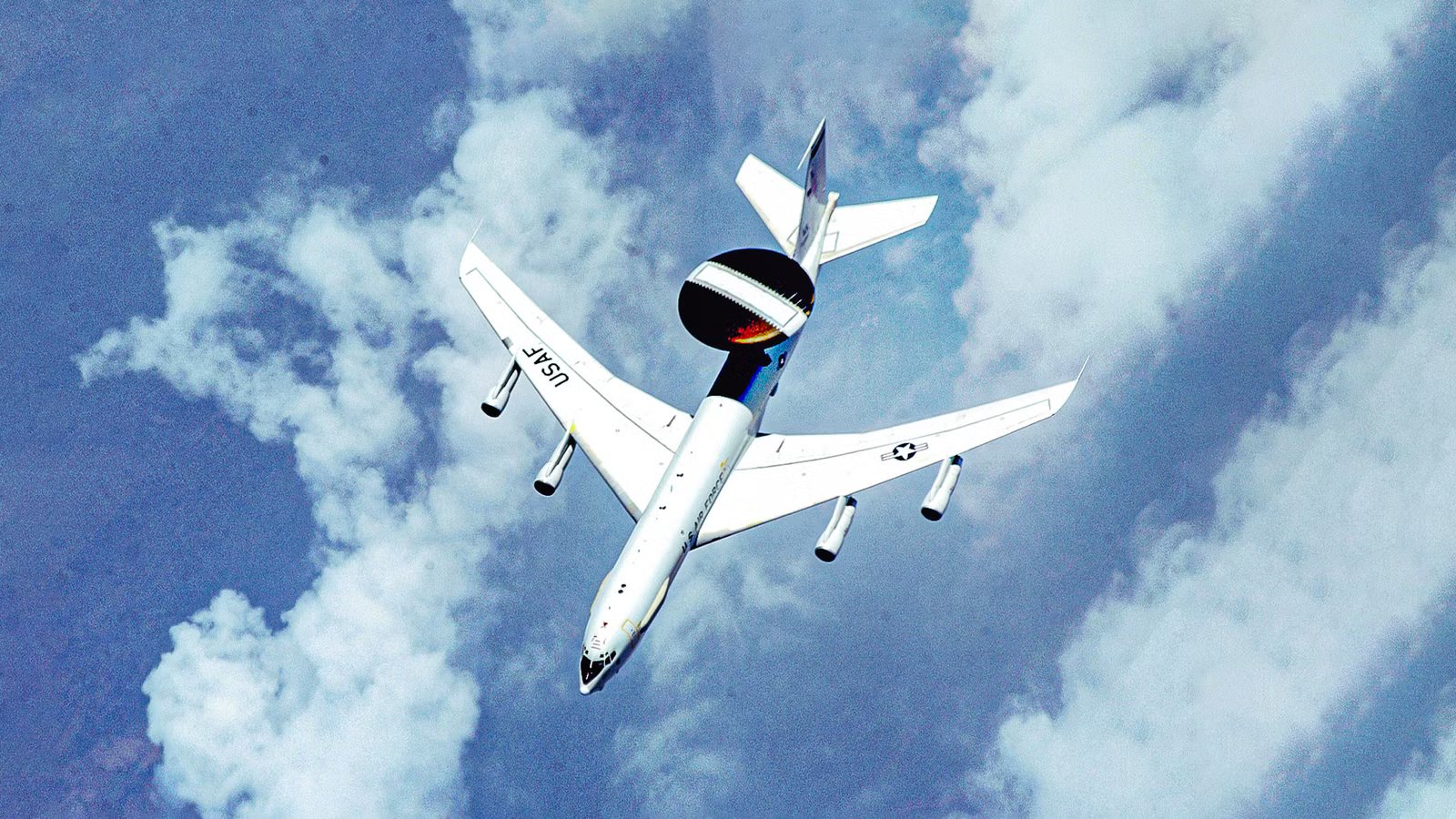
The expenditure of half of the United States interceptor missile arsenal in Operation Epic Fury has captured the headlines for its heavy burden on the defense industrial base, but another major cost of the recent attack on Iran is the loss of airframes that can not be readily replaced. In total, 42 aircraft have been lost or put out of action since the combined air, drone, and missile campaign by the US and Israel began. The price tag to replace these planes is estimated to be $7 billion, on top of the $29 billion that the expeditionary forces have spent.
Yet, this number fails to capture the irreplaceable nature of some of the airframes that were destroyed. Most notable was one Fairchild Republic A-10 Thunderbolt II attack fighter as well as a Boeing E-3 Sentry airborne warning and control plane. Neither one of these jets can be built as the assembly lines have been shuttered for decades.
At the same time, an equivalent replacement of modern options comes at an astronomical price tag. The strategic and tactical loss these airframe write-offs represent is far more burdensome than even the high price, as there simply is nothing readily available to fill the vacancy on the flightline.
Price Is Only Part Of The Problem: The Lost Warbirds

The core crisis for the US military is that many of the lost assets cannot simply be repurchased. This attrition fundamentally shifts the conversation from financial cost to military readiness and fleet sustainability. Operation Epic Fury has highlighted a sharp vulnerability: modern peer-level air defense networks and missile systems can deplete highly specialized aircraft faster than a modern industrial base can replace them.
This extends even to more modern platforms like the MQ-9 Reaper. Unlike the vintage A-10 and E-3, which were both products of Cold War era defense procurement, the Reaper is much newer, and yet it is also out of production, while the small number available was depleted significantly in ops against Iran. The successor to the Reaper is meant to be the collaborative combat aircraft, or loyal wingman drone, but this is still years from producing significant numbers. As of 2026, the prototyping phase is only beginning to advance to the final rounds of selection.
In a similar story of supply chain gaps, the successor to the A-10 is in production but facing a deficiency in operational testing. The Lockheed Martin F-35A Lightning II was supposed to receive a major upgrade series last year, but the Pentagon released a report in 2026 saying that the software package was largely unusable for all of 2025 and slashed the number of aircraft that it will take delivery of this year by half. Some of the F-35s recently delivered have even lacked a radar array and are only flyable for training purposes.
The story of the E-3 Sentry is even worse. Not only is it based on the Boeing 707 that has been out of production for decades, but its incredibly complex and massive array of electronics and radar systems is prohibitively complex and costly to even maintain. There are only 16 left in existence, six of which were forward deployed in Saudi Arabia, where one was destroyed, representing over 37% of the total force. A successor has not even been selected because the only viable option currently is too cost-prohibitive, the Boeing E-7A Wedgetail, and no other alternative has come forward.
Eagle Down: Friendly Fire Compounding Hostile Threats

Three F-15Es were lost in a devastating friendly fire incident over Kuwait when mistaken for hostile forces by local air defenses. A fourth Strike Eagle was shot down deep inside southwestern Iran during a high-threat nuclear-interdiction combat mission. A three-day combat search-and-rescue operation was launched in the mountains to recover the downed F-15E crew, which led to the loss of three more aircraft as well as three more drones.
Catch what other flight trackers miss
Emergency squawks, holds, NOTAMs — live signals, no signup.
Open tracker
Catch what other flight trackers miss
Emergency squawks, holds, NOTAMs — live signals, no signup.
Open tracker
The pilot of the Strike Eagle was rescued almost immediately after punching out. The weapon systems officer, however, remains stranded on the ground for days. On the very first day of the CSAR operation, the A-10 Warthog was severely damaged while flying ‘Sandy’ low-level air support, and the pilot ejected while attempting to return to Kuwait. On day three, 155 aircraft were dispatched deep inside Iran to extract the WSO. Severe weather arose, and while the team successfully rescued the F-15E back-seater, two transports were left in smoldering ruins on the ground.
Boeing has officially ended production of the legacy F-15E variant. The only path to replace these dual-role strike fighters is to pivot the order queue to the newer F-15EX Eagle II. The original F-15Es were valued at $70 million each, adjusted for inflation. An F-15EX costs roughly $90 million per airframe. Furthermore, the F-15EX production line in St. Louis is already highly backlogged, meaning any replacement jets will take at least three years to hit active operational squadrons.
The Pentagon Declared The F-35’s Most Critical Upgrade ‘Predominantly Unusable’
The problem with the Joint Strike Fighter.
The First Fifth-Generation Fighter To Take Combat Damage

A single F-35 Joint Strike Fighter was damaged during Operation Epic Fury, to public knowledge. Thankfully, the plane was not lost in action, but it did suffer hits from Iranian ground-based anti-aircraft fire and was forced to conduct an emergency landing. The stealth fighter was operating in a very high-threat environment on March 19 when it was struck. This marked the first time that a fifth-generation fighter jet of any kind has suffered hits from enemy fire in combat.
The official Congressional Research Service report stated that it is unclear how the extent of aircraft losses suffered over Iran will impact the Department of Defense’s ability to meet operational requirements. The report also stated that it is unclear whether current production lines can replace planes in the time frame necessary to sustain the required force levels for the Pentagon. Even if the US Air Force decides to purchase a brand-new F-35A to replace the damaged unit, the assembly line at Lockheed Martin is bottlenecked.
The program is heavily restricted by the rollout of the Technology Refresh Three Block Four hardware and software upgrades. Delays in validating this critical software have previously forced the Pentagon to halt acceptances of new jets, creating a jam of undelivered aircraft and a massive delivery backlog. The National Interest wrote that Lockheed Martin’s supply chain is facing such severe shortages of critical parts, forcing deployed squadrons to cannibalize parts from other stealth jets just to keep a portion of the fleet operational.
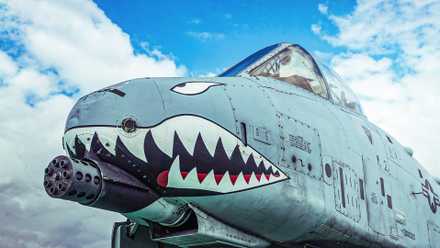
How The Fairchild Republic A-10 Warthog’s Titanium Bathtub Protects Pilots From Ground-Level Ballistics
The story behind America’s flying tank buster.
By The Numbers: Iran’s Blow To American Air Power

During the same mission that led to the loss of an A-10 from enemy fire, two Lockheed MC-130J Commando II special operations transports became severely bogged down during a combat extraction. These aircraft were lost on different days of the same search for the F-15E pilot who was forced to eject over the mountains inside Iran. To prevent their advanced electronic warfare and terrain-following radar suites from falling into Iranian hands, US forces intentionally blew them up on the ground before exfiltrating.
Unlike the legacy platforms, the C-130J line at Lockheed Martin is active. The Commando II variant, however, is packed with many complex and advanced systems. Sourcing the custom electronics packages introduces an immediate 2-to-3-year manufacturing lag at a replacement cost of $115 million per plane. Below is a table with a list of all aircraft that have been lost or damaged due to combat operations since Operation Epic Fury began, as reported by Congress:
Aircraft | Losses | Status | Estimated Unit Cost | Estimated Replacement Timeline |
|---|---|---|---|---|
F-15E Strike Eagle | 4 | Destroyed | $70 Million | Backfill requires F-15EX at 3+ years |
F-35A Lightning II | 1 | Damaged | $110 Million | 3 to 5 Years |
A-10 Thunderbolt II | 1 | Destroyed | $18 Million | N/A (Line closed since 1984) |
KC-135 Stratotanker | 1 | Destroyed | $40 Million | Backfill requires KC-46 at 3+ years |
KC-135 Stratotanker | 6 | Damaged | Variable | 1 to 2 Years |
E-3 Sentry | 1 | Damaged | $540 Million | N/A |
MC-130J Commando II | 2 | Destroyed | $115 Million | 2 to 3 Years |
HH-60W Jolly Green II | 1 | Damaged | $40 Million | 1 to 2 Years |
MQ-9 Reaper | 24 | Lost | $32 Million | N/A |
MQ-4C Triton | 1 | Lost | $180 Million | 3 to 4 Years |
Other support platforms have also taken losses since the conflict began. One Boeing KC-135 Stratotanker tragically crashed over friendly airspace in Iraq, killing all six crew members, while another made an emergency landing. Five additional KC-135s were severely damaged on the ground during an Iranian missile and drone strike at Prince Sultan Air Base.
A Sikorsky HH-60W Jolly Green II advanced CSAR helicopter also sustained significant small-arms fire damage while actively inserting Air Force Pararescue into heavy close-quarters combat during the rescue mission. Sikorsky is winding down the line for the HH-60W, making the replacement a questionable prospect.
Unofficially, up to four Boeing MH-6 Little Bird helicopters of the US Army were also lost on the ground alongside the MC-130Js. Because the Pentagon has not formally acknowledged the deployment of the Army’s elite 160th Special Operations Aviation Regiment ‘Night Stalkers’ inside Iran, the CRS left them off the public tally. Sacrificing the four helos alongside the two C-130s adds another $60 million hit to the total tally.
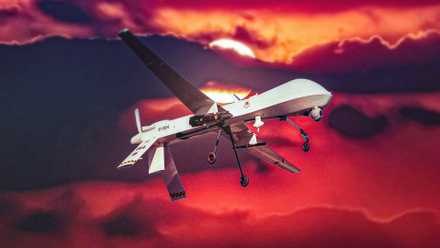
How Many Drones Does The US Department Of Defense Operate?
The rapidly growing fleet of unmanned aircraft.
Mounting Uncrewed Aircraft Losses Jeopardize Us Strategy

The American military has lost 24 examples of the General Atomics MQ-9 Reaper since the conflict with Iran began, but it has also lost one far more expensive and complex Northrop Grumman MQ-4C Triton. Despite drones being viewed as more attritable platforms because they are less expensive, the total damage to the fleet is approaching a critical level and tallied to a staggering cost of nearly $1 billion. While the US military announced multiple initiatives in the past year, including the Drone Dominance Plan and the next stage of the CCA program, large-scale production has not mobilized.
This is the most glaring strategic and tactical shortcoming of American military strategy since engaging Iran. The Iranian military’s far less expensive and much simpler drones have inflicted an extremely costly level of damage that is disproportionately higher than the investment required by Iran to produce the weapons. On the other hand, American production of uncrewed airframes is currently bottlenecked by procurement that has yet to advance, and what is available is both too slow and too expensive to sustain high levels of force readiness under the current loss rates.
For years, Western defense doctrine assumed that extreme technological superiority would allow a small pool of high-end aircraft to achieve rapid dominance without suffering significant losses. Operation Epic Fury shattered this assumption. When a multi-million-dollar MQ-9 Reaper or an E-3 Sentry is traded for a missile that costs a few hundred thousand dollars, the economic and industrial math heavily favors the adversary.
In World War II, American factories could replace a month of combat losses in days. Today, replacing a single lost fifth-generation fighter or a specialized electronic warfare asset takes years. The conflict exposed the fact that the American defense industrial base lacks surge capacity. It operates on a fragile, just-in-time commercial manufacturing model that is completely incompatible with 21st-century battles.