dailynewsnblog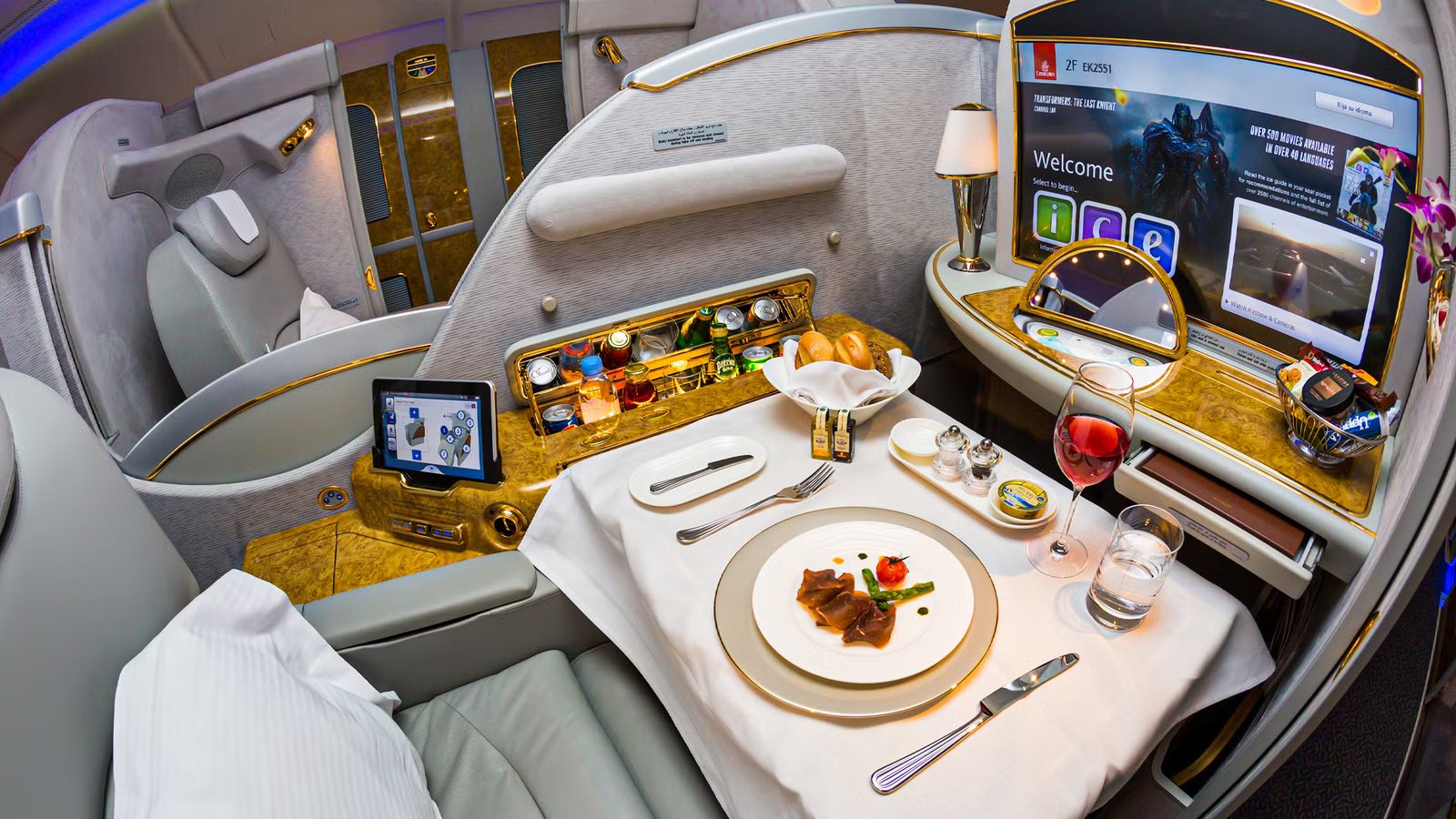
 Emirates Airbus A380 first class is often considered one of the most extravagant products in commercial aviation. One-way fares regularly climb beyond $10,000 on long-haul routes, supported by an onboard experience built around private suites, unlimited caviar service, premium Champagne, luxury amenity kits, and shower spas.
The presentation creates the impression of an enormously expensive operation centered on each passenger. Behind the spectacle, however, the economics tell a very different story. Many of the most recognizable luxury touches carry surprisingly modest wholesale costs for the airline itself, even when their retail value appears staggering to passengers.
From catering and alcohol to pajamas and skincare products, Emirates benefits from supplier pricing, scale, and branding partnerships that dramatically reduce what it actually spends per first class seat. The gap between perceived value and direct operating cost reveals how modern airline luxury is built less on raw expense and more on carefully engineered perception.
What Emirates First Class Costs To Fly

Emirates first class occupies one of the highest pricing tiers in commercial aviation. Long-haul one-way fares typically start around $8,000 to $10,000, while ultra-long-haul routes can exceed $15,000 or even $20,000, depending on seasonality and demand. Flights such as Dubai International Airport (DXB) to Los Angeles International Airport (LAX) or John F. Kennedy International Airport (JFK) to Dubai routinely approach those levels, placing the product closer to ultra-luxury hospitality than traditional air travel.
Even Emirates business class often ranges between $3,000 and $7,000, which highlights just how aggressively the airline prices the jump to the A380’s flagship cabin experience. Despite those headline fares, relatively few passengers actually pay full retail pricing. Emirates has built an unusually flexible upgrade ecosystem around its Skywards loyalty program, allowing premium travelers to move from business class to first class using miles, cash upgrades, or day-of-departure inventory releases.
Routes such as London to Dubai or New York to Milan can require fewer than 40,000 Skywards miles for an upgrade, dramatically reducing the effective price of entry into the cabin. The strategy benefits Emirates as much as customers, helping the airline fill unsold premium seats while preserving the perception that first class remains an exclusive, high-value product worth five-figure pricing.
Retail Value Vs Airline Spending

One of the most misunderstood aspects of luxury air travel is the difference between retail value and actual airline cost. Emirates first class is designed to surround passengers with products that already carry powerful luxury branding outside aviation, from designer amenity kits and skincare products to prestige Champagne and rare cognac.
When those retail prices are added together, the onboard experience can appear to contain thousands of dollars in value packed into a single flight. That perception plays a major role in justifying fares that regularly exceed the price of a small car. The reality behind the scenes is far more efficient.
Airlines rarely pay anything close to retail pricing for onboard products because they purchase at scale, negotiate wholesale contracts, and often secure promotional partnerships with luxury brands seeking exposure to affluent international travelers. A bottle of Champagne that retails for hundreds of dollars may cost the airline only a fraction of that amount once distribution agreements and bulk purchasing are factored in.
The same logic applies to catering, amenity kits, pajamas, and lounge services, all of which benefit from economies of scale that dramatically reduce per passenger costs. This gap between perceived value and direct spending is central to how premium aviation works. Emirates is not selling transportation alone, nor is it simply reselling luxury goods at a markup.
Instead, the airline packages relatively controlled operating costs into an experience engineered to feel exceptionally exclusive. The branding, presentation, scarcity, and atmosphere surrounding the cabin often contribute more to the fare than the raw cost of the products themselves.
What It Costs The Airline To Cater

On a 16-hour Emirates A380 flight such as EK215 from Dubai to Los Angeles, First Class catering appears extraordinarily lavish from the passenger perspective. The cabin offers unlimited caviar service, premium Champagne, multi-course à la carte dining, luxury snacks, and top-shelf spirits throughout the journey.
Retail pricing alone makes the experience seem incredibly expensive, especially when individual bottles of alcohol or caviar service can cost hundreds of dollars on the consumer market. However, the underlying economics reveal that the actual per-passenger catering spend is far lower than most travelers would assume.
Cabin | Estimated Catering Cost Per Passenger |
|---|---|
Economy Class | $2 to $5 |
Business Class | $15 to $20 |
First Class | $30+ |
Industry estimates place Emirates’ direct First Class catering costs at roughly $30 or more per passenger, even on ultra-long-haul routes. That figure includes food preparation, beverages, logistics, and onboard provisioning. Across all 14 First Class suites on the A380, total catering costs for the cabin may only reach a few hundred dollars per flight.
Even the airline’s total catering bill for nearly 500 passengers across Economy, Business, and First is estimated at roughly $15,000 for the entire Dubai to Los Angeles operation. From the passenger perspective, though, the retail value of Emirates First Class dining can feel extraordinarily high.
A single flight may include unlimited caviar service worth roughly $350, multiple pours of Dom Pérignon P2 at around $100 per glass, premium wines valued well above $100 combined, and rare spirits like Hennessy Paradis that retail for nearly $1,500 per bottle. Altogether, the perceived retail value of the food and beverage experience alone can easily exceed $1,000 per passenger, despite the airline spending only a small fraction of that amount through wholesale sourcing and large-scale catering contracts.
What Do The Amenities Cost The Airline?

Part of what makes Emirates first class feel so extravagant is the sheer amount of luxury packed into a single flight. Passengers receive Bulgari amenity kits valued at more than $100, hydra-active pajamas retailing around $110, premium Voya spa products worth roughly $80, and even smaller touches like Moleskine notebooks and pens.
On the service side, Emirates layers in airport escorts, chauffeur transfers, shower spas, and access to some of the most expensive alcohol regularly served in commercial aviation. Altogether, the perceived retail value of the experience can climb beyond $1,600 for a single passenger before the cost of the seat itself is even considered.
Amenity or Service | Estimated Retail Value |
|---|---|
Bulgari amenity kit | $130 |
Hydra-active pajamas | $110 |
Voya spa products | $80 |
Moleskin notebook and pen | $20 |
Airport escort and chauffeur | $130 |
For Emirates, however, the actual cost structure looks very different. Luxury airlines negotiate wholesale pricing, supplier partnerships, and promotional agreements that reduce the real expense of these products far below their retail equivalents. A Bulgari kit that appears to cost more than $100 at retail may represent a fraction of that amount to the airline once purchased in bulk.
The same applies to Champagne, cognac, skincare products, and branded merchandise. If the same ratio from catering holds true, the airline may be spending only tens of dollars on amenities that cost the customer hundreds. Emirates is effectively leveraging luxury branding and presentation to create an experience that feels dramatically more expensive than its direct per passenger cost.
How Airlines Sell Perceived Luxury

Luxury in aviation is not defined purely by cost, but by how effectively an airline can convert relatively controlled expenses into a high-end emotional experience. Airlines like Emirates design their First Class product around sensory cues that signal exclusivity: private suites, curated dining rituals, rare wines, and carefully choreographed service timing.
Research on airline luxury perception shows that passengers associate these elements with prestige and well-being, which together form the foundation of what is experienced as ‘luxury’ in the air. Another important layer is exclusivity through scarcity and segmentation. Airlines deliberately limit the number of First Class seats, create upgrade constraints, and maintain fare structures that make full-price access rare.
This scarcity strengthens perceived desirability and helps justify premium pricing even when operational costs do not scale proportionally. In effect, airlines are not selling the underlying components of the experience, but the feeling of being part of an elite tier of travel where every detail has been curated to signal value far beyond its actual cost base.
The Economics Of Flying: Does Emirates ‘Make Ends Meet’?

An Emirates A380 flight like EK215 from Dubai to Los Angeles is expensive to operate, with total costs estimated at around $322,000 per journey. Fuel alone accounts for roughly $192,000, while crew, maintenance, landing fees, and catering make up the remainder. The aircraft covers about 8,300 miles (13,358 km) over 16 hours and carries up to 489 passengers, making it one of the most resource-intensive commercial aircraft in service.
Despite this, the economics remain favorable due to high revenue potential across all cabins. With estimated total revenue approaching $947,000 per flight, Emirates only needs to fill about 34% of seats to break even before factoring in cargo income. Premium cabins carry a disproportionate share of revenue, while Economy adds volume and cargo provides additional upside, creating a model where profitability is achieved not through full loads but through yield optimization and scale efficiency.
Catch what other trackers miss
Emergency squawks, holds, NOTAMs — live signals, no signup.
Open tracker
Catch what other trackers miss
Emergency squawks, holds, NOTAMs — live signals, no signup.
Open tracker