dailynewsnblog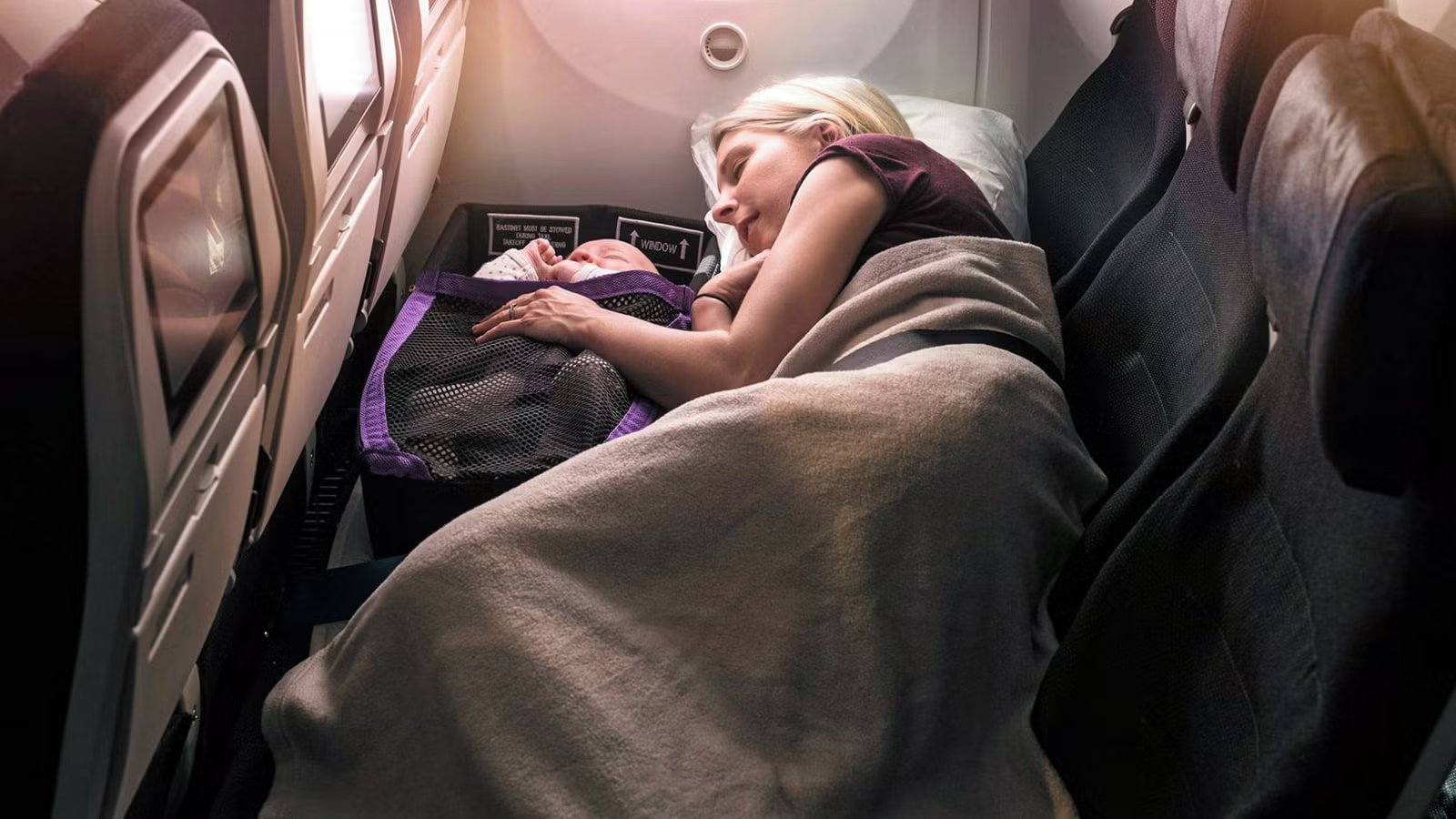
The Skycouch just helped Air New Zealand win World’s Best Economy Class for 2026, but the real question is whether paying $249 to $1,200 extra for a 5′ 1″ (1.55 m) flat surface actually beats just buying a premium economy ticket. As fuel costs and demand drive international fares to new heights, these mechanical and financial trade-offs become far more critical for anyone crossing the Pacific or heading toward the East Asian markets.
AirlineRatings.com awarded Air New Zealand the title of World’s Best Economy Class for 2026, specifically highlighting the Skycouch product available on Boeing 777-300ER and Boeing 787-9 aircraft. Competitors like  Singapore Airlines and Korean Air were runners-up, but the unique ability to convert a standard row into a bed remains a significant differentiator for the Kiwi carrier. This guide will break down the exact dimensions, the dynamic pricing model, and the hidden service differences that determine whether you should book the couch or opt for the wider seats and better catering of premium economy.
The Best Economy Add-On?

Mechanical innovation comes at a variable price, as the Skycouch is sold as a dynamic-priced add-on rather than a fixed-fare class. Depending on how many passengers are in your party and the length of the route, the cost of buying out the remaining seats in your row can fluctuate wildly. For a solo traveler, the price of securing all three seats can reach as high as $1,200 NZD on long-haul legs, potentially exceeding the cost of a discounted premium economy seat.
The math changes significantly for couples or parents traveling with one young child. Reviewers have reported paying much less per flight leg to unlock the Skycouch functionality for a duo. This means that for a relatively small surcharge, a family can create a shared play or sleep area, which is often far more economical than purchasing three full-price premium economy tickets.
Booking a flight during peak season or on high-demand routes like Los Angeles to Auckland can push these couch prices even higher. Because the availability is limited to specific rows in the economy cabin, once the designated Skycouch seats are gone, passengers are left with standard 31-33″ (78.7-83.8 cm) pitch seating.
Perfect For Solo Travelers

Pricing reflects the specialized hardware installed in the Skycouch rows, which features a different mechanism than standard economy seating. The system works by raising the leg rests of three economy seats to a full 90-degree angle, creating a flat surface that extends to the back of the seat in front. This creates a platform measuring 5′ 1″ (1.55 m) in length and 29″ (74 cm) in width, effectively turning the row into a small, cushioned bed.
Solo travelers find the most success with this setup, as they can curl up diagonally to accommodate the relatively short 5′ 1″ (1.55 m) length. However, the product is notably absent from some leased 777-300ER aircraft, meaning passengers must be vigilant during the booking process to ensure their specific aircraft is equipped with the right hardware. The bed is outfitted with a thin mattress protector, a large pillow, and a specialized cuddle belt that keeps passengers securely strapped in while lying down.
Premium economy, by contrast, relies on traditional seat recline rather than a lie-flat surface to provide comfort. The Skycouch offers the only way to lie completely flat in the economy cabin, but it still uses the standard economy seat cushioning, which is significantly thinner than the plush leather or fabric found in higher cabins. Reviewers frequently note that while the bed is flat, it is not as soft as a dedicated business premier seat, often requiring passengers to use their own blankets for extra padding.

The Air New Zealand Aircraft That Feature A Cozy Skycouch In Economy
Find the best option for you to fly along Air New Zealand long-haul routes.
Worth Staying In Economy?

Technical specifications for the Skycouch highlight a critical constraint: it is essentially too small for two average-sized adults to sleep comfortably side-by-side for a full flight. While it is marketed as a couch, the 29″ (74 cm) width is narrower than a standard twin bed, meaning couples often end up sitting with their legs up rather than sleeping flat. For solo adventurers, however, the width is a luxury, providing more elbow room than any other seat in the back of the plane.
Comparisons between the Skycouch and premium economy often come down to the difference between lying flat and sitting wide. A standard premium economy seat on Air New Zealand offers a 19.3″ (49 cm) width and a 41″ (104.1 cm) pitch, providing significantly more personal space while upright. If your goal is to work on a laptop or enjoy a multi-course meal, the premium economy seat is superior, but if your sole priority is sleep, the Skycouch’s flat surface wins.
Feature | Economy Skycouch (Row) | Premium Economy (Seat) |
Sleeping Position | Full lie-flat (180 Degrees) | Deep recline (nine inches / 22.8 cm) |
Total Length/Pitch | 5′ 1″ (1.55 m) bed | 41″ (104.1 cm) legroom |
Surface Width | 29″ (74 cm) | 19.3″ (49 cm) |
Standard Pitch | 31-33″ (78.7-83.8 cm) | 41″ (104.1 cm) |
Seat Width | 17.2″ (43.7 cm) | 19.3″ (49 cm) |
Catering | Standard economy | Premium multi-course |
Japanese travelers have praised the Skycouch for its utility when traveling with toddlers. The flat surface acts as a secure play area where children can sit on the floor-level padding without the risk of falling off a standard seat. Parents report paying approximately $700 extra for the row for an adult and toddler, a price point that provides much-needed sanity during a 12-hour trans-Pacific journey.
A Competitive Product For A Demanding Market?

The Skycouch has seen particularly strong adoption on East Asian routes, where passengers often value privacy and the ability to rest during long overnight hauls. At airports like  Narita (NRT) and
  Haneda (HND), Air New Zealand competes directly with the high-service standards of Japan Airlines and All Nippon Airways. Offering the Skycouch, the carrier provides a budget business alternative that appeals to the Japanese preference for innovative, space-saving design.
Flight reviews from the region often highlight that Japanese carriers offer world-class service but lack a direct equivalent to the lie-flat economy row. This has allowed Air New Zealand to capture a specific segment of the market: young families and budget-conscious professionals, who would otherwise have to pay for a full business class ticket to get horizontal rest. The 1.55-meter (5′ 1″) length is also generally better suited to the average heights found in the East Asian market compared to taller Western travelers.
Comfort in the Japanese context centers on hospitality, which the Skycouch facilitates by giving passengers control over their own environment. Instead of waiting for a cabin crew member to adjust a seat or provide a footrest, the traveler can mechanically transform their row in seconds. This autonomy, combined with the cuddle belt safety system, creates a sense of private space that is rare in a cabin containing hundreds of other people.
What Air New Zealand’s $292 Economy Bunk Beds Will Actually Cost Vs. Premium Economy
These beds are changing the long-haul flight experience.
Better Seat But Same Service

Service levels remain the biggest gotcha for those booking the Skycouch over a premium economy upgrade. When you buy a Skycouch, you are still technically an economy passenger, and so, you receive the same meals, the same small plastic cups, and the same luggage allowance as everyone else in the back. If you are a foodie who values a business-lite dining experience with porcelain plates and New Zealand wines, premium economy is the only choice.
Investing in premium economy gets you an elevated experience from the moment you arrive at the airport, often including priority check-in and boarding. The Skycouch provides none of these perks. You are essentially paying for the space of the three seats and the mechanical leg rests, but you are still subject to the standard economy hustle of a crowded cabin.
If you are a couple in a Skycouch, one person is inevitably stuck in the middle for the duration of the flight unless you’re lying down. In premium economy, the 2-4-2 or 2-3-2 configurations often provide more aisle and window access, making it easier to move around the cabin without disturbing your partner.
A Well-Earned Title?

Reliability of sleep is the primary metric for the Skycouch’s value. If you are a solo traveler who can actually sleep for six or seven hours on a 5′ 1″ (1.55 m) flat surface, the surcharge is often cheaper than a last-minute business class upgrade and more restful than a premium economy seat. For those taller than six feet, however, the couch may feel more like a cramped shelf, making the extra width and recline of premium economy a safer bet.
Identifying the best deal relies on the seat map during the booking process to see the current add-on price. If the premium economy upgrade is only $200 more than the Skycouch add-on, the superior food, service, and seat width of premium economy make it the logical choice. However, if the price gap is over $500, the Skycouch remains the most cost-effective way to get your feet off the floor and your head on a pillow.
Every traveler has a different comfort threshold, but Air New Zealand has successfully created a product that bridges the most painful gap in aviation: the space between sitting and lying. As we head into 2027, expect more airlines to mimic this flat economy model as they see the success of the Skycouch in capturing the lucrative family and solo traveler segments. The World’s Best Economy Class remains a title well-earned by a simple mechanical leg rest and a very clever bit of marketing.