dailynewsnblog
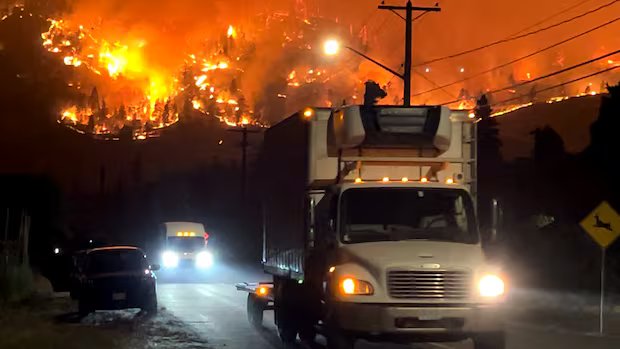
There are 112 active wildfires in northwestern Ontario, according to the latest report issued Sunday night from Ontario’s Aviation, Forest Fire and Emergency Services (AFFES).
Of those, 12 are not under control, seven are being held, six are under control and the rest are being observed.
There were three new fires confirmed in the northwest region as of Sunday evening.
- Nipigon 97 (NIP097) is located near Weitzel Lake, approximately 3 kilometers southwest of Parks Lake. The 0.1-hectare fire is not under control.
- Thunder Bay 78 (THU078) is located near Argon Lake, approximately 11 kilometers southwest of Highway 17. The 0.1-hectare fire is not under control.
- Fort Frances 63 (FOR063) is located near Kendall Lake and approximately 1.5 kilometers west of Scotch Lake. The 0.2-hectare fire is not under control.
The forest fire hazard is mostly low and moderate across northwestern Ontario, with pockets of high hazard across the southwestern parts of the region and around Lake Nipigon.
Fires of note in the region
- The Rinker Complex: Made up of Thunder Bay 36, Dryden 34 and Dryden 35 — remains one of the largest firefighting operations in the region. Thunder Bay 36 is 301,240 hectares, Dryden 34 is 45,800 hectares and Dryden 35 is 31,510 hectares. All three fires remain not under control. AFFES says 25 firefighting crews, including teams from Ontario, Alberta, Nova Scotia and Mexico, are assigned to the complex, along with heavy equipment, pilots, overhead staff and an incident management team. Seventeen helicopters are also supporting the response. Crews are working to extinguish hotspots, build fire guards and protect values, with helicopter bucketing continuing as needed. An evacuation order remains in place for areas affected by all three fires.
- Atikokan Cluster: Fort Frances 13, 14 and 15 — also remains not under control. The fires measure 25,279 hectares, 51,768 hectares and 42,273 hectares, respectively. AFFES says light rain fell overnight in parts of the cluster, with more than 20 millimetres recorded near Fort Frances 14. Fire behaviour remains low. Eight helicopters are assigned, with crews and a firefighting engine working hotspots and patrolling perimeters, particularly around Fort Frances 14 and 15. An evacuation order remains in effect for Fort Frances 14, while alerts remain for Fort Frances 15 and surrounding areas.
More than 1,600 people remain displaced
About 1,638 people from the region remain under evacuation due to wildfires as of Thursday, according to Jill Dunlop, the province’s minister of emergency preparedness and response.
In all, 14 communities have been evacuated and six have returned home.

“The number of evacuees is reported into the Provincial Emergency Operations Centre (PEOC) by community leadership. Evacuation numbers may fluctuate as community leadership confirm the total number of evacuated community members with the ministry,” wrote spokesperson Julia Facca on last Wednesday.
The ministry has held over 100 coordination calls with First Nation chiefs, leaders and communities, emergency management partners, municipalities and the federal government since the first Request for Assistance was received on July 14, according to Dunlop.
Evacuation, implementation orders
Evacuation orders or alerts remain in effect for areas near the following fires:
Those under evacuation orders are required to leave the area, while those under evacuation alerts are urged to prepare to evacuate.
Northwestern Ontario and a small portion of northeastern Ontario remain under a restricted fire zone, which means no open-air burning, including campfires, is allowed.
Notice to Air Missions, or NOTAMs, have also been issued for Thunder Bay 36 and Fort Frances 14.
However, updates have been made to the implementation order currently in effect for active Thunder Bay 36, 56 and Dryden 34, 35 in the Thunder Bay–Ignace District on Friday, removing some areas previously included.
The Ministry of Natural Resources Thunder Bay-Ignace District also invoked an updated implementation order for areas near Fort Frances 14 as of Aug. 1, meaning travel is restricted in the specified area.
The evacuation alerts around active wildfire Fort Frances 13, known as the “Little Knife” fire in Minnesota, have been lifted.
The AFFES said suppression efforts are ongoing on Fort Frances 13, but there is no longer any concerns for public safety relating to the fires. Restrictions remain for other fires in the area.
Highway closures in effect
According to the province’s interactive highway map, the following roads are closed due to wildfire activity:
- Highway 527 is closed in both directions between Kopka River and 1st Avenue in Armstrong.
- Highway 811 is closed in both directions between Weaver River and Dog River Road in Armstrong.
- Lac des Mille Lacs Road is closed in both directions from Inwood Road to Highway 17 near Upsala.
The Ontario Provincial Police (OPP) urge people for their safety and the safety of emergency responders to:
- Stay away from affected areas and refrain from attending wildfire scenes to take photos or videos.
- Remain calm and follow all evacuation orders and emergency instructions issued by local authorities.
- Avoid non-essential travel in affected areas.
- Monitor official sources for the latest information and evacuation updates.
- Remain away from evacuated areas until authorities have advised it is safe to return.
- Help keep roadways clear so emergency personnel can carry out their work safely and effectively.
- If evacuating, bring essential medications, identification, important documents, mobile devices and chargers and any items required to support family members and pets.
Canada Post red delivery service alerts
Mail delivery has been suspended in the following communities due to wildfire activity:
- Gull Bay.
- Armstrong Station (evacuation order).
- Collins (evacuation order).
Two new fires in the northeast
Two new fires were confirmed in the northeast as of Sunday evening:
- Sudbury 47 (SUD047)is 0.1 of a hectare and located approximately 0.45 of a kilometre east of Chiniguchi Lake, and 1.3 kilometres northwest of Telephone Lake. The fire is being held.
- Sudbury 48 (SUD048)is 0.1 of a hectare and located approximately 0.45 of a kilometre northwest of Moose Lake, and 0.6 of a kilometre southeast of Gem Lake. The fire is being held.
There are currently 44 active wildland fires in the northeast region. Of those, one is not under control, four are being held, one is under control and 38 are being observed.
Forest fire danger ratings are primarily low to moderate across northeastern Ontario, with high-hazard pockets throughout the region.
Aid against forest fires
There are 100 contracted aircraft, including seven medium helicopters actively responding during wildfire season, according to the Ministry of Natural Resources.
It can also access up to 80 additional crews through private contracts if needed.
The ministry said it is providing an additional $650 million to purchase six new waterbombers and five new helicopters.
It has also added 170 new permanent fire personnel positions, including crew lead roles, and increased compensation for staff, including firefighters and pilots.
The ministry will conduct an after-action review of its wildfire response to inform improvements in planning and response.
There have also been four Ontario Corps partners and 17 Ontario Corps volunteers sent to help. The province said the following equipment/supplies have been provided:
- 312 air purifiers.
- 84 air filters.
- Five air scrubbers.
- 7,040 N-95 masks.
- 4,676 hygiene kits.
- 80 food hampers.
Air purifiers, air scrubbers and replacement filters, in particular, were sent to five First Nations, allowing them to remain in their communities.
As part of these efforts, Feed Ontario and the Ontario Federation of Indigenous Friendship Centres are also shipping and distributing food to evacuees.
In addition, the Kaministiquia and Upsala fire departments were among some regional fire services to receive wildland fire skids from GlobalMedic.
Mexico, Alberta, New Brunswick, Newfoundland, the Yukon, PEI, the Canadian Forest Service and the Canadian Interagency Forest Fire Centre have also offered province-wide assistance.