dailynewsnblog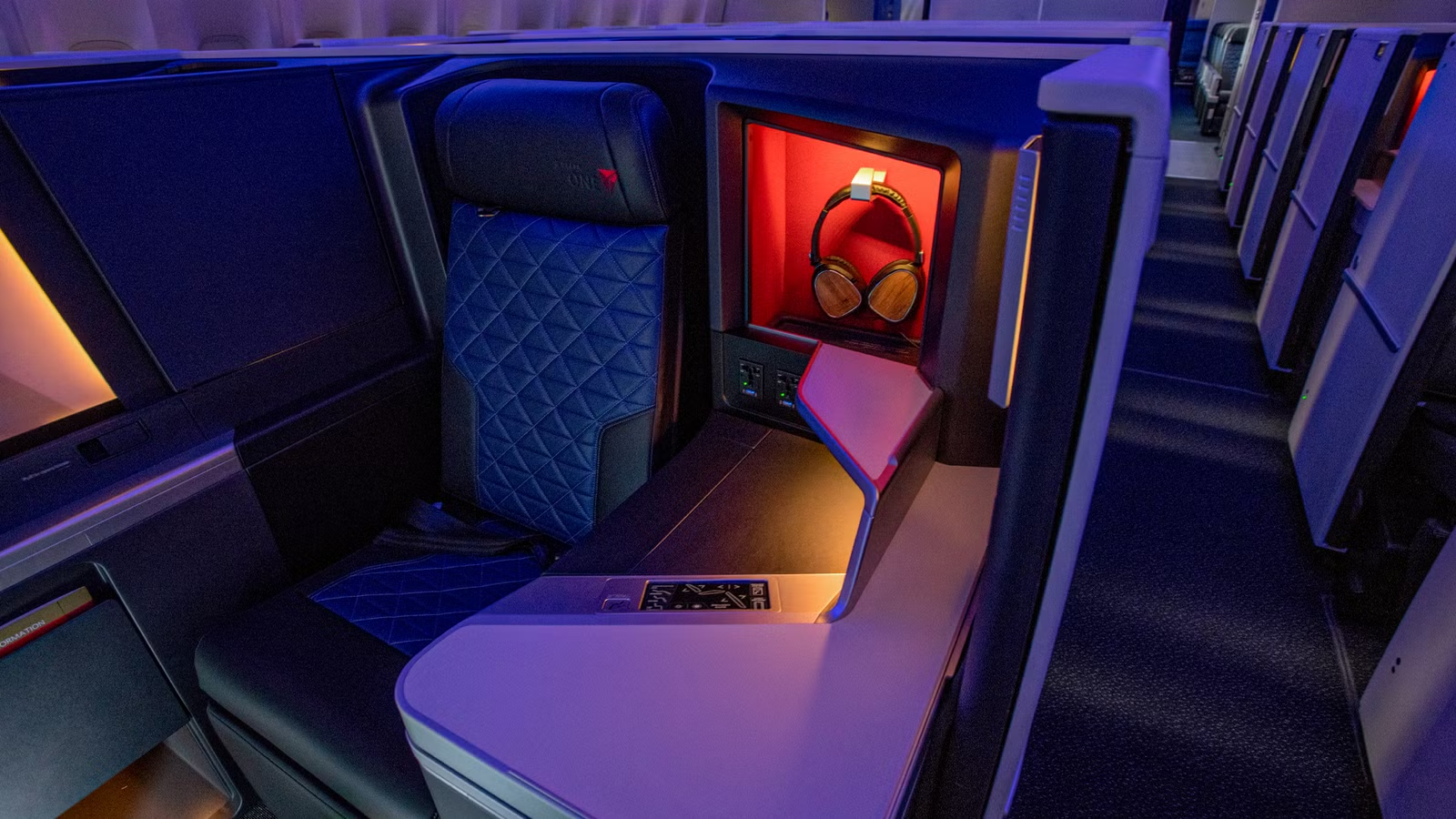
 Delta Air Lines is quietly creating one of the biggest premium-cabin opportunities in the United States airline market. Throughout June, the carrier has scheduled a record 1,522 domestic flights featuring lie-flat Delta One seats across 37 routes, giving travelers access to international-style business-class products on domestic tickets. While domestic premium cabins have traditionally meant wider recliners and extra legroom, these flights introduce fully flat beds and widebody aircraft typically reserved for long-haul international service. For travelers who normally associate domestic flying with narrowbody aircraft and standard first-class seats, the shift is notable.
The opportunity, however, goes far beyond simply booking a Delta One ticket. Frequent flyers and aviation enthusiasts increasingly view these routes as a strategy game rather than a route map. The reason is simple: the experience can vary dramatically depending on the aircraft operating the flight. One passenger may end up in a modern suite with privacy doors on an Airbus A350, while another booking the same route could find themselves on an aging Boeing 767 with a much older hard product. Knowing how Delta’s domestic widebody schedule works has become the difference between getting an international-grade experience and getting something considerably less impressive.
Delta’s Record-Breaking Domestic Lie-Flat Expansion

Delta’s June schedule marks the largest domestic deployment of lie-flat seats in the airline’s history. An Award Wallet report shows that across 37 routes, the carrier has scheduled 1,522 flights equipped with Delta One seating, representing a major expansion in premium domestic capacity and reflecting the airline’s broader focus on high-end travel products. Rather than limiting widebody aircraft to overseas markets, Delta is increasingly using premium long-haul products within its domestic network to maximize fleet flexibility and aircraft utilization.
Widebody aircraft have traditionally been associated with international journeys across the Atlantic and Pacific, where airlines use larger cabins and premium seating to attract long-haul travelers. Increasingly, however, airlines also use these aircraft domestically to support network demand or sometimes reposition aircraft. Delta appears to be taking advantage of that flexibility on a larger scale than before, creating more opportunities for travelers to encounter widebody aircraft on regular US routes.
The scale of the deployment becomes more noticeable when examining fleet assignments. The A350 operates just one daily scheduled round-trip domestic route in June between Hartsfield–Jackson Atlanta International Airport (ATL) and Los Angeles International Airport (LAX), making it relatively limited but highly sought after. The Airbus A330 fleet operates three recurring round-trip routes, including Atlanta–Honolulu (HNL), Minneapolis (MSP)–Honolulu, and New York JFK–Los Angeles, while also appearing on 12 one-off flights, such as Atlanta–Tampa (TPA) across six routes.
Why Delta One Doesn’t Always Mean the Same Thing

Some travelers may assume that purchasing a Delta One ticket guarantees a standardized experience across the airline’s network. In practice, that assumption can be misleading because Delta operates several aircraft types with cabins designed for different periods of time and for different operational needs. While the Delta One branding remains consistent, the actual seat, cabin layout, and overall passenger experience can differ substantially depending on the aircraft operating the flight.
The newest aircraft in Delta’s fleet deliver a significantly different onboard experience from older widebodies. Features such as privacy doors, larger entertainment screens, improved storage spaces, newer finishes, and updated cabin designs can noticeably influence comfort levels on flights lasting several hours. On newer aircraft, passengers may feel as though they are receiving a modern international business-class experience, while older cabins can reflect design standards introduced many years earlier.
Aircraft Type | Route Coverage | June Frequency | Example Routes (Award Wallet) |
|---|---|---|---|
Airbus A350 | 1 recurring route | Daily round-trip service | Atlanta – Los Angeles |
Airbus A330 | 3 recurring routes + additional one-off flights | Regular daily service, plus 12 individual flights. | Atlanta–Honolulu, Minneapolis–Honolulu, New York JFK–Los Angeles, Atlanta–Tampa |
Boeing 767 | 12 recurring routes + additional one-off flights | Mostly daily, plus 11 individual flights. | New York JFK–San Diego (SAN), Los Angeles–Maui (OGG), Salt Lake City (SLC)–Honolulu, Atlanta–Anchorage (ANC) |
Overall Network | 37 domestic routes | 1,522 total flights (50+ per day average) | Mixed domestic network |
This creates a situation where two travelers paying similar fares on comparable routes could receive entirely different products. A customer selecting a flight solely because it says “Delta One” may overlook the aircraft details, while frequent flyers often prioritize aircraft type above departure time or even route choice itself. In many cases, experienced travelers searching for premium value are not just booking a destination; they are deliberately booking a specific aircraft.
Delta Air Lines’ New SkyMiles Rules Even Punish Its Top-Tier Diamond Medallion Members
SkyMiles has revised its rewards for top-tier members.
The Airbus A350 And A330 Advantage

Among Delta’s domestic widebody fleet, the A350 and newer A330 variants are generally considered the most desirable options. These aircraft feature more modern Delta One products designed around passenger privacy, comfort, and a more premium overall experience.
Passengers flying on these aircraft gain access to features typically marketed as international business-class benefits. Delta One service includes fully flat 180-degree seats, premium meal service, upgraded amenities, and Missoni luxury bedding designed for longer journeys. The experience is intended to feel much closer to a transatlantic or transpacific business-class flight than a traditional domestic trip.
Delta is also investing heavily in improving its Airbus fleet over the coming years. The airline has committed significant resources toward retrofitting A330-200 and A330-300 aircraft with upgraded suites and privacy doors while also preparing next-generation suite products for incoming A350-1000 aircraft. The goal appears to be to create a more consistent premium experience across the fleet.
The Boeing 767 Reality Check

Although 767s account for a significant portion of Delta’s domestic lie-flat schedule, they represent a very different onboard experience from the airline’s newest products. The 767 fleet operates twelve domestic round-trip routes in June, making it a major component of Delta’s widebody operations. Examples include daily service on routes such as New York JFK–San Diego, Los Angeles–Maui, and Salt Lake City–Honolulu, while high-demand markets like New York JFK–Los Angeles can see multiple frequencies depending on the schedule.
The issue is not whether the seats provide a flat-bed experience; they do. Instead, the difference comes from the age of the cabins and the overall design philosophy behind the product. Older seating layouts generally offer less privacy, smaller entertainment systems, fewer storage spaces, and cabin finishes that reflect an earlier era of business-class travel. While Delta is making an effort to standardize the premium experience, 767-400ERs already feature the new and updated Delta One; the -300ER variant is not scheduled for refit due to planned retirement by 2030.
For passengers focused primarily on comfort, a fully flat bed still offers a major improvement over standard domestic first class. However, travelers expecting Delta’s latest suite-style experience with modern design elements may notice a considerable gap between the newest aircraft and the airline’s older fleet.

The 21% Fuel Burn Gap That Made Delta Air Lines Retire Its Entire Boeing 777 Fleet
The SkyTeam carrier previously operated a fleet of 18 Boeing 777s.
Why Frequent Flyers Are Paying Attention

Frequent flyers are increasingly treating these routes as opportunities to access premium products without paying the prices usually associated with international business-class travel. Rather than simply purchasing a ticket, many travelers actively search for specific aircraft and routes offering the best combination of value and comfort. For many travelers, the appeal goes beyond simply securing a larger seat. It is about finding access to a long-haul-style experience, complete with flat beds and premium service, on flights that would normally involve a standard domestic first-class cabin.
Award pricing has become one of the biggest attractions. Some domestic widebody routes have appeared at comparatively low redemption levels, including Atlanta-to-Tampa flights operated by an Airbus A330-900 with pricing around 30,100 SkyMiles one way or roughly 25,500 miles after applying any cardmember discounts. Compared with international business-class redemptions that frequently cost several times more, these domestic routes can present an unusually attractive value proposition for SkyMiles users seeking a premium experience.
Regional upgrade certificates create additional possibilities as well. Travelers booking lower-priced fares can occasionally move into premium lie-flat cabins without paying the full Delta One fare, creating a relatively inexpensive route into a much more premium experience. For frequent Delta customers, combining upgrade certificates with strategic aircraft selection can significantly increase the chances of securing an international-style seat at a fraction of the usual cost.
The Aircraft Swap Risk Every Traveler Should Know

As with most flight bookings, a widebody domestic flight does not necessarily guarantee that the assigned aircraft will remain unchanged. Domestic widebody schedules frequently support broader international operations, meaning aircraft assignments can shift as airlines respond to maintenance requirements, fleet availability, seasonal demand patterns, and network changes. Unlike some dedicated domestic routes that maintain relatively stable aircraft assignments, many widebody flights are closely tied to the movement of aircraft needed elsewhere in Delta’s global system.
A flight initially scheduled with an A350 or A330 could later be replaced by another aircraft because of operational adjustments taking place behind the scenes. Aircraft may be pulled for maintenance checks, reassigned to support international routes experiencing stronger demand, or moved within the network to accommodate scheduling changes. Travelers booking specifically for a particular onboard product, therefore, face a degree of uncertainty. A passenger choosing a flight for a modern Delta One suite experience could ultimately see a different aircraft appear on the reservation closer to departure.
For passengers targeting lie-flat seats and modern suite products, checking aircraft assignments after booking remains an important step rather than a one-time task. Frequent flyers often monitor seat maps and reservation details periodically in the weeks leading up to departure because changes can happen after tickets are purchased. The opportunity to experience international-grade business-class seating on domestic flights certainly exists, but understanding the details behind Delta’s scheduling strategy often determines whether travelers receive the experience they expected or end up with a significantly different one.