dailynewsnblog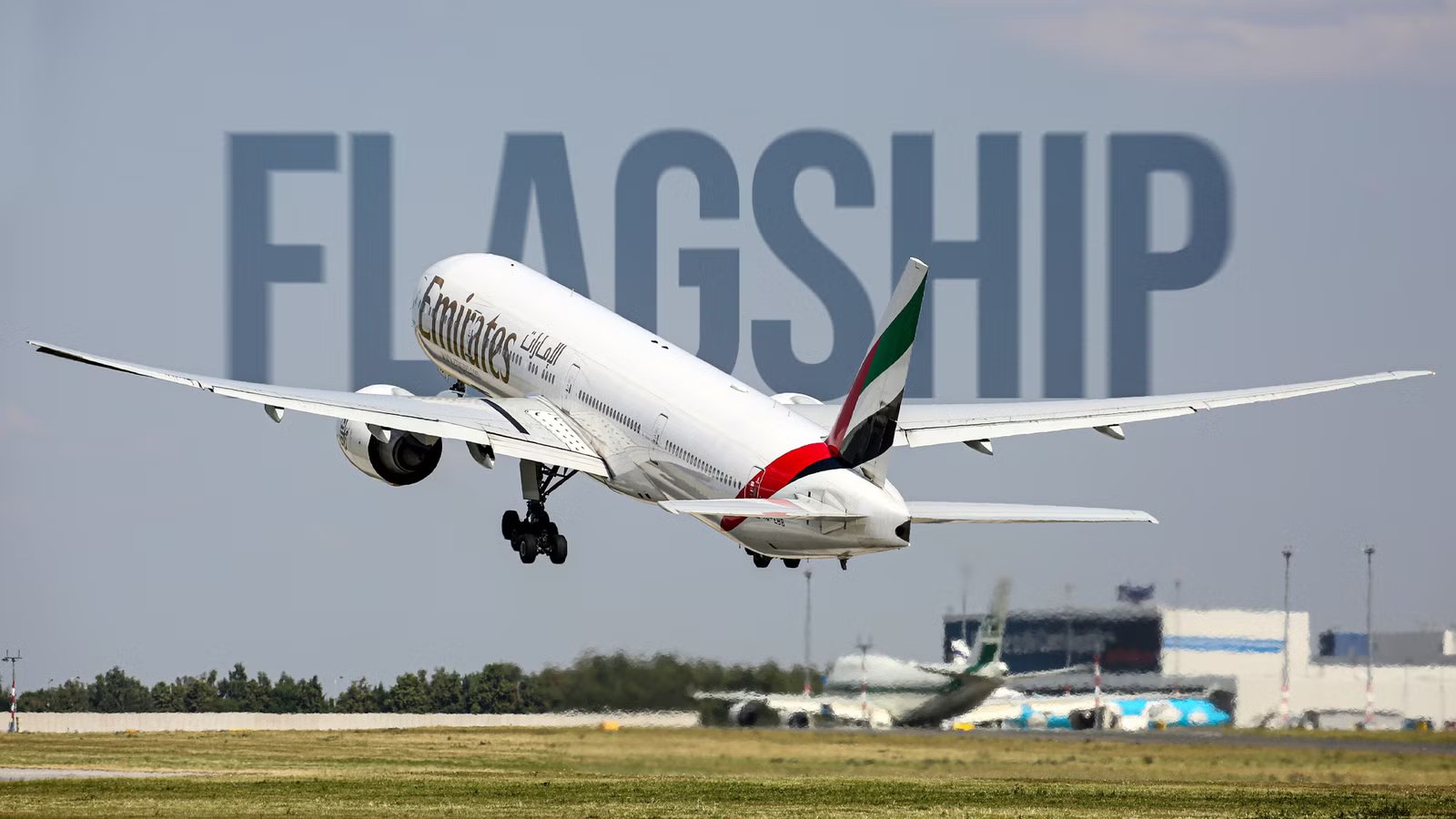
The 777 succeeded Boeing’s first widebody twinjet, the 767, and showed the world just how great the platform could be for both the economics of the notoriously volatile flying business and the satisfaction of flyers. The success of the 777 series directly contributed to the end of its larger quadjet predecessor, the 747.
By combining massive passenger and cargo capacity with unprecedented twin-engine efficiency, the 777-300ER radically altered airline economics, driving four-engine giants into early retirement. Historically, the FAA forced twin-engine aircraft to fly close to land in case one engine failed. This meant long-haul transoceanic routes were legally locked down by quadjets like the 747, but the 777-300ER changed the paradigm by achieving an ETOPS-180 rating.
Thanks to the performance and fuel efficiency of the 777-300ER’s unique GE90 engine, the Boeing 777 was able to achieve performance and range that no other twin did before. But it was the reliability of the GE90 that truly changed the way commercial aviation works today. Powered by GE’s watershed turbofan, the 777 transformed the aviation industry from a four-engine jumbo-jet era into the twinjet-dominated market of 2026.
The Hub & Spoke Killer

While the A380 and 747 were larger, they suffered from being too big. An airline must fill a massive percentage of an A380’s ~500+ seats just to break even. The 777-300ER is much easier to fill consistently, protecting airlines from devastating financial losses during economic downturns. The 777-300ER features massive cargo holds beneath the passenger deck, even more than a 747. On many routes, the under-floor freight revenue alone pays for the entire flight’s fuel burn, making the passengers pure profit.
Another important factor was the gradual shift of air route networks from the hub-and-spoke to point-to-point organization. To break even on a point-to-point route like Chicago to Brussels, a 747-8i requires an immense number of passengers. If the flight is only 70% full, the airline loses massive amounts of money. The 777-300ER can break even with far fewer passengers, making secondary city pairings consistently profitable.
Airlines don’t always fly 100% full. Ultimately, Boeing sold only 48 passenger versions of the 747-8 Intercontinental. Meanwhile, the 777-300ER became the backbone of long-haul aviation, with over 800 units delivered, cementing the total victory of point-to-point travel. The 777-300ER didn’t just compete with the 747 and A380; it entirely reshaped global aviation by making quadjets completely obsolete.
The Right-Sized Giant

When the first 777-200 rolled out of the factory, airlines were immediately eager for its combination of payload, range, and efficiency. Here was an aircraft that could carry over 300 passengers across oceans with just two engines instead of the four that was standard for such large jets. It was streamlined, modern, and most importantly for the accountants, economical to operate.
The introduction of the 777-300ER in 2002 maximized the quality of the 777 airframe. Boeing expanded the fuselage to carry nearly 400 passengers in standard configuration, with fuel consumption only slightly increased compared to the smaller models. Airlines improved income thanks to a variety of cabin arrangements and cargo options made possible by the aircraft’s super-sized twinjet design.
Boeing designed the 777 from the ground up for extreme reliability, including triple redundant systems for hydraulics and electronics. During certification for the -300ER, a GE90-115B was famously tested by being shut down mid-flight for 330 minutes (5.5 hours) during a 13-hour journey from Seattle to Taiwan to prove it could handle the stress. In 2011, the FAA granted ETOPS-330 approval for the 777 fleet, effectively opening up 99.7% of the Earth’s surface to twin-engine flight.
Safety In Numbers

The GE90-115B was so powerful that a twin-engine 777-300ER could carry almost as many passengers as a Boeing 747-400 but with two fewer engines to maintain and half the fuel burn. Dropping from four engines to two literally halved the engine maintenance budget for long-haul routes. Even accounting for payload proportions, the 777-300ER burns roughly 20% to 25% less fuel per seat than a quadjet like the Airbus A340-600.
The 777 proved that a twin-engine jet could be just as safe as a four-engine jet while burning significantly less fuel. The 777 and GE90 combo directly spurred the retirement of older quadjet airliners like the Boeing 747 and Airbus A340 on most long-haul routes. The 777 fleet has now completed over three million ETOPS flights, which is more than double all its competitors combined, according to Flight Drama.
Its ability to generate profit on extremely reliable performance solidified the 777-300ER’s dominance of the widebody market. Spreading its development cost over large production runs helped Boeing to cut unit costs and create competitive pricing that attracted more orders as more airlines experienced notable returns. Over time, the supply chain created by the network of manufacturers, maintenance providers, and training institutes made 777 operations even more cost-effective and readily accessible.
The Record-Breaking Powerhouse

Boeing designed all 777 variants to be ETOPS-ready, and today, the global fleet flies twice as many ETOPS flights as competing models combined. The GE90 family maintains a 99.97%–99.98% dispatch reliability rate, with an in-flight shutdown rate of only one per million engine flight hours. Before the 777, twin-engine aircraft typically had to fly for two years to prove their reliability before being allowed to fly 180 minutes from an airport.
Catch what other flight trackers miss
Emergency squawks, holds, NOTAMs — live signals, no signup.
Open tracker
Catch what other flight trackers miss
Emergency squawks, holds, NOTAMs — live signals, no signup.
Open tracker
The 777-200 was the first aircraft in history to receive FAA ETOPS-180 certification at entry into service (EIS) in 1995. Boeing says that the worldwide total for 777 monthly flight hours exceeds 73,000 at present. Jets that stay in the air earn more than the ones on the ground. The high dispatch reliability of the huge twinjet makes it a top earner for carriers that fly long-haul or just high-density routes that demand a huge cabin capacity to make the most of every departure.
In 1999, Boeing and GE Aerospace made a landmark deal that they would exclusively see the Boeing 777-300ER and 777-200ER powered by variants of the GE90 engine. GE essentially bought exclusivity by agreeing to bear a significant portion of the development and risk costs for the -300ER program. In exchange, Boeing agreed not to certify any other engines for the variant, ensuring GE would capture 100% of the engine sales for that model. Thus, the GE90-115B became the standard for Boeing’s highest-performance 777s.
The GE90-115B is a beast of engineering that redefined what a twin-engine aircraft could do. Its extreme performance isn’t just a marketing buzzword; it’s backed by some truly staggering numbers. Officially rated at 115,300 lbs of thrust for routine use, the GE90-115B even set a Guinness World Record by reaching 127,900 lbs during a special 2002 test. That single engine produced more thrust than all four engines of a fully loaded Concorde combined.
The Next Chapter: 777X

The Boeing 777X is a long-anticipated successor to the iconic Boeing 777, or ‘Triple Seven’ family. Boeing estimates that the 777X will achieve a 10-13% improvement in block-hour fuel burn compared to the 777-300ER. Owing to its greater seat capacity, the per-seat fuel efficiency gain is even more significant, at 15% to 20%. Its incredible wings work in conjunction with new engines that will not only provide a 10% better fuel burn rate but will also be the most powerful turbofan power plants ever installed on an airliner.
The GE9X has 10% greater fuel efficiency compared with the GE90. The overall pressure ratio is 61:1, which allows for a 5% lower thrust-specific fuel consumption. The GE9X is also the most powerful commercial aircraft engine ever built, maxing out at a world-record 134,000 lbs (597.4 kN) of thrust. GE Aerospace said it took data from its previous engines to produce its revolutionary new engine.
“The GE9X represents a multi-generational technology development chain, supported by millions of hours of field experience. We have pulled learnings from other engines, including the GE90 and GEnx, to enable a more efficient, more reliable, quieter engine with lower emissions.”
The increased wingspan of the 777X complements this engine with a very high aspect ratio, 10:1 compared to 9:1 for the 777-300ER. That increases lift and reduces induced drag. The 777X will have wings that are 23 feet (7 m) wider than the 777-300ER. That is a total wingspan of 235.5 feet (71.75 m) compared to 212.6 feet (64.8 m). This allows the 777X to climb faster and cruise at higher altitudes, above 40,000 feet, where air resistance is lower.
Ultra-Long-Haul Aviation Evolved

By folding the last 11 feet (3.4 meters) of each wing upward, the 777X reduces its span to 64.8 meters on the ground, or the exact same width as the 777-300ER. With the tips folded upward on the ground, it fits within standard ICAO Code E gates at airports worldwide. The new wing means, with its industry-first folding tips, means carriers can gain major efficiency upgrades without having to pay for custom infrastructure or take penalties for schedule restrictions that limit the jumbo A380 or 747.
The Boeing 777X not only features a dramatically improved cabin, fuel-saving and performance improvements, but also a much better maintenance interval with reduced cost and less frequent needs. That combination of capacity, efficiency, and compatibility is what makes the aircraft so appealing to airlines in a future with slot-restricted hubs and increased cost-cutting concerns.
Emirates alone has anchored its entire future fleet strategy around the type, with an enormous backlog of over 170 Boeing 777X aircraft on order. The first airline to commit to the 777X was seeking to replace its departing fleet of 747 double-deckers, that was Lufthansa. Ordering 34 of the 777-9 extended variants, the German airline went for the maximum capacity model with its launch order.
Due to the long-awaited arrival of the new twinjet, Lufthansa’s fleet of 22 747s has gradually shrunk. After the 777X goes into service, the airline plans to retire its remaining aircraft. But as the jet stands alone, and its size category, for now, it remains one of the most eagerly anticipated aircraft ever made. Its certification is expected this year with the first deliveries of the 777-300ER successor expected to finally arrive in early 2027.