dailynewsnblog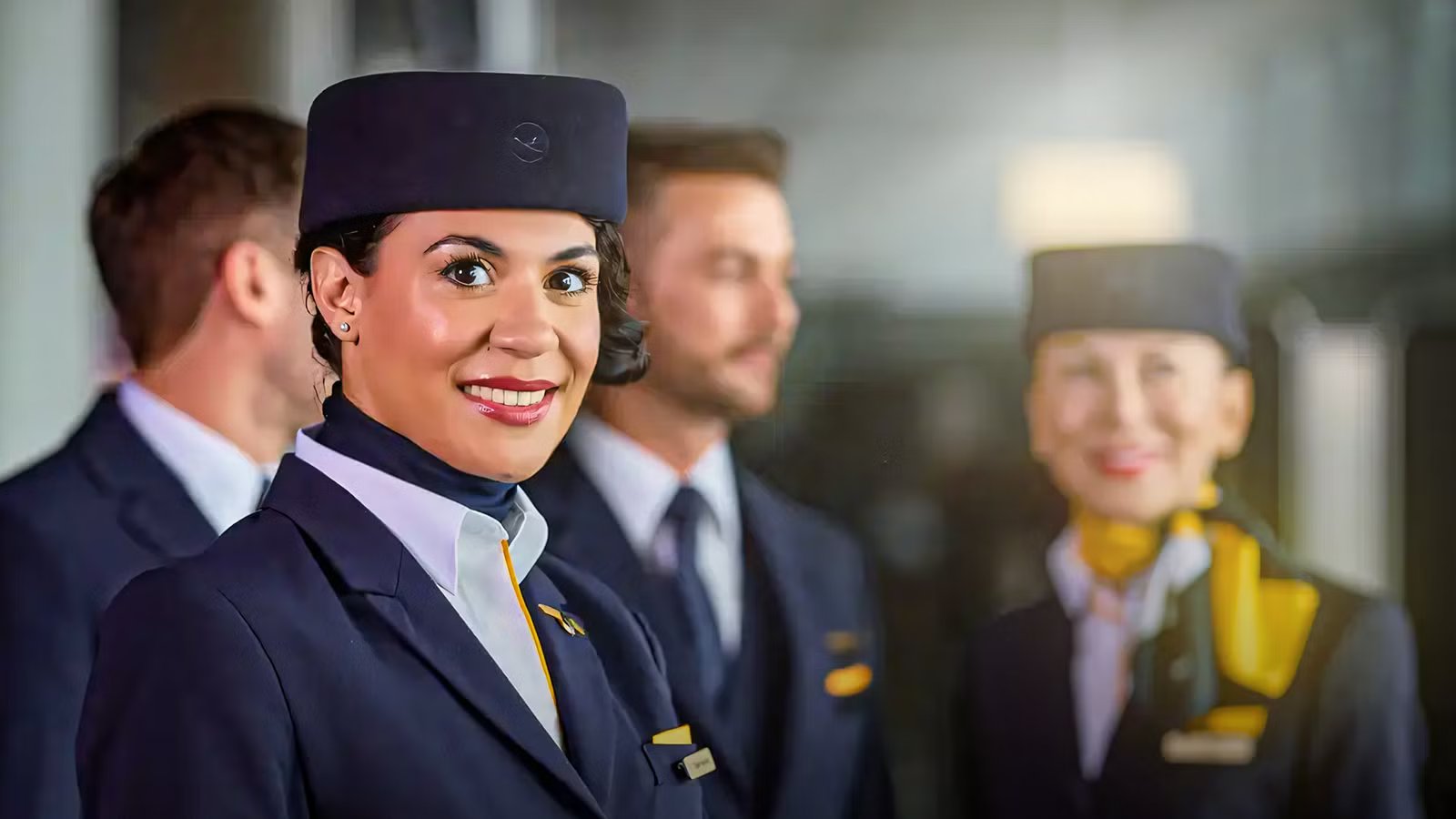
The senior cabin crew member (SCCM) leads the whole Cabin Crew team on the ground, preparing for a flight, and then during the flight and service. This role is also sometimes called Senior Purser, Inflight Service Manager, or Cabin Services Director, depending on the airline and the region. It is an extremely important position, requiring experience as the SCCM liaises with the cockpit at all times and also the ground staff, making sure that everything runs smoothly during every flight.
They often wear a slightly different uniform to the rest of the crew and are positioned at the front exit door on the left side of the aircraft. This means that they can liaise with ground staff and the cockpit as needed. The forward galley can be seen as an operations room (and indeed, on larger aircraft, they have their own office). Here, they run the cabin like an air traffic controller runs a sector, with contingency trees mapped for unexpected turbulence, organizing crew rest rotations, as well as being prepared for any emergencies.
The Senior Cabin Crew Member Role

The SCCM role requires extensive cabin crew experience, strong leadership skills, and a great deal of organization. They are the ‘captain’ of the cabin and ensure that all tasks are completed safely and efficiently, and supervise the operation. The aim is for every flight to be as safe and efficient as possible, and safety and comfort are never compromised. They set the service standard and create a positive mood in the cabin.
An article at Globalair.com says that the SCCM will check on the flight crew consistently and remains in communication with them during the flight. The cabin crew are the eyes and ears in the cabin, and anything unusual needs to be communicated. If there is a smell, a sound, or something out of the ordinary, it has to be reported to the flight crew via the SCCM. They, in return, pass on instructions that the flight crew may have, such as a warning of turbulence. The SCCM works like an air traffic controller, making sure that everything runs smoothly according to plan.
In emergencies, such as a medical emergency or an onboard fire, the crew take on various roles depending on who was on the scene first, and then the other crew take on support and communication roles to deal with the emergency. The support gathers extra equipment as needed. The communicator speaks to the SCCM, who relays everything to the flight crew, who then may call them back with special instructions based on the emergency. The communication between the cabin and the flight deck is critical to flight safety.
Simple Flying Quiz
What Aircraft Type Are You?
Five questions. One aircraft. Find out which plane best matches your personality.
Question 1 of 5
How do you prefer to travel?
Question 2 of 5
What’s your ideal weekend away?
Question 3 of 5
How do you handle a busy schedule?
Question 4 of 5
What matters most to you on a long trip?
Question 5 of 5
How do others describe you?
Your Result
The Explorer
Cessna 172
You value freedom, simplicity, and the joy of the journey itself. You’re happiest when you’re in control, taking life at your own pace and discovering the world one small airfield at a time. No crowds, no queues — just sky.
Your Result
The Workhorse
Boeing 737
Reliable, efficient, and always in demand. You get the job done without fuss, keeping things moving for everyone around you. You’re the backbone of any operation — proven, dependable, and trusted the world over.
Your Result
The Icon
Airbus A380
You think big. More space, more comfort, more presence — you believe in doing things properly and on a grand scale. When you walk into a room, people notice. You’re built for the long haul, and you do it in style.
Your Result
The Pioneer
Concorde
Speed, ambition, and a refusal to accept limits define you. Every second counts, and you’d rather break the sound barrier than wait in line. You were ahead of your time — bold, brilliant, and utterly unforgettable.
Pre-Flight Briefing

Before the flight, the SCCM will speak with the flight crew and operations to confirm the conditions of the flight. This includes information about the flight, the expected weather, whether there is turbulence or delays, and the flight time. The SCCM collates all the information to present to the cabin crew, including the number of passengers and whether any require special assistance. There may also be additional information about the safety and security downroute for the crew and the layover hotel.
The SCCM leads the pre-flight briefing, which usually takes around 20 minutes. During the briefing, they will communicate the flight information collected earlier to the cabin crew and assign working places based on seniority. Safety and emergency procedures and first aid are reviewed, and each cabin crew member is asked questions on both topics, ensuring their knowledge is up-to-date and correct and that they are competent and fit to fly. If a crew member fails, they can be removed from the flight.
The SCCM will also note any special meals or passengers who may need extra assistance during the flight. Service flow is also discussed, and what should be done if there is unexpected turbulence or other issues. They will also check that the airline’s grooming standards are met. Any current safety or security issues will be discussed. Finally, the flight crew join the briefing and clarify any flight information regarding flight time, turbulence, and special instructions for the crew.
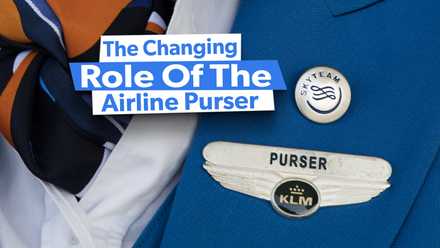
Why The Role Of The Airline Purser Has Changed Dramatically In 20 Years
Diversifying roles and lack of experienced crew may cause future issues.
The Boarding Process

Pre-flight security and safety equipment checks take place before passengers can board, and the SCCM liaises with the flight crew and ground staff as to when boarding can proceed. The SCCM checks that all checks are complete and reports to the flight deck. They will also check that the number of meals and carts is correct, that no security seals are broken, and that everything tallies with the paperwork.
Boarding is a very busy time for all crew and the SCCM, helping passengers with their luggage and finding their seats. They are also making passenger observations according to an article at Travel and Leisure, to try to stop any possible problem passengers before the flight. The SCCM usually works in the first class cabin or business class, depending on the aircraft type, and will provide any welcome drinks and amenities. They will also coordinate between the cabins to ensure boarding runs smoothly.
Once the door is closed and pushback commences, the flight crew will call for the crew to arm the doors. The SCCM checks that all crew report back that their doors are armed and reports back to the flight deck to confirm. Then, of course, the safety demonstration takes place, and the crew starts the cabin security checks, ready for takeoff.
The SCCM and all crew have their own section of passengers to check, and all exits are clear. All baggage needs to be stowed, and passengers must be seated with seatbelts on, seatbacks upright, and tray tables stowed. This ensures that the cabin is as safe as possible on takeoff and landing and offers the best chance of evacuating an aircraft safely in case of an emergency. Once the cabin security checks are completed, the SCCM will report to the flight crew that the cabin is secure and takeoff or landing can commence.
During The Service

The SCCM supervises the cabin crew team for service flow and usually works in business or first class for the meal and beverage service. They are also responsible for flight deck security and communication between the cabin and the flight deck. Any conditions, such as turbulence, will be notified to the SCCM, who then communicates with the cabin crew. The SCCM runs the service flow with precision, in what can be a high-pressure time, especially on short flights.
If there are any issues in the cabin, they can be escalated to the SCCM, and they also have numerous reports to fill in. The service in all cabins starts at the same time as soon as the carts are all set up. Cabin crew are used to orchestrating the very limited space when preparing for service. Special meals are always served first and by hand to individual passengers, rather than by cart. This avoids potential bottlenecks in the cabin.
Each cart starts from a certain position (usually the front and mid of each cabin) to ensure an efficient service, and whether it is a bar or meal service or clearing in, the crew always starts from the same point. If there is reported turbulence, service can be stopped for safety reasons temporarily by the SCCM, creating a holding pattern for when service can restart. The cabin and galley are secured once more to ensure safety, and hot drinks are poured away, and the crew retake their jumpseats.
If it is mild turbulence, service may continue without hot drinks. If there is an issue with an intoxicated passenger, the bar service may be stopped completely, if necessary. The SCCM communicates these items via interphone to the crew and makes passenger announcements in the cabin to reflect this.
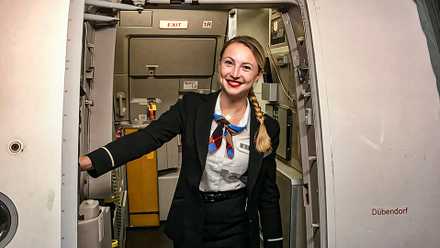
I’m A Flight Attendant: This Is Why Boarding Is The Most Stressful Part Of The Job
A lot of responsibility in a short time.
Crew Rest

On long-haul flights, cabin crew need to have crew rest as per aviation authority regulations, such as the FAA. This is because the crew needs to remain alert in case of any emergency. This depends on the length of the flight and is split into two shifts between the end of the main service and about two hours before landing. The rest period can be anything from 45 minutes on flights of around seven hours to three hours on a twelve-hour flight.
The SCCM allocates first and second rest periods, ensuring that there are experienced crew to cover the SCCM role and each galley sufficiently in normal and abnormal flight. There are two separate crew rest areas, one for the flight crew and one for the cabin crew. The flight crew rest area is at the front of the aircraft, and the cabin crew rest area is at the rear, either near the tail or in the cargo compartment.
These are small compartments that have bunk beds with privacy curtains and seatbelts. They are usually either side by side, or one up and one down, or ‘coffin’ style. Each bunk has a blanket, a pillow, and a small area for storage. The senior crew member usually takes the second shift for rest and takes the bunk nearest the door and the intercom, so that they can be contacted quickly if there is an emergency.
Some aircraft such as the Airbus A321XLR and the Boeing 767, have limited cabin crew rest areas, consisting of a row of seats with a curtain around them. When flights are operated on large aircraft such as the Airbus A380, additional flight crew and cabin crew are carried to ensure the crew rest requirement and that there are enough crew to operate sufficiently and cover rest periods. On ultra-long-haul flights, the crew may rotate every two to three hours.
The Bottom Line

The SCCM is a very important figure in running a safe and efficient flight, and communication and leadership are extremely important. They are also key in communicating with the flight deck during normal or abnormal flights; all safety instructions are relayed from the flight crew to the cabin crew via the SCCM and in reverse, so that everyone knows what is going on and they are all on the same page. They act like an air traffic controller in supervising that everything is done in a safe and efficient manner.
The pre-flight briefing is crucial to safe operations, and the SCCM sets the tone for the flights. They assign working positions, inform the crew of the fine details of the flight, and the expected service flow. They check that the crew’s safety knowledge and grooming are up to airline standards. Once on board, they are the main communicator with the flight deck, ensuring that every procedure is precise and followed correctly and safely.
They are also responsible for filling in paperwork, such as flight reports, incident reports, bar and duty-free paperwork, and general administration required for the flight. They run the service flow, ensuring that everyone starts at the same time and from the correct position. When service is slow in another cabin, they can bring crew from another cabin to help out.
If there is turbulence or some other issue, service may be stopped or postponed, and the SCCM will communicate this. On long-haul flights, they will allocate crew rest to ensure there are enough experienced crew to be distributed across the aircraft, should anything unusual occur during the flight. The SCCM is key in the chain of command, and their role is essential to safe and efficient flights.
Catch what other trackers miss
Emergency squawks, holds, NOTAMs — live signals, no signup.
Open tracker
Catch what other trackers miss
Emergency squawks, holds, NOTAMs — live signals, no signup.
Open tracker