dailynewsnblog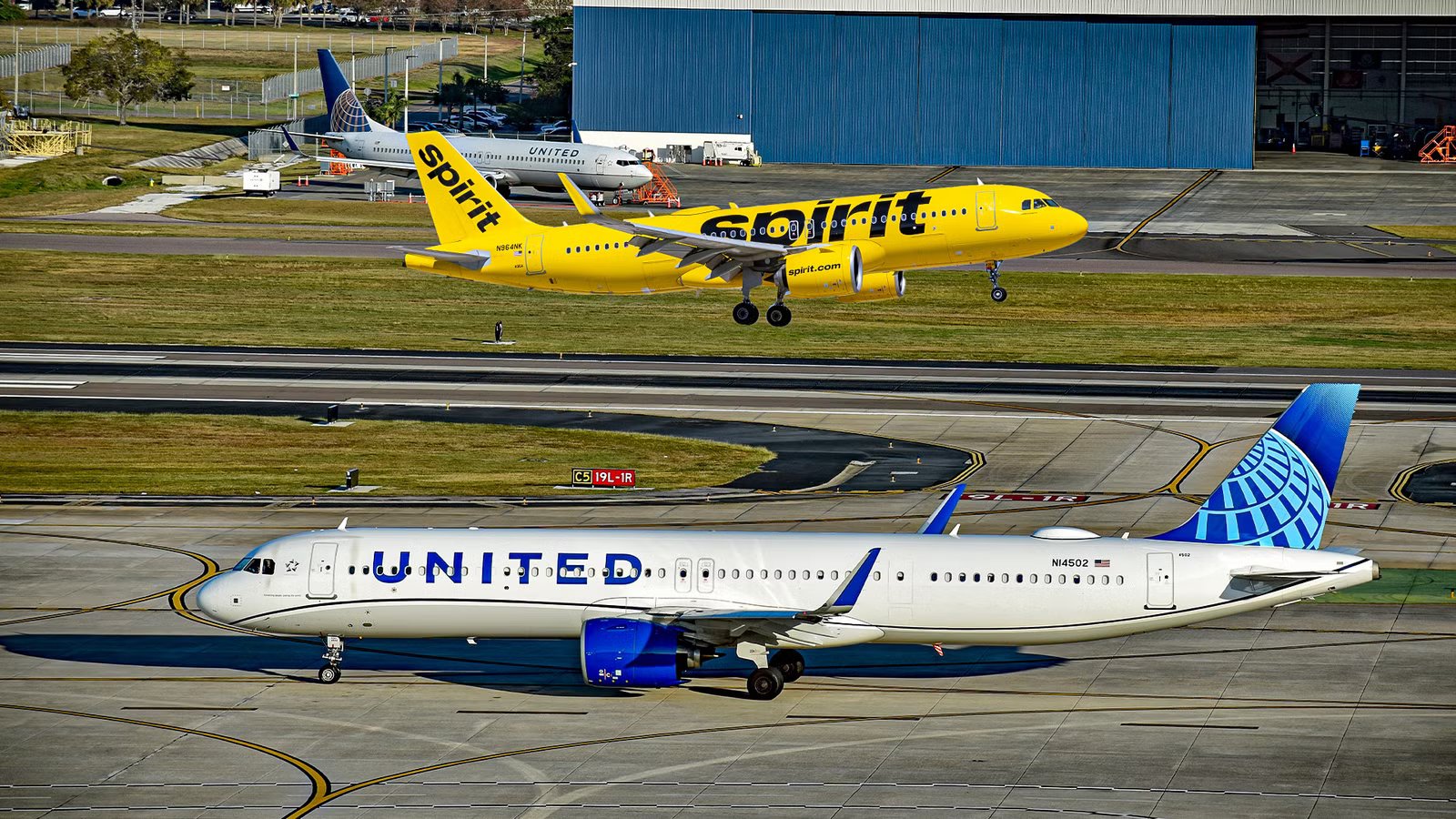
Airbus’ A321neo family has become the backbone of short- and medium-haul fleets around the world, but not all members of the family play the same role. While the A320neo is designed as a high-efficiency workhorse for core routes, the A321neo has evolved into a solution for medium markets, while also expanding long-haul travel. The two aircraft share the same cockpit, systems, and cross-section, yet in practice they serve very different missions. The differences become especially clear once you step inside the cabin.
At a glance, the A321neo may look like a simple stretch of the A320neo, but the larger cabin allows for far higher seating capacity, more flexible layouts, and, in long-range versions, missions that were once reserved for much larger jets. This has made the A321neo one of the most in-demand narrowbody aircraft in the world. But just how much bigger is its cabin compared to the A320neo, and what does that difference actually mean for airlines and passengers?
The Airbus A320 Family

The Airbus A320 family began with the original Airbus A320, which entered service with Air France in 1988. The larger A321 followed in 1994, while the shorter A319 arrived in 1996, and the smallest variant, the A318, entered service in the early 2000s but saw limited adoption. All members of the family feature six-abreast economy seating and were designed around a shared cockpit philosophy. This allows pilots to move between variants with the same type rating, giving airlines significant operational flexibility.
In 2010, Airbus launched an updated version of the family known as the A320neo, with “neo” standing for “new engine option.” The primary change was the introduction of more efficient, higher-bypass-ratio engines, along with aerodynamic improvements, to reduce fuel burn and operating costs. The earlier generation aircraft were retroactively labeled A320ceo, meaning “current engine option.” This refresh allowed Airbus to keep the platform competitive against newer narrowbody designs.
The NEO family is offered in three main variants: the A319neo, A320neo, and A321neo. Within the A321neo line, Airbus further differentiates the aircraft into the standard A321neo, the longer-range A321LR, and the A321XLR. While these versions share the same basic airframe, they are optimized for very different mission profiles. This range of options has turned the A321 into the most versatile member of the family.
The Original A321neo Cabin

The first A321neo, designated the A321-200N, was delivered to Virgin America in 2016 before the airline was acquired by Alaska Airlines. From the outside and inside, it looked almost identical to the earlier A321ceo, aside from the larger and more efficient engines. This version retained four full-size main cabin doors and lacked any overwing emergency exits. However, Airbus quickly moved away from this layout as it looked for ways to improve capacity and flexibility.
Airbus soon introduced the A321 Cabin Flex, or ACF, configuration, which later became the standard production layout under the designation A321-200NX. This arrangement removes the second pair of full-size doors located ahead of the wing and shifts another door pair further aft, with the option for airlines to deactivate it. In place of the removed doors, the aircraft uses overwing emergency exits, with one pair standard and a second pair available as an option. While the layout was initially marketed as a high-density solution, it has since become the default configuration and is used on the A321neo, A321LR, and A321XLR.
The benefits go beyond higher seating capacity. Removing two full-size doors and their associated slides reduces structural weight, which improves efficiency. The layout also gives airlines far more flexibility in how they configure the cabin. Low-cost carriers can activate all exits and maximize seating density, while network airlines can deactivate some exits and use the space for galleys, lavatories, or lower-density seating layouts.

Here’s How Much Wider The Airbus A320neo’s Cabin Is Compared To The Boeing 737 MAX
By today’s standards, the 737’s cabin is rather narrow, and while the A320 is wider, it is far from the widest in its class.
How Much Bigger Is The A321neo Cabin When Compared To The A320neo?

Across all variants, the A321neo is certified to carry up to 244 passengers. In practice, most major network carriers operate the aircraft with closer to 180 to 220 seats, depending on the cabin mix. United and Delta, for example, typically seat around 200 passengers in two-class configurations. At the high-density end of the spectrum, easyJet fits as many as 235 seats on its A321neos.
By comparison, the A320neo has a significantly lower maximum capacity. Airbus lists a maximum of 194 passengers, while high-density operators like easyJet configure their aircraft with around 186 seats. Full-service carriers usually install far fewer, with airlines like ANA operating the type with roughly 146 seats in a two-class layout. This puts the real-world gap between the two aircraft at roughly 40-50 seats in many configurations.
The two aircraft share the same fuselage cross-section, so their cabin widths are identical. Beyond seat count, one of the most visible layout differences is that the A321neo gives airlines the option to install a lavatory directly behind the forward premium cabin, at the front of the economy section. This is similar to the layout used on aircraft like the Boeing 737-900. In practice, however, relatively few airlines choose to use this option.
Both aircraft benefit from Airbus’s Airspace XL overhead bins, which are standard on the NEO family. These bins offer about 40 percent more volume and can accommodate roughly 60 percent more bags than older designs. This improves boarding efficiency and reduces the need for gate-checked luggage. In day-to-day operations, this is one of the most noticeable improvements over earlier A320 family cabins.
Cargo capacity also highlights the size difference between the two aircraft. The A320neo can carry up to seven LD3-45W containers in its lower hold, while the A321neo can accommodate up to ten. These figures are unchanged from the earlier CEO variants of both aircraft.
How Do They Compare In Range?

The standard A321neo offers slightly more range than the A320neo. The A321neo has a published range of about 3,500 nautical miles (6,500 kilometers), while the A320neo is rated at roughly 3,400 nautical miles (6,300 kilometers).
Compared to the previous generation, both aircraft also see meaningful improvements. The A321neo offers roughly 300 nautical miles more range than the A321ceo, while the A320neo gains about 100 nautical miles over the A320ceo. The A319neo stands out in the family with a published range of around 3,700 nautical miles (6,850 kilometers), thanks to its lower weight and similar fuel capacity. This makes it the longest-legged of the standard NEO variants.
It is when looking at the A321LR and A321XLR that the real range gap opens up. The A321LR is rated for around 4,000 nautical miles (7,400 kilometers), while the A321XLR pushes that figure to about 4,700 nautical miles (8,700 kilometers). At the upper end, 4,700 nautical miles can translate to roughly 10 to 11 hours of flight time depending on winds and routing. That kind of endurance has fundamentally changed what airlines are willing to attempt with a single-aisle aircraft.

How Cabin Crew Rest & Sleep On The Airbus A330neo
How aircrew get some shut-eye on the fly.
Let’s Discuss Efficiency

Efficiency is the central pillar of the A320neo program and the primary reason Airbus chose to update the family rather than design a clean-sheet replacement. For airlines, lower fuel burn translates directly into lower operating costs and reduced emissions, which is especially important on short and medium-haul networks where margins are thin. This focus on efficiency is also what made the NEO program one of the most successful commercial aircraft upgrades in history. In practice, the performance gains are large enough to materially change route economics.
Airbus advertises up to a 20 percent reduction in fuel burn and CO₂ emissions per seat compared to earlier versions of the aircraft. About four percent of this improvement came from the introduction of Sharklets, while roughly ten percent came from the new-generation engines. Additional refinements in the cabin and systems raised the total improvement to around twenty percent.
The biggest driver of these gains is the move to higher-bypass-ratio turbofan engines. These engines are more efficient because they accelerate a larger mass of air at a lower speed, producing the same thrust while using less fuel. By sending most of the airflow around the engine core rather than through it, they achieve better propulsive efficiency and also reduce noise. The use of advanced materials, including titanium aluminide components, further cuts engine weight and improves durability, reinforcing the efficiency gains over the previous generation.
The A321LR and A321XLR

One of Airbus’s goals in developing the extended-range A321 variants was to create a true successor to the Boeing 757-200. The 757 earned a reputation for combining strong performance with long range, making it a workhorse on transatlantic and other long, thin routes. Boeing has never directly replaced the aircraft with a modern equivalent, leaving a gap in the market. With the A321LR and especially the A321XLR, Airbus has produced an aircraft that not only matches the 757’s mission profile but, in range terms, clearly surpasses it.
As airlines adopt the A321LR and A321XLR, long-haul narrowbody flying is becoming increasingly common. Thanks to their efficiency, these aircraft allow carriers to serve lower-demand long-distance routes that would not support a widebody aircraft. For passengers, this opens up more nonstop and one-stop markets that previously required connections. At the same time, it has sparked a debate about comfort, as spending nine or more hours on a single-aisle aircraft inevitably means less space than on a widebody.