dailynewsnblog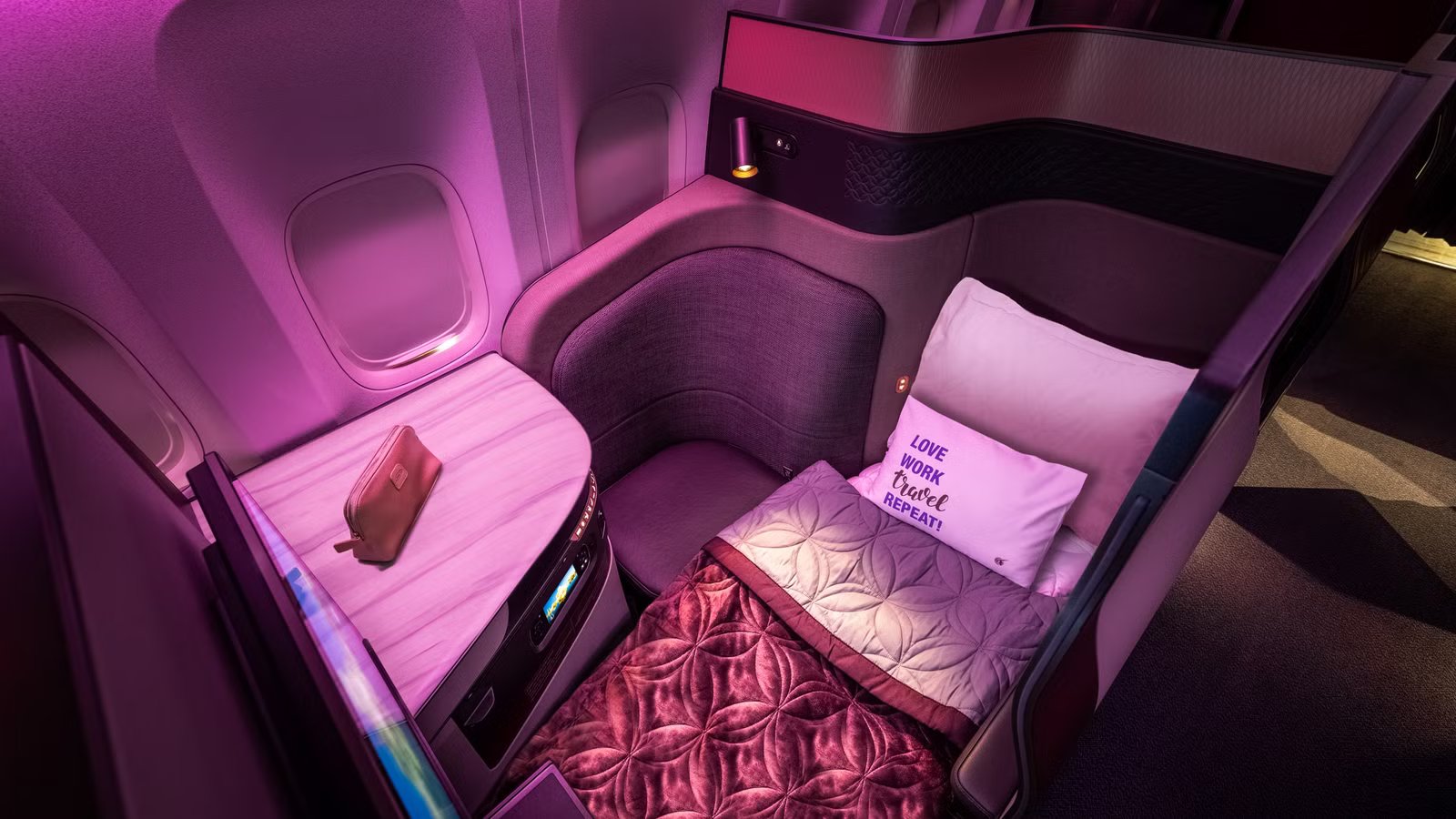
The saga of the Airbus A380 at  Qatar Airways has taken another dramatic turn in 2026, directly altering the economics of booking a premium seat on the double-decker superjumbo. Following capacity disruptions caused by the 2026 Iran Crisis, the Doha-based carrier completely grounded its active fleet of eight aircraft for April and May, severely constraining premium seat supply worldwide.
Qatar Airways is managing its A380 fleet with an aggressive, short-term tactical approach. Unlike competitors that operate standard year-round double-decker schedules, the Gulf carrier is implementing a truncated network that will resume on June 16, 2026, with flights strictly limited to London Heathrow and Bangkok. High-level scheduling volatility has led to massive price fluctuations, making it essential for premium flyers to understand how scarcity, route pruning, and regional adjustments affect the final price of their tickets.
Why No Qsuite?

Qatar Airways has long been renowned for its award-winning, fully enclosed Qsuite business class. Passengers booking the Airbus A380 will encounter a different cabin architecture from what is typically expected. The airline chose not to retrofit its superjumbo fleet with sliding-door suites, opting instead to retain its classic open-plan reverse-herringbone layout. The configuration features 48 business class seats spread across the upper deck, arranged in a one-two-one configuration, guaranteeing that every passenger enjoys direct aisle access without disturbing their neighbor.
The absence of a closing door does not mean the experience is lacking, as the dimensions of the seat still rival the top tiers of international aviation. Each business class suite offers a generous seat width of 22.2 inches (56.38 centimeters) between the armrests, extending into a fully flat bed measuring 80 inches (203.2 centimeters) in length. The cabin is positioned on the wider upper deck of the world’s largest passenger jet, allowing those seated here to benefit from massive side-wall storage bins and an incredibly quiet, draft-free atmospheric filtration system.
However, the reality of paying for an older seat layout instead of the flagship Qsuite is quite hard to justify for many travelers, given the quality of the Qsuite product. The airline compensates for the lack of complete structural privacy by giving upper-deck passengers immediate access to one of the most celebrated social spaces in the sky. It transforms the A380 business class into a highly social, premium leisure experience rather than a completely isolated corporate office, heavily influencing how the carrier values and prices these tickets against its modern twin-engine aircraft.
Not Quite First, But Far More Achievable

Pricing structures for Qatar Airways’ business class on the A380 reflects the highly disrupted scheduling landscape of 2026. The entire fleet of eight operational planes was grounded through April and May, meaning cash tickets for the remaining months of the year carry a significant premium due to compressed capacity. When flights resume on June 16, 2026, the carrier will strictly consolidate its double-decker fleet onto two primary trunk routes, leaving other typical destinations waiting until later in the year.
For travelers booking a standard one-way itinerary from  London Heathrow to
  Doha Hamad International once operations restart, cash fares typically hover around $3,200. Opting for the longer journey to
  Bangkok Suvarnabhumi can see one-way costs reach $4,100, varying heavily depending on how close to departure the seat is secured. Once the airline reintroduces the double-decker on long-range routes like
  Sydney Kingsford Smith on September 16, 2026, prices are expected to climb well past $5,500 for a single leg, given the immense distance of this route.
These dramatic price brackets are closely tied to how the carrier manages seat inventory across its network amid ongoing regional airspace constraints. When premium demand spikes during holiday corridors, the restricted pool of 48 upper-deck seats triggers pricing software to automatically apply top-tier fare buckets. Flying business class on the superjumbo remains a premium investment, but it serves as a far more achievable objective than first class, which only offers eight ultra-expensive seats per aircraft.
Here’s How Much A First Class Ticket On A Qatar Airways Airbus A380 Costs In 2026
The Airbus A380’s return has brought back one of the most exclusive ways to fly: First Class. But how much does this level of luxury actually cost?
The Points Game

For those who prefer to preserve their cash reserves, utilizing frequent flyer points represents the most efficient method to experience the double-decker aircraft. Qatar Airways utilizes Avios as its reward currency, integrating its mileage ecosystem directly with  British Airways, Finnair, and
  Iberia. Qatar introduced a variable peak and off-peak award calendar, which fluctuates the cost of booking an upper-deck business class seat depending on seasonal demand patterns.
When evaluating the standard mileage rates, an off-peak business class redemption between London Heathrow and Doha requires 43,000 Avios one-way. If travel dates coincide with a peak travel period, that price scales up by roughly 20% to 35%, requiring around 58,000 Avios for the exact same leg. For longer routes resurrected later in the year, such as Singapore or Bangkok to Doha, passengers can expect to spend a baseline of 50,000 Avios off-peak, climbing past 70,000 Avios during high-demand summer windows.
Securing these award seats is not the easiest task, but the digital reward seat finder tool on the airline’s platform to map out availability across a full month can simplify the task somewhat. It is important to account for the carrier-imposed surcharges, which demand an additional cash co-pay of a few hundred dollars per flight segment. Despite these cash fees, keeping back points to book the A380 remains an exceptional value play, often yielding a redemption value well above three cents per point when contrasted against standard cash tickets.
What Makes The A380 Different For Qatar?

The true justification for the premium pricing of an A380 business class ticket lies just beyond the rear bulkhead of the upper cabin. Passengers holding a business class boarding pass receive full entry privileges to the legendary onboard social space, an executive lounge environment nestled between the business class cabin and the upper-deck economy section. This dedicated social hub represents one of the grandest architectural features of the aircraft, setting it apart from the airline’s standard widebody operations and what comes with the Qsuite experience.
The centerpiece of this high-altitude sanctuary is a massive, semi-circular bar wrapped in premium materials and illuminated by automated LED mood lighting arrays. Unlike typical long-haul aircraft, where flyers remain anchored to their personal seats, this configuration encourages passengers to stand, socialize, or relax on long leather sofas while enjoying premium food and beverage menus. The bar serves high-end vintage champagnes, rare spirits, and bespoke mocktails, complemented by a rotating selection of gourmet light bites, artisanal chocolates, and warm canapés prepared on demand by a dedicated lounge host.
|
Operational Parameter |
Superjumbo Lounge Specification |
Passenger Benefit |
|
Cabin Accessibility |
First Class and Business Class Only |
Maintains an intimate, private club atmosphere |
|
Seating Configuration |
Dual contoured leather sofas with integrated seatbelts |
Allows secure relaxation during light turbulence |
|
Max Capacity |
Accommodates up to 15 passengers simultaneously |
Provides ample breathing room away from the main cabin |
|
Catering Philosophy |
Continuous walk-up bar service and tailored canapés |
Eliminates rigid dining schedules on ultra-long hauls |
Qatar Airways limits access to the passengers occupying the eight first class suites and 48 business class seats, so the space never feels overly congested or chaotic. Even if the physical layout of the seat lacks the structural privacy of a sliding door, the presence of this upper-deck escape completely alters the soft-product dynamic of a long-haul flight. It converts a standard business class commute into a highly memorable, luxury event, validating the price premium for aviation purists who want to experience the golden age of double-decker travel before the fleet faces structural retirement.

What Are The Best Seats In Each Class Of Qatar Airways’ Airbus A380 In 2026?
Which seat should you book for your next flight?
Don’t Wait For A Last Minute Upgrade

Given the current network tightening, securing a day-of-departure upgrade at Hamad International Airport has become a highly competitive endeavor. Passengers often look to utilize either cash or accumulated miles to bridge the structural gap between the lower deck and the premium section upstairs. With limited seats available on a limited aircraft type, getting that upgrade is becoming highly unlikely.
Upgrading a ticket depends heavily on your original economy fare bucket, as deep-discount promotional tickets are frequently excluded from upgrade programs. For eligible tickets, Qatar Airways typically distributes dynamic upgrade offers via email roughly seven days before departure. Alternatively, if seats remain open when check-in opens, travelers can request an airport standby upgrade using Avios at the transfer desk, which generally requires a fixed rate starting at 30,000 miles.
Importantly, an upgrade to business class does not automatically guarantee access to the award-winning Al Mourjan lounges in Doha unless you purchase a higher tier of upgrade fare. The airline protects its physical lounge capacity by separating lounge privileges from basic upgraded boarding passes on high-density aircraft. However, once you cross the threshold onto the aircraft, your upgraded ticket unlocks the full onboard service model, including the open bar and the ability to rest on a flat surface for the remainder of a long flight.
A Worthy Premium?

Booking a premium seat on the superjumbo is fundamentally tethered to the operational lifecycle of the remaining aircraft. The decision by executive leadership to drop A380 operations by 43% compared to the previous year highlights the increasing fragility of double-decker route planning. As the carrier routes its remaining aircraft into specific high-yield networks like the corridor to London, travelers must treat every scheduling window as a finite luxury asset.
For anyone aiming to experience the distinct upper-deck lounge before the carrier transitions completely to twin-engine operations, flexibility remains the ultimate tool. Booking travel during off-peak periods immediately following the June resumption offers the highest probability of avoiding massive price spikes.
Former leadership openly labeled the acquisition of the superjumbo as a major commercial misstep; now, global supply chain backlogs have extended the survival of these massive jets. The airline relies on the immense footprint of the double-decker to maximize passenger volume through slot-constrained hubs while waiting for next-generation widebody deliveries to materialize. Ultimately, the cost of a business class seat on this specific aircraft is a premium for access to a vanishing era of civil aviation history.