dailynewsnblog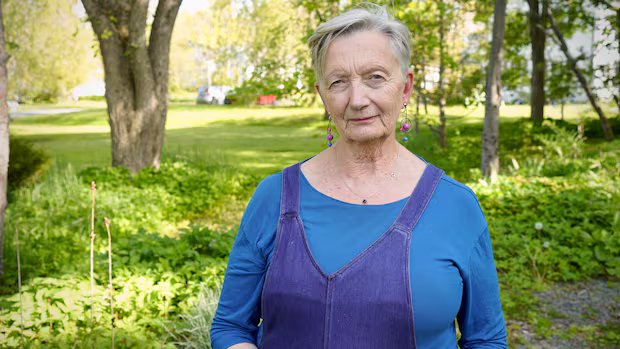
WARNING: This story contains details of violence and sexual exploitation, including rape
Gwen Frankton says she was at home with her husband of 21 years when the police showed up.
It was a snowy February morning, and her husband, Stephen, was sitting at the dining room table in pajamas, fixing one of her silver hoop earrings with a pair of pliers.
There was a rap on the door – unusual in their small village, where people usually walk in without knocking.
“It was such a shock, but I believe the arresting officer said, ‘Stephen Lowe, I’m arresting you,’” Frankton recalled during an interview with CBC News at the same table in her home in Maitland, N.S.
Lowe, Frankton’s husband, is facing 79 charges including harassment, uttering threats, possessing and publishing obscene material and child sexual abuse material. The Ottawa Police Service – the lead agency in a multijurisdictional investigation – says the case involves AI-generated nude deepfakes, depicting the real faces of Canadian women in fabricated and graphic scenes.

While there are up to 25 victims identified in documents currently before the courts, Ottawa Police now say they believe more than 50 women are affected.
CBC News has spoken with 10 women in Nova Scotia, Ontario and Nunavut, who say their photos were taken from their social media profiles and manipulated into violent imagery including rape, torture, bondage, and kidnapping.
Inspector Pascal Labine, of the Ottawa Police Service, says officers “strongly suspect” there will be more victims and additional charges could also be laid in this investigation.
“Every time I learn of another [alleged] victim, it’s like a knife wound to my heart. It’s profoundly painful,” said Frankton.
Frankton is speaking out to express support for the women involved in the case, to call for stronger laws to deal with the kind of behaviour of which her husband stands accused, and to start a conversation about support available for people in her position, who are not formally victims of alleged crimes, but remain deeply affected.
No signs, says wife
Four days after he was arrested, she says she informed Lowe she would be filing for divorce.
“He called me from the centre where he was incarcerated and I said, ‘It’s over, I can no longer support you,’” she said. “And he said he understood.”
Until now, she said their marriage was “loving and amiable.” She said they met and were married in Iqaluit, and later moved to Ottawa, before settling in the small, scenic village of Maitland, N.S.

She described a peaceful and contented life that included time spent with family, traveling the province, watching the stars with a telescope and working together on art projects.
She said he spent a lot of time in his office, and in a separate gaming room where he played Dungeons and Dragons with friends, but insisted there was never a sign anything was awry.
“No slamming shut of the computer. Nothing,” she said. “He was his usual benign, ‘Sure, I’ll help you open that jar, honey,’ self.”

Police in Ottawa have charged two men for allegedly using the images of dozens of Canadian women in violent and sexually explicit AI deepfakes and posting them online without consent.
Volunteered with youth
Frankton said at various points Lowe worked with a local media company in Iqaluit, operated his own photography business, and worked with Parks Canada.
In Nova Scotia, she said, he volunteered once a week, facilitating a gaming night for youth with the Canadian Mental Health Association [CMHA].
In a statement, Susan Henderson, the executive director of the CMHA Colchester East Hants branch, confirmed Lowe facilitated activities in a supervised setting.
“These allegations are deeply disturbing, and our thoughts are with the individuals who may have been affected,” Henderson said.
She said Lowe completed a criminal record check, a vulnerable sector check, and reference checks, and met all requirements.
CBC News has confirmed Lowe has no criminal record.
The Ottawa Police Service would not comment on whether Lowe’s work with the CMHA is part of its investigation.
A second man, Gregry Peter Van Beek, who goes by Peter, his lawyer says, is also facing charges in connection to the case.

None of the allegations has been proven in court, and lawyers for both accused declined comment.
Calls for more support
Frankton said she does not know Van Beek, but she does know many of the women involved in the case, and they have largely been her only source of information.
To her knowledge, she has not been identified in any of the photos, and is not a named victim in the case. As such, she is not provided updates in the investigation.
She also doesn’t have access to supports typically provided by Victim Services, such as general information about how to navigate the court system, and funded therapy.
Frankton said there has to be a better way to support people like her who are not accused and not named victims in a case.
“My voice might help somebody else in this position. And maybe that person is more vulnerable than I am,” she said, noting she’s had incredible support from family, friends and neighbours.

Kylee Nunn, who works with victims in her role at the Elizabeth Fry Society, says she encounters lots of people who are not named as victims, but have been harmed by crime. She’d like to see the mandate of Victim Services expanded.
“There’s not a lot of space to look at the impact of violence and everyone who is impacted and harmed by instances of violence because of the binary nature of our justice system,” she said.
Bill to criminalize deepfakes
Frankton is also calling for the swift passing of the Protecting Victims Act. Known as Bill C-16, it would specifically criminalize the sharing of deepfakes.

Labine, of the Ottawa Police Service, said the absence of this legislation was a challenge in this case.
“The officers had to navigate through a variety of different sections in the [Criminal] Code to be able to develop the foundation of the criminal behavior that’s been associated with this particular case,” he said.
The bill is expected to receive third reading in the House of Commons today. If approved by Parliament, it will be sent to the Senate for review and debate, before becoming law.
“I really hope that anybody who can and is in a position to make this bill become law will do that and not use it as a place for adversarial politicking,” said Frankton. “This one is so important.”
For support in your area, you can look for crisis lines and local services via the Ending Sexual Violence Association of Canada database.