dailynewsnblog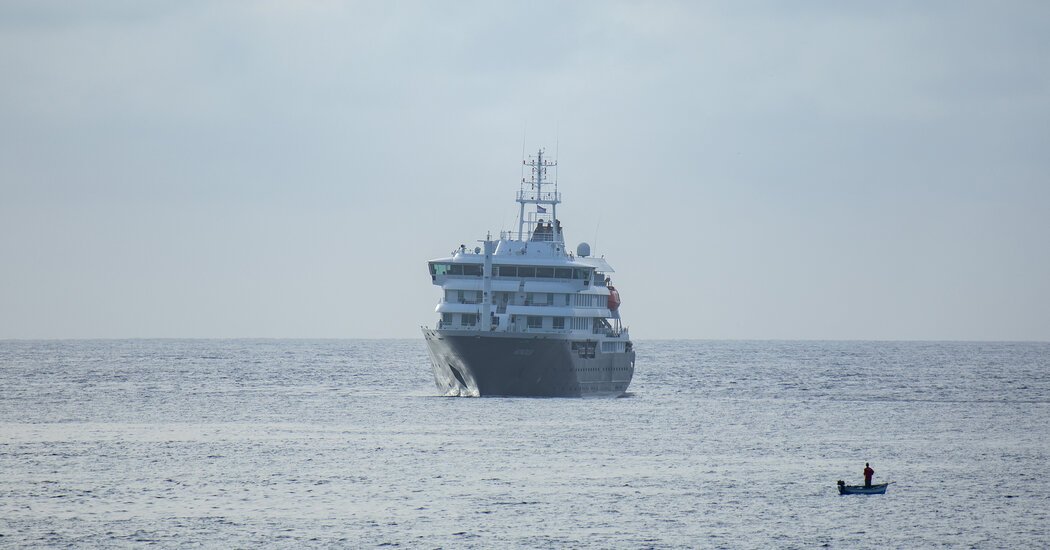
Hantaviruses have most likely been around as long as rodents, but little was known about these pathogens before the 20th century. This rare family of viruses that rodents carry has been cited as the source of a deadly outbreak aboard a cruise ship in the Atlantic Ocean.
The virus is zoonotic, meaning it can be transmitted to humans from animals. And while outbreaks have been rare, it is one of the most widely distributed zoonotic viruses on Earth.
“Some are Old World hantaviruses and others are New World hantaviruses,” said Sabra Klein, a professor of molecular microbiology and immunology at the Johns Hopkins Bloomberg School of Public Health.
“Different species of the virus are carried by different rodents,” Dr. Klein said, adding that European strains cause less severe illnesses than those from Asia.
She noted that “there’s no vaccine, there’s no cure, there’s no money” in finding a cure “in part because these are so rare.”
It was well into the 20th century that the first hantavirus outbreak was documented.
1951: Korean War, Korea
Earliest outbreaks
In 1951, soldiers in Korea who were part of an international command under the United Nations developed an illness that could lead to hemorrhagic fever with renal syndrome, a disease that affects the kidneys. By 1954, about 3,000 soldiers had been clinically diagnosed with this disease, according to researchers.
Those soldiers had been stationed along the Hantan River, so the virus was called hantavirus. The outbreak led to the first deeply researched and detailed pathological investigations of the disease.
The discovery made it possible to retroactively identify outbreaks in the first half of the 20th century, including in eastern Siberia, in Europe during the world wars and in northeastern China during the Japanese invasion and occupation of the 1930s.
1993: Eastern Seaboard, United States
Virus found in the United States
Scientists didn’t think that the Americas had these hantaviruses, now known as “Old World” strains, Dr. Klein said. But there was a recognition that “Old World” hantaviruses could be found around major shipping ports.
“We know that up and down the East Coast, our urban city rats have one of these Old World viruses, but a lot of the disease is not quite as severe,” she said.
That was confirmed when scientists from Johns Hopkins trapped rats at the Port of Baltimore, Dr. Klein said, and found a species of Old World hantavirus in the animals. They found similar results in New York and Philadelphia.
But the researchers didn’t see evidence of a hantavirus native to the Americas.
“We just think the only way we have virus in the United States, or in the Americas in general, is from ships carrying goods and carrying rats,” Dr. Klein said.
1993: Four corners region, U.S.
A new strain is found
The same year as the East Coast discoveries, at least 15 people died from a mysterious disease in the Four Corners area, the point where Arizona, Colorado, New Mexico and Utah meet.
It turned out to be a hantavirus with a high fatality rate.
“That was the first time that we had a ‘New World’ hantavirus being carried by New World rodents,” Dr. Klein said. “These were deer mice, and deer mice are all over the United States.”
This strain was named the Sin Nombre virus, which is Spanish for “the nameless one.” It is the primary strain found in the United States, and linked to deer mice. The virus had probably been sickening and killing people in the American West for centuries.
2002: Chile
First case of Andes virus
It turned out that there were hantaviruses across North, Central and South America.
In 2002, a Chilean boy with no symptoms of hantavirus died, Dr. Klein said. His grandmother also died. They were infected by rodents, scientists said.
Scientists called it the Andes virus. It and other hantaviruses found in the Americas have a higher fatality rate than the ones in Europe, researchers said. The strains in the Americas cause more cardiopulmonary symptoms, which are more likely to cause fatalities than the kidney disease from Old World strains.
The strains in the Americas are collectively known as hantavirus pulmonary syndrome.
The Andes virus is the only hantavirus in the Americas known to be transmitted between people, and not just from rodents to humans, Dr. Klein said.
“It is very, very, very, very rare,” she said of this kind of spread.
2012: Yosemite National Park, Calif.
Deadly cluster among campers
At least 10 people contracted the Sin Nombre virus in September 2012 at a camping ground in Yosemite National Park in California. Three of them died.
The California Department of Public Health had reported finding deer mice infected with hantavirus at several locations in Yosemite from 2007 to 2010. This time the deer mice were nesting inside the double walls of tent cabins.
The campers inhaled the virus, which was present in dust contaminated by infected mice droppings, urine or saliva that became airborne, according to a report from the Centers for Disease Control and Prevention.
2018-19, Argentina
Human-to-human outbreak
One of the largest reported clusters in history resulted in at least 29 cases and 11 deaths. It occurred in Epuyén, a village of 2,000 people in Patagonia, in southern Argentina, in late 2018 and early 2019.
It remains the best-known case involving human-to-human transmission. The authorities there had to put in place a strict quarantine, rigorous contact tracing, isolation of close contacts and active monitoring to prevent further spread.
In Argentina, hantavirus pulmonary syndrome has a fatality rate of up to 50 percent, researchers said.
The Epuyén outbreak was defined by sustained human spread, unlike most hantaviruses, including the Sin Nombre virus, which jump only from rodents to humans.
2025: New Mexico
A case that made headlines
Shortly after the deaths of the Oscar-winning actor Gene Hackman and his wife, Betsy Arakawa, a classical musician, New Mexico’s chief medical examiner announced that Ms. Arakawa had died of hantavirus. She most likely had been infected by deer mice in New Mexico, where the couple lived.
MAY 2026
Virus comes aboard a cruise ship
Two cases of hantavirus infection have been confirmed in a laboratory, and there are five additional suspected cases aboard the M/V Hondius, a cruise ship sailing the Atlantic Ocean, the World Health Organization said on Sunday. Three people have died.
The ship had departed from Argentina. Scientists believe that the cause of the cruise ship passenger’s death is the Andes strain.
While there has been a heavy focus on human-to-human transmission, Dr. Klein said other forms of exposure were more likely.
“There’s some contact probably with the rodents in some capacity, either in Argentina or somewhere on the ship,” she said.