dailynewsnblog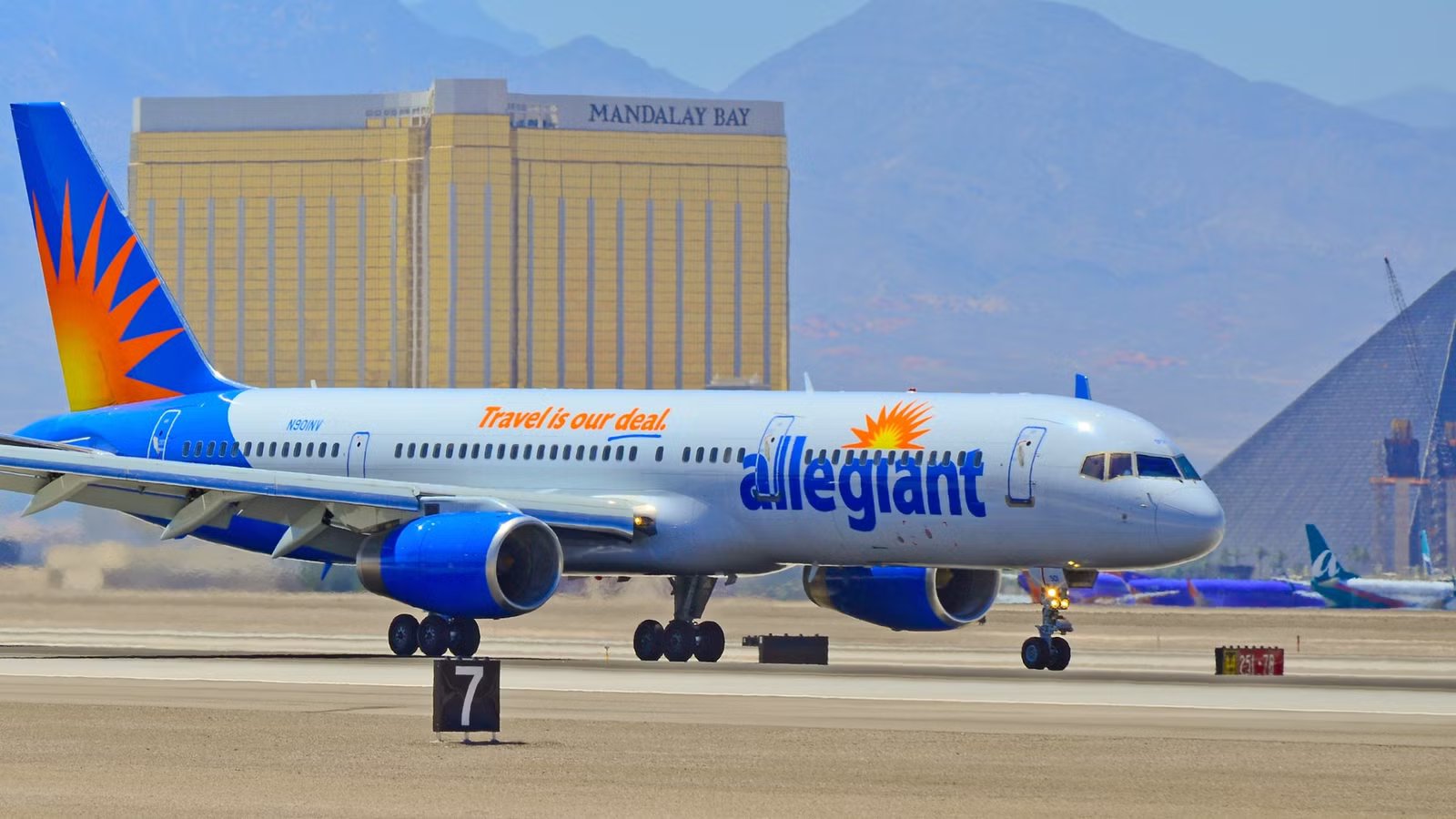
US-based ultra-low-cost carrier Allegiant Air is primarily known today for operating widebody twinjets from the Airbus A320 series. In fact, until recently, the airline had been an all-Airbus operator for several years, before its deliveries of the Boeing 737 MAX 8-200 began. However, prior to this spell, did you know that Allegiant Air also flew larger aircraft in the form of the 757 during the 2010s?
The carrier acquired these aircraft second-hand with the express goal of flying nonstop from the US mainland to Hawaii, something that the rear-engined McDonnell Douglas MD-80 narrowbody twinjets in its fleet at the time were not capable of. Allegiant’s 757s also gave it extra capacity on a wide variety of other routes on the US mainland.
Six 757s

Allegiant Air first announced its plans to fly the 757-200 back in March of 2010. The carrier acquired these jets from the UK-based leisure carrier Thomson Airways, where, according to Allegiant, they had been “since original delivery from Boeing.” Allegiant highlighted that Hawaii was “a major leisure destination that it cannot serve with its existing MD-80 fleet,” but one the 757s could fly to.
This was because, among other things, these jets were “equipped for extended twin-engine operations (ETOPS), as required for long overwater flights.” While they came secondhand, the 757s still represented a considerable investment for Allegiant Air, with the carrier saying it would cost between $75 and $90 million to acquire and prepare the jets. Allegiant President and CFO, Andrew Levy, commented on the aircraft at the time.
“The 757 is a new aircraft type for Allegiant, but we otherwise see this program as consistent with our existing business model. This transaction will enable Allegiant to extend its strategy of serving large leisure destinations from smaller cities.”
A Diverse Route Network

According to historical fleet data made available by Planespotters.net, Allegiant Air’s six 757-200s arrived between May 2010 (N902NV) and November 2012 (N903NV). 2012 was the carrier’s first meaningful year of 757 flights, and these peaked the following year with an annual total of 2,895 in 2013. Thereafter, this total annual figure gradually fell to 984 in 2017.
Year | Allegiant Air Boeing 757 Flights |
|---|---|
2011 | 2 |
2012 | 315 |
2013 | 2,895 |
2014 | 2,254 |
2015 | 2,253 |
2016 | 1,886 |
2017 | 984 |
Using 2013 as an example, data from Cirium, an aviation analytics company, shows that Allegiant’s top routes with the 757 were a pair of mainland services from Las Vegas. These served Bellingham daily and McAllen 175 times across the year. A Hawaiian route completed the podium, with 136 rotations from Las Vegas to Honolulu. The map above shows its full 757 network in 2013.
However, as exciting as the 757’s arrival at Allegiant Air was, they were not the youngest aircraft, and by the mid-2010s, it was time for them to undergo a thorough ‘D check’ maintenance procedure. According to the Las Vegas Review-Journal, the carrier opted to retire the aging twinjets instead of undertaking these expensive procedures, and the last examples were left in October 2017.
Allegiant Air Recently Began Operating Another Boeing Twinjet

According to present fleet data made available by ch-aviation, Allegiant Air’s current fleet consists of a total of 128 narrowbody twinjets. The A320 series represents the backbone of its operations, with 28 A319s and 80 A320s at its disposal. In recent years, however, Allegiant Air has been reintroducing Boeing aircraft into its operational roster in the form of the 737 MAX 8.
Indeed, the ultra-low-cost carrier now has 20 examples of the high-density 737 MAX 8-200 at its disposal, with further orders for another seven of these jets and 23 examples of the standard 737 MAX 8. With its existing 737 MAX 8-200 jets averaging just 1.2 years old, compared to 20.9 for the A319 and 15.5 for the A320, these planes certainly represent the future for Allegiant.