dailynewsnblog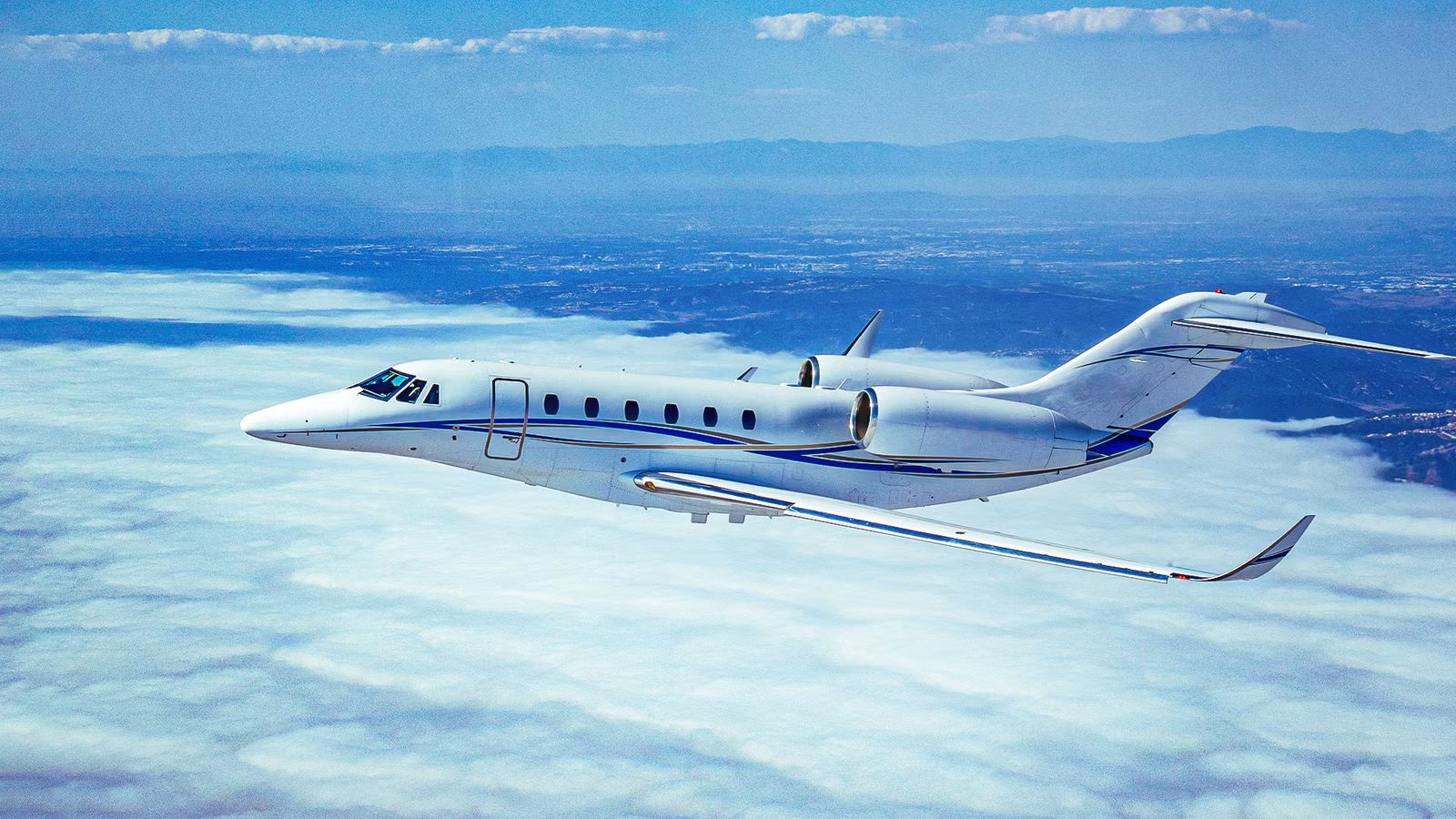
Hearing the announcement that the aircraft has reached cruising altitude is an integral part of the passenger experience. It marks the end of the initial climb and the start of cruise. This is where meaningful distances are covered at high performance and where the highly anticipated service portion of a flight often begins. Cruising altitudes vary by flight and depend on several factors, including equipment type, direction of travel, and regulatory requirements.
A common misconception is that in aviation, the bigger the aircraft, the better the performance. Larger airframes are equipped with high-performance powerplants such as the Rolls-Royce RB211, but they are usually supplemented by increased weight, causing a different climb performance than a Corporate Jet While the topic is nuanced, manufacturers such as Gulfstream, Dassault Falcon, and even Embraer would argue that their products are the sports cars of the sky.
Looking At Mass, Weight, And Business Models

Private or Corporate jet aircraft such as the Gulfstream G650 are smaller and therefore contain less mass than a commercial airliner such as the Boeing 737 MAX 8. As a seasoned operator, Guardian Jet has published the G650’s maximum takeoff weight (MTOW) at 99,600 lb (45,178 kg). Boeing, by contrast, reports an MTOW of 182,200 lb (82,191 kg). Unless the Gulfstream is loaded near its MTOW and the MAX 8 is flying near empty, the Gulfstream will, more frequently than not, merit a lower weight than the MAX 8.
Most commercial operators schedule flights to fill as many seats as possible. A United Airlines scheduled passenger flight from Raleigh–Durham International Airport (RDU) to  Chicago O’Hare International Airport (ORD) aims to be profitable, achieved through a high load factor and takeoff with as few empty seats as possible.
The same is not necessarily true for private charter or corporate operators flying under 14 CFR Part 135 or simply Part 91. In business aviation, the purpose of a mission is typically selective, where a customer or owner/operator will have an exact route planned, with a finite number of passengers and cargo onboard; the main criteria of such a mission is comfort and convenience.
Climb Performance Explained

Operating at a lighter weight, the Gulfstream in this example will have increased climb performance than the  Boeing. Pilot resource Boldmethod describes the relationship between weight and climb performance and is based on the four forces of flight: weight, lift, thrust, and drag. All of these forces are equal in straight and level, unaccelerated flight. Whereas during a climb, the vector of lift will be longer than the vector of weight.
A heavier airplane simply can’t climb as well as if it were lighter, because weight steals the excess power the engines need to turn forward motion into upward motion. As weight increases, the wings must fly at a higher angle of attack to generate enough lift, which creates more drag. More drag means the engines must work harder just to maintain level flight, leaving less reserve power available for climbing. The result is a shallower climb, slower altitude gain, and a generally more sluggish feel after takeoff.
Commercial operators like  United Airlines are aware of this, and they accept this as a part of the mission. A United 737 MAX 8 is not meant to give peak performance during each phase of flight, but rather it is, again, prioritizing high load factor from place to place, seeking profitability. Increased climb performance for a Gulfstream jet adds to the allure and fascination of the experience, as well as a few key benefits as the aircraft expedites climb into cruise.
A Shorter Amount Of Time Until Cruise

For example, picture the Guardian Jet G650 climbing rapidly with its stellar performance, at a weight of 90,000 lb (40,823 kg) on a standard day. A standard day is defined as 15 degrees Celsius or about 59.5 degrees Fahrenheit. This aircraft will be able to achieve a 3,500–4,000 feet per minute climb rate as per the technical specifications from Global Air. For this example, the filed cruise altitude is 39,000 feet (11,887 meters), and it is a non-turbulent day.
Ultimate Specs has published the performance charts of the MAX 8. By contrast, up near its 182,200 lb (82,191 kg), it typically posts climb rates closer to 2,500–3,000 feet per minute, a significant difference from the G650. As it relates to time in-flight, the MAX 8 arrives at its top of climb later than the G650 on the same route, on the same standard day and at the same filed cruising altitude.
A noticeable effect of this reduced climb duration for the passenger is the timing of the seat belt sign coming off, as well as the commencement of in-flight service. A seat belt sign that turns off at 10,000 feet (3,048 meters) signifies that a passenger can officially move about the cabin. Passengers onboard a Gulfstream jet do not wait long for the cabin crew to begin à la carte, premium service. Passengers onboard fully loaded commercial jets end up waiting a longer period of time to reach 10,000 feet (3,048 meters), and subsequently, the commencement of service.
Altitude Can Vary

Not all routes are under the same parameters. Given the lighter weight of the Gulfstream jet, this allows the aircraft to fly at a higher altitude under a higher, manufacturer-published service ceiling. Flying higher matters because the air is thinner, drag is lower, fuel burn improves, and the aircraft can cruise above most weather events and traffic.
Because the Gulfstream operates at a significantly lower gross weight, it maintains a higher specific excess power (SEP) throughout the climb, allowing it to continue generating positive rate‑of‑climb margins deep into the thinner air of the upper flight levels. As the aircraft ascends, true airspeed increases while available thrust decreases. However, the G650’s high thrust‑to‑weight ratio and efficient high‑aspect‑ratio wing delay the point at which rate of climb approaches zero, enabling it to reach its manufacturer‑published service ceiling.
Quantum Jets has highlighted that the service ceiling of the G650 is 51,000 feet (15,545 meters) or FL510. Under standard atmospheric conditions, the heavier, transport‑category MAX 8 reaches its thrust‑limited ceiling much earlier, as its available climb gradient diminishes rapidly with altitude due to higher induced drag, lower excess thrust, and a substantially lower SEP profile. This negates any reduced time taken to reach top of climb, but presents less congested airways to the pilots and the ability to overfly many weather systems, although not all.
Weather Is Still A Factor, But Marginalized

Most weather systems globally occur at altitudes lower than the FL510 service ceiling, within the tropopause. Simple Flying’s Brandon Shaw broke down exactly what takes place in the tropopause, and where its boundaries are.
“Thunderstorms, convective turbulence, icing conditions, frontal systems, and the jet stream all occur within this layer. The tropopause, the boundary between the troposphere and the stratosphere above it, sits at approximately 36,000 feet (10,973 meters) at mid-latitudes and varies from approximately 26,000 feet (7,925 meters) at the poles to 52,000 feet (15,849 meters)”
While still a factor for flight planning purposes, at times private jet aircraft may be able to overfly many weather systems. While the tropopause is the general location of thunderstorms, it is not a locked boundary. FAA Advisory Circular 00-24C defines the stages of a thunderstorm, in which the mature state may exhibit anvils reaching altitudes in excess of FL500. In this case, regardless of published service ceiling, no aircraft should logically attempt to overfly such a system.
Not all business jets are built to the tall service ceiling held by the G650. Cessna Citations are certified between 41,000 and 45,000 feet (12,497 and 13,716 meters), and only the fast Citation X reaches FL510, according to Jetfly. Such aircraft, manufactured by Textron Aviation, the parent company of the Cessna brand, would not be able to overfly major weather systems in the first place due to their lower service ceilings and limited high‑altitude performance.
Further Developments In Business Aviation

The ability of certain business jets to climb higher, reach cruise sooner, and operate above much of the world’s weather introduces a deeper question about how altitude is becoming a competitive differentiator in aviation. As operators increasingly prioritize efficiency, comfort, and schedule reliability, the vertical dimension of airspace now shapes everything from dispatch decisions to passenger experience.
One place to watch this unfold is in certification and fleet planning. The Federal Aviation Administration(FAA) and the European Aviation Safety Agency (EASA) continue to evaluate high‑altitude performance envelopes, and manufacturers like Gulfstream and Dassault Falcon are already pushing service ceilings toward the upper limits of the stratosphere. Meanwhile, Textron’s Citation series remains capped between 41,000 and 45,000 feet (12,497–13,716 meters), creating a natural dividing line between aircraft that can routinely operate above the tropopause and those that must remain within it.
Guardian Jet’s acquisition data shows growing demand for aircraft capable of FL470 and above, while dispatchers increasingly factor vertical routing into their weather‑avoidance strategies. If these trends continue, the next major shift in business aviation may not be about speed, cabin size, or range, but about how high an aircraft can reliably fly, and how much of the world’s weather it can leave behind. The question now is not whether altitude matters, but how far manufacturers and operators will go to make it a defining feature of the modern flight experience.
Catch what other trackers miss
Emergency squawks, holds, NOTAMs — live signals, no signup.
Open tracker
Catch what other trackers miss
Emergency squawks, holds, NOTAMs — live signals, no signup.
Open tracker