dailynewsnblog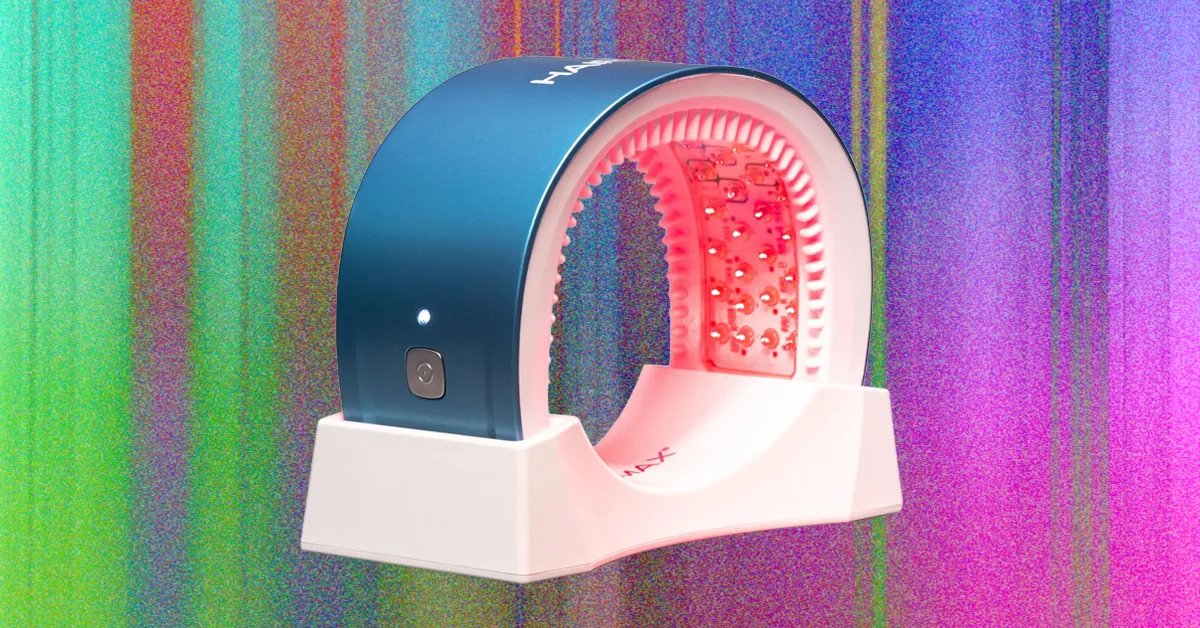
Red light can also support the production of adenosine triphosphate (ATP), an energy-carrying molecule that helps existing follicles remain in the hair-growth phase. However, while these devices can promote a healthy environment for living hair follicles, they can’t revive follicles that are scarred or long dormant. If parts of your scalp are totally bald and shiny, you may need to go to Turkey after all.
The Hairmax LaserBand, a 3-inch-thick blue headband with teeth, looks a lot like a shark mouth when sitting on its charging cradle, which is both a handy resting place and keeps it charged at all times. It’s pricey—a few hundred more than similar devices. But unlike a lot of competitors, like CurrentBody’s LED helmet and HigherDose’s ball cap-style hat, the LaserBand contains no LEDs in favor of more targeted red-light laser diodes. (Some competitors, like GroWell and iRestore, use a mix of LEDs and laser diodes.)
Unlike more diffuse LED lights, laser diodes provide collimated beams of light that travel in a straight line for more focused treatment. The Hairmax 82 contains—wait for it—82 of these lasers, while the less expensive Hairmax 41 ($649) contains just 41.

Photograph: Kat Merck
The other main LaserBand selling point is, of course, the treatment time. Hairmax only requires 30 seconds per section of your head, several times a week (compared to much longer sessions for most other red-light therapy devices for the hair and face). After 30 seconds, the device will emit a loud, slightly startling buzz to let you know it’s time to move it to the next section. I’ve found I can usually cover most of my head in 90 seconds.
The Hairmax’s teeth are intended to both separate your hair to allow the light to penetrate your scalp and keep the headband secure on your head while you’re doing other things, but I found I had to hold it in place if I placed it anywhere but the very top of my head. This wasn’t a big deal since the treatment time is so short, and it’s not super uncomfortable to wear, but having to use your hands adds a layer of inconvenience compared to a hat that can just sit atop your head.
Five Months Later
Hairmax provides a list of seven clinical studies on its site detailing the LaserBand’s efficacy, but you’re probably wondering if, after five months of use, it worked for me in real life. I wasn’t perfectly compliant. I didn’t bring the device on vacation, so there was a usage gap during that time; I was also guilty of sloppy placement when I wasn’t looking in a mirror; and I forgot to use it altogether for a couple of weeks.
Despite those few hiccups, it did work. My results (pictured below) aren’t too dissimilar to the many before-and-after pics on Hairmax’s website.