dailynewsnblog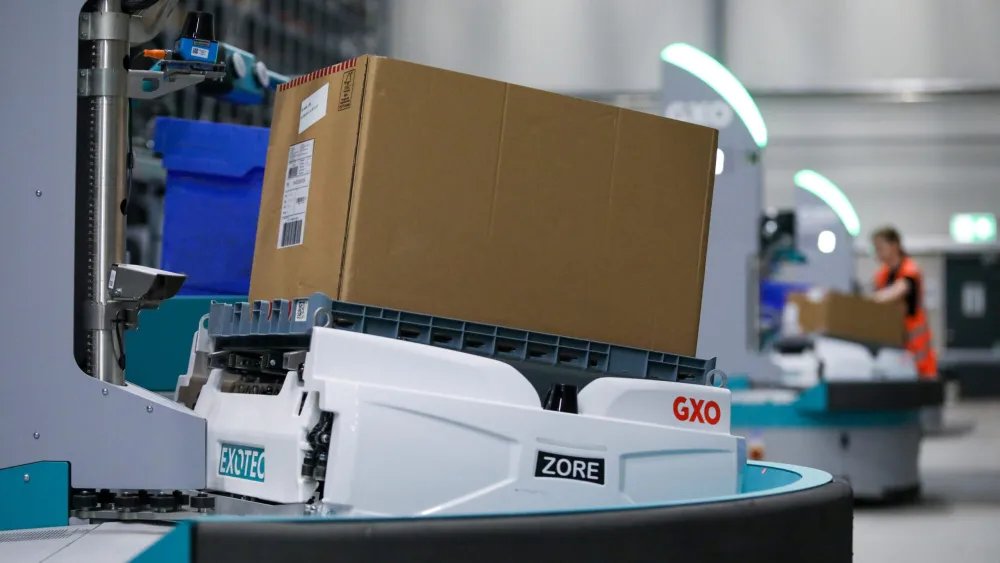
Guess is layering new levels of robotics into its European fulfillment network.
GXO, which operates three warehouses for Guess, is implementing 127 Skypod robots from warehouse robotics company Exotec at a distribution center in Venlo, the Netherlands, as the contract logistics provider looks to more efficiently handle the apparel brand’s complex mix of seasonal inventory.
An automated system, supplied and integrated by Exotec, has been deployed at GXO’s Venlo facility, which has handled logistics operations for Guess since 2017. The operation distributes merchandise to Guess stores across Europe, the Middle East and Africa and Asia (EMEA), while preparing to launch e-commerce fulfillment for customers in the Netherlands, Belgium and Luxembourg.
The GXO partnership and automation upgrades enable Guess to absorb additional volume and new e-commerce flows within an established operation without requiring the fashion brand to undergo a complete warehouse redesign.
The system combines the Skypod robots with 60,000 storage locations, eight goods-to-person picking stations and a conveyor system stretching roughly 650 feet. At peak, it can process 2,200 order lines per hour and between 40,000 and 70,000 pieces per day, according to Exotec.
For GXO, the investment is aimed at addressing a familiar problem in fashion logistics: an operation that needs to be simultaneously flexible enough to handle thousands of SKUs and seasonal swings while maintaining the speed and accuracy required across multiple sales channels.
“We were looking for solutions to automate. The question was: how can we reduce the picking effort?” said Mark Donné, operations manager at GXO Venlo.
Rather than adding automation to the existing workflow, GXO and Exotec designed the system around the specific requirements of the Guess operation. Exotec served as the integrator, combining storage, robotics, picking and material handling into a single system.
The Skypod robots move through the storage structure to retrieve inventory and bring it to operators at the picking stations, replacing much of the walking associated with traditional warehouse picking.
According to Exotec, the robots carry loads of up to 30 kilograms in bins, trays or custom containers, travel at up to four meters per second in three dimensions, climb racks up to 46 feet, operate in temperatures from zero to 40 degrees Celsius and can drive beneath the racks in any direction.
A conveyor network links storage, picking and dispatch, while additional equipment handles tasks including moving totes between levels, consolidating containers and automatically feeding picking stations with zero manual intervention.
“The impact has been evident from day one,” said Donné.
The result is intended to be more than simply faster picking. GXO described the operation as more organized and lower pressure following the deployment, while Exotec said processing times at the facility have been reduced to a single day.
“Fashion logistics doesn’t tolerate approximation—high SKU counts, seasonal spikes and EMEA-wide distribution require precision engineering, not off-the-shelf automation,” said Wim Vermeir, senior sales executive at Exotec in a statement. “With GXO, we designed a system built specifically for those demands, and the throughput numbers speak for themselves. The result is a highly efficient operation that supports both current performance and future growth.”
For Guess, the Venlo system is also part of a longer-term relationship with GXO, which has managed Guess operations in Italy since 2011 and in the Netherlands since 2017. Two years ago, the companies extended their European logistics partnership through 2032.
GXO’s partnership with Exotec comes as the contract logistics provider has made automation a central part of its warehouse strategy. In July, the company unveiled it had invested nearly $1 billion in warehouse automation over the previous five years, deploying technologies ranging from autonomous forklifts to drones and piloting humanoid robots.
The Guess deployment also follows a series of larger apparel automation investments from Exotec. In 2025, Oxford Industries selected the company to automate a new 560,000-square-foot omnichannel distribution center in Georgia supporting brands including Tommy Bahama, Lilly Pulitzer and Johnny Was. That facility is designed to process more than 20 million units annually and will use more than 450 robots and 450,000 storage locations.
Exotec has recently expanded its work with fashion companies internationally. In January, the company announced a partnership with South Korean fashion platform Musinsa to deploy its Skypod system at a new logistics center designed to handle hundreds of thousands of SKUs and highly variable demand.