dailynewsnblog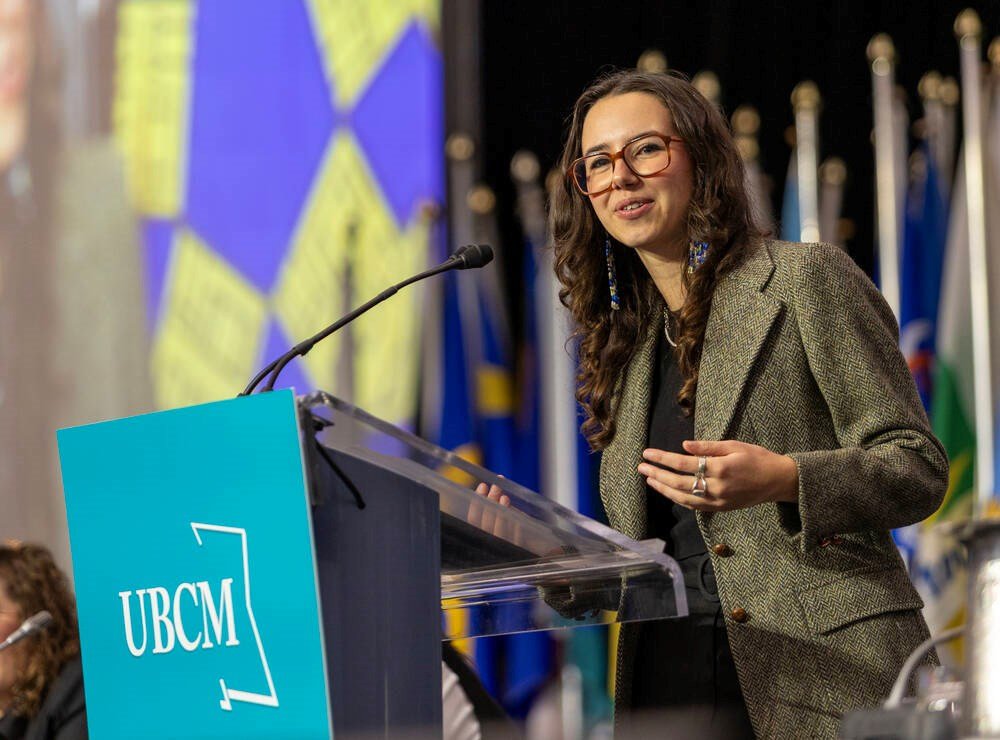

Greens revive old NDP child-care ambition, Eby and Doerkson both eye resource development
One week into B.C.’s snap election campaign and everyone is stealing each other’s material.
You have the BC NDP leader poaching lines from the prime minister, the BC Conservative leader borrowing phrases from the NDP and the Greens going back to crib notes from the John Horgan days of yesteryear.
It’s all very confusing and amusing at the same time.
Green leader Emily Lowan took the biggest swing Monday, announcing she’d restart the BC NDP’s frozen $10-a-day child-care program and supercharge it into a free universal child care system by 2031.
“We’re going to be building these centres to last for generations,” said Lowan. “This also means we need to create one simple point of registration, so families are stuck fighting centre by centre wait lists. It means cutting red tape holding back child-care operators. For every dollar we invest, about 40 cents comes back in taxes from the parents who are able to take on jobs and work more.
“Investing in child care takes care of B.C.’s little ones, and their parents.”
Close your eyes and you could easily imagine a New Democrat saying those exact words. Not today, of course. The NDP of today has pretty much given up on $10-a-day child care, as was evidenced in a freeze and review in the February budget.
But the NDP of old? The John Horgan NDP of 2017 and 2020? These words come straight from that playbook, to the audience lured into politics hoping for a $10-a-day system that, nine years later, is grossly disappointed that only 10 per cent of spaces actually meet that mark.
“We know why,” said Lowan. “The people on the front lines who provide care have told us that accessing the funding is nearly impossible. The province’s funding model simply doesn’t have the flexibility, lack of red tape and singular simple funding channels that care centres need.”
This is true. The child-care system created by the NDP is a byzantine bureaucratic nightmare of annual forms, income testing, applications, employer qualifications, subsidies and ministry approvals. You couldn’t design something more complex and less efficient if you tried. Which suited the NDP fine because it artificially slowed down a system that it had pumped billions of dollars into, run out of money and failed to get results.
Lowan also zeroed in on implementing an early childhood educator wage grid of up to $35-45 per hour by 2028—a promise New Democrats have also entirely failed to fulfill.
It was interesting to watch Lowan focus on child care while BC NDP leader David Eby was up at the Port of Prince Rupert talking about LNG and mining expansion.
It was reminiscent in a way of the 2017 election, in which Liberal leader Christy Clark talked big about expanding resource development in communities that most people have trouble finding on a map, claiming they would boost GDP, increase government revenues and allow for the growth of services in health care and education.
Back then, and up until just a couple years ago, Eby was no fan at all of LNG or mining. Now he’s reading off that same song sheet, one that has been sharpened to a point by Prime Minister Mark Carney to riff off of the trade pressures caused by U.S. President Donald Trump.
“Right now, we have almost 20 critical metals and minerals mines in the province that represent almost 40 billion dollars in capital investment … almost 40 billion dollars in provincial tax revenues, municipal tax revenues, federal tax revenues, that we don’t have to come to you and your family for when you’re struggling with affordability,” said Eby.
“That will enable us to deliver the health care and the social services that you need.”
Sort of like Clark’s LNG promise to pay down the provincial debt and lower taxes using LNG and natural resource extraction.
The problem with the Liberal focus in 2017 on major economic projects in far-flung corners of the province is that they failed to meet the needs of suburban voters worried about pocketbook issues. Those voters latched on to the $10-a-day plan, along with bridge tolls. And while Clark’s LNG future ultimately did come to fruition, many years later, she’s no longer around to see the benefits of it.
Conservative leader Lorne Doerkson on Monday also took a stab at the natural resources file, promising to double natural gas and LNG outputs by 2032 and triple them by 2035. Natural gas revenue, though volatile, is a source of more than $1 billion annually to the provincial budget.
“It will keep taxes low for hardworking families in British Columbia, it will fund the social programs that we all rely on, it pays for new hospitals, it will pay for schools, it will pave the roads,” said Doerkson.
He began cribbing lines about the United States from Eby, who had cribbed them from Carney.
“Beyond the economics, there’s a strategic imperative … we break free from relying on a single buyer in the U.S. That’s true economic strength for British Columbia. The world needs our energy and British Columbia needs this opportunity.”
The party leaders all reading different versions of each other’s lines, from different moments in time. Elections can do that. They realign leaders to real voters in real time.
Rob Shaw has spent more than 17 years covering B.C. politics, now reporting for CHEK News and writing for Glacier Media. He is the co-author of the national bestselling book A Matter of Confidence, host of the weekly podcast Political Capital, and a regular guest on CBC Radio.
[email protected]
Stay ahead of the curve in B.C. politics. Get expert political analysis delivered straight to your inbox, plus inside scoops and other stories from across the province. Sign up for Coast and Capital here.